Recently visited Samsung Heavy Industries’ Geoje Shipyard. Robots were cutting massive steel plates required for ships and shaping them as needed. They read code numbers containing work instructions and executed them as is. Until before October last year, this work had been performed by skilled workers. The entire process of welding robots understanding work instructions is carried out by artificial intelligence (AI). The company stated, “Productivity has increased by about 20% compared with before AI was applied,” and expressed expectations that “once the system is operated entirely by AI without human intervention, productivity will improve by more than 50%.”
With AI adoption, Korean manufacturing is already undergoing changes on a “revolutionary” level in productivity. Expectations are also rising that a second “manufacturing renaissance” will arrive once humanoids that have learned even humans’ delicate manual skills are deployed.
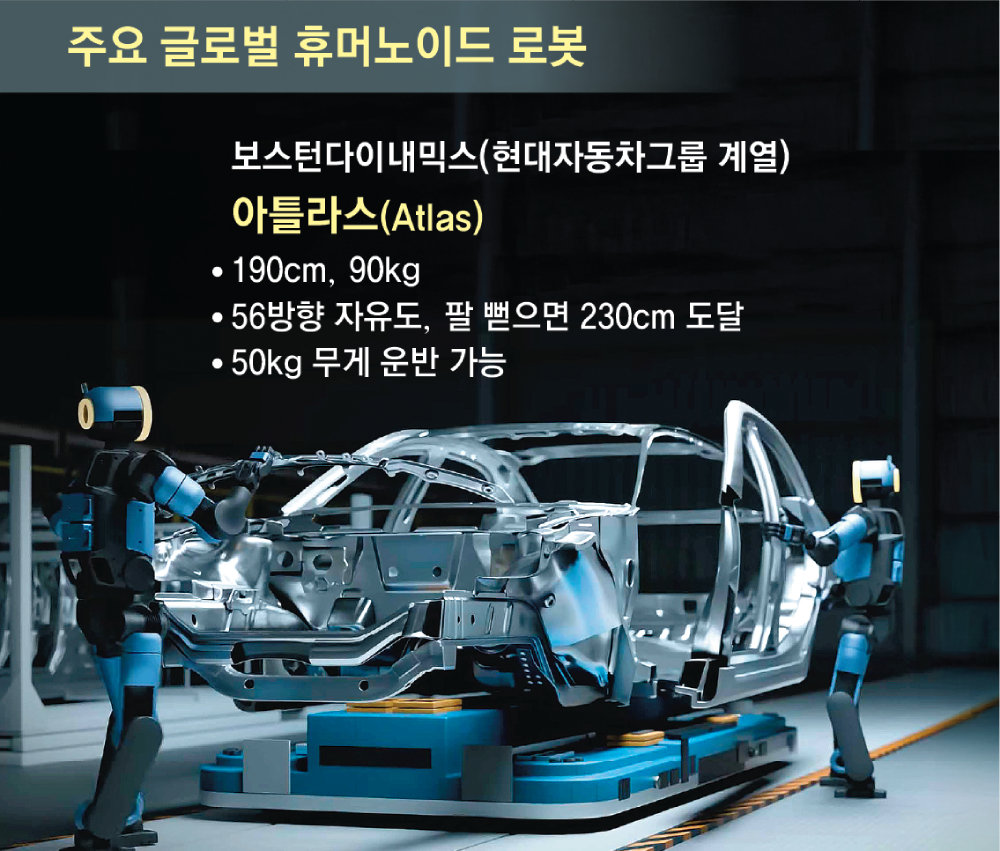
Captured from Boston Dynamics YouTube
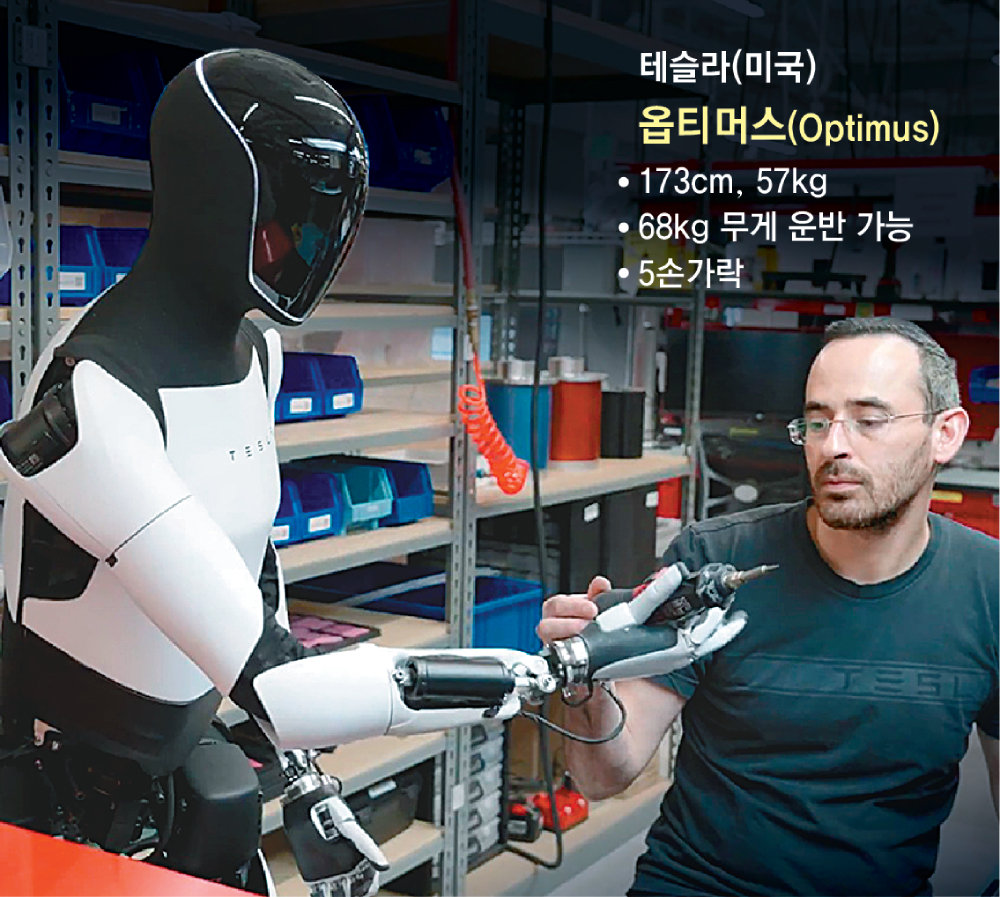
Captured from Tesla YouTube
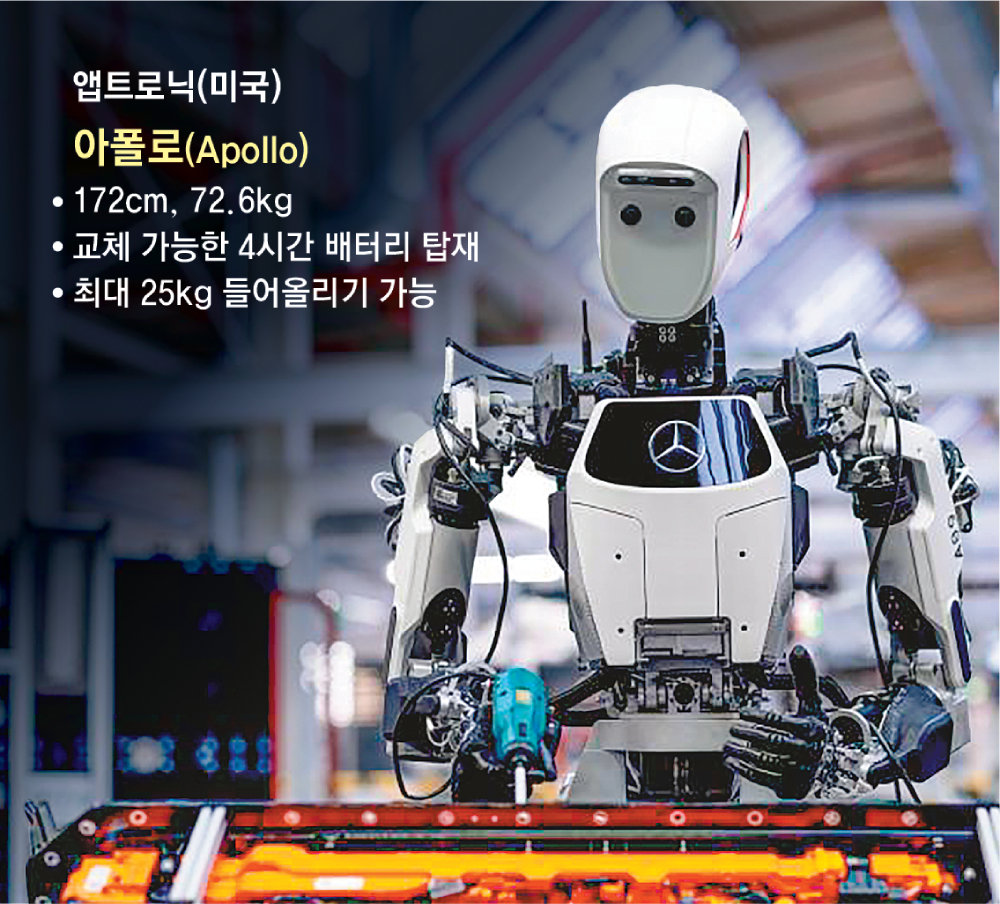
Captured from Apptronik YouTube
● From shipyards to steel mills, AI-enabled Korean manufacturingAccording to industry sources on the 8th, a recent survey by the Korea Chamber of Commerce and Industry of about 500 manufacturing companies found that 49.2% of large corporations in Korea are utilizing AI in production, research and development (R&D), and other areas. In particular, there is a projection that this year will mark the first year of the “AI 2.0” era, in which “AI robots” will oversee all work sites without any human involvement.
In fact, at POSCO’s Pohang Steelworks visited on the 7th, robotic arms were busy removing impurities from ladles of molten steel. In the past, operators visually checked the condition of impurities and then manually moved the robotic arm controls to remove them. Recently, however, the system has been changed so that AI independently determines the condition of impurities and manipulates the robotic arm to remove them.
Hanwha Ocean conducts “draft measurement” to check physical characteristics such as the ship’s center of gravity before sea trials of vessels under construction. “Draft” refers to the point where the water surface meets the bottom part of the hull. Previously, employees in small boats personally circled around the ship to take measurements. Because this involved work at sea and required inflatable boats to come very close to vessels larger than houses, the level of risk was high. After the introduction of an AI-based draft measurement system, drones now circle the ships and perform the task. The work time, which used to take more than two hours, has been reduced to under 30 minutes, and the required manpower has decreased from three people to one.
At LS ELECTRIC’s Cheongju plant, robotic arms rotate around finished circuit breaker products taking photographs. The images taken by the robotic arms are analyzed by AI to determine defects. In the past, humans created defective samples for computers to learn from, but after the company introduced generative AI in 2023, inspection speed and quality improved. A company representative said, “In the past, the probability of classifying a non-defective product as defective was 10%, but now it is 0%.”
● Automobiles become a battleground for humanoidsThe automotive industry is becoming a key battleground for humanoids, which are regarded as the most advanced form of AI robots. Not only Hyundai Motor’s “Atlas,” which drew attention at the world’s largest information technology (IT) exhibition “CES 2026,” but also Tesla, BMW, and Mercedes-Benz are all entering competition to develop humanoids that will be the workers of the future.
Tesla plans to deploy “Optimus” in its factories by the end of this year, and BMW is training humanoids at its South Carolina plant in the United States in partnership with US robotics company Figure AI. Mercedes-Benz already deployed “Apollo” last year for testing at its plant in Berlin, Germany. In China, where the government is supporting the establishment of mass-production systems for humanoids, automakers such as BYD and Geely Automobile have already introduced humanoids into their plants in collaboration with domestic robotics companies.
This trend is interpreted as being driven by the fact that automobiles themselves are evolving from wheeled computers into AI robots equipped with autonomous driving, and that companies will be able to secure an edge in cost competitiveness once they can mass-produce robot workers in large quantities.
Jang Jae-hoon, Vice Chairman of Hyundai Motor, met with reporters on the 7th (local time) at the “CES 2026” event in Las Vegas, United States, and said regarding AI robots, “Since (success or failure) depends on speed, the entire company must commit to this,” stressing that “China is also heavily emphasizing robots, so this is the time to focus on (robots).”
ⓒ dongA.com. All rights reserved. Reproduction, redistribution, or use for AI training prohibited.
Popular News