At CES 2026, the world’s largest consumer electronics and IT trade show that opened in Las Vegas on January 6 (local time), a shift in focus among complete vehicle manufacturers became apparent. Whereas they previously used CES primarily as a debut stage for new cars, robots and autonomous driving technologies have now taken center stage instead of new vehicle models. These companies were busy trying to answer the question, “What part will the mobility industry play in a technological society?” rather than “What kind of car will be built?” Underlying this is a sense of crisis that survival is difficult by manufacturing cars alone.
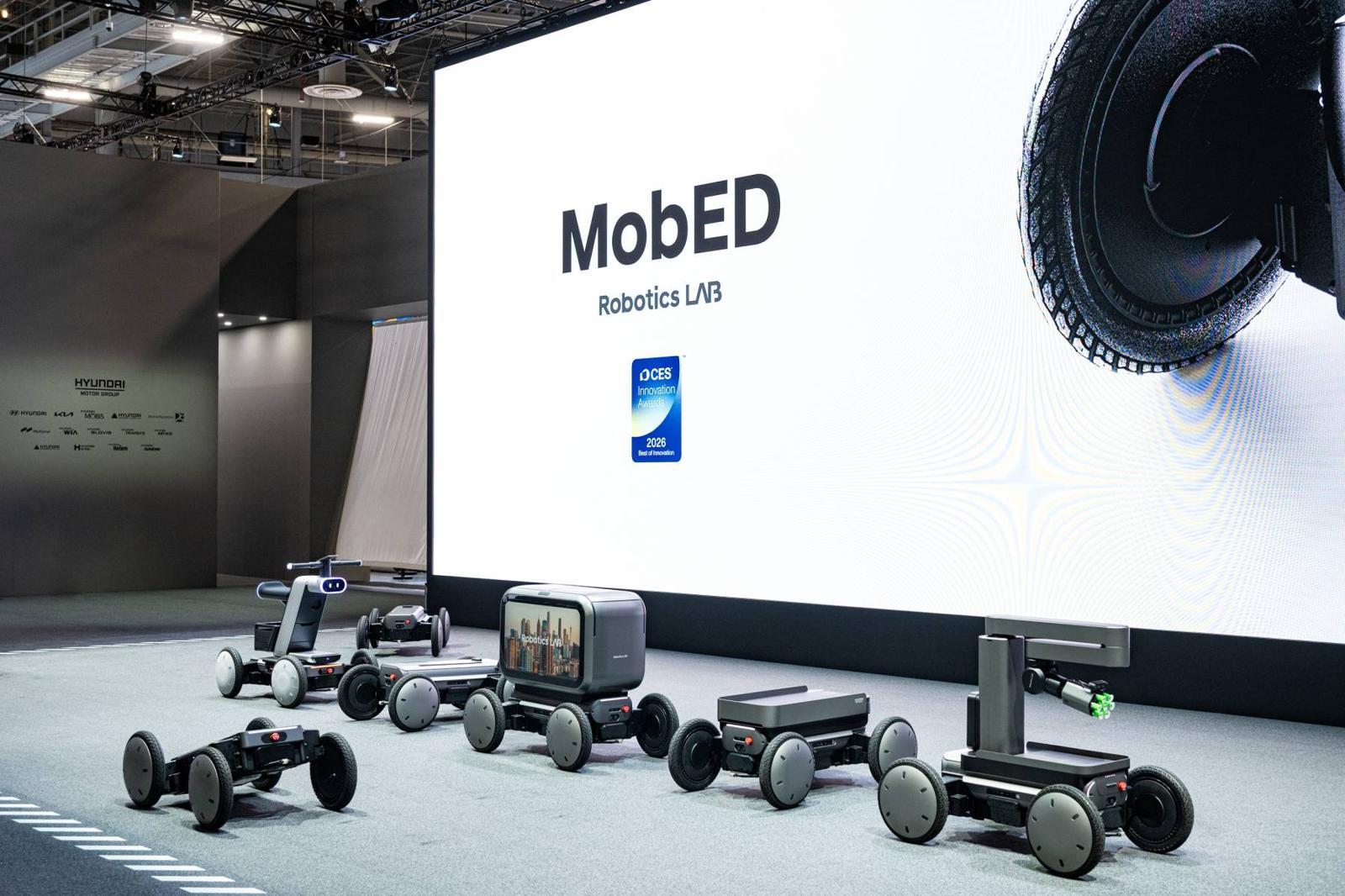
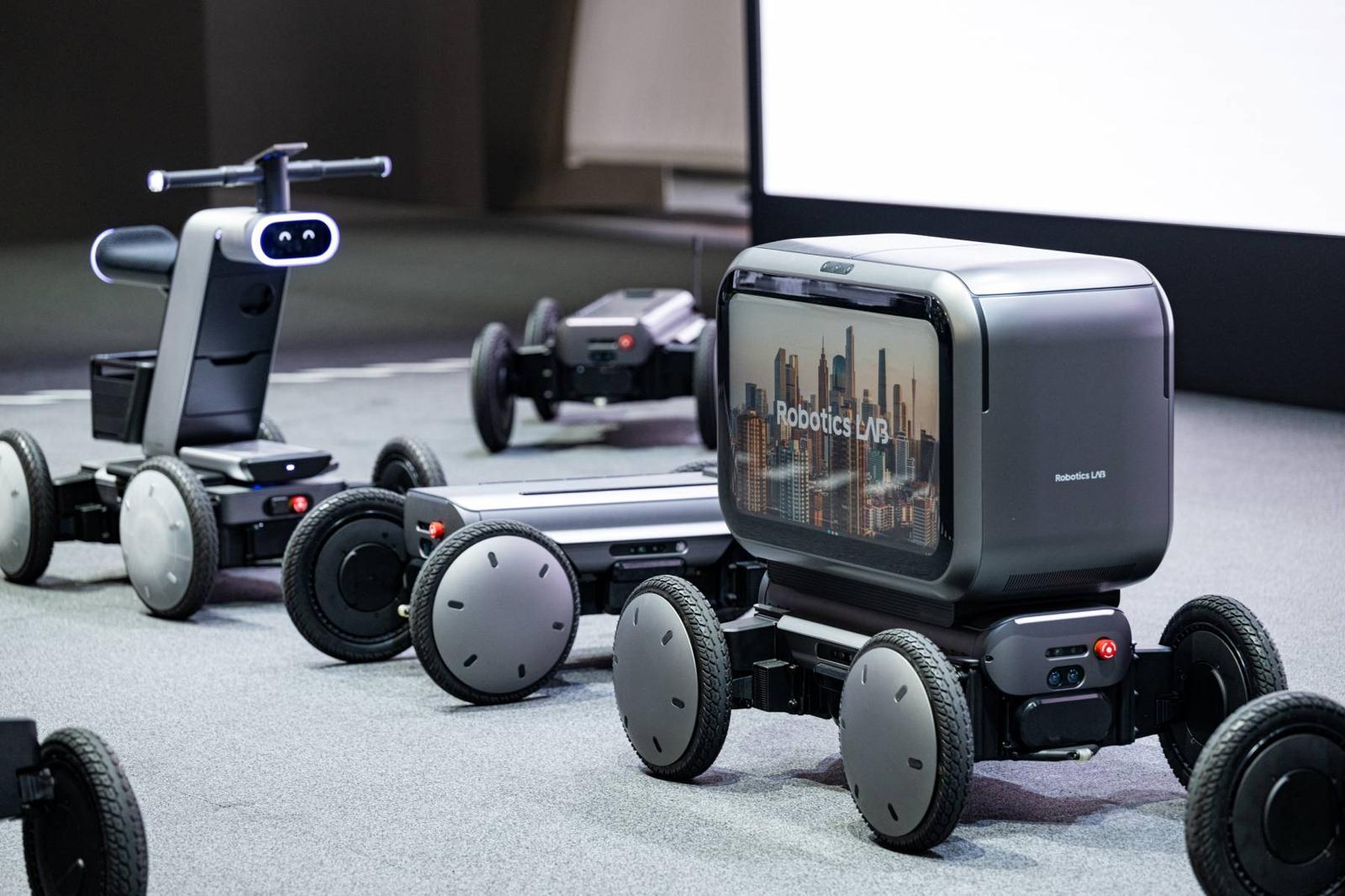
MobED commercialization model unveiled by Hyundai Motor Group at CES 2026 / Source=Hyundai Motor Group
An era where “good cars” alone cannot ensure survival… Fierce competition to lead the physical AI ecosystemThe focus of complete vehicle manufacturers on physical AI (AI embedded in hardware such as robots) is rooted in a fundamental change in industrial structure. Following the transition to electric vehicles, differentiation in vehicle hardware is becoming increasingly difficult, and pressure on price competition and profitability is intensifying. The industry has entered a phase where it is no longer possible to achieve sustainable growth merely by making “good cars.” In response, automakers are seeking to improve production efficiency through humanoids and intelligent robots, while simultaneously advancing AI training and autonomous systems.
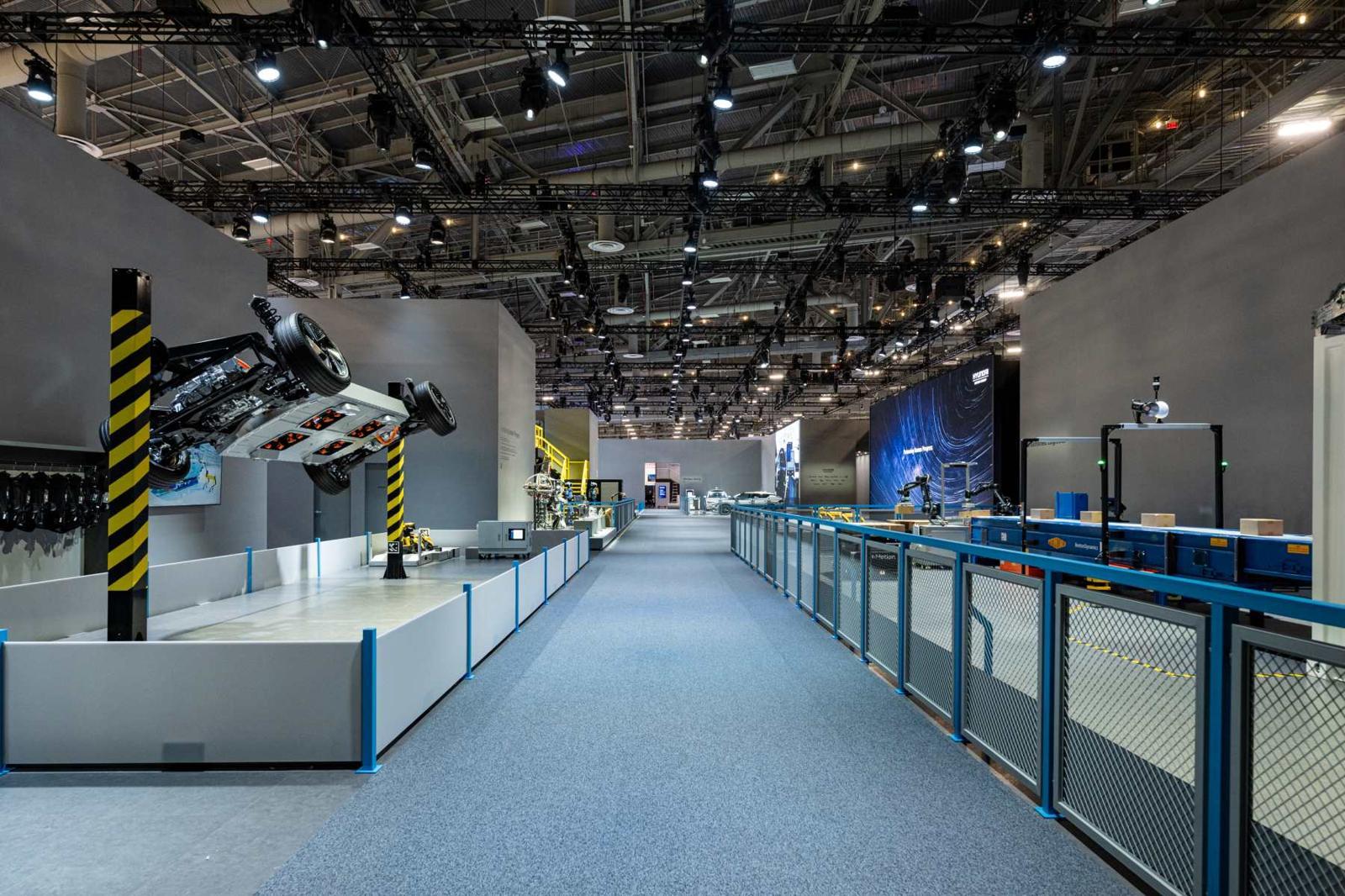
Hyundai Motor Group unveils key products and technologies to lead the AI robotics ecosystem at CES 2026For example, during CES 2026, Hyundai Motor Group set up a 1,836-square-meter (approximately 557-pyeong) exhibition booth in the Las Vegas Convention Center West Hall and is showcasing a variety of exhibits where visitors can directly experience the Group’s AI robotics technology development process. With real-world robots such as the next-generation Atlas, Spot, and MobED, the company presents how physical AI will transform consumer daily life and work environments.
Exhibition booth prepared by Hyundai Motor Group at CES 2026 / Source=Hyundai Motor Group
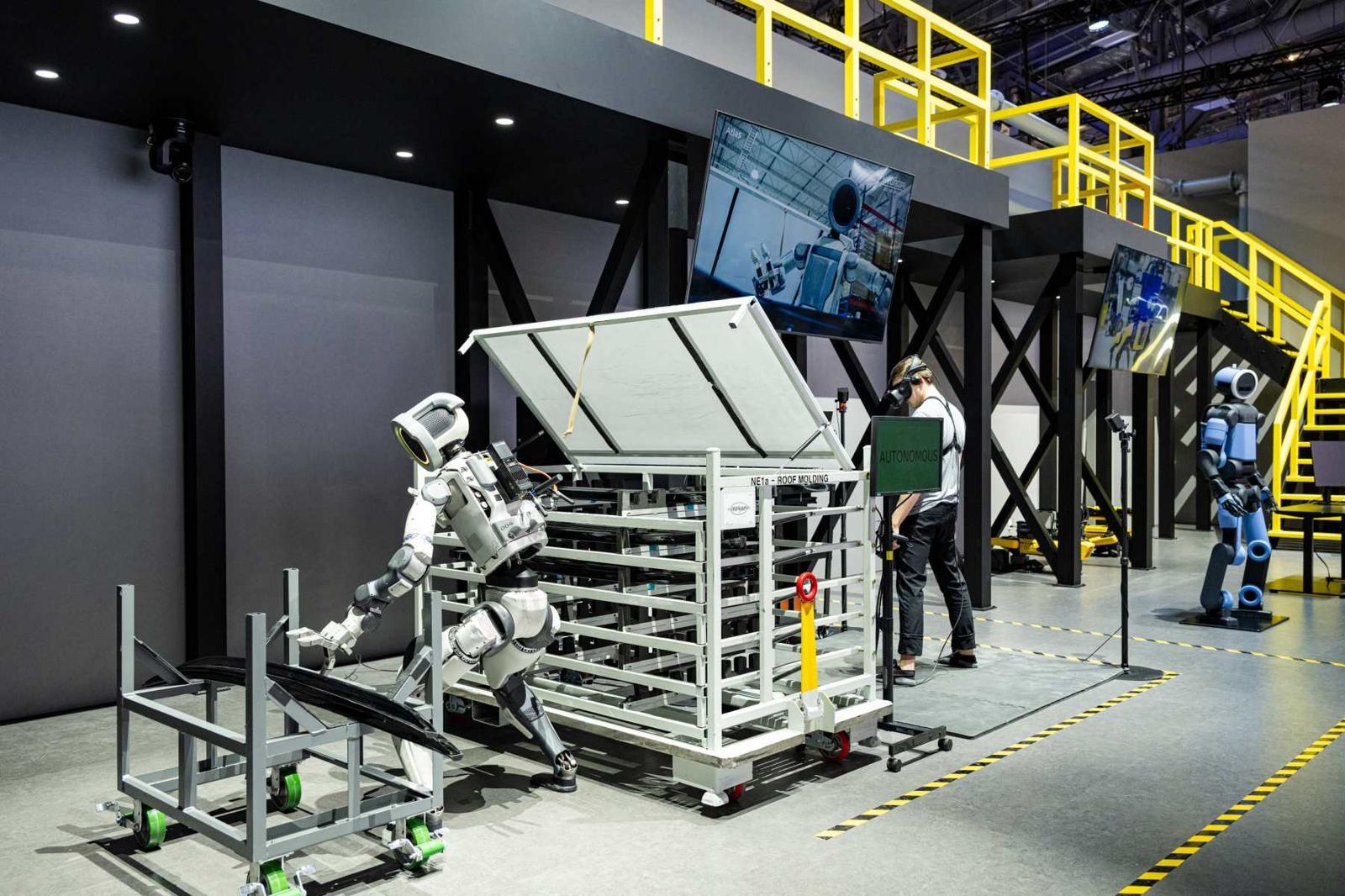
First, in the “Tech lab,” which recreates Hyundai Motor Group’s AI robotics research environment within the exhibition space, the company held demonstrations of “The Atlas prototype,” a next-generation electric Atlas research model that will be at the core of the AI robotics ecosystem, “The Atlas product,” a next-generation electric Atlas development model, and “Spot utilizing the Orbit AI solution.”
The “next-generation electric Atlas development model,” unveiled for the first time at CES 2026, was developed by Boston Dynamics, Hyundai Motor’s dedicated robotics subsidiary. It is a model introduced with a focus on flexibility that allows application to various work environments.
The development model can fully rotate most of its joints and is equipped with tactile sensors in hands similar in size to those of humans, enabling natural movements. With 360-degree cameras, it recognizes all directions and can immediately detect surrounding objects and situations.
It has the strength to lift weights of up to 50 kg (about 110 pounds) and can reach heights of up to 2.3 m (about 7.5 feet). It delivers performance even in extreme environments ranging from -20℃ to 40℃ (-4℉ to 104℉), and its waterproof function allows it to be washed. It can perform a wide range of tasks from material handling to precision assembly, and when its battery is low, it autonomously moves to a charging station to replace the battery and resumes work.
Next-generation electric Atlas development model / Source=Hyundai Motor Group
Hyundai Motor Group expects the physical AI market to form around humanoids. Accordingly, it has set a goal of first deploying the next-generation electric Atlas development model at industrial sites in advance, then evolving it into a mass-produced humanoid robot. Going forward, the company plans to deploy the next-generation electric Atlas development model to production bases including Hyundai Motor Group Metaplant America (HMGMA), verify it by individual process units, and then gradually expand Atlas deployment.
Hyundai Motor Group plans to learn from real-world data accumulated through Atlas, improve usability, and expand its reach beyond automobiles to other manufacturing sectors.
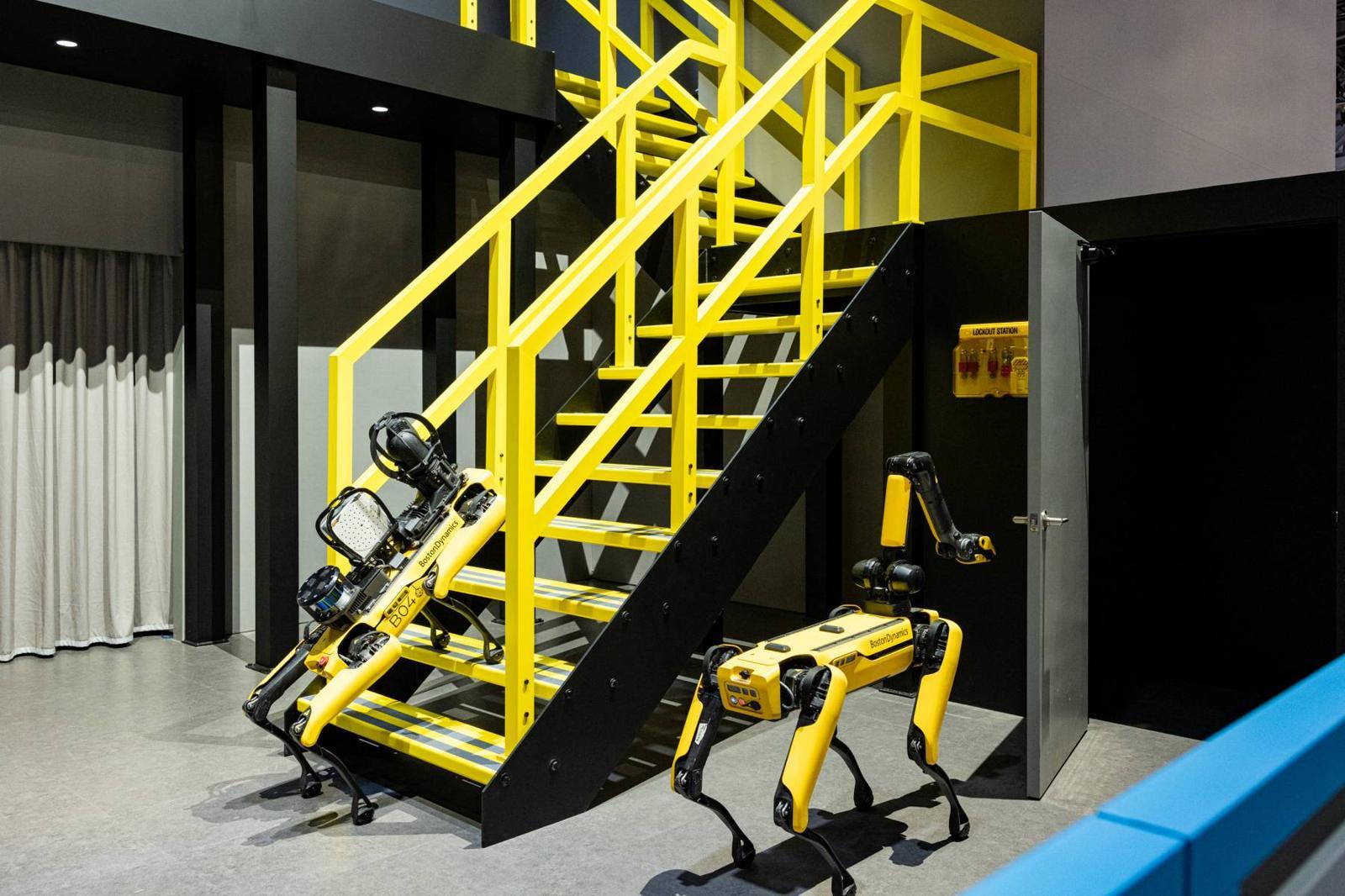
Quadruped robot Spot integrated with Orbit AI / Source=Hyundai Motor Group
At CES 2026, Boston Dynamics also demonstrated how its quadruped robot “Spot,” combined with “Orbit AI,” can manage and inspect equipment in industrial sites.
Orbit AI is a dedicated software platform for Boston Dynamics robots. Based on functions such as ▲remote control and real-time monitoring ▲AI-based anomaly detection ▲data analysis and insight provision, it enables efficient management and operation of robots.
Hyundai Motor Group also prepared content that allows visitors to directly see and experience how the advancement of AI robotics technologies will change everyday life.
First, the company unveiled a commercialized version of the next-generation mobility robot platform “MobED (Mobile Eccentric Droid, MobED)” in physical form. It also exhibited the “Top Module combined concept model,” developed for use in various industrial environments such as delivery and logistics, and conducted driving demonstrations.
MobED commercialization model / Source=Hyundai Motor Group
MobED has a width of 74 cm, a length of 115 cm, and a maximum speed of 10 km/h, and can travel for more than four hours on a single charge. Its maximum payload ranges from 47 kg to 57 kg depending on the lineup.
MobED is equipped with four independently driven wheels and an eccentric posture control mechanism. Each wheel is fitted with three motors that handle wheel driving, steering, and eccentric functions, allowing the body to be tilted to the desired angle. As a result, it can maintain stable balance even on sloped or uneven surfaces. This mechanism also enables it to overcome curbs up to 20 cm high.
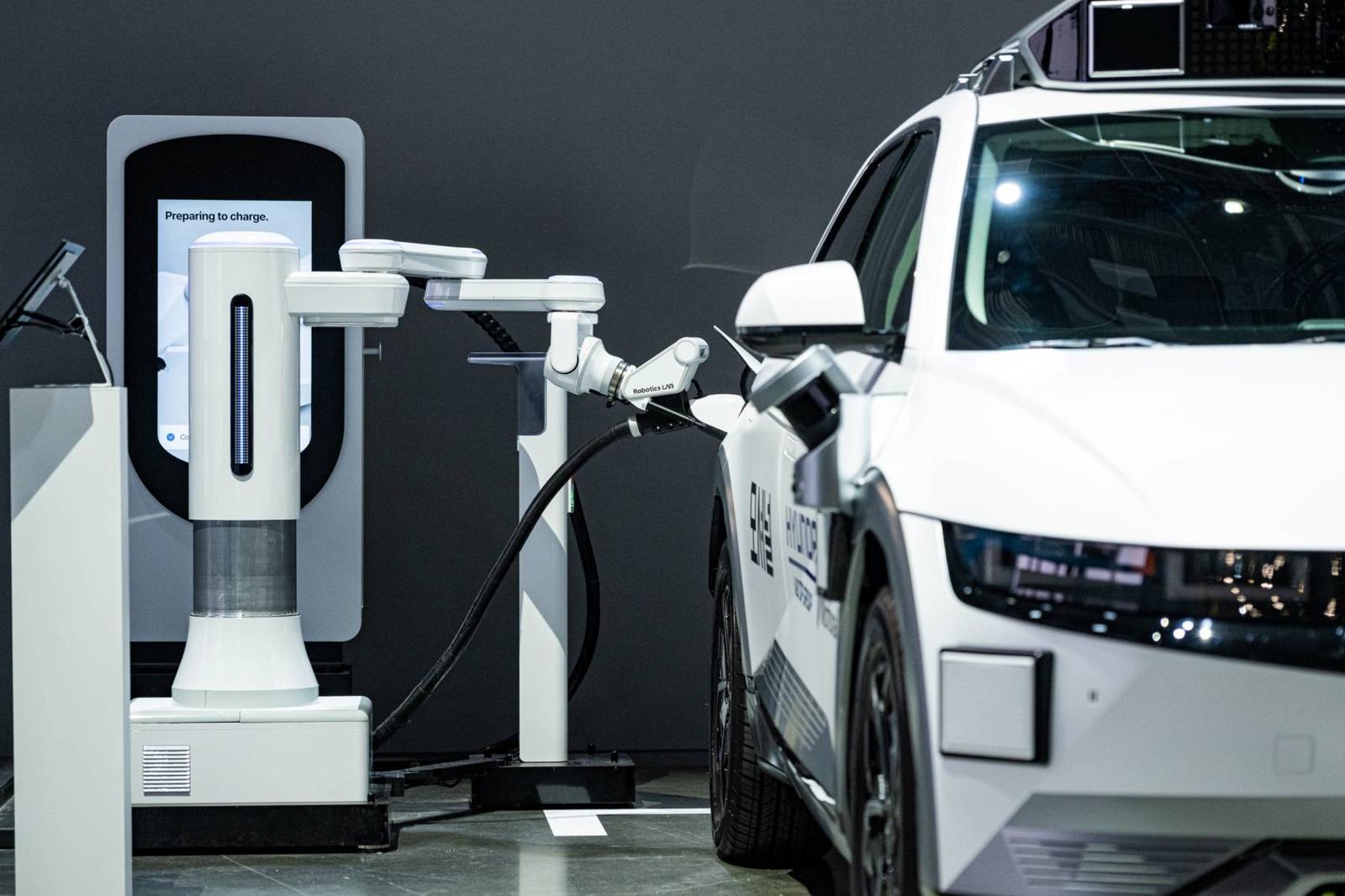
Hyundai Motor Group also showcased a “robotaxi” developed based on the IONIQ 5 in cooperation with its autonomous driving subsidiary Motional.
IONIQ 5-based robotaxi developed by Hyundai Motor Group and Motional / Source=Hyundai Motor Group
The IONIQ 5 robotaxi is equipped with Level 4 autonomous driving technology, as defined by the US Society of Automotive Engineers (SAE), jointly developed by Hyundai Motor Group and Motional. Level 4 autonomous driving refers to a level where the vehicle itself perceives and judges situations to drive, and can handle emergencies without driver intervention.
The IONIQ 5 robotaxi is Motional’s first commercial fully driverless autonomous vehicle. Starting this year, it is scheduled to be deployed for ride-hailing services for general passengers in Las Vegas, USA.
NVIDIA teams up with Mercedes-Benz to launch its first autonomous car in Q1NVIDIA announced that it will launch its first autonomous vehicle in partnership with Mercedes-Benz in the first quarter.
In a CES 2026 keynote speech held at the Fontainebleau Las Vegas on January 5 (local time), CEO Jensen Huang disclosed details of the autonomous driving collaboration between NVIDIA and Mercedes-Benz and the vehicle launch schedule.
CEO Jensen Huang said, “NVIDIA will launch its first autonomous vehicle in partnership with Mercedes-Benz,” adding, “We are coordinating a launch schedule of the first quarter in the United States, the second quarter in Europe, and the third to fourth quarters in Asia.” He then unveiled NVIDIA’s autonomous driving AI system “Alpamayo.”
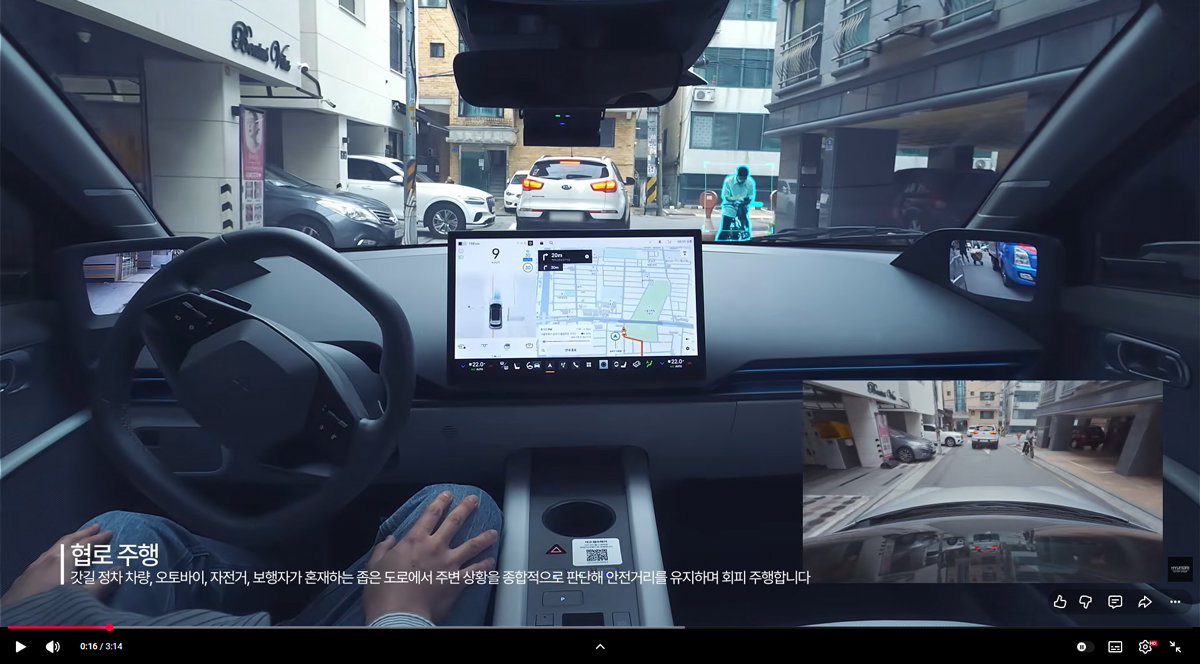
Alpamayo operates based on NVIDIA’s next-generation autonomous driving technology, the Vision Language Action (VLA) model. Unlike conventional autonomous driving models, it can independently interpret and judge traffic situations. This allows the autonomous vehicle to explain the basis of its decisions in human language and logic.
For example, it can perform complex tasks such as lane selection, directional changes, and route following even in congested or unfamiliar areas. It can also proactively respond by, for instance, yielding or stopping upon recognizing unexpected situations involving pedestrians, cyclists, or e-scooter users. The technology is attracting attention as a way to overcome the limitations of existing autonomous driving models, which have shown weak responsiveness to unexpected situations beyond predefined scenarios and difficulty in ensuring safety.
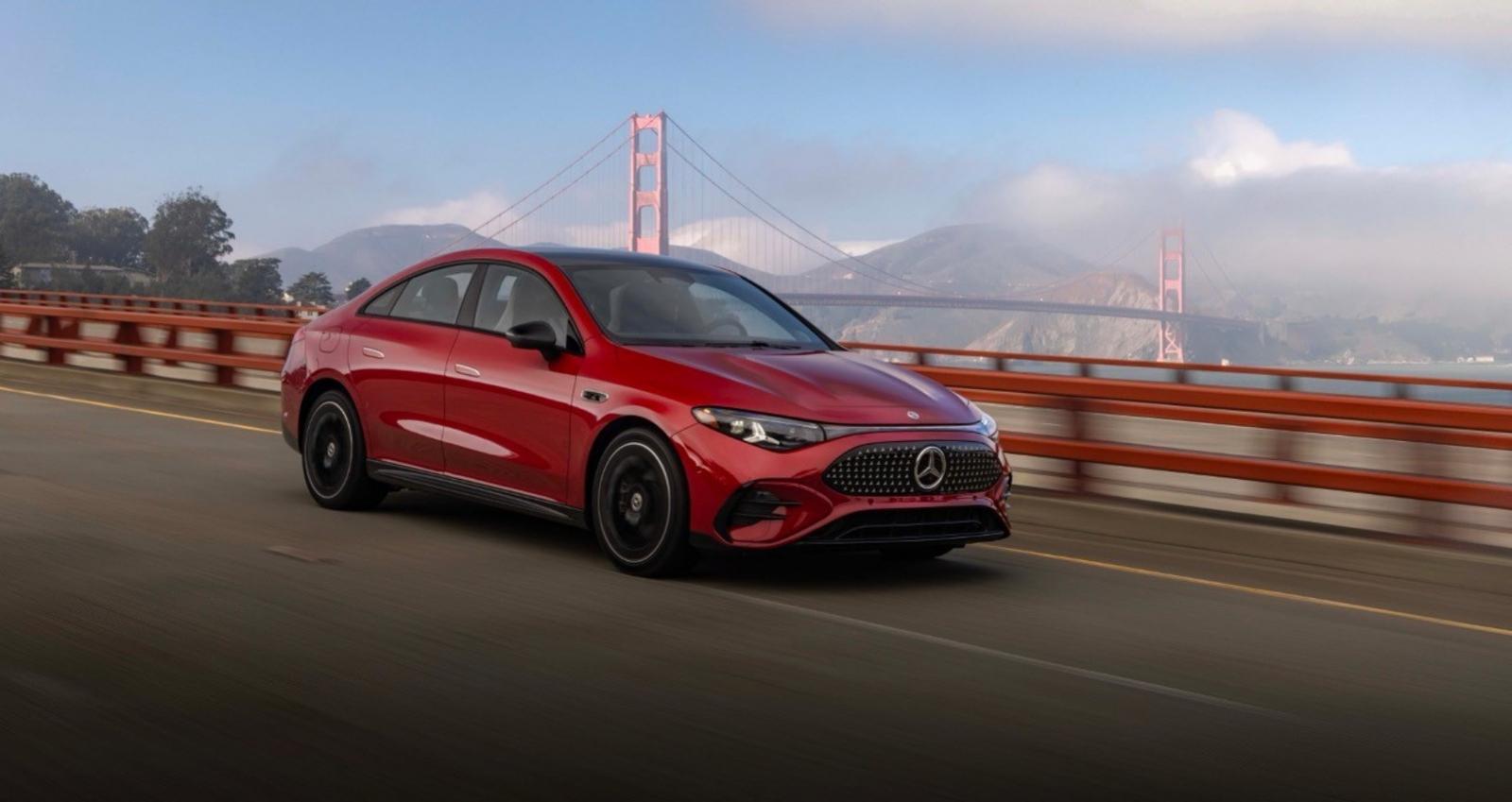
The first autonomous vehicle to be mass-produced with NVIDIA’s Alpamayo will be Mercedes-Benz’s new CLA, a compact executive sedan.
Mercedes-Benz’s new CLA, the first autonomous vehicle to be mass-produced with NVIDIA’s Alpamayo / Source=NVIDIA
CEO Jensen Huang said, “The new Mercedes-Benz CLA equipped with Alpamayo will be launched in the United States within the first quarter, followed by Europe in the second quarter and the Asian market in the third to fourth quarters,” expressing confidence that “the new CLA, which operates based on Alpamayo, will be recorded as the safest car in the world.”
Kim Pil-soo, professor in the Department of Future Automotive Engineering at Daelim University College, commented, “The striking change at this CES is the advancement of humanoid robots and autonomous driving technologies,” adding, “The era in which humanoid robots can be used in ordinary households in the near future is now within sight. What is clear is that the era of technological competition has arrived in which automakers can no longer survive merely by building good cars. A look at each manufacturer’s announcements at this CES 2026 clearly reveals this trend of change.”
IT Donga reporter Kim Dong-jin (kdj@itdonga.com)
ⓒ dongA.com. All rights reserved. Reproduction, redistribution, or use for AI training prohibited.
Popular News