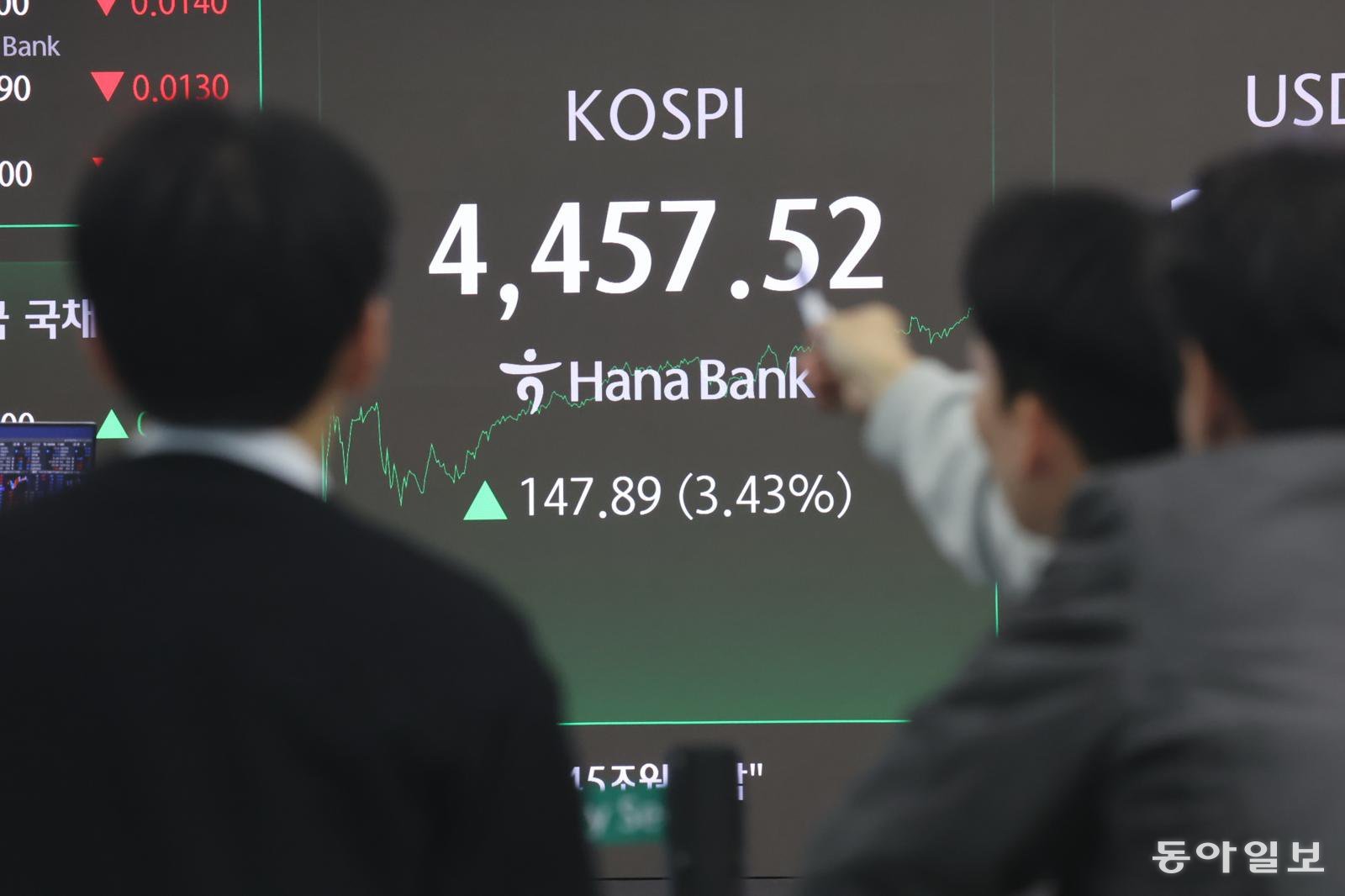
KOSPI surpasses 4,400: The KOSPI closing price is displayed in the dealing room of Hana Bank in Jung-gu, Seoul, on the 5th. On this day, the KOSPI exceeded 4,400 for the first time and set a new all-time high. Reporter Jeon Young-han scoopjyh@donga.com
This year, as in the previous year, semiconductors are driving the Korean stock market. Despite controversy over a potential bubble in artificial intelligence (AI) investment, intensifying investment competition among big tech firms has created a “supplier’s market” in which memory semiconductor supply cannot keep up with demand.
On expectations that the industry will enter a full-fledged “memory super cycle” and deliver unprecedented earnings, semiconductor share prices have surged and the KOSPI is renewing its record highs. However, as expectations for this year’s earnings are largely reflected in current share prices, volatility could increase if future earnings guidance falls short of market forecasts.
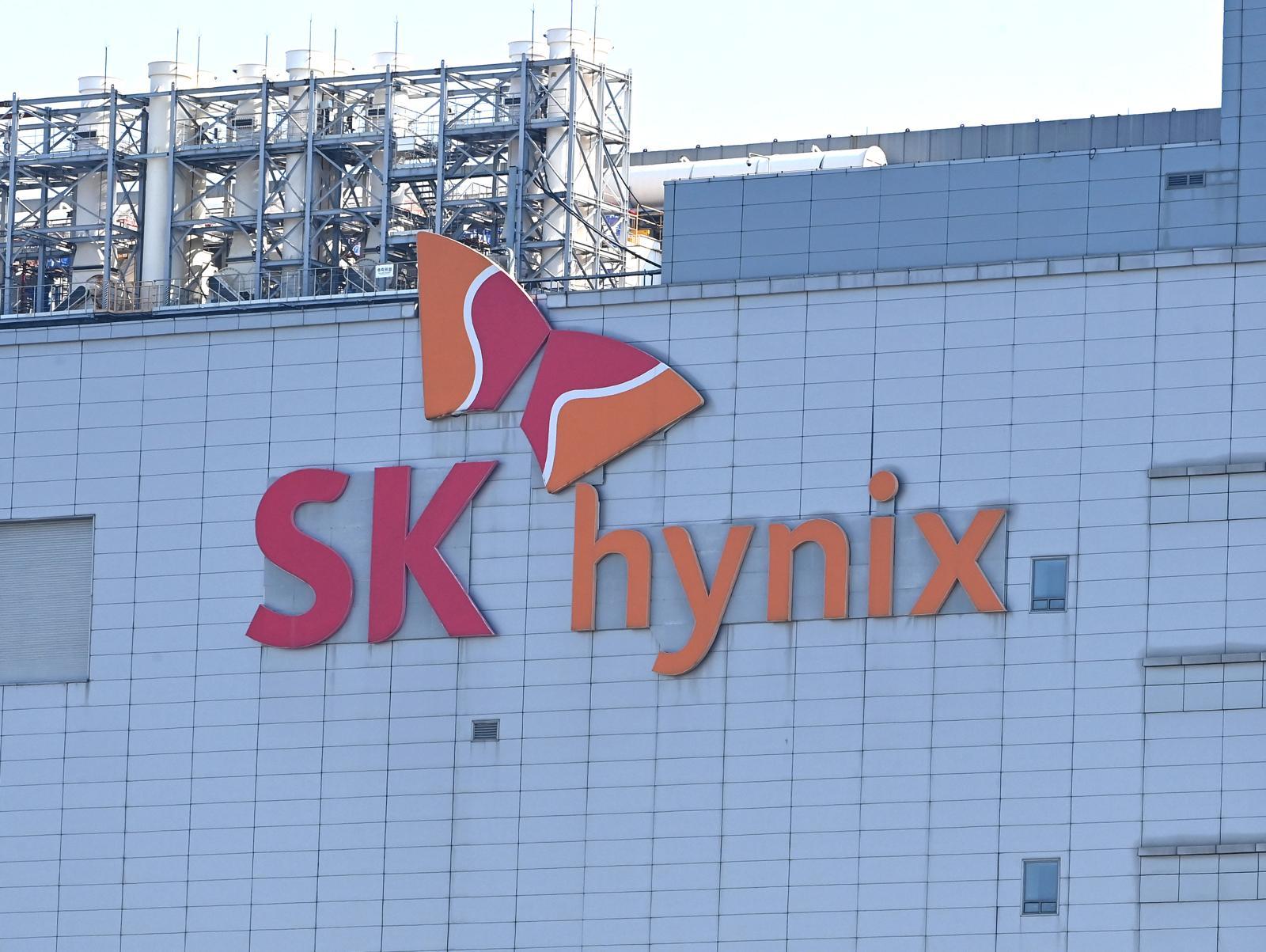
● “Samsung Electronics contributed more than 60 points to KOSPI gains” The driving force behind the KOSPI’s record close of 4,457.52 on the 5th was Samsung Electronics. According to Daishin Securities, Samsung Electronics rose 7.47% on the day, contributing more than 60 points to the KOSPI’s gain of 147.89 points. After closing above KRW 120,000 for the first time at KRW 128,500 on the 2nd, the stock ended at KRW 138,100 just one trading day later, approaching the KRW 140,000 level. SK hynix, which rose 2.81% to close at KRW 696,000, also briefly touched KRW 700,000 during intraday trading.
The strength in Samsung Electronics and SK hynix shares is underpinned by a global shortage of memory semiconductors. On 2 January in the U.S. New York market, the Standard & Poor’s (S&P) 500 Index rose 0.19% and the Nasdaq Composite Index slipped 0.03%, remaining broadly flat, but share prices of memory makers Micron (up 10.51%) and SanDisk (up 15.95%) surged. Compared with their closing prices at the end of November last year, Micron has risen 33.4% and SanDisk 23.3%.
In terms of global memory market share, Micron ranks third in DRAM and fourth in NAND, while SanDisk ranks fifth in NAND. Both companies are considered to lag behind Samsung Electronics and SK hynix in market share and technology, but expectations for the memory semiconductor market are seen as particularly strong.
Earnings outlooks for Samsung Electronics and SK hynix this year are also positive. According to financial information provider FnGuide, the average operating profit forecast for this year from 26 domestic securities firms stands at KRW 90.7886 trillion for Samsung Electronics and KRW 80.5154 trillion for SK hynix. Compared with last year’s forecasts, projections for Samsung Electronics are up 127.5% and for SK hynix 86.6%.
Global investment banks (IBs) expect both companies to generate more than KRW 100 trillion in operating profit. Last month, Goldman Sachs forecast operating profit of KRW 112.2 trillion for Samsung Electronics this year, while Morgan Stanley projected that SK hynix would post operating profit of KRW 148 trillion. Citi, which recently released its outlook, forecast KRW 155 trillion for Samsung Electronics and KRW 133.1 trillion for SK hynix.
● Will they become a “super-supplier” beyond the traditional cycle? Upward revisions to earnings forecasts for memory semiconductor companies are due to supply failing to catch up with demand. As AI-related capital expenditure continues, demand has risen not only for high bandwidth memory (HBM) but also for commodity DRAM and NAND. As AI models transition from the training phase to the inference phase, the importance of high-capacity memory has increased. There is even an assessment that big tech firms, which were late in securing memory demand, have effectively become the weaker party in negotiations.
The market expects that if long-term contracts with customers continue, the valuation of the memory business could change. Traditionally, memory businesses made large-scale capital expenditures first and then signed contracts, resulting in wide swings in profitability depending on cyclical demand from downstream industries. If, as in foundry (contract manufacturing), capital expenditure is made after contracts are secured, the business can generate more stable earnings.
In practice, long-term contracts are reportedly increasing. Han Dong-hee, an analyst at SK Securities, said, “Given that it is impossible to achieve AI roadmaps without stable supply and demand for memory, the share of two- to three-year long-term supply contracts for SK hynix is expected to increase rapidly.”
ⓒ dongA.com. All rights reserved. Reproduction, redistribution, or use for AI training prohibited.
Popular News