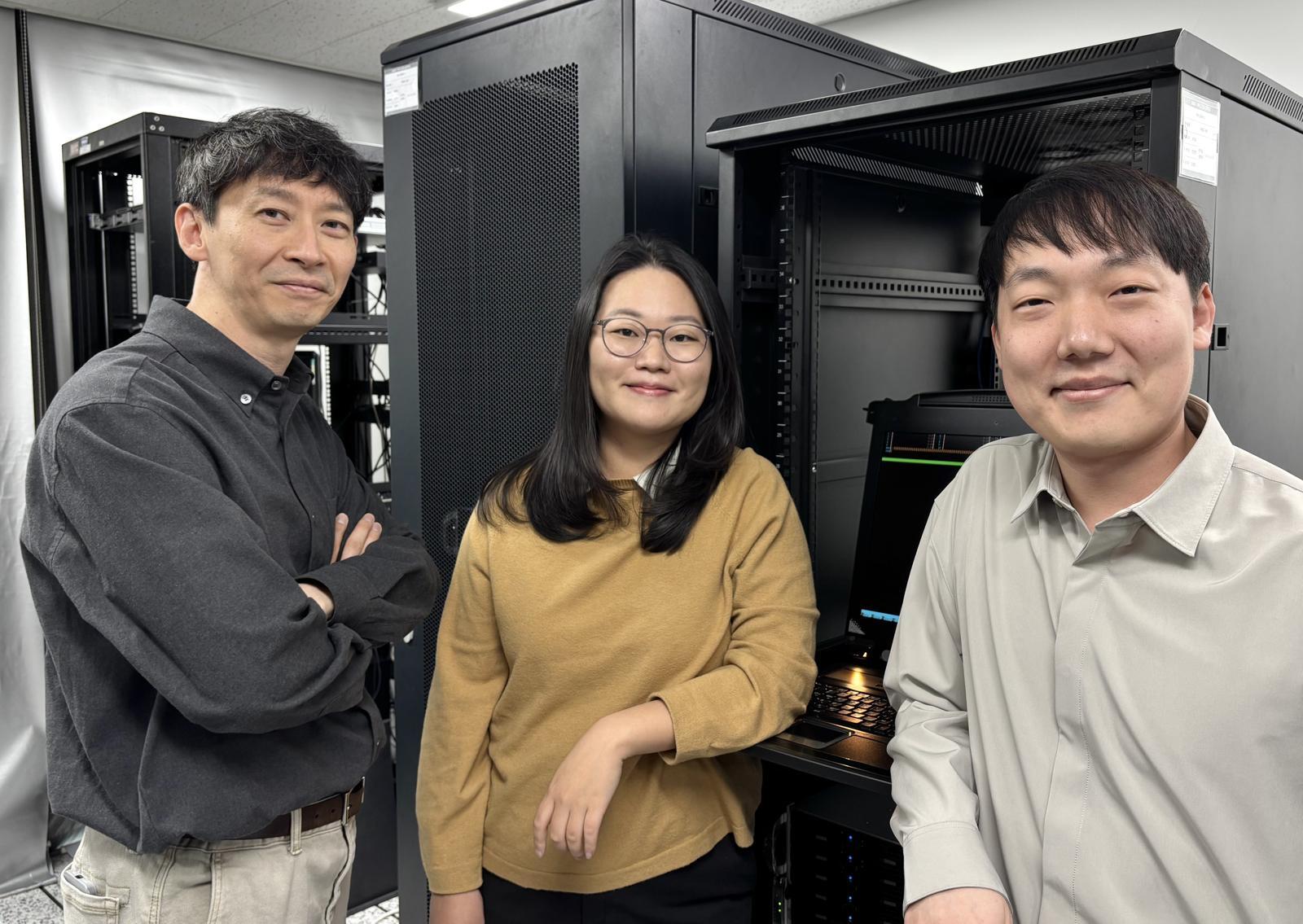
Professor Choi Jeong-gyun of the Department of Bio and Brain Engineering at KAIST (left) and his research team. Provided by KAIST
The KAIST research team has developed an artificial intelligence (AI)-based anticancer vaccine design technology capable of creating “personalized cancer vaccines.” Unlike conventional anticancer drugs, in which an externally administered drug attacks cancer cells, an anticancer vaccine is a substance that educates immune cells in the body with information about cancer cells so that the immune system can attack the cancer. Currently, anticancer vaccines have only enabled a “one-time attack,” but if this technology is commercialized and applied to anticancer vaccines, it is expected to enhance long-term immunity against cancer cells.
On the 2nd, KAIST announced that the research team led by Professor Choi Jeong-gyun of the Department of Bio and Brain Engineering (in the photo) has developed an AI model that predicts neoantigens to which B cells respond, through joint research with NeogenLogic. Neoantigens are protein fragments derived from mutations in cancer cells, and at present, anticancer vaccines are manufactured by identifying neoantigens that elicit a response from T cells.
However, T cells, which serve as the “attackers” in the body’s immune system, have the limitation of only short-term memory, meaning that the effects of the vaccine do not last long. To overcome this, the team created an AI model that predicts neoantigens that also induce responses from B cells. While T cells focus on directly attacking cancer cells, B cells attack cancer cells and at the same time retain information about them for an extended period. The researchers expect that if an anticancer vaccine that educates B cells is commercialized using the AI model developed in this study, it will also be effective in preventing cancer recurrence.
This research was published in the international journal Science Advances on December 3 last year. Professor Choi said, “We are conducting preclinical development of a personalized cancer vaccine platform together with NeogenLogic,” adding, “Our goal is to enter clinical trials by 2027.”
Cho Yu-ra
AI-translated with ChatGPT. Provided as is; original Korean text prevails.
ⓒ dongA.com. All rights reserved. Reproduction, redistribution, or use for AI training prohibited.