“First Non-Korean Components to Supply Avionics Equipment” U.S. Shortlists K9 Self-Propelled Howitzer for Introduction Big Three Korean Shipbuilders Expected to Join ‘Golden Fleet’ Project Cooperation Likely to Deepen Across All Army, Navy, and Air Force Domains
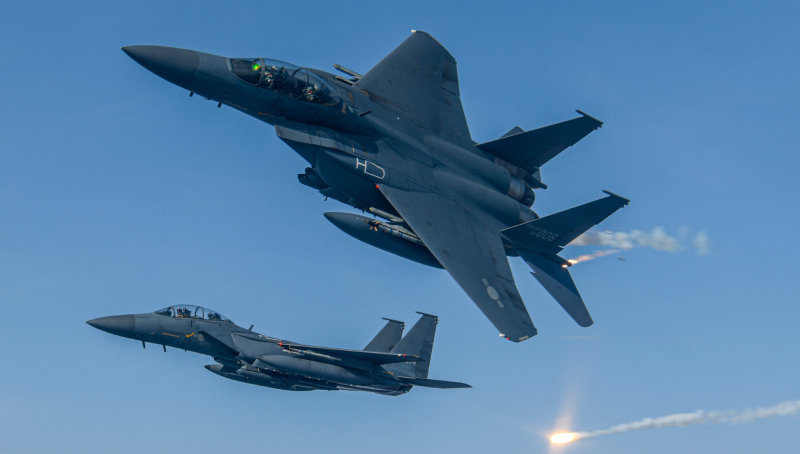
F-15K fighter
The United States, the world’s largest military power, which allocates close to KRW 1,000 trillion annually in defense spending, has been successively adopting equipment developed by Korean defense companies into its weapons lineup. Weapons from the Korean defense industry, which had mainly been exported to Eastern Europe, the Middle East, and Southeast Asia, are now expanding their market reach to the United States. In particular, unlike the past when exports were centered on naval vessels and ground weapons, recent exports have expanded into airborne weapon systems mounted on fighter jets, according to assessments.
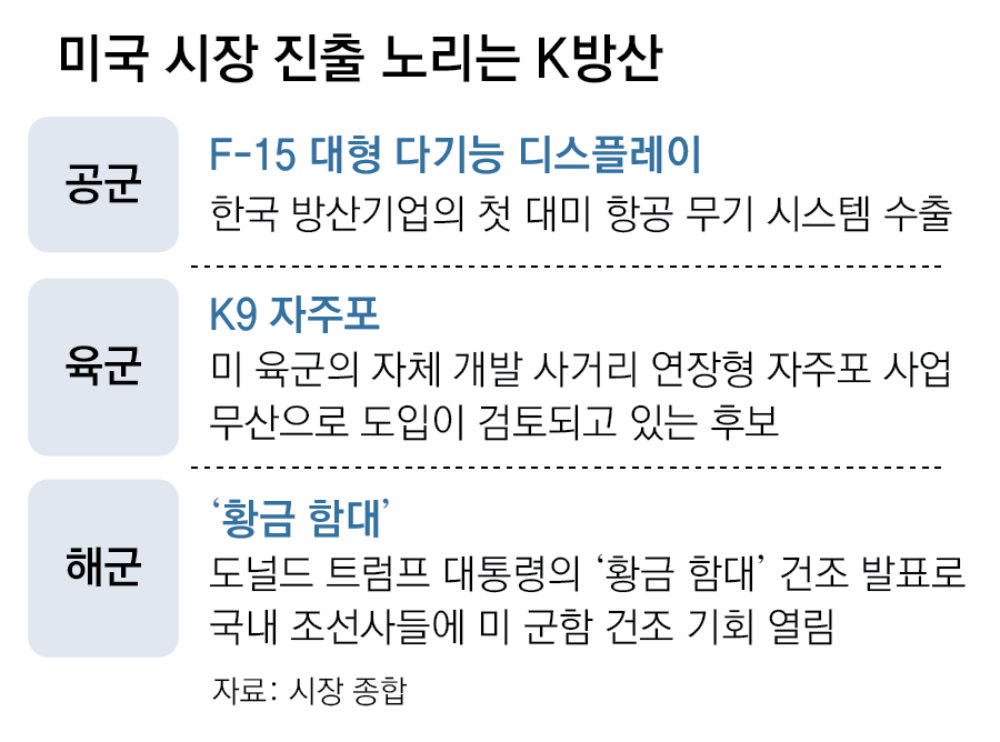
Boeing recently decided to equip its F-15 fighter jets with a Large Area Multi-Function Display (ELAD) manufactured by Hanwha Systems. The ELAD is an advanced avionics device that integrates and displays on a single screen various flight and combat information that was previously shown separately on analog instrument panels. Boeing stated, “This is the first time that avionics equipment, rather than simple aircraft parts, is being supplied from Korea.”
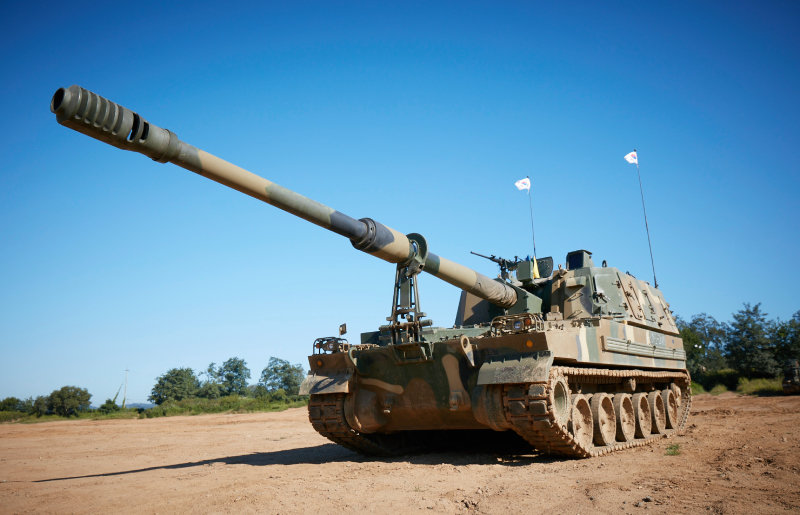
K9 self-propelled howitzer
The self-propelled artillery system, a main export item of the Korean defense industry, is also one of the Korean defense products that the United States is considering introducing. After the U.S. Army-led Extended Range Cannon Artillery (ERCA) development program was canceled for failing to meet performance standards such as durability, the K9 self-propelled howitzer emerged as an alternative candidate. It is reported that the U.S. military is currently reviewing whether the long-barrel technology it had been developing can be applied to and utilized with the K9 self-propelled howitzer.
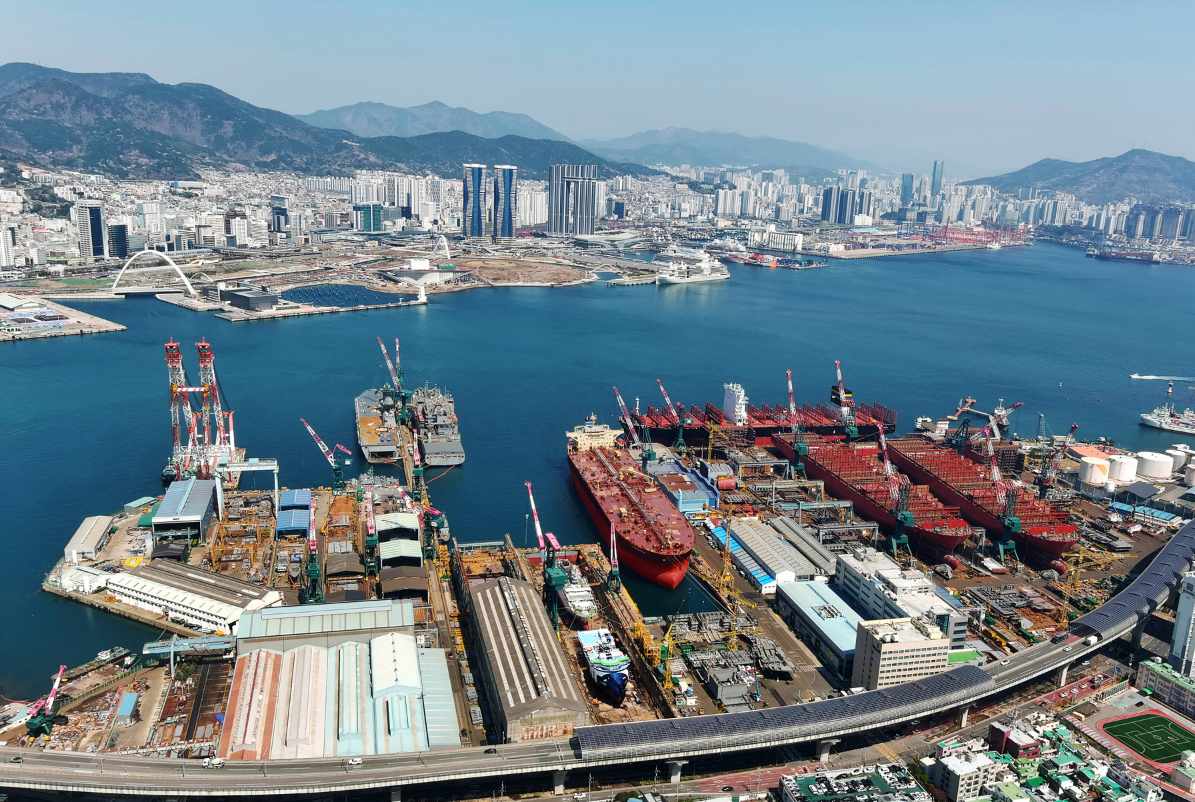
With U.S. President Donald Trump announcing the “Golden Fleet” construction plan on the 22nd of this month (local time), a path has opened for Korean shipbuilders to directly participate in U.S. naval vessel construction. There are also projections that not only HD Hyundai and Hanwha but even Samsung Heavy Industries could enter the U.S. warship construction business through collaboration with U.S. defense shipbuilders. For its fleet modernization program, the U.S. Navy has requested a budget of USD 47.4 billion (about KRW 68.47 trillion) for next year alone. In the longer term, local projections indicate that the U.S. Navy will invest a total of around USD 1 trillion (about KRW 1,445 trillion) in the modernization project.
In particular, Hanwha plans to accelerate its engagement in the U.S. naval vessel construction program, as President Trump referred to it as a “good company” and stated that he would jointly produce frigates, which are escort ships. The shipbuilding industry understands that Hanwha is already preparing to apply for a Facility Clearance (FCL), a security certification required for warship construction, for its Philly Shipyard in the United States.
HD Hyundai is also a key partner in the U.S. Navy’s shipbuilding program. In addition, the U.S. Navy has selected Huntington Ingalls’ Ingalls Shipbuilding as the “lead shipyard” to build new frigates. HD Hyundai signed a technical cooperation and joint construction partnership with Huntington Ingalls in April this year and has already agreed to jointly build next-generation logistics support vessels. Accordingly, it is considered highly likely that Huntington Ingalls will also cooperate with HD Hyundai when building combat vessels such as frigates.
There are also predictions that Samsung Heavy Industries may enter the U.S. naval vessel construction market. Samsung Heavy Industries has signed a memorandum of understanding (MOU) with U.S.-based Vigor Marine Group and is jointly conducting maintenance, repair, and overhaul (MRO) projects for U.S. Navy support ships. As U.S. naval vessel retrofitting and block construction are carried out at Vigor Marine’s “Vigor Swan Island” shipyard in Portland, there are expectations that Samsung Heavy Industries could participate jointly in U.S. Navy ship construction projects.
Lee Won-joo
AI-translated with ChatGPT. Provided as is; original Korean text prevails.
ⓒ dongA.com. All rights reserved. Reproduction, redistribution, or use for AI training prohibited.