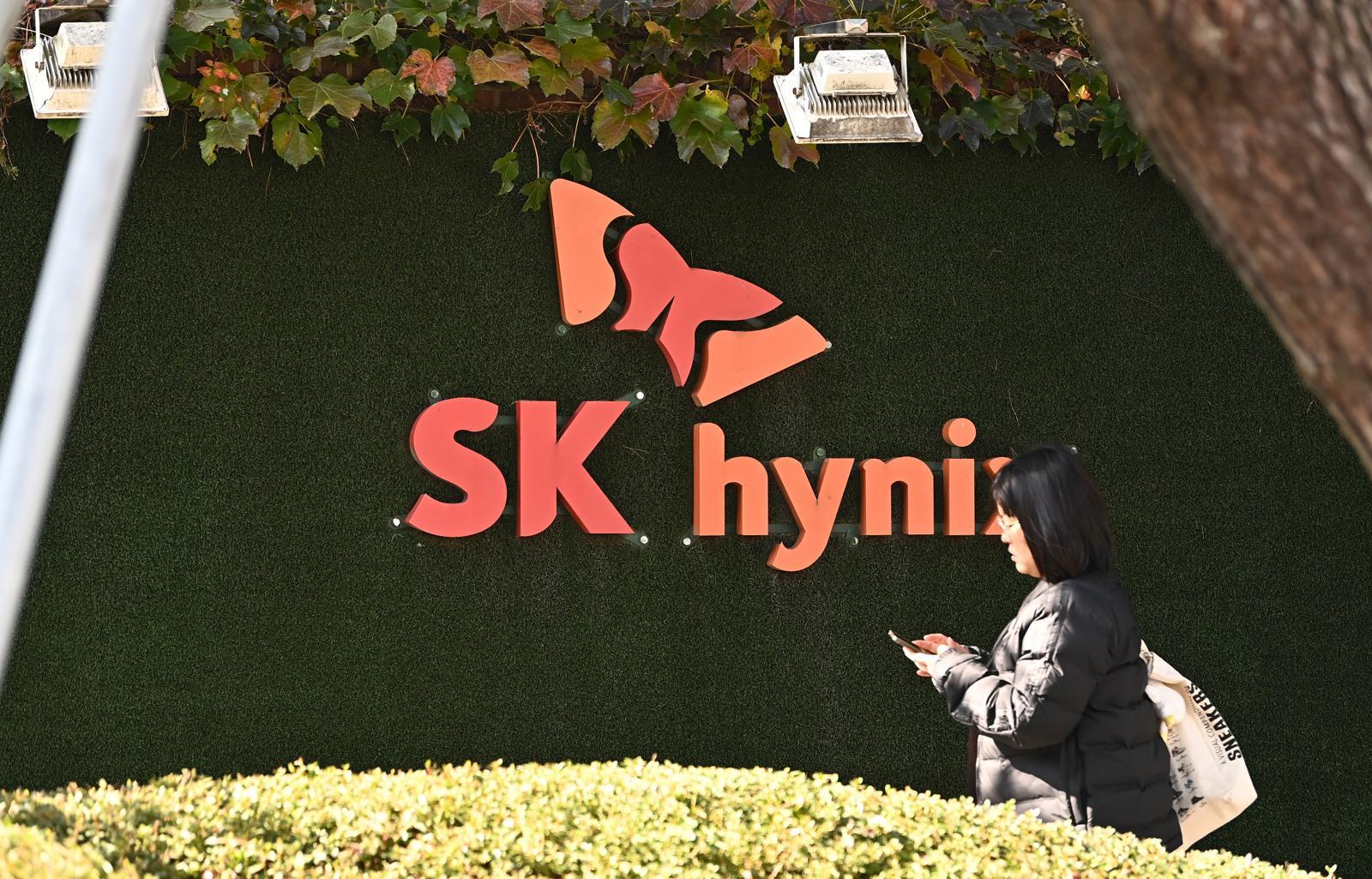
Leveraging the technological prowess it has built up in the HBM (high-bandwidth memory) market, SK hynix’s operating profit in the third quarter of this year exceeded KRW 10 trillion for the first time since the company was founded. SK hynix announced on the 29th that it posted third-quarter revenue of KRW 24,448.9 billion and operating profit of KRW 11,383.4 billion this year. The operating margin reached as high as 47%. The photo shows SK hynix’s headquarters in Icheon, Gyeonggi Province, on this day. 2025.10.29. [Icheon=Newsis]
The Financial Times (FT) of the United Kingdom selected SK hynix as one of this year’s winning stocks. While global equity markets fluctuated sharply amid rising geopolitical risks, U.S. President Donald Trump’s tariff war, and both hype and bubble concerns over artificial intelligence (AI), companies in precious metal mining, semiconductors, and defense enjoyed substantial gains. In contrast, consumer goods companies and chemical firms facing deepening oversupply struggled.
On the 22nd (local time), the FT cited Mexico’s Fresnillo, whose share price surged 425%, as one of this year’s winning stocks. Fresnillo, which mines gold and silver, is Mexico’s second-largest gold producer and the world’s largest silver producer. As global geopolitical uncertainty increased this year, prices of gold and silver, both considered safe-haven assets, rose in tandem, lifting Fresnillo’s share price. Based on futures prices, gold jumped about 70% and silver about 138% this year.
The dominant theme in global stock markets this year was AI. AI semiconductor bellwether Nvidia became the first company in the world to surpass a market capitalization of USD 5 trillion (about KRW 7,422 trillion). As AI investment competition intensified among Google, Microsoft (MS), Amazon, Meta and others, supplies of memory semiconductors tightened and memory prices soared in the second half of the year (July–December). As a result, SK hynix’s share price climbed 234% this year. While Samsung Electronics and Taiwan’s TSMC saw their share prices rise 108% and 36%, respectively, SK hynix, which is leading the high-bandwidth memory (HBM) market, recorded an even steeper ascent.
With the war in Ukraine dragging on, defense companies also reported strong results. In particular, as European countries embarked on rearmament and allocated large-scale budgets, the share price of Germany’s Rheinmetall rose 151% this year. Korean defense firms, including Hanwha Aerospace (176%) and Hyundai Rotem (268%), also secured large export contracts in Europe and the Middle East, driving sharp gains in their share prices.
The fortunes of companies related to virtual assets diverged. The FT listed Robinhood, a comprehensive financial platform that sells stocks, virtual assets, and derivatives, among this year’s winning stocks. Robinhood’s share price rose 228% this year. After expanding its market share with “zero commissions” as a key strength, Robinhood broadened into a range of products and scaled up its business.
By contrast, MicroStrategy, the company that holds the largest amount of Bitcoin in the world, was named a losing stock, with its share price falling 43% this year. Formerly a software (SW) company, MicroStrategy shifted its business structure in 2020 by accumulating and holding large quantities of Bitcoin. At the end of last year, when Trump won the presidential election and virtual asset prices soared, MicroStrategy’s assets and share price both rose in tandem. However, as Bitcoin’s price volatility increased—hitting an all-time high of USD 126,000 in October and then surging into the USD 80,000 range—MicroStrategy’s share price remained sluggish.
British WPP, the world’s largest advertising company, whose business model deteriorated with the rise of AI and whose share price fell 57% this year, was also cited as a losing stock. Lululemon, which produces premium sportswear such as yoga wear, also saw its share price drop 45% this year. Concerns over inflation driven by tariffs under the Trump administration increased price sensitivity, while competition in the premium sportswear market intensified.
ⓒ dongA.com. All rights reserved. Reproduction, redistribution, or use for AI training prohibited.
Popular News