Racing to Break Through the ‘Memory Wall’ at a Major U.S. Tech Event Samsung Electronics: Three-pronged approach across speed, capacity, and storage Micron: A rack-level shared ‘memory pool’
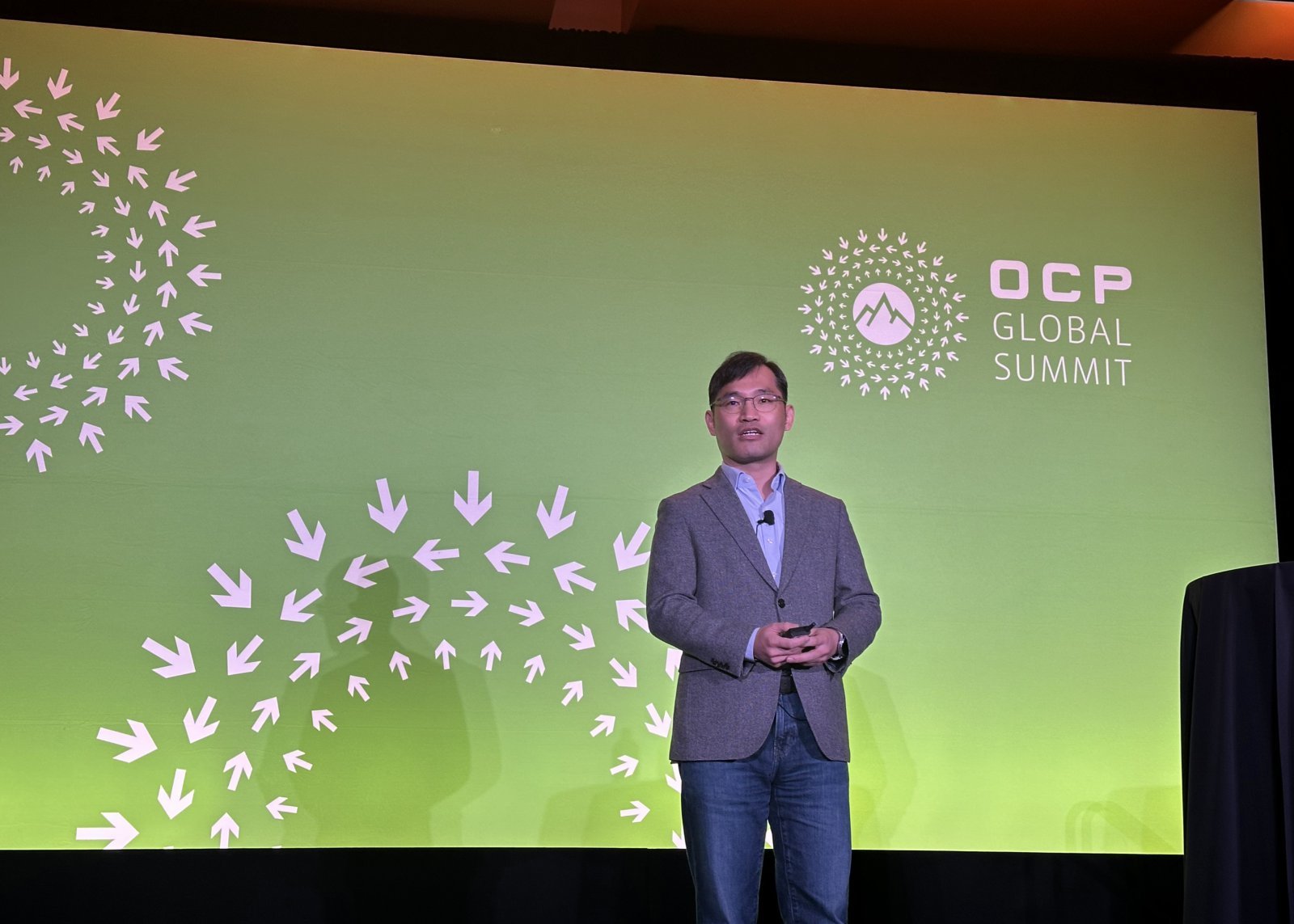
On the 12th (local time), Shim Ho-jun, Executive Vice President of the AE Team in the Memory Business Division of Samsung Electronics’ DS Division, gives a presentation at “OCP Global Summit 2026” held in Silicon Valley, United States. Provided by Samsung Electronics
Samsung Electronics and SK hynix unveiled side by side their next-generation memory strategies to overcome the “memory wall,” a bottleneck in artificial intelligence (AI) infrastructure, at a global data center technology event in the United States. Competition for leadership is expanding beyond high-bandwidth memory (HBM) to the entire memory hierarchy, including Compute Express Link (CXL) and solid-state drives (SSD).
On the 13th, Samsung Electronics and SK hynix announced that they participated in “OCP Global Summit 2026,” which opened on the 12th (local time) in San Jose, California, United States, and presented their blueprints for next-generation AI memory.
The memory industry is currently facing the so-called “memory wall,” a limitation in which overall system performance declines because memory cannot keep up with the computation speed of AI chips. Both companies put forward CXL technology as a common key to solving this problem. CXL is a technology that connects computing devices such as central processing units (CPU) and graphics processing units (GPU) with memory and other components at high speed. In particular, it enables “memory pooling,” in which multiple servers share memory resources, allowing idle memory to be allocated efficiently without waste.
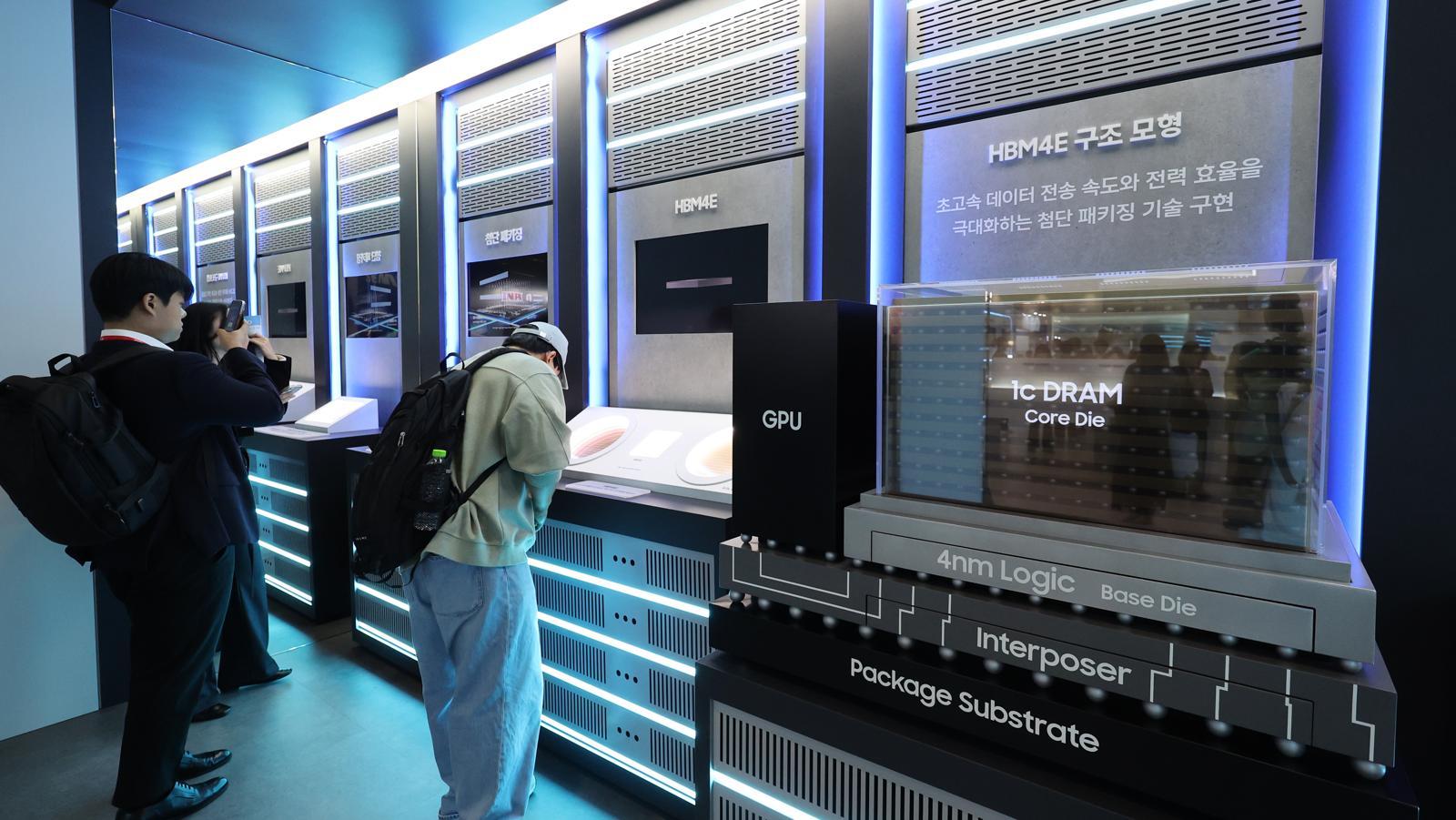
At this event, Samsung Electronics presented three approaches centered on speed, capacity, and storage. It plans to increase computation speed with next-generation HBM such as “HBM5,” expand insufficient memory capacity by adding it through CXL technology, and store growing volumes of data in next-generation SSDs. The company also highlighted the outcomes of its collaboration with global partner AMD by demonstrating CXL-based memory expansion technology in a real-world environment.
The solution proposed by SK hynix is the “Memory-Centric AI Rack System (MARS).” A rack is a server structure that houses AI chips and memory and serves as the basic building block of a data center. Until now, memory has been treated as an auxiliary component to AI chips, so racks have been designed mainly around the chips. As a result, even if one server lacked memory, it could not use surplus memory in other servers. MARS uses CXL to detach memory that has been tied to GPUs and convert it into a “memory pool” shared by the entire rack. Because memory can be flexibly allocated as needed, capacity shortfalls can be filled without purchasing additional expensive AI chips.
Lee Dong-hun
AI-translated with ChatGPT. Provided as is; original Korean text prevails.
ⓒ dongA.com. All rights reserved. Reproduction, redistribution, or use for AI training prohibited.