Four AI leaders including LeCun discuss ‘Global Cooperation in Industrial AI’
“Opportunity for Korea with its manufacturing base and talent”… urge on-site deployment and swift decisions
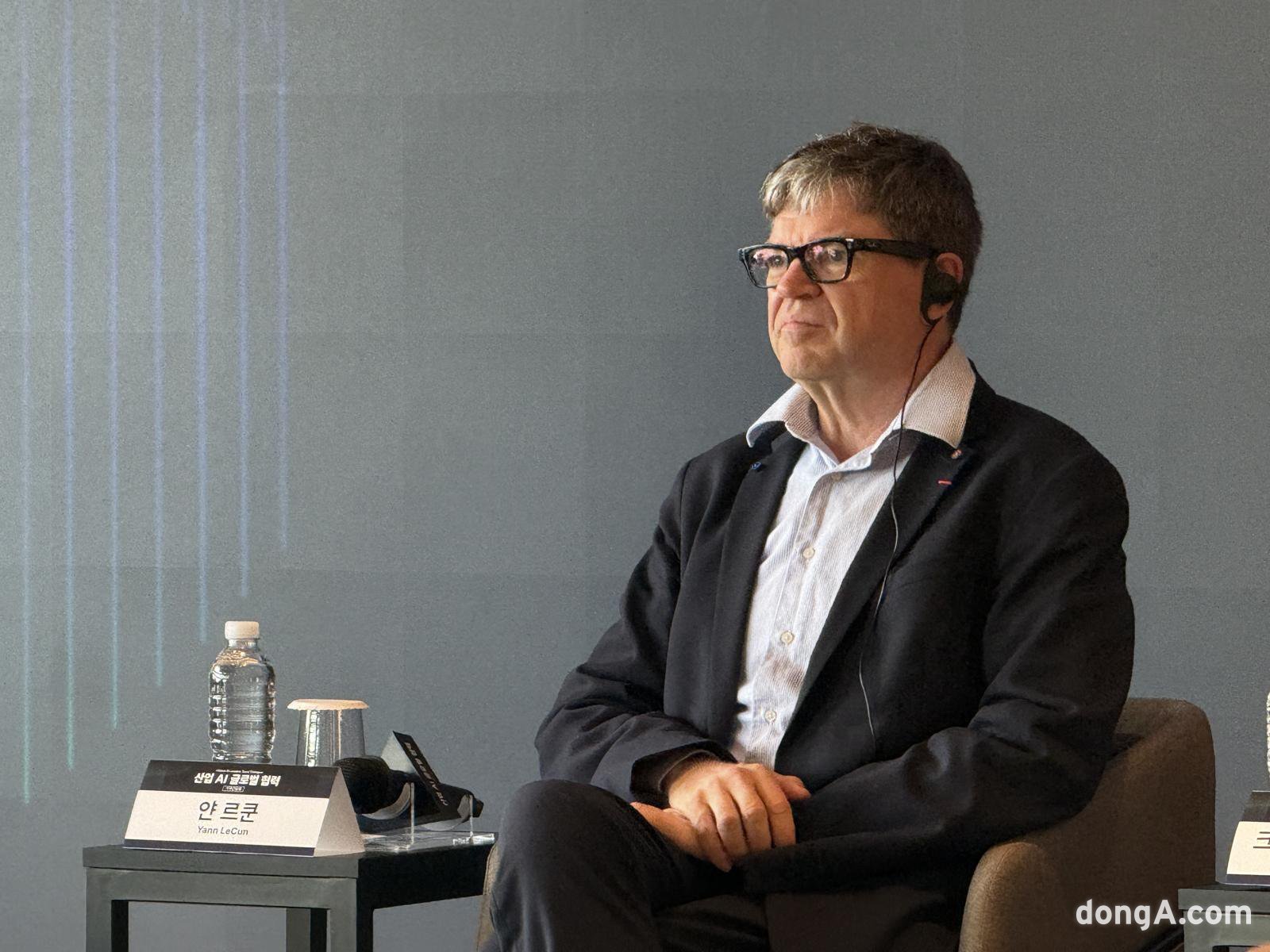
Chairman Yann LeCun speaking at the “Global Cooperation on Industrial AI” press conference held at the Westin Josun Seoul on the 12th. Photo = Reporter Kim Young-ho rladudgh2349@donga.com
“Another revolution is coming in AI. It will take place in physical AI and robotics, and Korea has the opportunity to play a key role in that revolution.”Global artificial intelligence (AI) leaders, including Yann LeCun, founder and chairman of AMI Labs, assessed that Korea, with its manufacturing base and core talent pool, can seize leadership in the competition for physical AI.
Chairman LeCun made these remarks at the “Global Cooperation on Industrial AI” press conference held on the 12th at the Westin Josun Seoul in Jung-gu, Seoul.
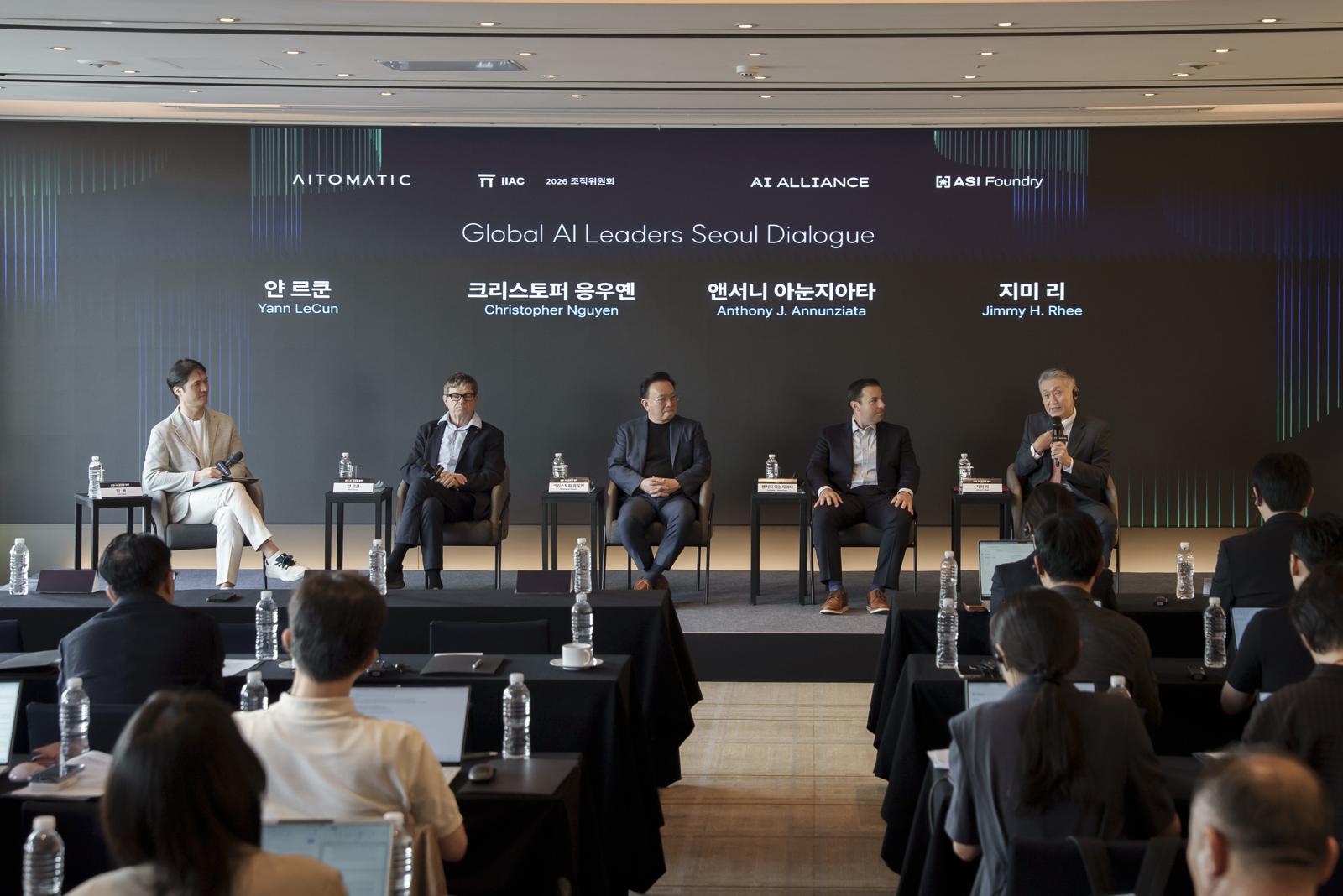
The press conference was organized to discuss the role of Korean manufacturing as AI competition spreads into industrial fields such as manufacturing, semiconductors, and energy. The event was also attended by Christopher Nguyen, CEO of Aitomatic, Anthony Annunziata, co-chair of the AI Alliance, and Jimmy Lee, chairman of ASI Foundry.
● LeCun: “The key to physical AI is the world model… Korea already has the talent”
Scene from the press conference
LeCun argued that the next AI revolution will come from “physical AI that understands the real world.” He pointed out that while large language models (LLMs) are powerful in narrow domains such as coding or mathematics, robots still cannot perform tasks at the level of a 10-year-old child.
LeCun said, “Ten years have passed and the driving data collected from humans now literally amounts to millions of hours, yet we still do not have fully autonomous vehicles,” adding, “We need world models and other concepts as well.”
The world model is a kind of “digital brain” in which AI predicts the next outcome based on the current state of the world. Whereas LLMs are trained to predict the next word, world models are trained to predict how the state of the world will change depending on an action. This enables AI to plan in advance the sequence of actions needed to achieve a goal.
LeCun presented JEPA (Joint Embedding Predictive Architecture) as a method to implement world models. JEPA is a learning method for AI that he proposed in 2022. Instead of finely reconstructing the masked parts of images or videos, it predicts them using abstract semantic representations, allowing AI to efficiently learn how the world works.
● “More important than trillion-dollar investments are field deployment and rapid decision-making”
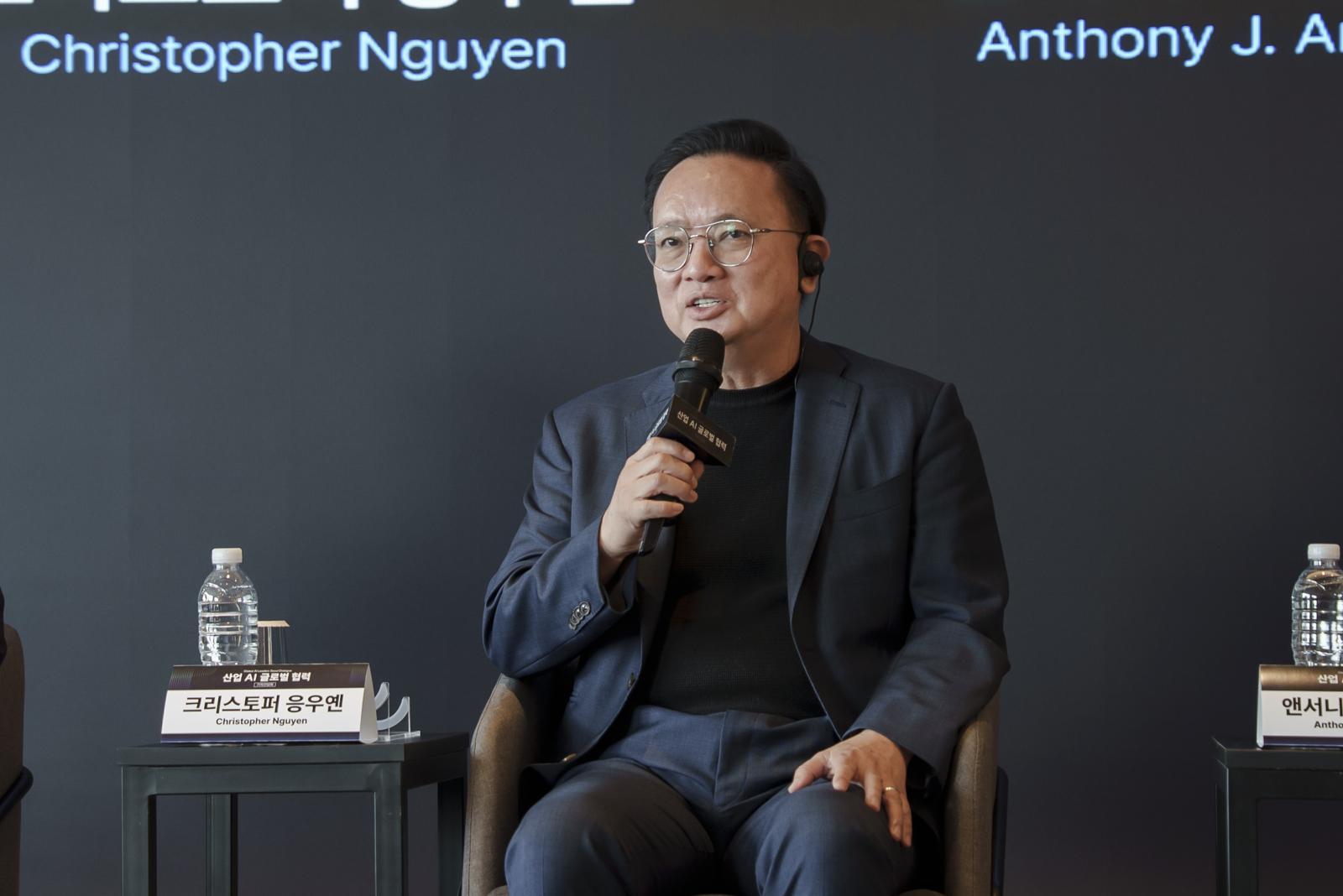
Christopher Nguyen, CEO of Aitomatic
LeCun cited Korea’s manufacturing base and research workforce as its strengths. “Talent is the most difficult resource for any country to secure,” he said, adding, “Korea already has that.”
LeCun stressed the need for a research ecosystem that attracts overseas talent. Citing Singapore, which has drawn in Chinese talent, and Japan, which has shifted toward favoring immigration of highly educated workers, he said, “Korea is right next to China, so it is certainly worth trying.”
Advice was also given that, to leverage Korea’s strengths, it must first change its investment direction and decision-making speed.
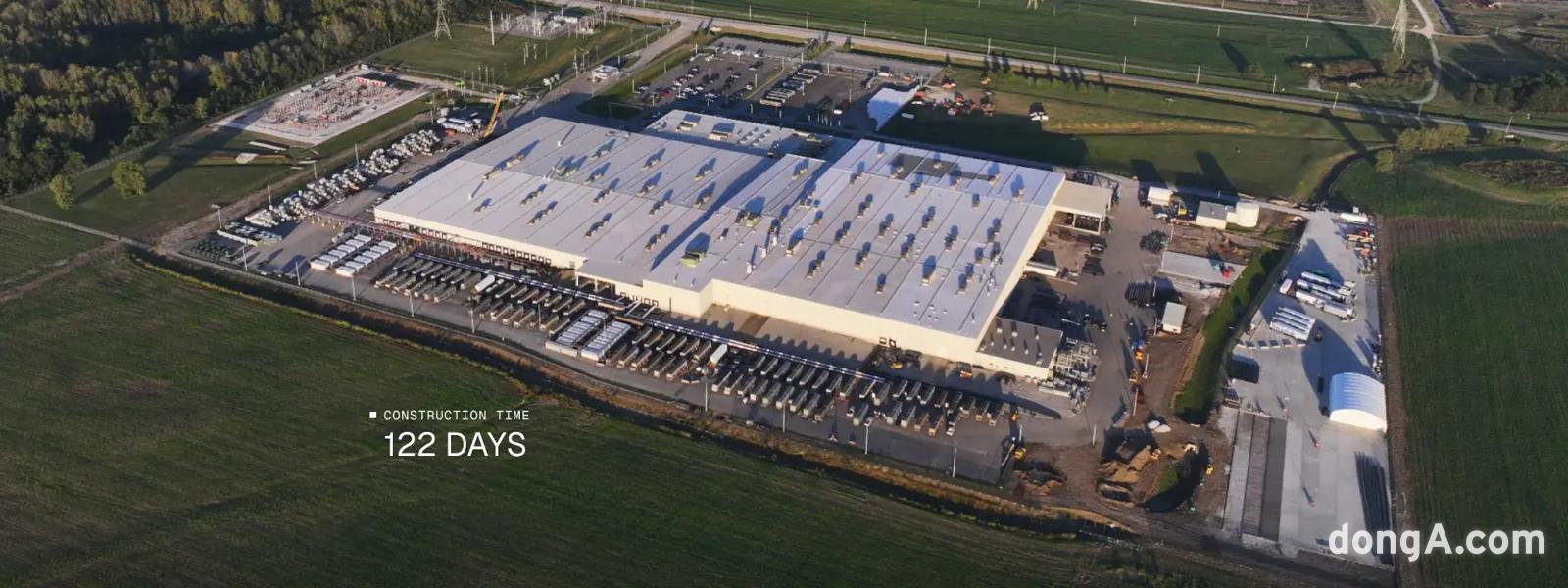
Nguyen advised against directly copying the U.S.-style competition of companies such as OpenAI and Anthropic, which invest trillions of dollars to build data centers. He argued that the massive computing resources poured into developing superintelligence could be a waste from Korea’s standpoint.
Instead, Nguyen recommended rapidly deploying AI in the field. “In the past, systems that did not learn were built and only configuration values had to be set,” he said. “Now, when AI systems are deployed, value is created by the fact that they learn the environment like humans.”
Lee pointed to the practice among Korean companies of demanding perfect information before making decisions, saying, “This is a time when the cost of hesitating is far greater than the cost of moving boldly.”
ⓒ dongA.com. All rights reserved. Reproduction, redistribution, or use for AI training prohibited.
Popular News