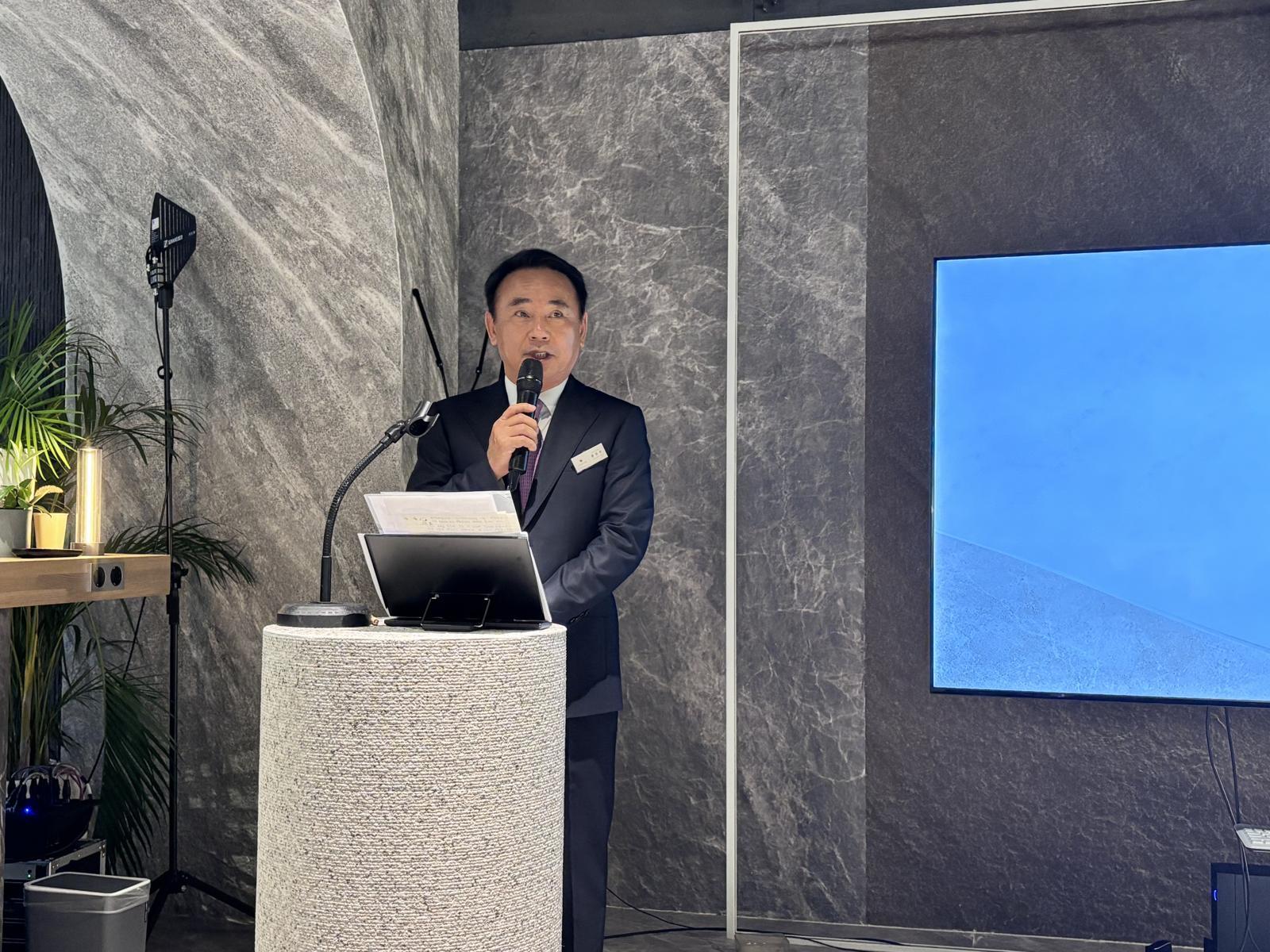
On 10 September, CEO Yoon Kyung-sun of Noirium presents Noirium’s business vision at the official brand launch event held at Noi Gallery in Gangdong-gu, Seoul. Hwang So-young, Reporter fangso@donga.com
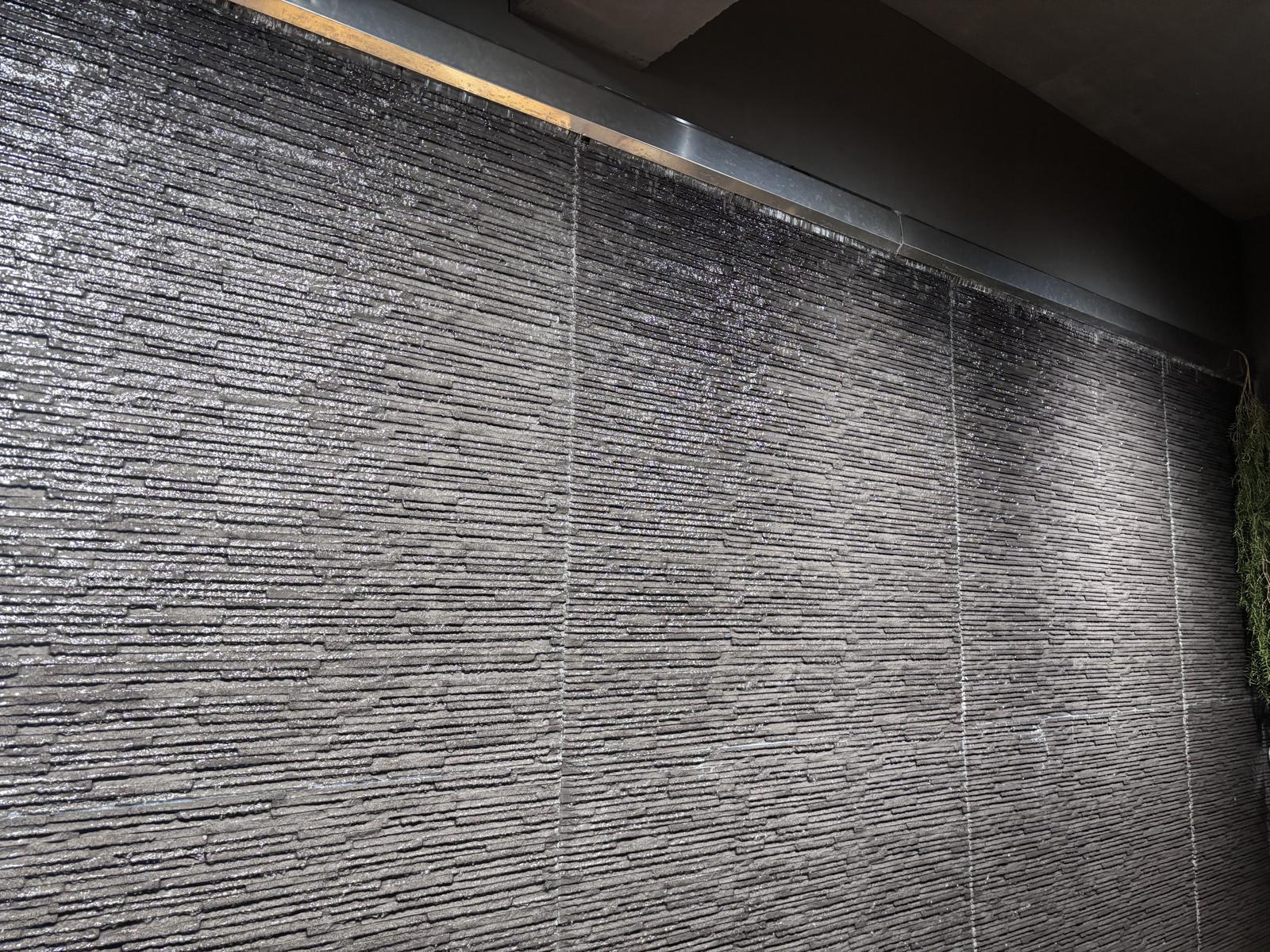
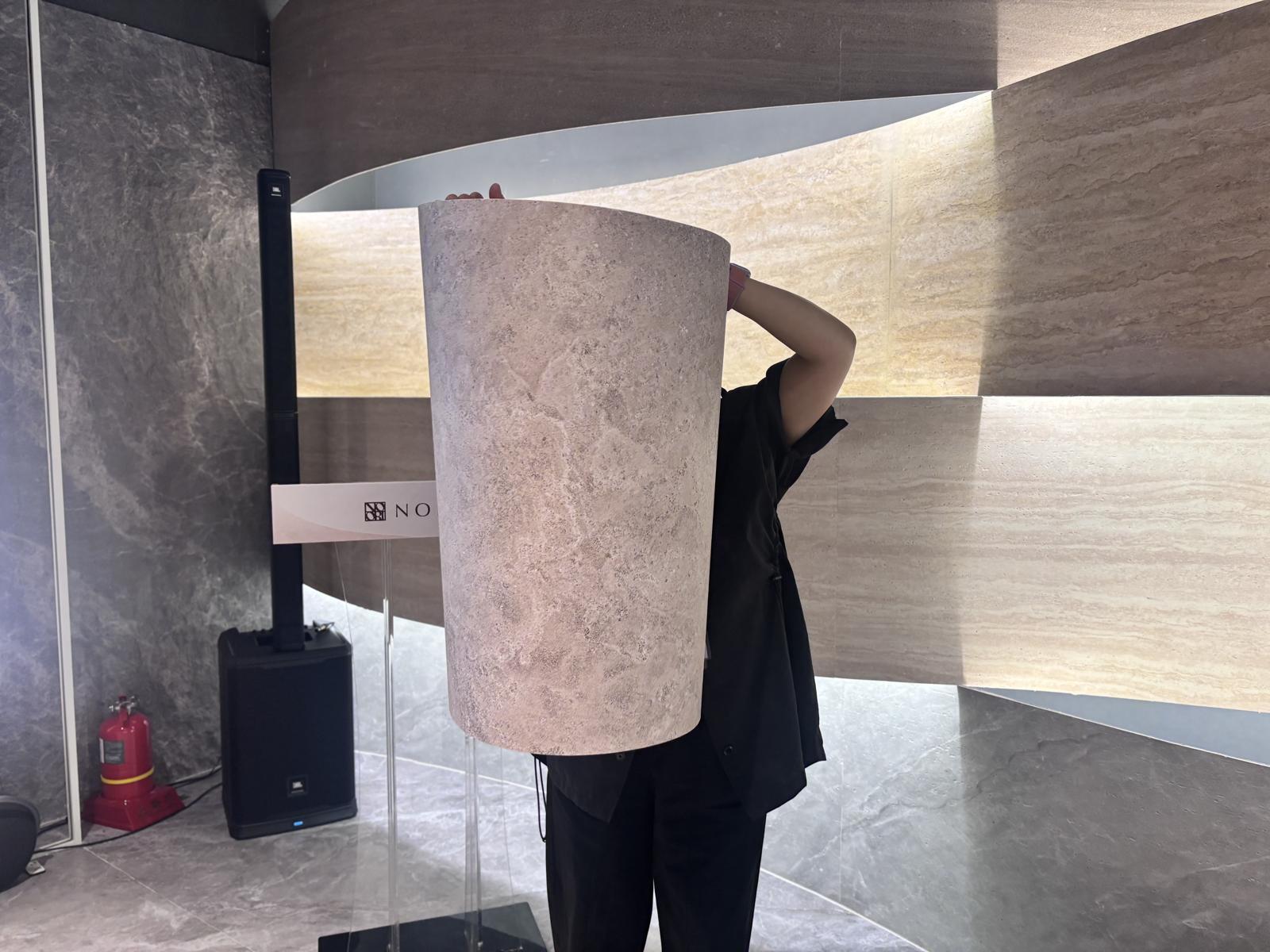
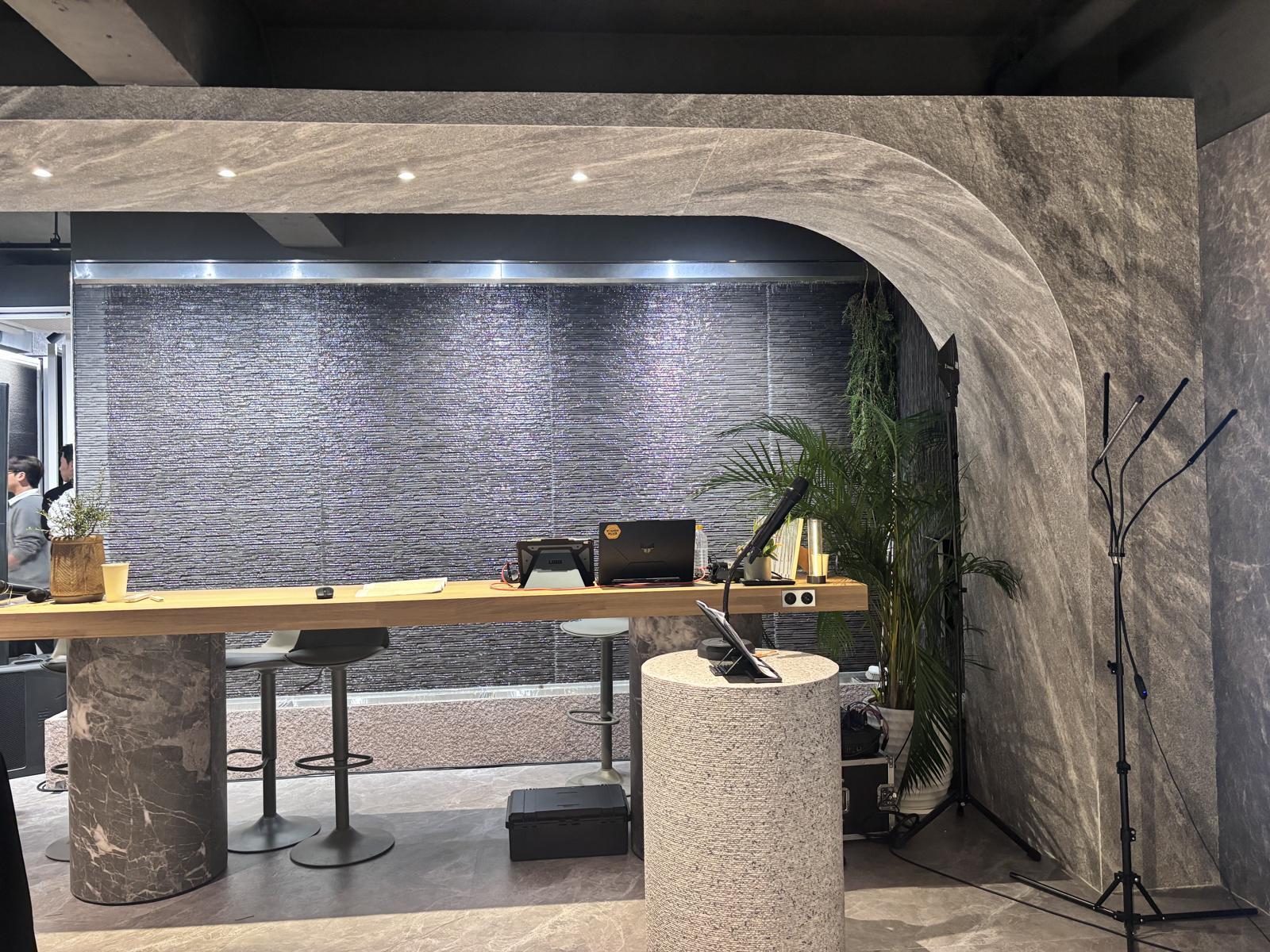
When a large slab that looked like marble was lifted, it proved lighter than expected. At only a few millimeters thick, it bent by hand, and the thinner products could even be rolled up and carried like wallpaper. On one side of the gallery, a “waterfall wall” was installed, with water continuously flowing down a wall finished in the same material.
Noirium held an official brand launch event on 10 September at “Noi Gallery Gangdong” in Gangdong-gu, Seoul, and unveiled its flexible stone “Noi Stone.” Flexible stone is an architectural finishing material that reproduces the texture of natural stone while being thin and lightweight enough to bend.
Noirium focused on the fact that although conventional natural stone offers unique texture and a luxurious appearance, its heavy weight and hardness require separate cutting and processing to apply it to curved or irregular spaces. The company also saw the need to address the high labor requirements and cost burden for transport and installation.
CEO Yoon Kyung-sun of Noirium said, “We have been developing flexible stone through joint Korea-China development for the past two years,” adding, “This is the first official introduction of Noirium as an architectural finishing material brand and an opportunity to present our vision for the architectural finishing materials market we aim to build going forward.”
3–4 kg per m²…less than one-tenth the weight of marble
Noi Stone uses quartz sand as its main raw material. A mineral base layer using quartz sand, calcium carbonate and other minerals is formed on a backing layer made of fiberglass mesh, after which digital ink is used to reproduce the color and pattern of stone, and a surface protection coating is applied. The company refers to this as its “mineral layered process.”
The total thickness is about 2–4 mm. While reproducing a range of natural stone textures such as marble, travertine, and slate, the weight has been reduced to about 3–4 kg per m². Panels can be manufactured in large sizes up to 1,200 × 3,000 mm.
The biggest difference from marble was apparent when lifting it by hand. Even large Noi Stone panels were light enough to be carried by one person. Based on the typical density of marble at about 2,700 kg/m³, a 20 mm-thick product weighs approximately 54 kg per m². On the same area basis, Noi Stone weighs less than one-tenth that of marble. Thinner products can be rolled up like wallpaper for transport.
Thinner products can be cut with a utility knife or scissors without the need for a large stone cutting machine. Thanks to its flexible properties, it can be applied not only to flat walls but also to circular columns and curved wall surfaces. The applicable curvature radius disclosed by the company is around R200 mm.
A “waterfall wall” created using Noi Stone at Noi Gallery in Gangdong-gu, Seoul. Noi Stone’s water absorption ratio is said to be low at around 0.3%. Hwang So-young, Reporter fangso@donga.com
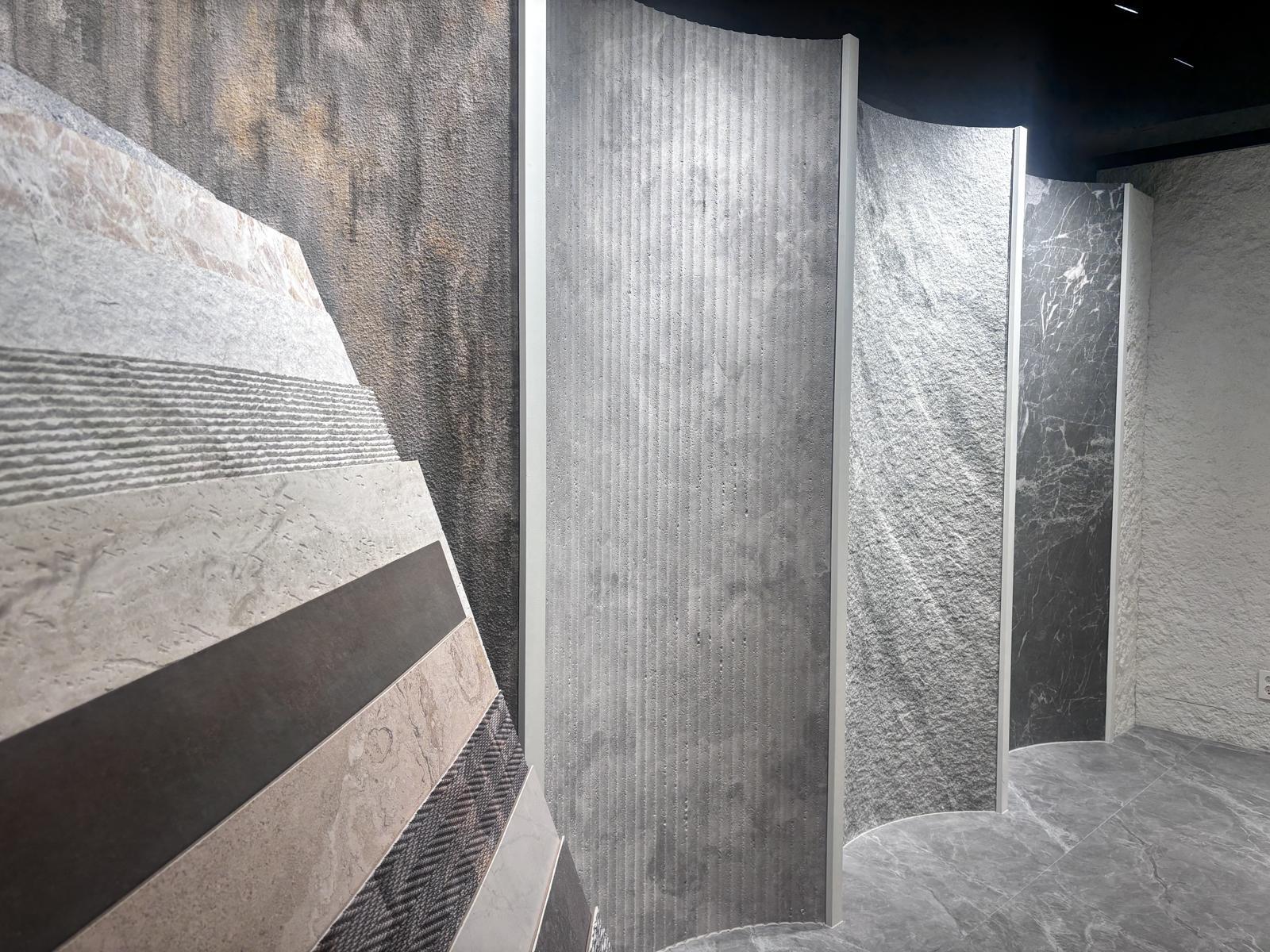
In the gallery tour that day, spaces leveraging the features of Noi Stone were visible throughout. Circular columns, wave-shaped art walls, curved counters, and arched walls were all finished with Noi Stone. In areas where natural stone would have required processing to match the curvature, thin Noi Stone panels were simply bent and installed.
The “waterfall wall,” where water runs down the entire wall surface, also stood out. Water continuously flowed down the stone-textured wall surface with irregularities. Noirium said Noi Stone has a water content of around 0.3%, with low moisture absorption, allowing it to be used as both an interior and exterior finishing material.
The company stated that it has obtained semi-noncombustible certification from an accredited testing institution, and its indoor air quality performance has received the highest HB Mark rating. It also reported that four major heavy metals and other harmful substances were not detected. It has secured 14 types of test reports related to quality requirements currently demanded at construction sites.
A staff member rolls up and lifts the thin and flexible stone “Noi Stone.” Hwang So-young, Reporter fangso@donga.com
30–50% cheaper than marble…shorter construction periods
Another competitive advantage Noirium highlights is price and workability. According to the company, Noi Stone’s material and installation costs are about 30–50% lower compared with natural marble.
The light weight also reduces the burden of transport and installation. While natural marble typically requires multiple workers for transport and installation, Noi Stone panels can be handled by one or two workers, according to the company. Using large panels also reduces the need to piece together many small slabs and decreases joint lines, which is advantageous for shortening construction periods.
Currently, Noi Stone is produced and supplied through an agreement with a vendor in the Guangzhou region of China. In Korea, inventory is held at a logistics warehouse in Yeosu, and the company has established a supply system that can bring in designs not in stock to Korea within about two weeks after ordering.
Noirium plans to expand its domestic production system going forward. The concurrently introduced “Noi Board” is a finishing material using MDF, magnesium board, and calcium silicate board, and the company intends to equip production facilities to respond to customer-requested designs and quantities.
Target applications for Noi Stone include not only new buildings but also the remodeling market for aging structures with heavy load constraints. It can be used in commercial spaces such as hotel lobbies, bar counters, and lounges, as well as in residential spaces such as living room art walls and bathroom and kitchen walls. For some products, the company is also developing applications that use their light-transmitting characteristics when backlit, such as bar tables, stages, and indirect lighting.
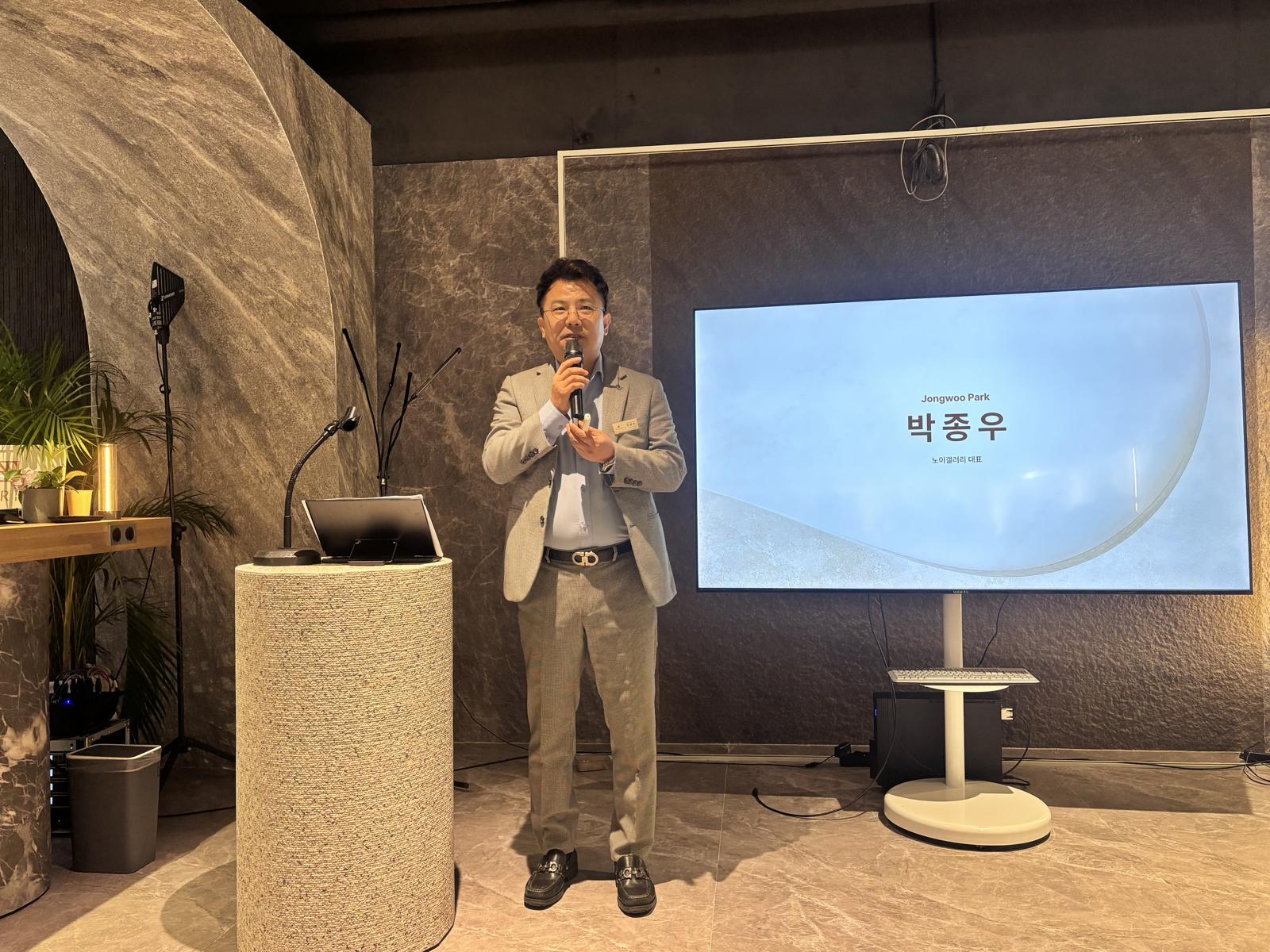
Park Jong-woo, head of Noi Gallery, explains the products at the brand launch event held at Noi Gallery in Gangdong-gu, Seoul, on 10 September. Hwang So-young, Reporter fangso@donga.com
From product sales to installation…two-year defect warranty
Noirium plans to build a system that manages not only product supply but also installation. To reduce variability in finish quality depending on the installer, the company is preparing a separate training program and will grant licenses to installers who complete a set period of training.
Park Jong-woo, head of Noi Gallery Gangdong, said, “Differences in finish quality depending on the installer at each site can become a problem for both consumers and the company,” adding, “We aim to establish a system that not only supplies the materials but also takes responsibility for the installation results.” The product defect warranty period is two years.
A curved wall created using Noi Stone at Noi Gallery. Hwang So-young, Reporter fangso@donga.com
An exhibition space created with Noi Stone at Noi Gallery in Gangdong-gu, Seoul. The thin and flexible characteristics of Noi Stone are used on circular columns and curved walls. Hwang So-young, Reporter fangso@donga.com
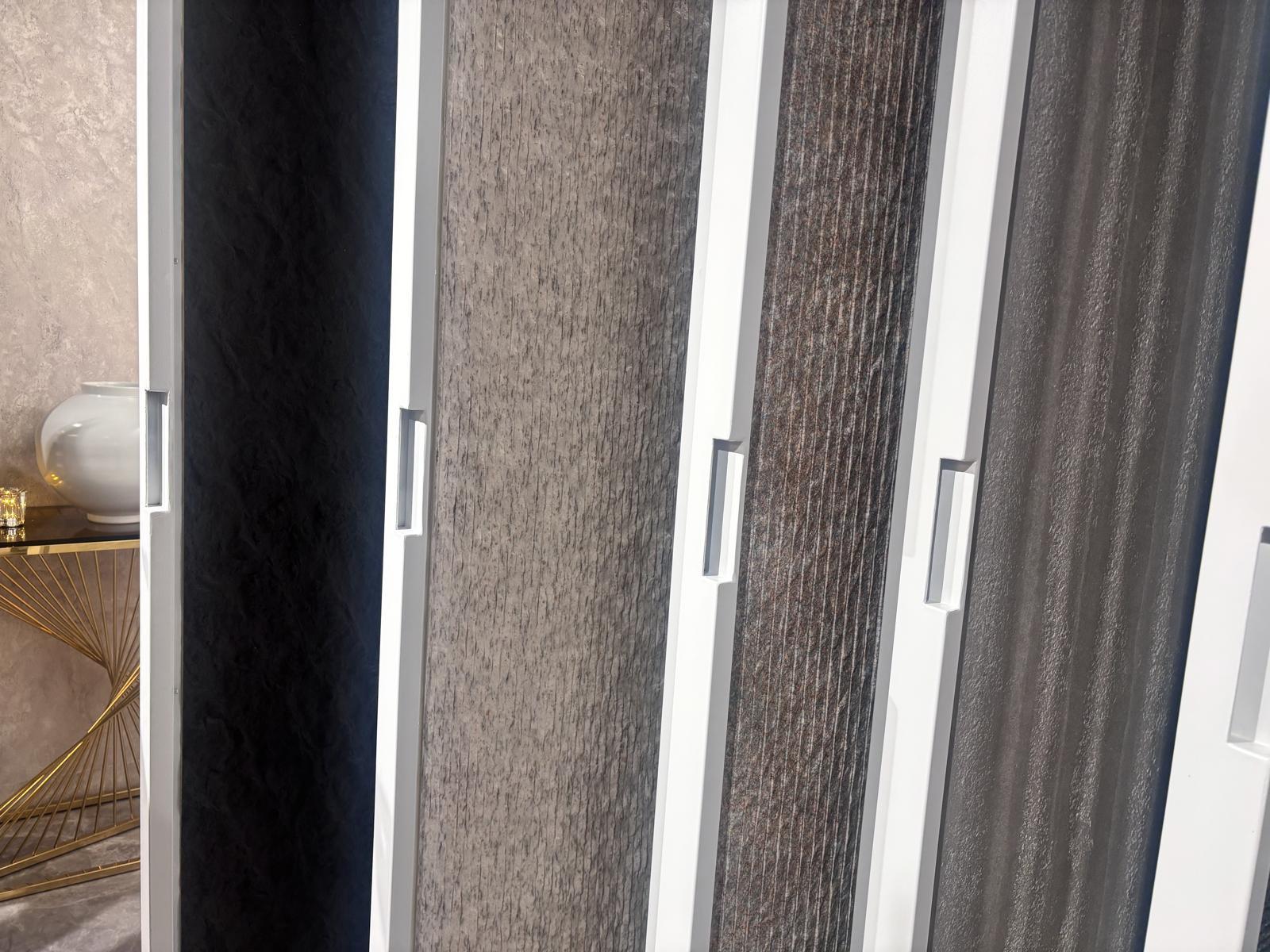
Flexible stone “Noi Stone” on display at Noi Gallery in Gangdong-gu, Seoul. Hwang So-young, Reporter fangso@donga.com
ⓒ dongA.com. All rights reserved. Reproduction, redistribution, or use for AI training prohibited.
Popular News