NeuroGreen’s Digital Dementia Therapeutic ‘Saerogreen’
Lee Jin-han, Medical Correspondent and Physician
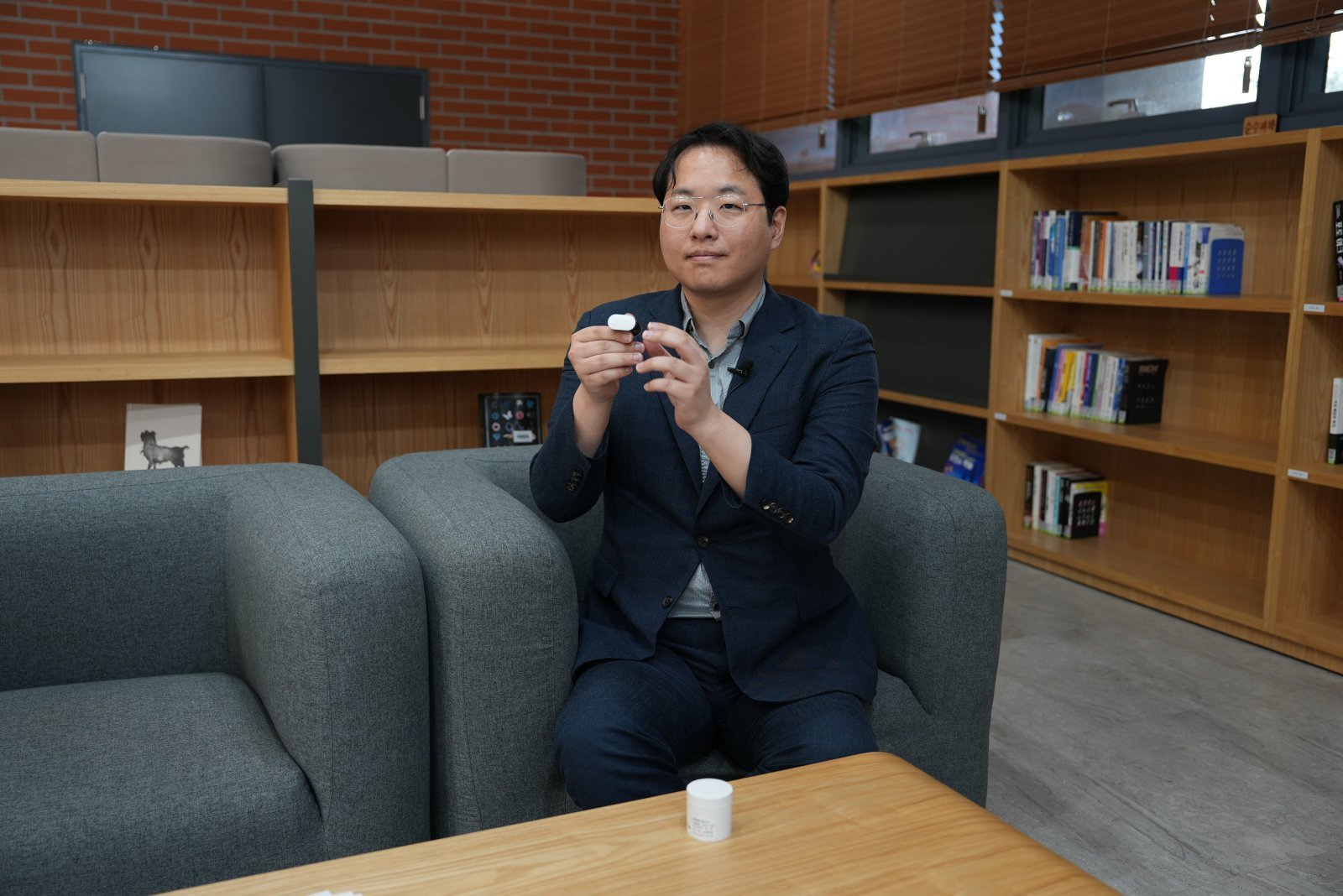
Dementia is a disease with a high incidence, affecting 1 out of every 10 people aged 65 and older in Korea. Although an Alzheimer’s dementia treatment has recently been introduced, its effect is limited to slowing the rate of cognitive decline, and it does not restore function. For vascular dementia, there is effectively no clearly proven treatment available. To overcome these limitations, a company has developed an electroceutical that treats dementia through nerve stimulation rather than drugs. That company is NeuroGreen, based in Seoul BioHub. The Korea Economic Daily spoke with Jeong Ji-hoon, CEO of NeuroGreen (photo), about its dementia-treatment electroceutical “CEROGRIN.”
― What kind of company is NeuroGreen?
“NeuroGreen develops technologies for diagnosing and treating intractable neurological disorders. It was founded in 2021 by neuroscience researchers and is focused on translating research outcomes into real-world clinical applications. In particular, the company is researching technologies that regulate abnormal states of the body through neural stimulation, and is currently concentrating its main efforts on developing dementia treatment technologies.”
― What are the limitations of existing dementia treatments? “Dementia is a disease for which various treatments are being developed, but fundamental cure remains difficult. Even the Alzheimer’s dementia drug recently approved by the U.S. Food and Drug Administration (FDA) only slows the rate of cognitive decline; it does not restore patients to normal. In particular, in the case of vascular dementia, which is the second most common type of dementia, there is virtually no treatment whose efficacy has been clearly demonstrated. Because there are evident limitations in current therapies, a new therapeutic approach is needed.”
― What kind of product is CEROGRIN? “CEROGRIN is an electroceutical for dementia treatment that noninvasively stimulates the vagus nerve to promote cerebrospinal fluid circulation. Recent studies highlight impairment of cerebrospinal fluid circulation and the resulting accumulation of waste in the brain as one of the common causative mechanisms across various forms of dementia. NeuroGreen has developed a technology that alleviates dementia symptoms by activating this ‘brain cleaning’ process through vagus nerve stimulation. CEROGRIN is a wearable device designed for long-term use without surgery, stimulating the branches of the vagus nerve distributed around the ear.”
― What differentiates CEROGRIN? “CEROGRIN uses a proprietary method that stimulates the vagus nerve with magnetic electrodes placed on the front and back of the ear. It is also designed based on stimulation parameters whose effects have been verified in animal studies, thereby facilitating cerebrospinal fluid circulation and removal of waste in the brain. Whereas conventional brain-stimulation therapies directly stimulate the brain to induce temporary activation, CEROGRIN focuses on improving the brain environment itself. Going forward, there is potential for synergy when used in combination with drug therapies.”
― How is CEROGRIN used? “CEROGRIN is a clip-shaped wearable device that can be easily used in daily life. After switching it on and attaching it to the ear, it noninvasively stimulates the area where the vagus nerve is distributed. Because it does not directly stimulate sensory nerves, most users do not experience particular pain or discomfort during use. In medical institutions, stimulation intensity, frequency, and other parameters can be set via a separate control station, and once configured, patients can simply wear the device and use it conveniently in everyday settings.”
― What are the company’s future goals? “From its early days, NeuroGreen was selected for support programs at Seoul BioHub and has received extensive assistance, including research equipment and facilities, support for commercialization, and training on regulatory issues. NeuroGreen is currently conducting clinical research on the dementia indication for CEROGRIN. The clinical study is being carried out with funding from the Ministry of Science and ICT and support from the Global Top Research Group Program of the National Research Council of Science & Technology. Based on this, the company plans to pursue regulatory approval for the device as a medical device. It also aims to expand its applications to a wide range of areas, including neuropathic pain, treatment-resistant depression, obesity, and addictive disorders. The goal is to evolve into a next-generation personalized therapeutic platform that combines biosignal measurement technologies with electroceuticals.”
ⓒ dongA.com. All rights reserved. Reproduction, redistribution, or use for AI training prohibited.
Popular News