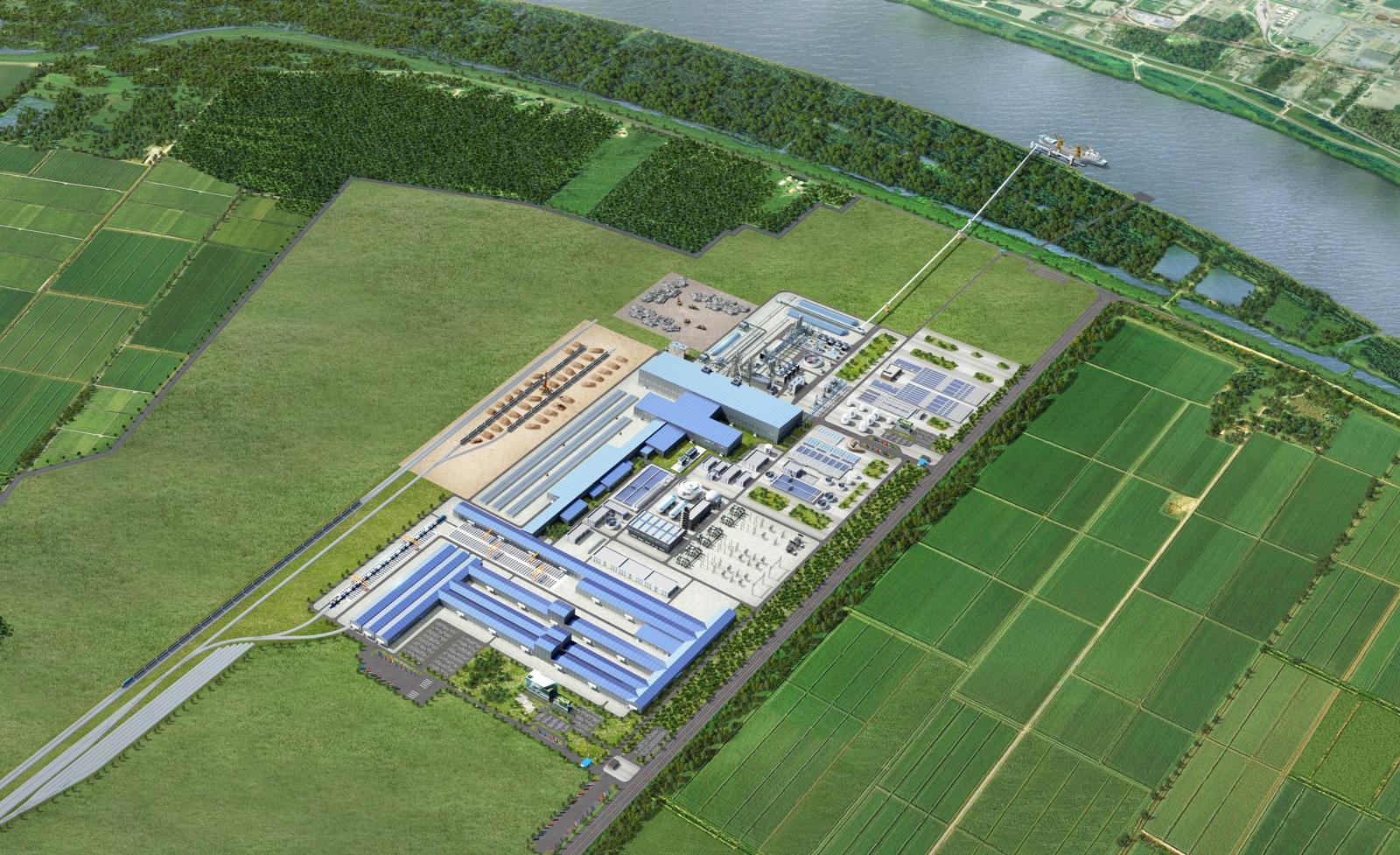
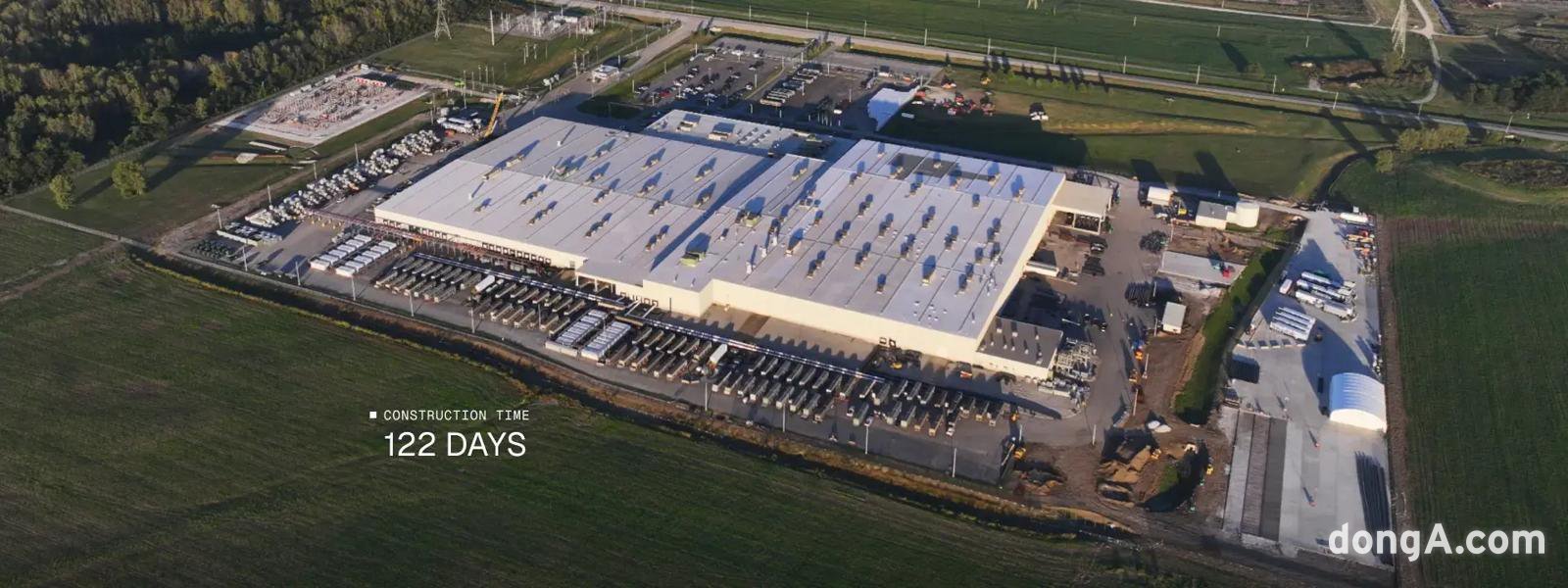
A bird’s-eye view of the Hyundai Steel–POSCO Louisiana (HPLS) electric arc furnace steel mill located on the Mississippi River in Donaldsonville, Louisiana, USA. Provided by Hyundai Steel
“When our steel mill begins producing steel sheets in the first quarter of 2029 (January to March), it will become the world’s first steel mill to reduce carbon emissions by 70% compared with blast furnace operations.”
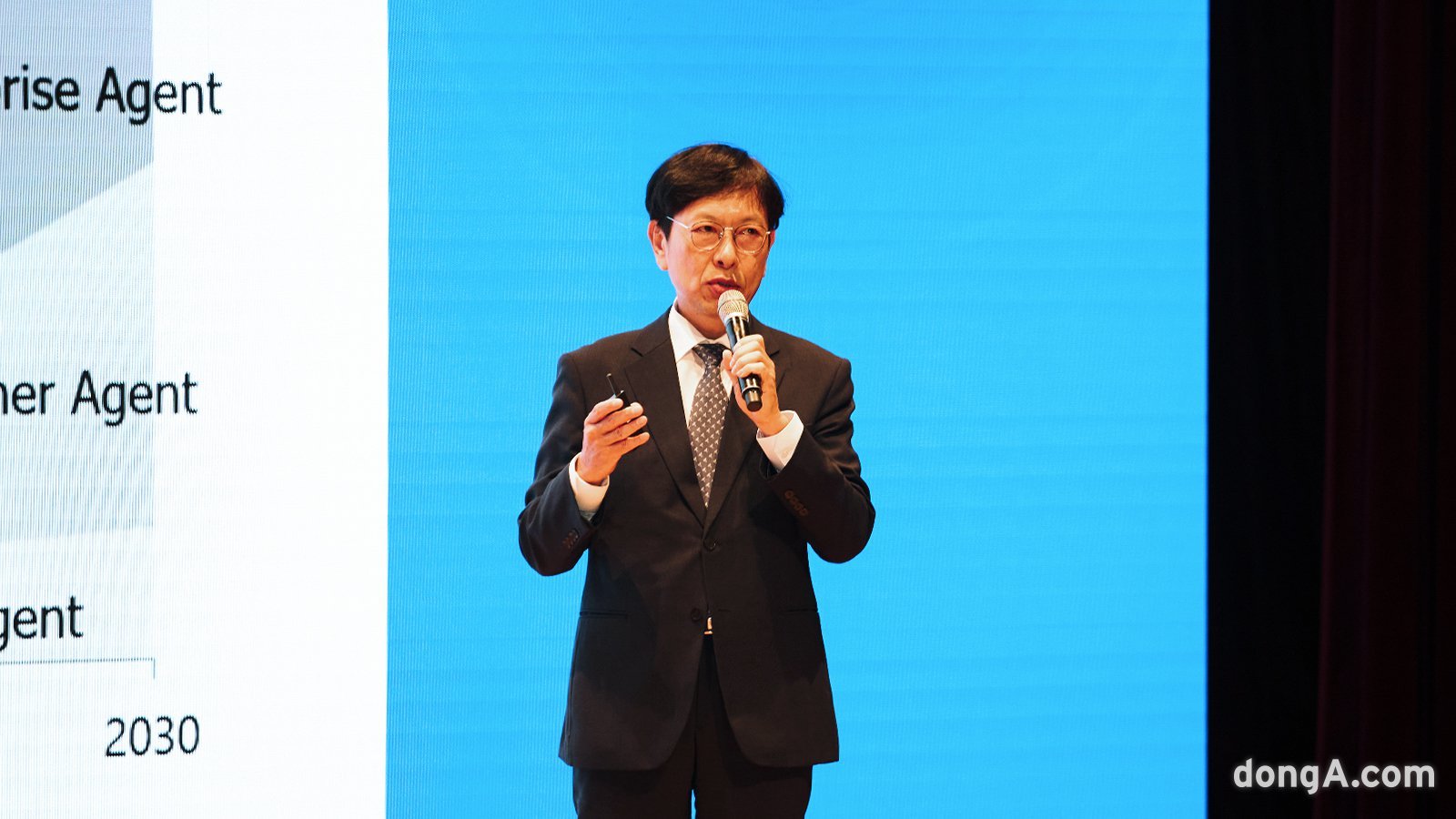
Hyunghin Kim, CEO of the Hyundai Steel–POSCO Louisiana (HPLS) joint venture, stressed this point on 3 September (local time) at a press briefing held at the HPLS electric arc furnace steel mill site in Donaldsonville, Louisiana, USA. The mill is the Korean steel industry’s first steel plant in the United States, being built by Hyundai Steel and other Hyundai Motor Group affiliates together with POSCO Group at a cost of USD 5.8 billion (approximately KRW 7.8 trillion). It is also the first integrated electric arc furnace steel mill in the United States.
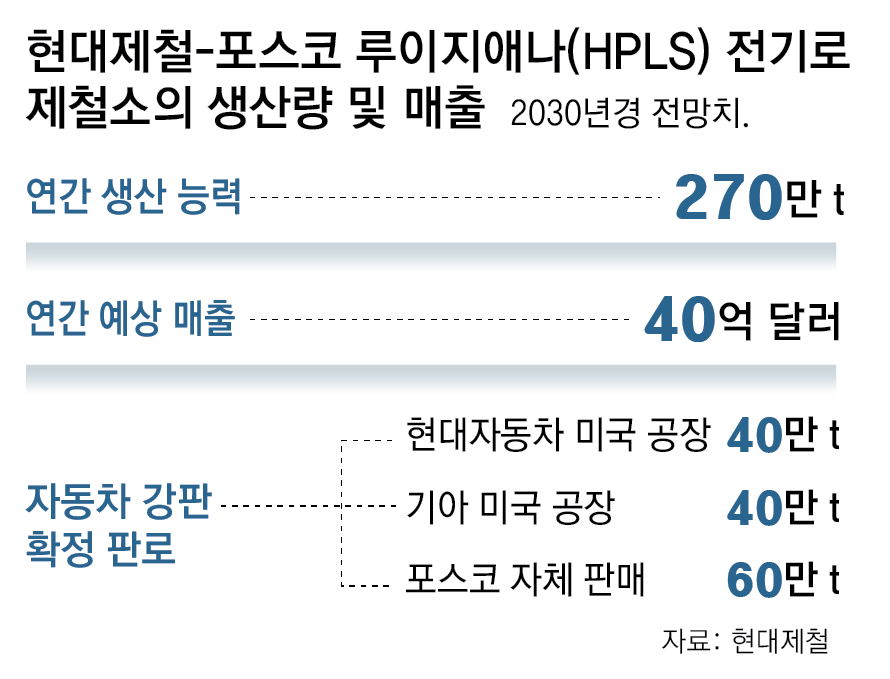
After operations begin, the plant is projected to generate annual sales of USD 4.0 billion (approximately KRW 5.4 trillion). This is because it will produce high value-added low-carbon steel and will have a large-scale annual production capacity of 2.7 million tons. In particular, the flagship product—automotive steel sheets, which will account for two-thirds of total output—is expected to sell smoothly as global automakers seek to procure such materials to implement carbon neutrality policies.
● “Will become a game changer for low-carbon steel sheets”
Hyundai Steel’s decision to disclose projected sales even before construction starts reflects its strong confidence in the products to be manufactured. As countries worldwide work to reduce carbon emissions, the global automotive industry is seeking a breakthrough in body steel sheets for carbon reduction, recognizing that a shift to electric vehicles alone is insufficient. Taeckjun Kim, head of Hyundai Steel’s North America Steel Business Strategy Office (Managing Director), who also attended the event, expressed confidence, saying, “HPLS will become a ‘game changer’ in the field of low-carbon steel sheets.”
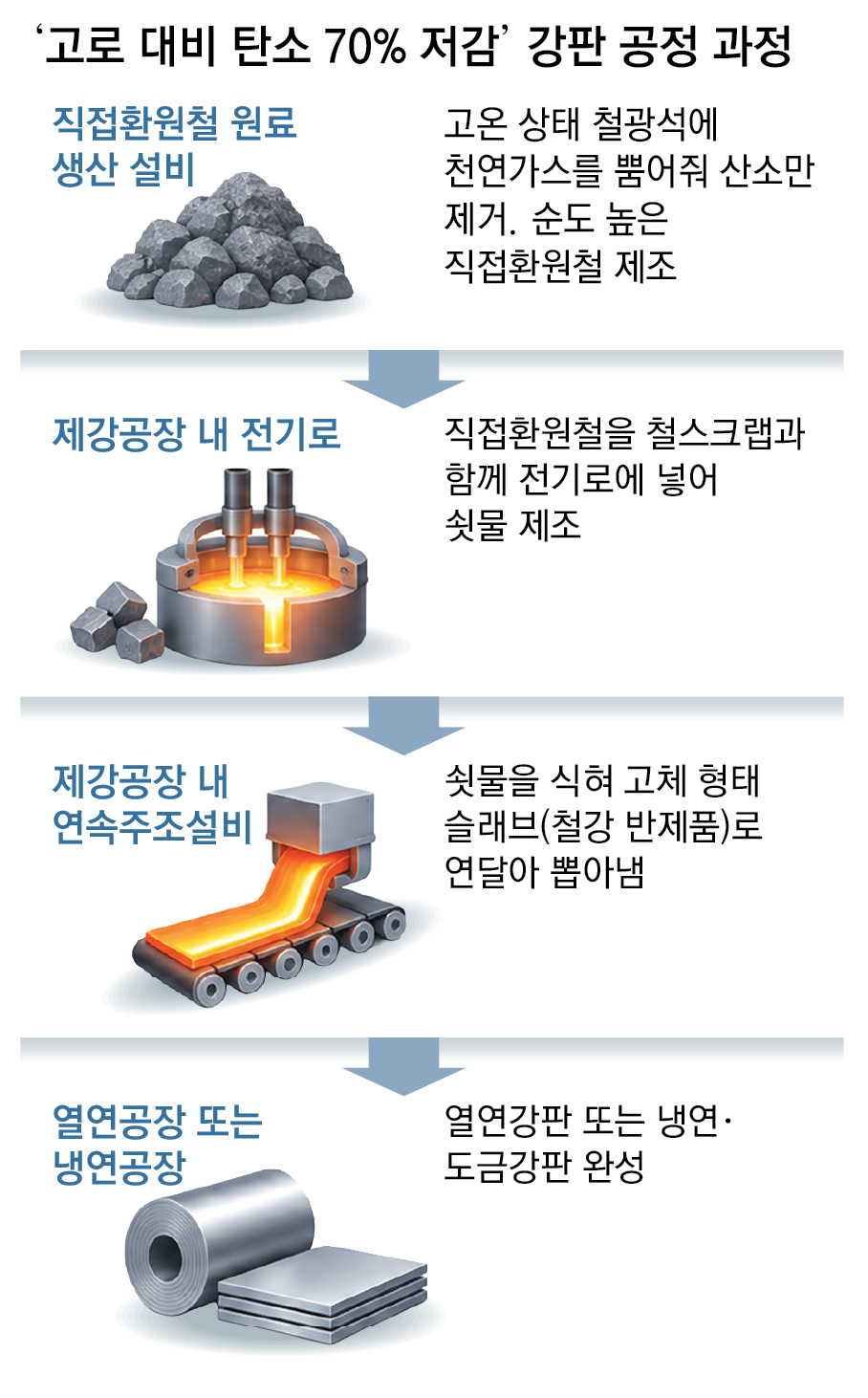
The HPLS electric arc furnace steel mill is also significant in terms of technology. It marks the debut on the global stage of the Korean steel industry’s “green steel” technologies. This is the first time a domestic steelmaker will produce steel using a “double eco-friendly” process that combines natural gas-based direct reduced iron (DRI) with electric arc furnaces. High-purity iron in the form of DRI is produced not by melting iron ore, but by blowing natural gas at high temperature to selectively remove only the oxygen. The resulting DRI is then charged into an electric arc furnace together with steel scrap and reborn as high-quality molten steel.
Regarding the timing of a future transition to a “zero carbon emission” DRI process using hydrogen instead of natural gas, Managing Director Kim said, “The timing of hydrogen use is still under review, as we must assess its economic feasibility.”
● Will US sales recover after tariff-driven contraction?
Once this steel mill is built, exports to the United States, which had contracted due to the 50% tariff imposed on Korean steel, are expected to naturally recover. Last year, Korea’s steel exports to the US were 2.54 million tons, down 8% from 2.76 million tons the previous year, indicating a continuing decline. CEO Kim explained, “Because of the impact of tariffs, the volume previously exported from Korean plants to the US has significantly decreased,” adding, “With the construction of this steel mill, steel sales are expected to exceed the amount lost to export declines.”
Some outlets for HPLS production have already been secured. For automotive steel sheets, supply volumes to Hyundai Motor and Kia’s US plants (800,000 tons) have been finalized, and POSCO has agreed to sell 600,000 tons to its existing US customers. José Muñoz, President and Global COO of Hyundai Motor Company, told reporters at the HPLS groundbreaking ceremony on 4 September, “We are in discussions with some local automakers.” CEO Kim said, “As sustainability has become a core agenda item not only for automakers but for the global manufacturing industry as a whole, carbon reduction will be a major competitive edge in securing customers.”
ⓒ dongA.com. All rights reserved. Reproduction, redistribution, or use for AI training prohibited.
Popular News