Leveraging in-house audio technology to develop hearing enhancement features
Using AI to filter background noise and amplify speech
Integrating into Galaxy Buds and AirPods to reduce wearing burden
“Improving accessibility to hearing support for people with hearing loss”
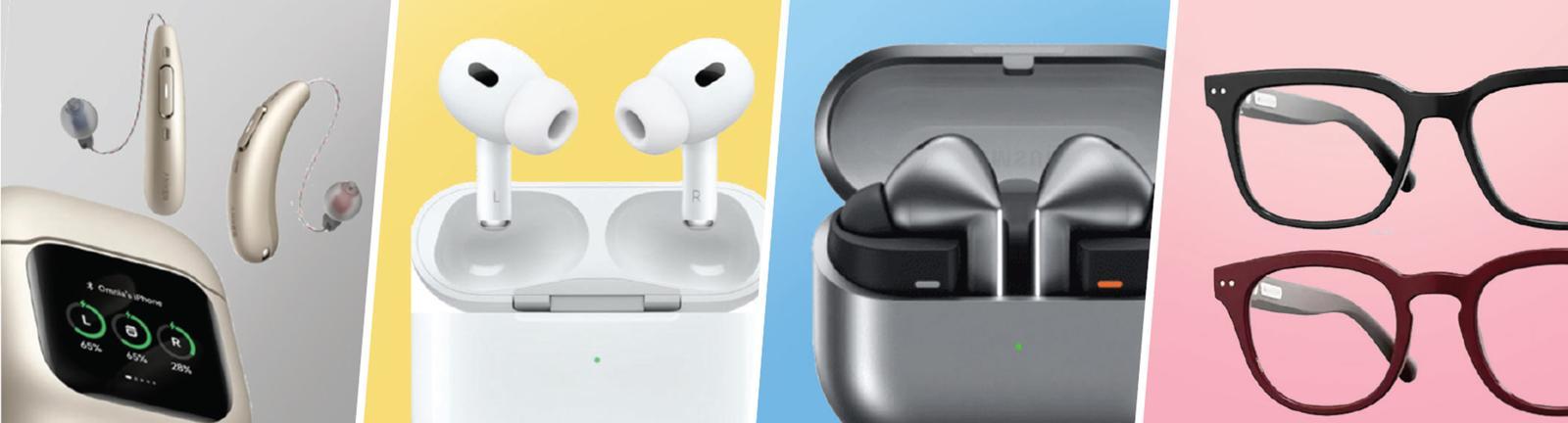
Competition is intensifying in “hearing loss tech” among companies targeting elderly people suffering from declining hearing. Beyond traditional hearing aid manufacturers, big tech firms in consumer electronics such as Apple and Samsung are entering the market, leveraging artificial intelligence (AI) technologies for voice separation and personalized hearing compensation. Drawing on acoustic technologies accumulated in the development of mobile phones and earphones, they distinctly transmit speech in noisy environments and integrate hearing enhancement functions into everyday items such as wireless earphones and glasses to reduce the burden of wearing dedicated devices.
● AI that picks out speech in noise
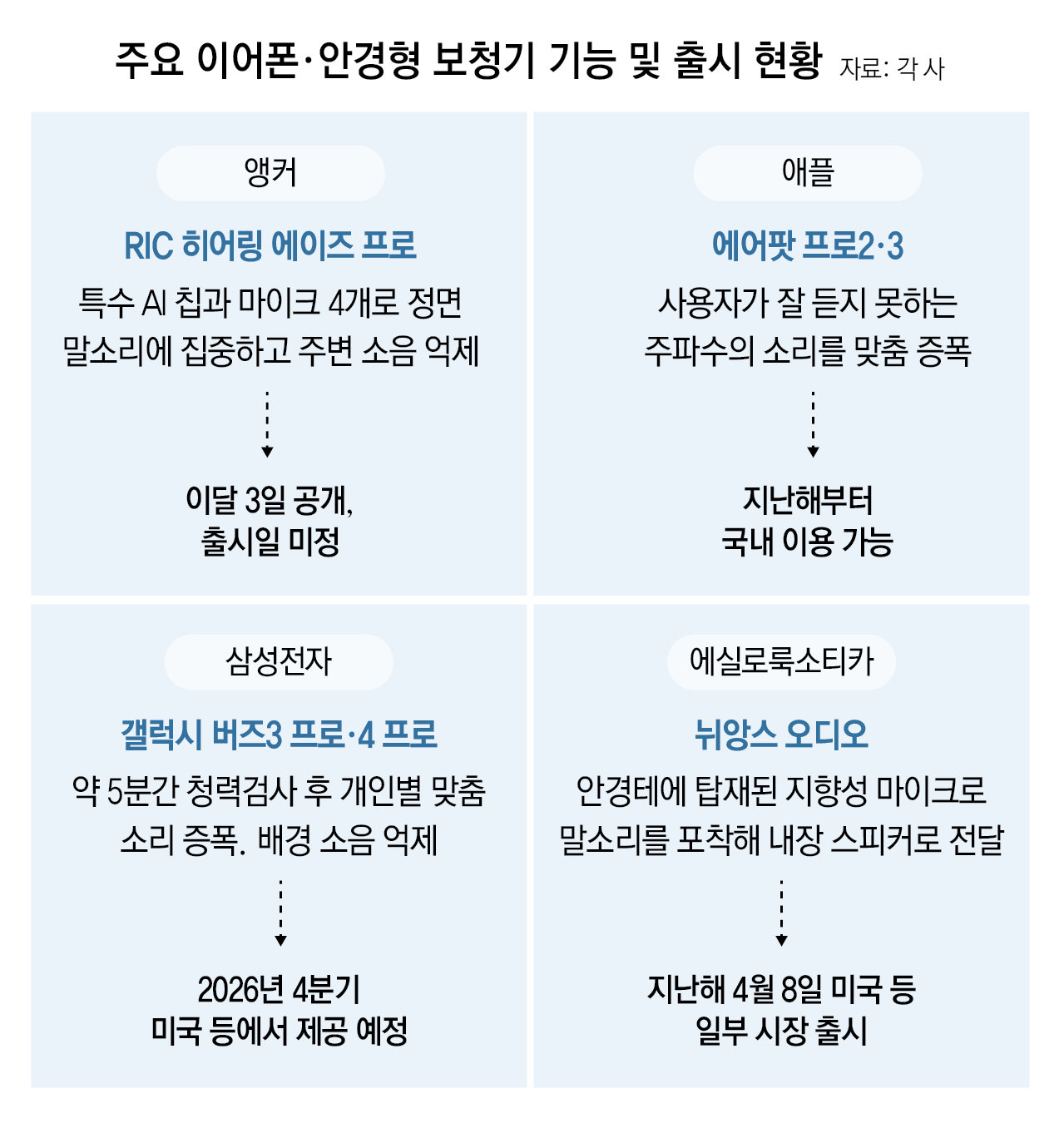
AI technology is at the core of big tech’s push into the hearing loss market. Their strategy is to lead in hearing assistance functions that extract speech from surrounding noise by using the AI previously applied in earphones. On 3 September (local time), Chinese electronics company Anker unveiled its first over‑the‑counter hearing aid, the “RIC Hearing Aids Pro.” The device, which hooks the main body behind the ear and places the receiver in the ear canal, received the official innovation award “Best of IFA” at IFA, Europe’s largest consumer electronics and information technology (IT) trade show. The key component is its in‑house “THUS AI” chip, used in its earphones and other audio devices. By using four microphones to analyze the direction from which sound is incoming, it focuses on the voice of the person in front of the wearer while reducing noise from other directions.
AI-based voice separation technology is drawing attention because age-related hearing loss is not merely a matter of volume. Older adults have difficulty isolating the desired sound when multiple sounds are mixed together. For example, in a noisy restaurant, the voice of the person across the table may be hard to hear, while the sound of clattering dishes is perceived as loud. If the entire sound environment is amplified, background noise also becomes louder, making it crucial to selectively enhance only the necessary speech.
In response, big tech companies that have built experience in acoustic technologies such as noise cancelling and AI development are utilizing their existing research facilities and personnel to develop hearing support functions. Apple tested hearing assistance capabilities in its audio laboratory, which evaluates the sound performance of the iPhone, AirPods, HomePod and other devices. Kuba Majoor, senior hearing health engineer at Apple, explained, “We recreated external environments indoors to adjust and validate the hearing assistance functions of AirPods.” Apple first introduced a hearing assistance function in AirPods Pro 2 in 2024, and users in Korea can now conduct hearing tests and use hearing support via AirPods Pro 2 and Pro 3. According to a study published in March this year by a research team including Arizona State University in the United States, 20 adults who used the hearing assistance function of AirPods showed improved speech recognition and recall ability.
Samsung Electronics is also adding hearing support functions to its Galaxy Buds. Last month, it obtained approval from the U.S. Food and Drug Administration (FDA) for hearing assistance features to be applied to Galaxy Buds3 Pro and Buds4 Pro. Samsung has incorporated “beamforming” technology that reduces background noise and focuses on sounds coming from the front. The company plans to roll out this feature in markets including the United States in the fourth quarter of this year.
● Growing hearing‑impaired population and the trend toward ‘everyday hearing support’
The traditional hearing aid market had high entry barriers and was dominated by specialized manufacturers. As medical devices, hearing aids must be adjusted to amplify different frequencies according to each individual’s hearing profile and require regulatory approval in each country, as well as specialized personnel and sales networks to handle hearing tests, device tuning and after‑sales service.
However, this picture has changed as population aging expands the hearing aid market and regulations are relaxed. The World Health Organization (WHO) forecasts that the global hearing‑impaired population will increase from more than 1.5 billion at present to about 2.5 billion by 2050. In 2022, the United States opened an over‑the‑counter (OTC) hearing aid market, allowing adults with mild to moderate hearing loss to purchase hearing aids without prescriptions or professional fitting. When approving the hearing support function in AirPods in 2024, Michelle Tarver, then acting director of the FDA’s Center for Devices and Radiological Health, assessed that it “has made it easier for people with hearing loss to access hearing support functions.”
Against this backdrop, companies are also seeking to incorporate hearing assistance into everyday items used daily, such as eyeglasses, to reduce the burden of wearing separate devices. “Nuance Audio,” a hearing‑assist eyewear product from global eyewear group EssilorLuxottica, integrates directional microphones and speakers into the frames. It assists listening through the same glasses used for vision correction. EssilorLuxottica stated, “The conspicuous appearance of traditional hearing aids, discomfort in wearing them, and cost have long been barriers to use,” adding, “Consumers will be able to see clearly and hear clearly with a single product.”
ⓒ dongA.com. All rights reserved. Reproduction, redistribution, or use for AI training prohibited.
Popular News