[Weekly Report] Land-based aquaculture research accelerates amid surge in seaweed exports
Gaining popularity overseas as a “healthy snack”… Exports hit a record USD 1.1 billion last year
Climate change undermines stable production… Land-based, temperature-controlled farming emerges as alternative
Pulmuone, Daesang and others move to secure technology… Government to provide KRW 35 billion in support by 2029
Short cultivation period with same taste… Scaling up is key
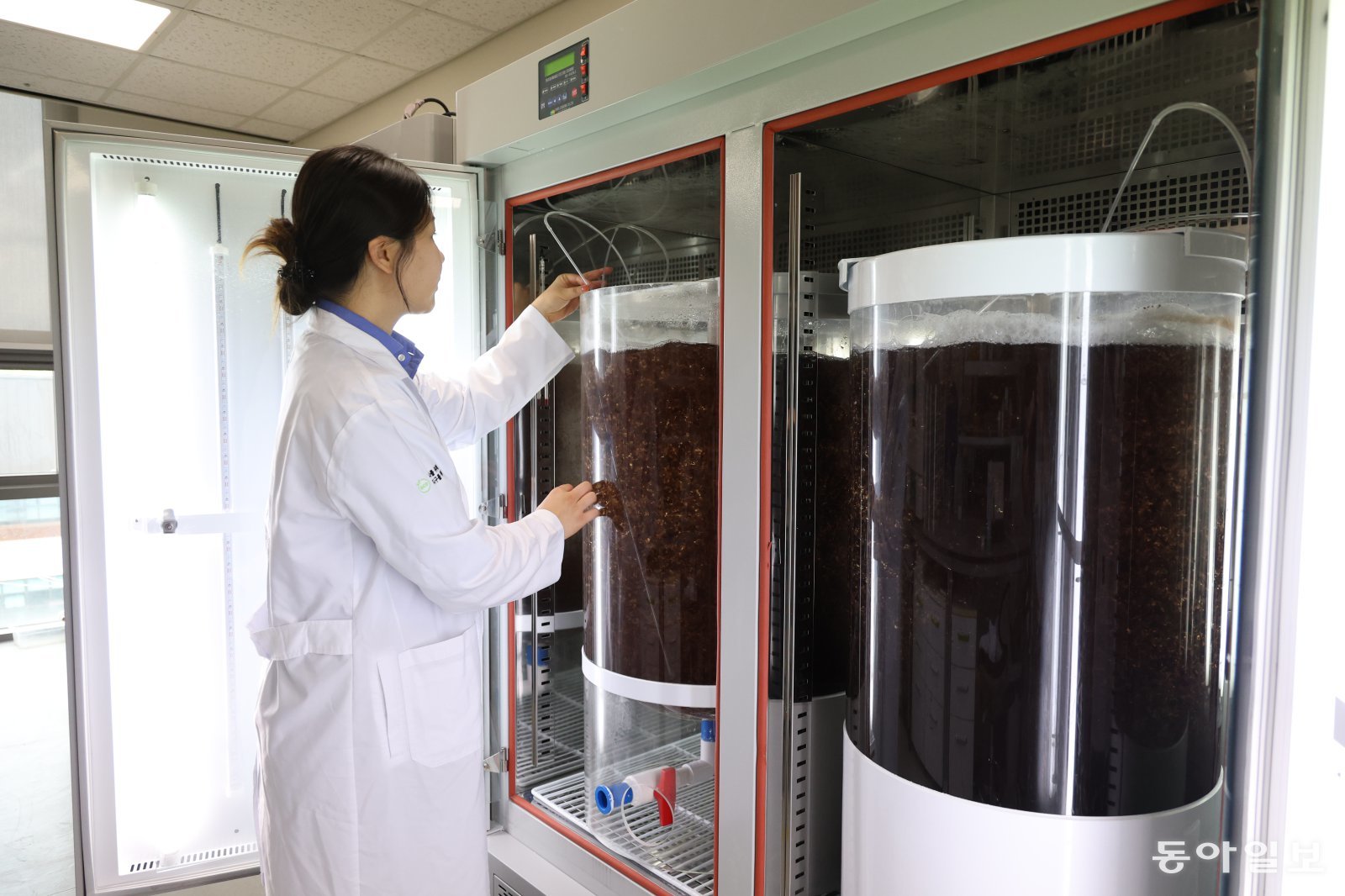
On the 25th, at the Pulmuone Technology Institute located in Osong-eup, Cheongju, North Chungcheong Province, Pulmuone Senior Researcher Lee Da-jeong injects oxygen into a laver culture tank. Having been conducting research on land-based laver aquaculture since 2021, Pulmuone plans to fully launch products using land-grown laver starting next year. Osong = Reporter Park Hyeong-ki oneshot@donga.com
“To grow laver seedlings, the seawater temperature needs to drop to a cold level. But recently, due to global warming, that timing is being pushed back more and more. With land-based tanks, the temperature can be controlled year-round, so it is expected that laver can be produced more stably.”
On the 25th, at the Pulmuone Technology Institute located in Osong-eup, Cheongju, North Chungcheong Province. Senior Researcher Lee Da-jeong of Pulmuone, met at the laver land-based aquaculture tank on the first floor, made this comment while inserting a thermometer. At this facility, Pulmuone researchers are working on technology to grow laver on land from the seed stage through to harvest.
Lee said, “To farm laver on land, it is necessary to precisely control and maintain water temperature, salinity, light, and other factors at appropriate levels,” adding, “We are currently at the stage of identifying the conditions most suitable for growth when the tank scale is expanded.”
● The ‘future of laver’ impossible without raw laver
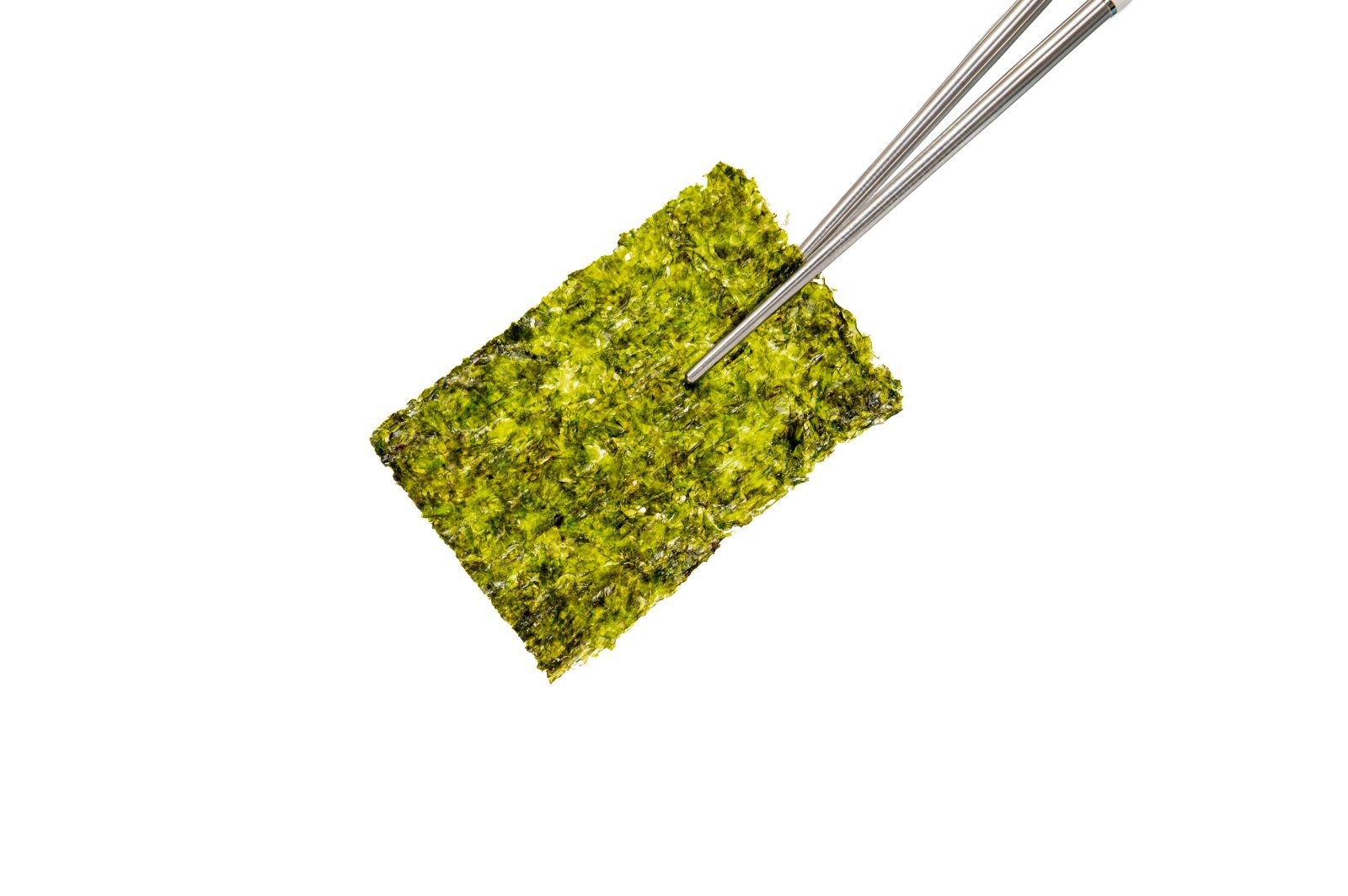
Getty Images Bank
Despite being a flagship K-food item that has recently captivated the world, laver faces growing production risks. As the marine ecosystem changes rapidly due to the climate crisis, it is becoming increasingly difficult to secure a stable supply of raw laver. In response, the food industry is focusing on technology research to secure the “future of laver,” as securing the raw laver supply chain is the most critical factor in laver production.
In fact, laver production volume has shown large annual fluctuations depending on natural conditions, particularly water temperature. The optimal water temperature for laver growth is 5–15 degrees Celsius. The later seawater temperatures fall, the later the start of laver farming and the shorter the production period. The problem is that the seas around the Korean Peninsula are warming especially fast. According to the National Institute of Fisheries Science, the annual average surface water temperature in Korean waters rose by about 1.60 degrees Celsius over the past 58 years (1968–2025). This is more than twice the global average surface water temperature increase of 0.76 degrees Celsius over the same period. This is why there are growing concerns that rising sea temperatures could shorten the period available for laver farming.
In response, Pulmuone launched research and development (R&D) on land-based laver aquaculture in 2021. The goal was to move laver farms onto land and produce laver stably year-round without production being affected by season or weather. To that end, seawater drawn from the West Sea is passed through fine filters, and water temperature, light, salinity, nutrients, and other factors are adjusted to create a growth environment similar to that of the actual sea.
At the institute visited that day, researchers were growing laver starting from the “spore” stage, which is difficult to see with the naked eye. It was explained that it takes about 60 days to grow laver spores about 20 micrometers (㎛) in size to 1–2 cm in a culture device.
In typical sea farming, from March, seeds are increased on seashells and then attached to laver nets around October. Offshore farming effectively requires that the entire period from spring to autumn be devoted solely to preparing seeds. In comparison, land-based farming appears to have a major advantage in that it can significantly shorten this period.
Lee said, “Sensors monitor the tank’s water temperature, salinity, and hydrogen ion concentration (pH) in real time,” adding, “To understand conditions more precisely, researchers also directly inspect the status twice a day to confirm the most suitable growth conditions.”
● Demand for dried laver expected to exceed 200 million bundles by 2030
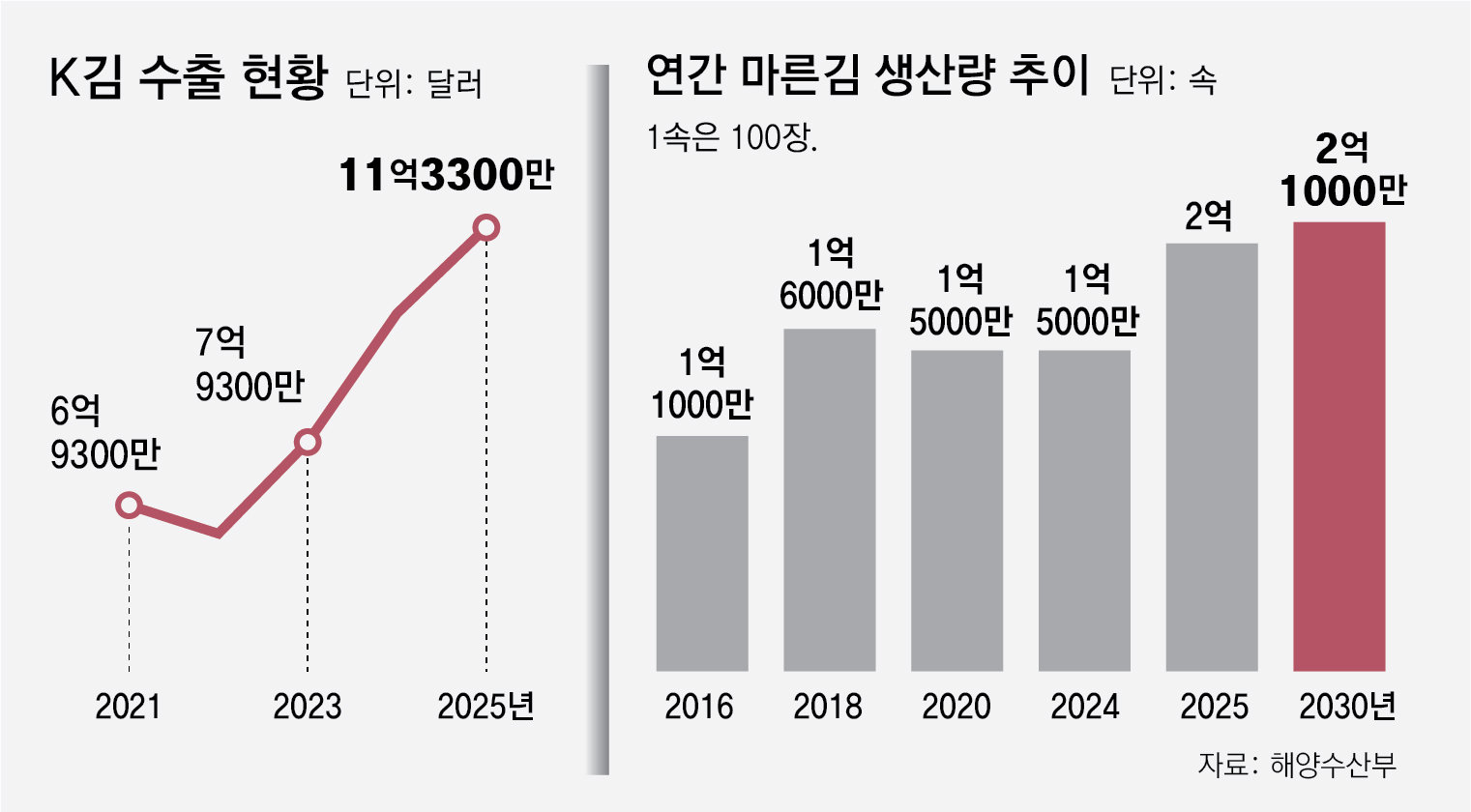
Laver has grown over the past few years into one of Korea’s leading export items, to the point of being dubbed a “black semiconductor.” According to the Ministry of Oceans and Fisheries on the 28th, Korea’s laver exports surpassed USD 100 million for the first time in 2010, reached about USD 700 million in 2021, and hit a record high of USD 1.13352 billion last year. Compared with USD 600 million in 2020, the figure has nearly doubled in five years.
If the current trend continues, total annual demand for dried laver is expected to reach 210 million bundles (1 bundle = 100 sheets) by 2030. Considering that average annual domestic dried laver production over the past 10 years has been around 150 million bundles, there will be a shortfall of about 60 million bundles compared to projected demand in 2030.
The government is therefore joining hands with the private sector to support the securing of land-based aquaculture technology for “sustainable laver production.” Since last year, the Ministry of Oceans and Fisheries has been working with companies such as Pulmuone and Daesang on projects to develop technology for producing high-quality, sustainable laver seed and land-based aquaculture. A total of KRW 35 billion will be invested over five years through 2029 to select high-quality laver varieties suitable for land-based farming and to commercialize a system for year-round, mass-production land-based laver aquaculture.
Daesang is developing an “attachment-type” technology that cultivates laver by attaching it to structures in a way similar to offshore farming. The method makes maximum use of natural conditions by utilizing filtered seawater and natural light at land-based aquaculture facilities near the sea. Daesang believes this approach can increase production relative to cost.
Kim Jun-gyu, head of Daesang Seaweed CIC, said, “Our goal is to establish technology development and commercialization systems by 2029 and to commercialize laver harvested through land-based aquaculture around 2030,” adding, “We expect to be able to produce high value-added products based on high-quality raw laver.”
● Economic feasibility and scale remain challenges
On this day at the Pulmuone research institute, it was possible to directly taste laver grown through actual land-based aquaculture. The taste of land-grown laver did not differ significantly from that of products commonly sold on the market.
However, the processing method was different from that of ordinary laver. Lee explained, “For now, production volume is not high enough to use existing facilities that process laver into square full-size sheets,” adding, “The difference is that harvested raw laver is simply dried as is and turned into pieces.” Pulmuone plans to powder laver developed through land-based aquaculture as early as next year and use it in sauces, snacks, and other products.
There are also issues that need to be resolved. The biggest challenge is economic feasibility. Recreating the marine environment on land entails significant costs. Initial facility investment is required, as are cooling devices to maintain low water temperatures, lighting, and equipment to continuously circulate and filter seawater. Operating these systems entails considerable maintenance costs, including electricity expenses.
Another hurdle to commercialization is reproducing in facilities tens or hundreds of times larger the optimal growth conditions identified in small laboratory tanks. Lee said, “Even if good conditions for maximizing productivity are found on a small scale, transferring them to a larger scale is a different task,” adding, “Problems constantly arise in this process, so we must continuously search for conditions suited to large-scale operations.”
● Pushing ahead with both raw laver procurement and product diversification
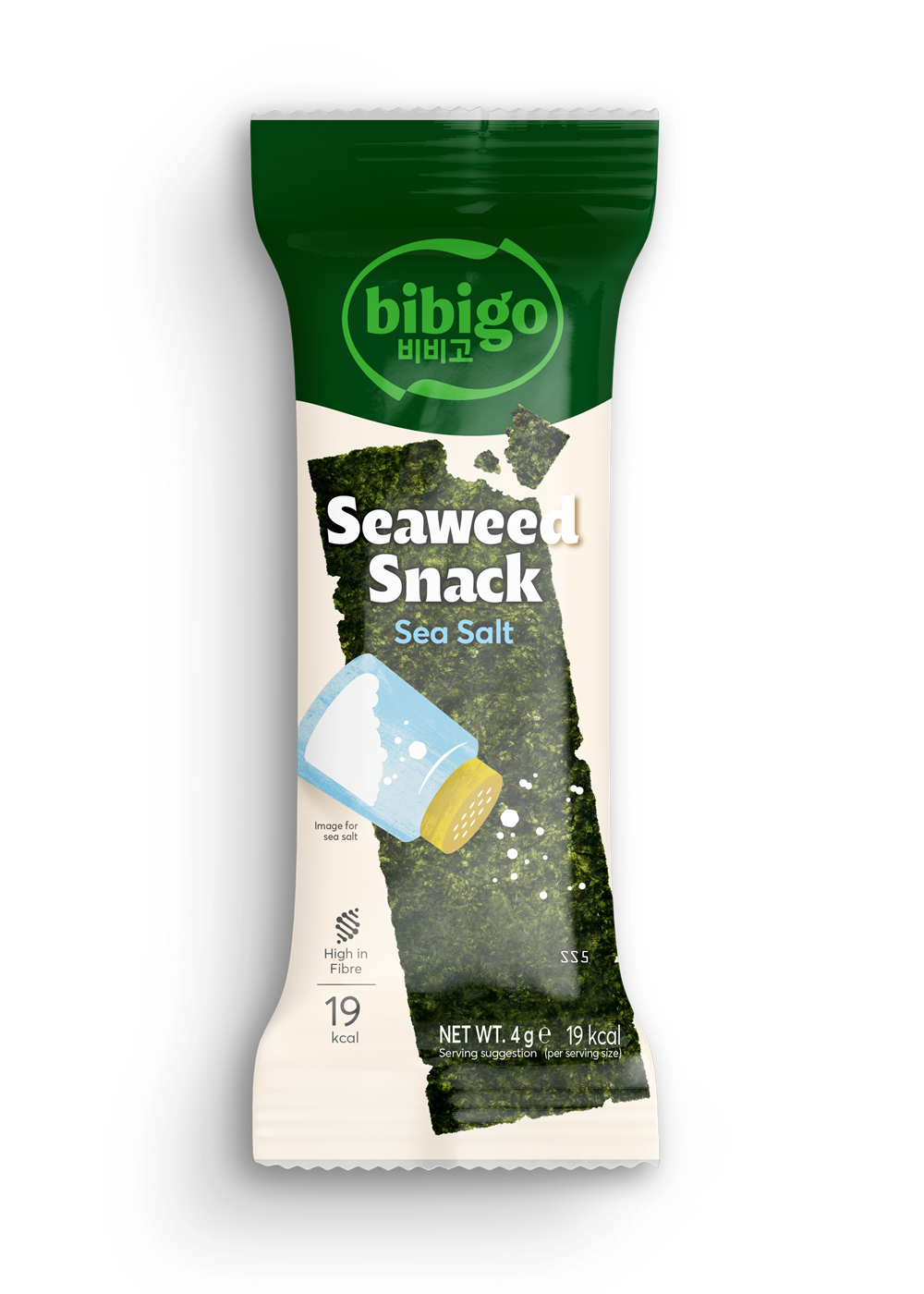
CJ CheilJedang’s “Bibigo Seaweed Snack” product sold in the United States. CJ CheilJedang has been turning laver into snack products to target local tastes in response to growing overseas demand for laver. Provided by CJ CheilJedang
Nevertheless, laver’s popularity overseas continues to grow by the day. Competition to appeal to overseas consumers’ tastes is becoming as intense as investment in securing raw materials for the future of laver.
CJ CheilJedang began full-scale laver exports to the United States in 2010 and has been producing laver at its Beaumont plant in California since 2020. The company imports raw laver from Korea and manufactures laver snacks and seasoned laver products in the United States.
According to CJ CheilJedang, processed laver sales grew by an annual average of about 35% from 2023 to 2025, with overseas growth at 44%, outpacing domestic growth. Overseas sales now account for 55% of total laver business revenue, more than half. By country, the United States has the highest share at 43%, followed by the Asia-Pacific region at 35%, Japan at 12%, and Europe at 10%.
Overseas, laver is often perceived more as a “healthy snack” than as a side dish to rice. In the U.S. market, CJ CheilJedang has developed 16 snack-type products such as chips and rolls. Melissa Thompson Truff, Vice President in charge of Asian food manufacturing at CJ Schwan’s, explained, “As the United States is a country with strong demand for wellness snacks, laver is gaining popularity as a healthy snack.”
ⓒ dongA.com. All rights reserved. Reproduction, redistribution, or use for AI training prohibited.
Popular News