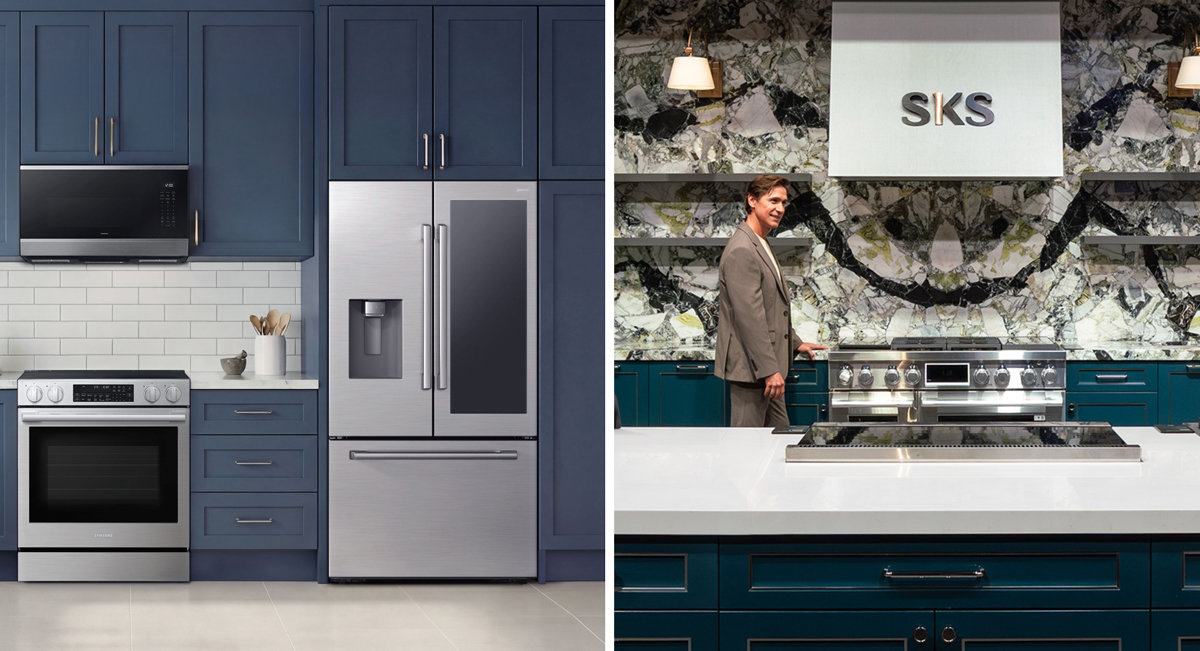
A view of Korean kitchen appliances designed in built-in form and tailored for U.S. consumers. On the left is an image of kitchen appliances such as ovens and refrigerators that Samsung Electronics released targeting the North American market. On the right is “SKS,” a premium kitchen appliance brand showcased by LG Electronics at the North American Kitchen & Bath Industry Show “KBIS 2026” in February this year. Provided by Samsung Electronics and LG Electronics
Samsung Electronics, LG Electronics and other Korean electronics manufacturers are rapidly expanding their presence in the North American kitchen appliance market. For years, the segment had been dominated by local “traditional powerhouses” such as GE and Whirlpool, but in the first half of this year (January–June), Korean companies surpassed them for the first time in combined market share.
● North American “K-appliances” rise from 29.6% → 34.9% in six months
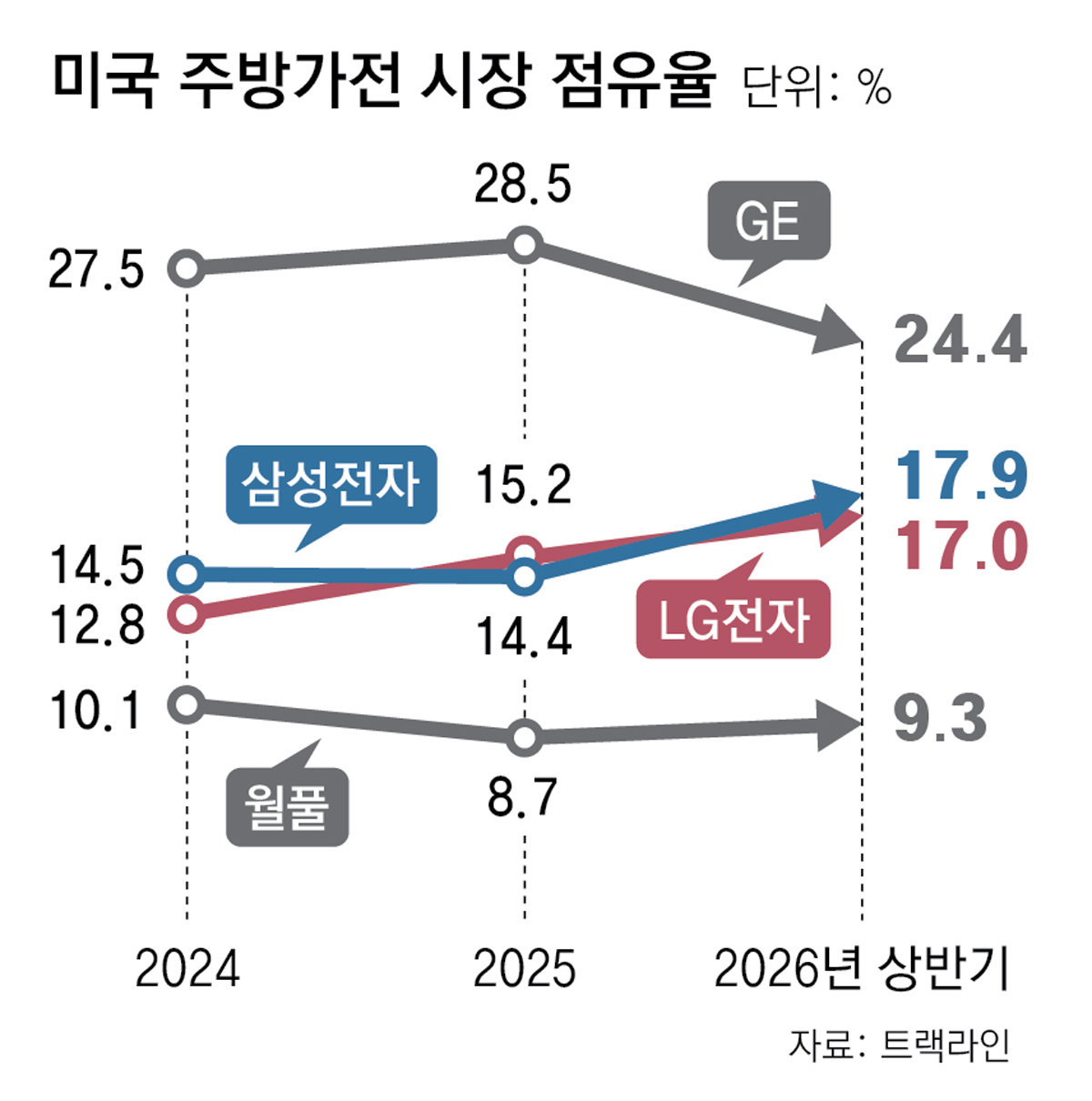
According to market research firm Traqline on the 30th, in the North American kitchen appliance market in the first half, the combined market share of Samsung Electronics (No. 2 with 17.9%) and LG Electronics (No. 3 with 17.0%) was 34.9%, exceeding the combined 33.7% held by competitors GE (No. 1 with 24.4%) and Whirlpool (No. 4 with 9.3%). On a full-year basis in 2025, Korean companies’ share stood at 29.6%, trailing the 37.2% of GE and Whirlpool by 7.6 percentage points, but they have managed to overtake them this year.
In the United States, the world’s largest consumer market for home appliances, kitchen appliances have historically enjoyed a stronger preference for traditional local brands compared with general home appliances such as TVs, washing machines, and air conditioners. While Samsung Electronics and LG Electronics each hold market shares in the 20% range in the U.S. home appliance market, their shares in kitchen appliances remain in the 10% range for this reason. A representative example is the range, an integrated cooking appliance that combines a heated cooktop and an oven. With a household penetration rate of 100% in the U.S., ranges are considered a “national appliance,” and local consumers have shown a strong preference for familiar domestic brands. In particular, because kitchen appliances are often installed as customized built-ins, continuity with previously used products has been important.
However, as positive brand images for Korean manufacturers have accumulated through TVs and general home appliances, and as they have strengthened localized strategies such as built-in products, domestic companies have been steadily increasing their share in the U.S. kitchen appliance market. Local evaluations have also improved significantly. LG Electronics was ranked No. 1 as the “Most Reliable Kitchen Appliance Brand” selected by Consumer Reports, the largest consumer media outlet in the U.S. In July, Samsung Electronics took first place in six categories, including over-the-range microwaves and dishwashers, in the “2026 Home Appliance Customer Satisfaction Study” announced by U.S. market research firm J.D. Power.
● Targeting North America with a premium strategyOne of the key approaches that Korean companies are taking in the North American kitchen appliance market is a “premium” strategy. In February this year, Samsung Electronics announced that it would supply its premium built-in appliance brand “Dacor” to all 260 households in Aripeka, a luxury residential complex in Viera, Florida. Dacor is a U.S. local brand acquired by Samsung Electronics in 2016. Aripeka is scheduled for completion in 2027, and Samsung Electronics will supply six types of built-in appliances to the site, including ranges, refrigerator–freezer units, and wine cellars. In July, LG Electronics opened a showroom for its ultra-premium built-in appliance brand “SKS” in Boston, U.S., to secure business-to-business (B2B) customers.
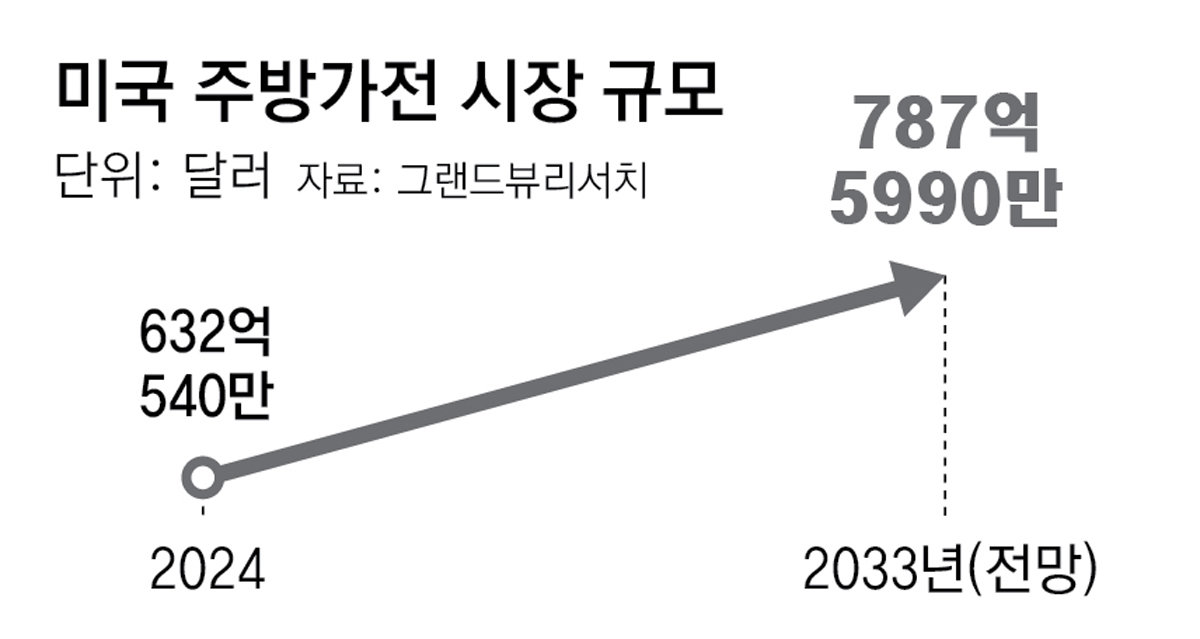
The kitchen appliance business is an area where Korean companies are seeking new growth in segments where they have previously been weak, at a time when the global home appliance market is entering a period of stagnation. Even if the market itself does not expand significantly, they are aiming to capture competitors’ market share to achieve the effect of cultivating a new market. According to market research firm Grand View Research, the U.S. household kitchen appliance market is projected to grow from USD 63.2054 billion (approximately KRW 87.255 trillion) in 2024 to USD 78.7599 billion (approximately KRW 108.728 trillion) in 2033. Grand View Research stated, “This represents 24% of the global market, and the U.S. is expected to continue to lead the global kitchen appliance market.”
ⓒ dongA.com. All rights reserved. Reproduction, redistribution, or use for AI training prohibited.
Popular News