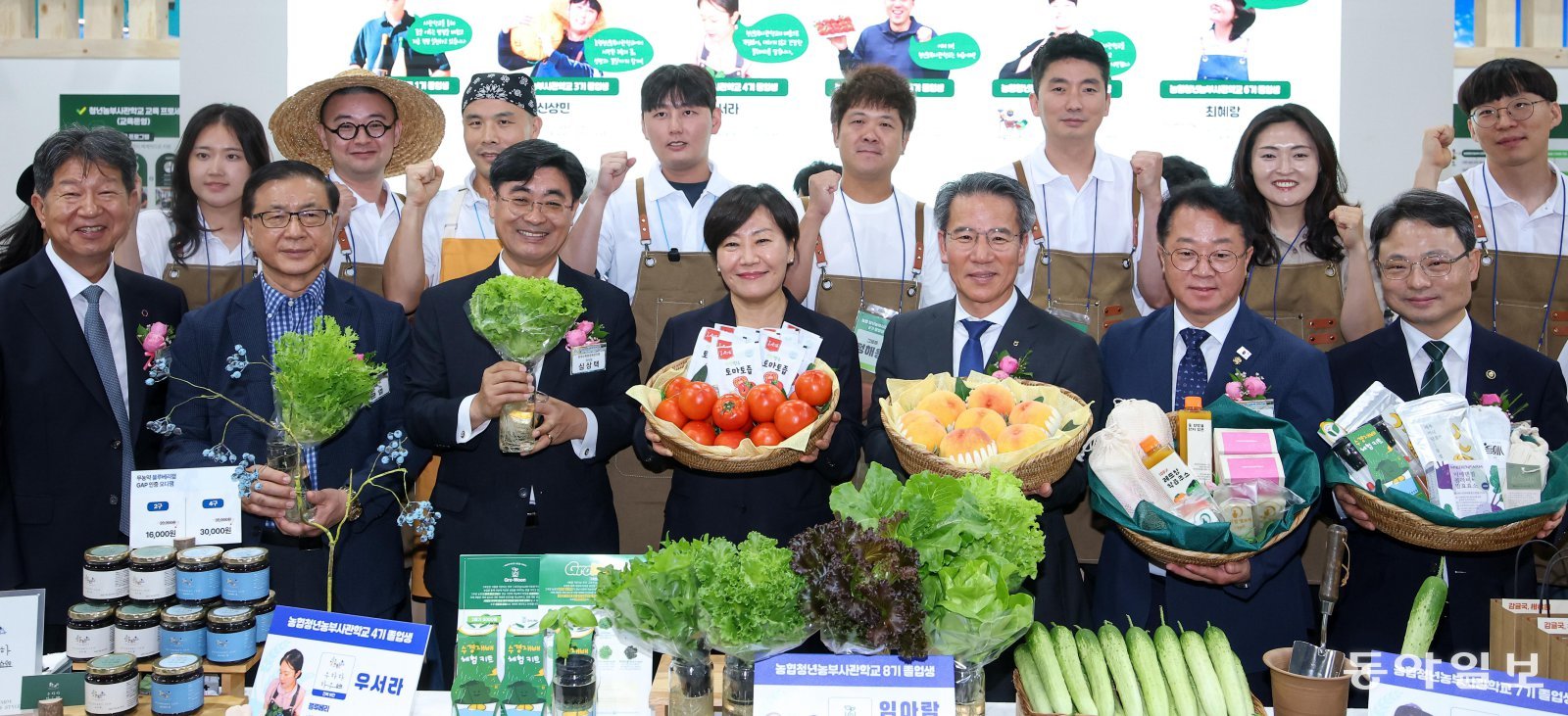
At the “2026 A FARM SHOW – Start-up Farming, Returning-to-Farming Hometown Love Expo” held at the Korea Agro-Fisheries & Food Trade Corporation (aT) Center in Seocho-gu, Seoul, on the 28th, Minister of Agriculture, Food and Rural Affairs Song Mi-ryeong (center, front row) and other dignitaries pose for a commemorative photo with young farmers. Jeon Young-han scoopjyh@donga.com
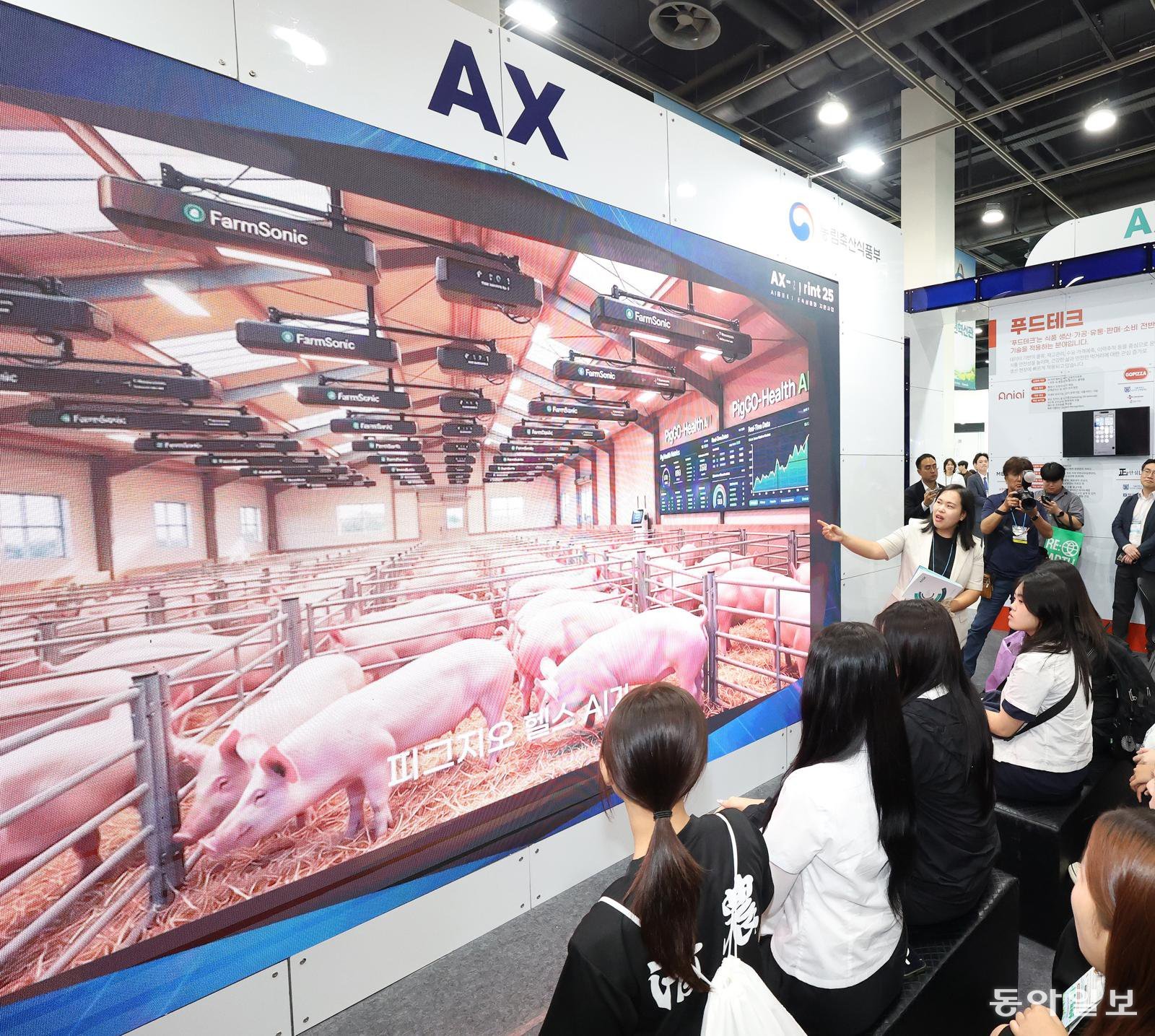
Students visiting the expo that day were able to see various artificial intelligence (AI) technologies applied to agriculture at the AI·AX Sprint Project promotional pavilion. Kim Jae-myung base@donga.com
“By using artificial intelligence (AI) to analyze pigs’ coughing sounds and the environment in pigsties, it is possible to detect the likelihood of an infectious disease outbreak in advance.”
At the AI·AX Sprint Project promotional pavilion in Exhibition Hall 1 of the “2026 A FARM SHOW,” which opened at the aT Center in Seocho-gu, Seoul, on the 28th, cutting-edge technologies that detect signs of livestock diseases before humans notice symptoms on the ground, where livestock infectious diseases such as African swine fever (ASF) and highly pathogenic avian influenza (AI) occur, drew visitors’ attention.
Shin Hyo-jeong, senior researcher at the Korea Institute of Agricultural Science & Technology Planning and Evaluation, explained, “Because many animals live together in livestock facilities, a disease in one animal can lead to mass deaths,” adding, “Sensors collect abnormal signs that are difficult to detect with the naked eye, then AI analyzes them so that early responses are possible.”
● AI technologies to lead future agriculture introduced
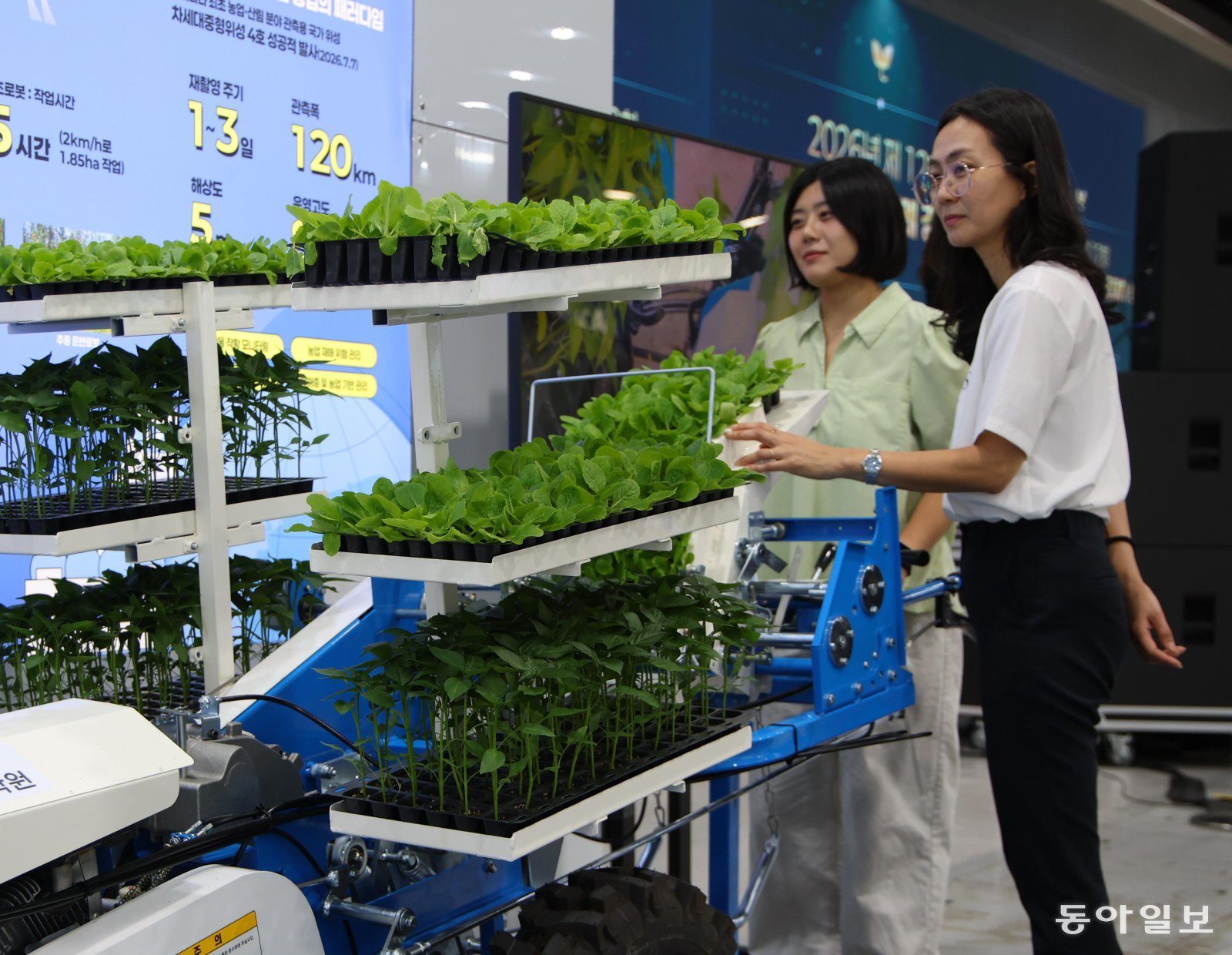
At the Rural Development Administration booth, an automatic transplanter that plants seedlings in the field automatically was on display, drawing attention. Song Eun-seok silverstone@donga.com
At the pavilion, 25 AI technologies expected to lead future agriculture were introduced through video presentations. Iontech showcased a technology that analyzes feed leftovers and the physical condition of Korean beef cattle to provide customized feeding and predict the optimal shipping time. It effectively places an “AI worker” on each farm to monitor data 24 hours a day. Agmo introduced a technology that identifies paddy and field boundaries from satellite images in three seconds and then sends optimal routes for each task such as transplanting, plowing, and pest control to agricultural machinery.
Agricultural AI technologies are also expanding into “food tech.” Eniai’s cooking robot determines the doneness of hamburger patties using cameras, while Gopizza is developing a system that automates the entire process from ordering to cooking and packaging. Medisola presented a service that designs daily meal plans according to a patient’s disease and nutritional status and then readjusts them based on intake results.
● Diverse ideas for starting farming showcased
At the “Youth Start-up Farming Mentor School” held that afternoon, about 30 prospective farmers attended to hear the experiences of senior start-up farmers. As a speaker, Lee Min-seok, CEO of Greenfingers and head of the Chungnam Smart Farm Youth Association, introduced realistic challenges that can be encountered in the process of starting farming, such as smart farm facility costs—excluding land prices—reaching KRW 700,000–1,200,000 per pyeong, and labor costs accounting for around 40% of operating expenses.
Hong Ju-pyo (34), who attended the lecture, said, “I am looking into either returning to farming in Gangneung, Gangwon Province, my grandfather’s hometown, or starting a smart farm business,” adding, “At A FARM SHOW, I was able to see at a glance the youth start-up farming support programs offered by each local government.”
In the exhibition hall, visitors were also able to encounter various start-up ideas from young people. The 11 teams that advanced to the finals of the “2026 Agri-Food Start-up Contest” presented items such as agricultural facility automation using physical AI, robotic vertical farms, four-season strawberry vertical farms, and technologies to maintain the freshness of agricultural products and reduce waste.
Minister of Agriculture, Food and Rural Affairs Song Mi-ryeong stressed, “Rural areas possess a wide range of assets, including the experience accumulated by seniors,” and added, “If these are combined with the fresh ideas of young people, they can create a significant synergy effect. Through this event, it is hoped that such cases will become more widely known and interconnected.”
ⓒ dongA.com. All rights reserved. Reproduction, redistribution, or use for AI training prohibited.
Popular News