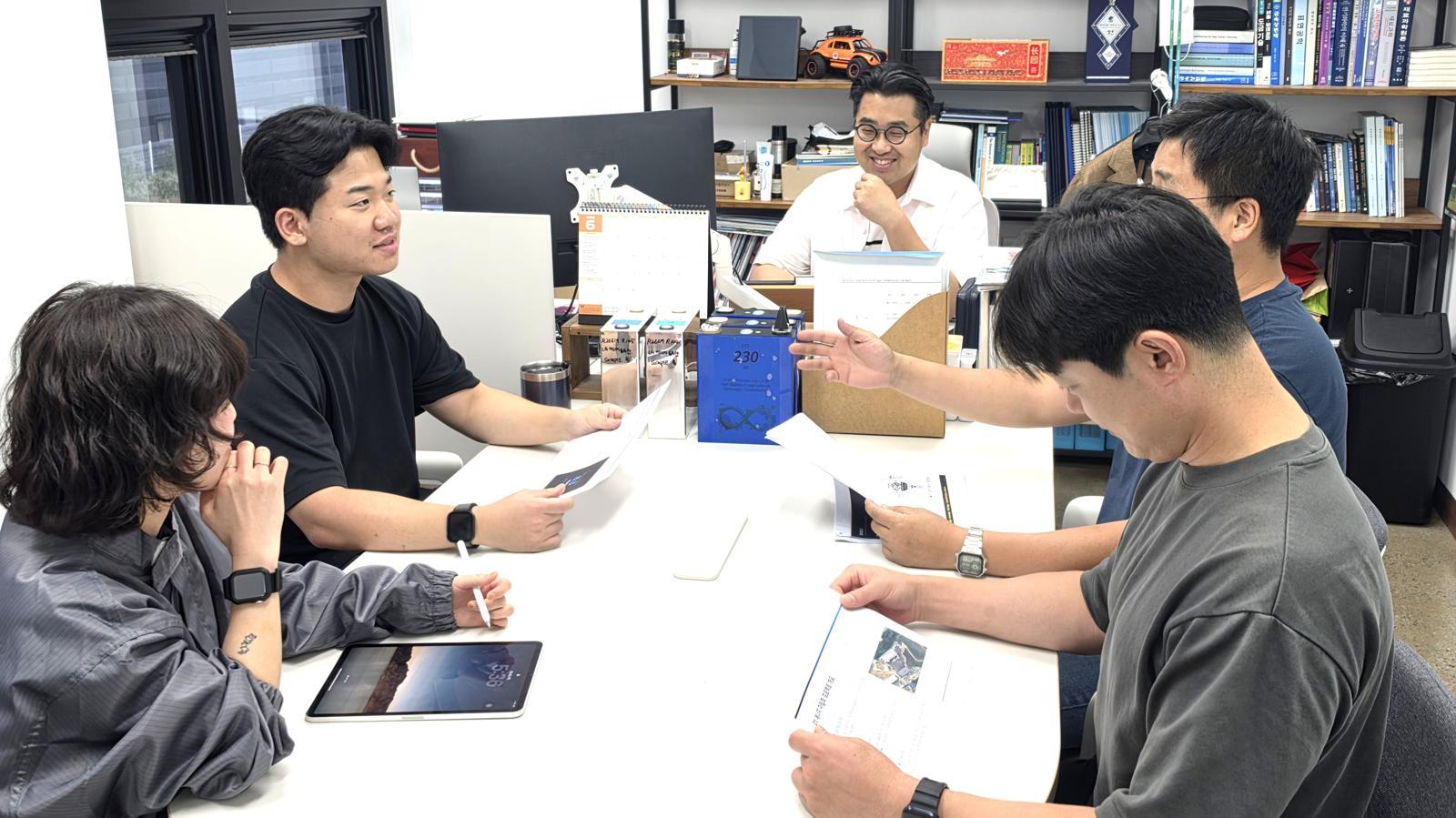
On the 15th, executives and employees hold an idea meeting at the Remplir Co., Ltd. research institute in Songsan-ri, Yanggam-myeon, Hwaseong-si, Gyeonggi Province. Provided by Remplir
From electric vehicles and energy storage systems (ESS) to drones and electric forklifts, batteries are now core components of future industries. However, the rapidly growing lithium iron phosphate (LFP) battery market is currently dominated by Chinese companies. As moves to reduce dependency on Chinese batteries accelerate due to the United States’ Inflation Reduction Act (IRA) and Europe’s supply chain diversification policies, localization of batteries and key materials has emerged as a key task for securing competitiveness in related industries.
Remplir Co., Ltd., headquartered in Daegu, is a battery specialist that develops LFP batteries and core materials with its own technology in line with these supply chain shifts. The company name “Remplir” is French, carrying the meaning “solid and fully filled,” “compact and dense.” It reflects the founding philosophy of building up core battery technologies step by step and growing into a company with unshakable competitiveness.
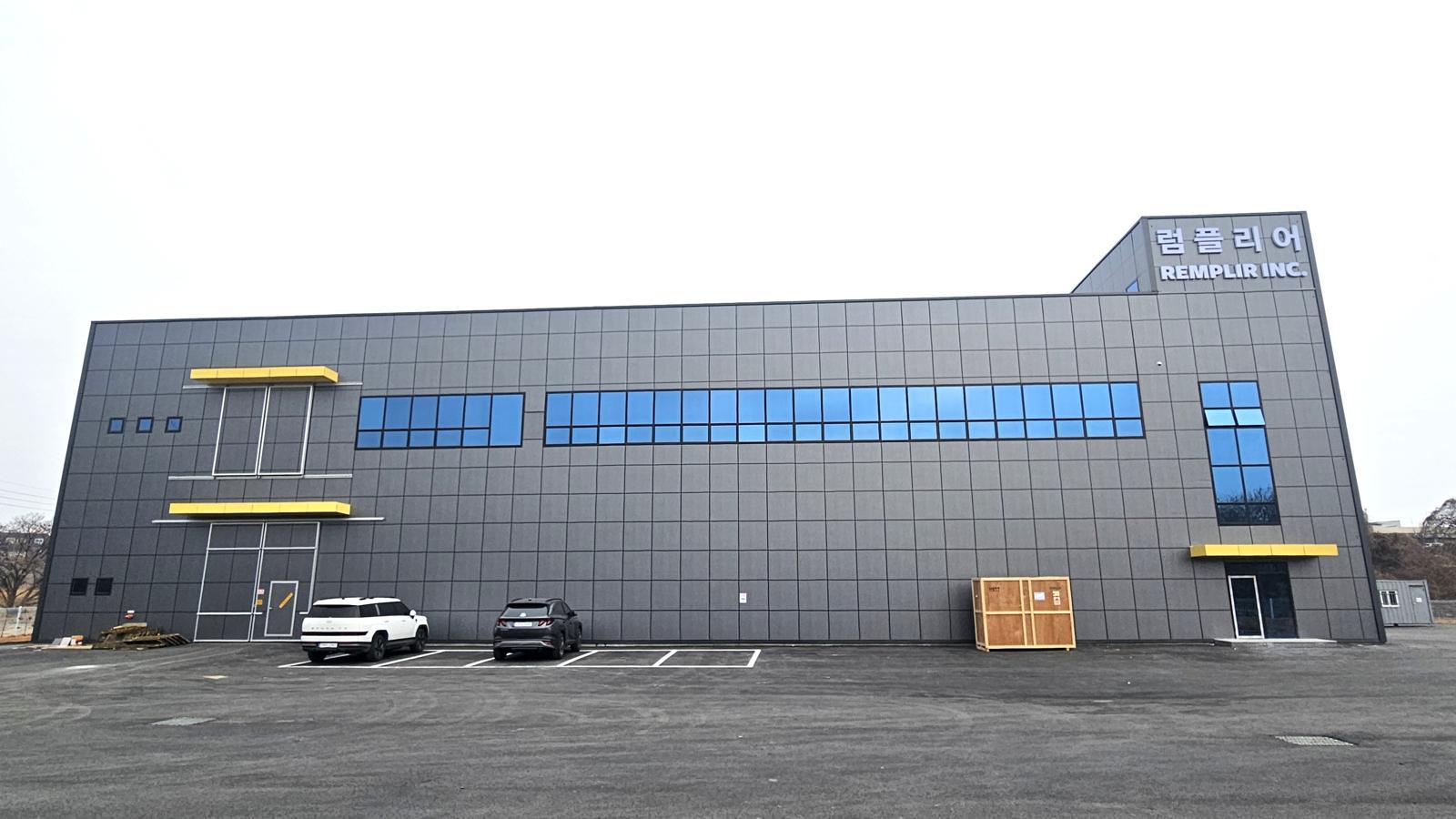
The company was established in 2019 and relocated its headquarters to Daegu in 2024. After completing a 150 MWh-class production plant in Hwaseong, Gyeonggi Province last year, it built a system with in-house capabilities from research to production by linking R&D bases in Daejeon and Chuncheon.
The company’s main focus areas are LFP batteries and materials based on carbon nanotubes (CNT). LFP batteries have low fire risk and long lifespan, and their use is rapidly increasing not only in electric vehicles but also in ESS, industrial equipment, and electric ships. Remplir is working to establish a domestic supply chain by independently developing everything from CNT dispersions that enhance battery performance to cells, modules, and battery packs.
Remplir’s lithium iron phosphate (LFP) battery production plant in Hwaseong-si, Gyeonggi Province.
Its differentiated competitiveness also derives from its manufacturing process. While conventional lithium-ion batteries use the toxic chemical solvent N-methyl-2-pyrrolidone (NMP) to produce electrodes, Remplir has developed, for the first time in Korea, a “water-based cathode manufacturing process” that uses water. This eco-friendly technology reduces emissions of hazardous substances while cutting facility investment and production costs. The company expects to lower manufacturing costs by up to 20% through this process while responding to global environmental regulations.
The technology is also delivering results in industrial settings. Unlike large corporations that sell only standard products, Remplir offers “customizing solutions” that immediately respond to customers’ required shapes and capacities. It has supplied Korea’s first LFP battery pack for electric forklifts to a major conglomerate and is expanding its application range to industrial mobility sectors such as electric excavators and autonomous mobile robots (AMR).
In the defense sector, the company has succeeded in localizing high-output battery packs for drones. It is also pursuing cooperation with overseas defense drone companies in the United States, Israel, and Türkiye. In parallel, it is developing batteries for ESS, electric ships, and electric buses, accelerating its push into the global future mobility market.
This year, the company plans to expand production capacity by adding to its Hwaseong plant and installing automated equipment. It is also continuing to invest in the development of next-generation lithium manganese iron phosphate (LMFP) batteries and key cathode materials. As the battery industry shifts from price competition to supply chain competition, Remplir aims to enhance the competitiveness of Korea’s battery ecosystem by leveraging domestically developed technologies.
Co-CEO Kim Dong-hyun said, “The battery industry is a strategic sector directly linked to a nation’s manufacturing competitiveness,” adding, “Based on eco-friendly manufacturing processes and domestic technology, we will strengthen our supply chain competitiveness and grow into a battery company recognized in global markets with Daegu as our base.”
ⓒ dongA.com. All rights reserved. Reproduction, redistribution, or use for AI training prohibited.
Popular News