Accelerating “focused development strategies” for new technologies and industries that safeguard the health and well-being of humans, animals, and the environment
Building a foundation to lead the nation’s future by linking veterinary medicine and bio with medical engineering, law, and the humanities
New construction of Asia’s largest animal hospital sparks expectations for integrated infrastructure supporting research, clinical practice, and education
View of Konkuk University’s Seoul campus
What comes to mind first at the mention of Konkuk University? Many would likely think of its College of Veterinary Medicine, animal hospital, and Konkuk University Medical Center. The university is also showing strength in agriculture and livestock, food, and bio industries, which have recently emerged as promising sectors, and outside the sciences, some point to real estate, business administration, and the Law School as representative “Konkuk-branded” programs.
However, as it approaches the 100th anniversary of its founding in 2031, Konkuk University is not content to rest on these achievements. Instead, it is striving intensely and thoughtfully toward an even higher goal: becoming one of the top 5 universities in Korea and entering the ranks of the world’s top 100 universities.
● Agriculture–Livestock–Medicine–Science as the cradle of its foundingFrom its founding in 1931, Konkuk University designated agriculture, livestock, and medicine as core fields for national development and focused on nurturing talent in these areas. The university’s founder, Dr. Yoo Seok-chang (pen name Sangheo, 常虛 劉錫昶, 1900–1972), went to Manchuria as a boy following his father and contributed to the anti-Japanese independence movement. After returning to Korea, he entered Kyungsung Medical College and pursued the path of “benevolent medicine to safeguard the nation” (仁術保國), seeking to help the country through medicine.
Before Liberation, Dr. Yoo established the Social Central Low-Cost Medical Clinic (社會營 中央實費診療院) to treat impoverished people, and after Liberation he founded the Chosun School of Politics (朝鮮政治學館) to cultivate the talent needed to rebuild the nation. True to his pen name “Sangheo,” which means “always thinking of the nation and emptying one’s heart for the people,” his life was one of practice through education and medical care, and the people’s hospital he established later became the predecessor of Konkuk University Medical Center.
In particular, under the insight that food self-sufficiency and the advancement of science and technology determine national competitiveness, Dr. Yoo built Konkuk’s early educational framework around agriculture, livestock, and bio fields. This founding spirit remains deeply rooted throughout the university today and has led to the systematic development of scholarship in veterinary medicine and bio-related disciplines.
● Evolution of the One Health strategy: “KU AI One Health”As the 100th anniversary of its founding in 2031 approaches, Konkuk University has continued to carry forward this meaningful tradition. A representative example is the “KU One Health” specialization and development strategy declared by President Won Jong-pil, who took office in 2024.
One Health is a concept designed to build a sustainable ecosystem in which animals, humans, and the environment coexist in mutual prosperity, by linking diverse academic fields such as bio, medicine, policy, law, economics, and culture. Konkuk has translated this concept into a concrete development strategy based on its long-accumulated academic strengths—recognized socially as surpassing those of other universities—in veterinary medicine, animal bio, and advanced bio fields.
Konkuk has gone a step further. Recently, President Won announced the “KU AI One Health” vision, which expands the existing One Health strategy on an artificial intelligence (AI) basis. The idea is to leverage advanced technologies powered by AI to realize a society in which humans, animals, and the environment can coexist in a healthy manner.
To this end, Konkuk University has presented three key strategies—△ AI-based animal bio specialization △ AI-based medical and pharmaceutical infrastructure advancement △ AI-based environmental conservation systems—and declared that it will organically link these to build an “integrated One Health ecosystem.”
For AI-based animal bio specialization, the university plans to train professionals who will lead next-generation pet-tech businesses (Pet-Tech: technologies that use AI, the Internet of Things (IoT), and big data to support pet healthcare, safety, and training) and to establish AI-based precision veterinary medical models. In terms of AI-based medical and pharmaceutical infrastructure advancement, it will pursue the “KU Medical Data Bank” project, which aims to build extensive medical data and upgrade medical systems using AI simulations. To establish AI-based environmental conservation systems, the university plans to introduce AI-based energy management systems to reduce carbon emissions and optimize energy efficiency, while continuing to develop environmentally friendly materials for a sustainable future.
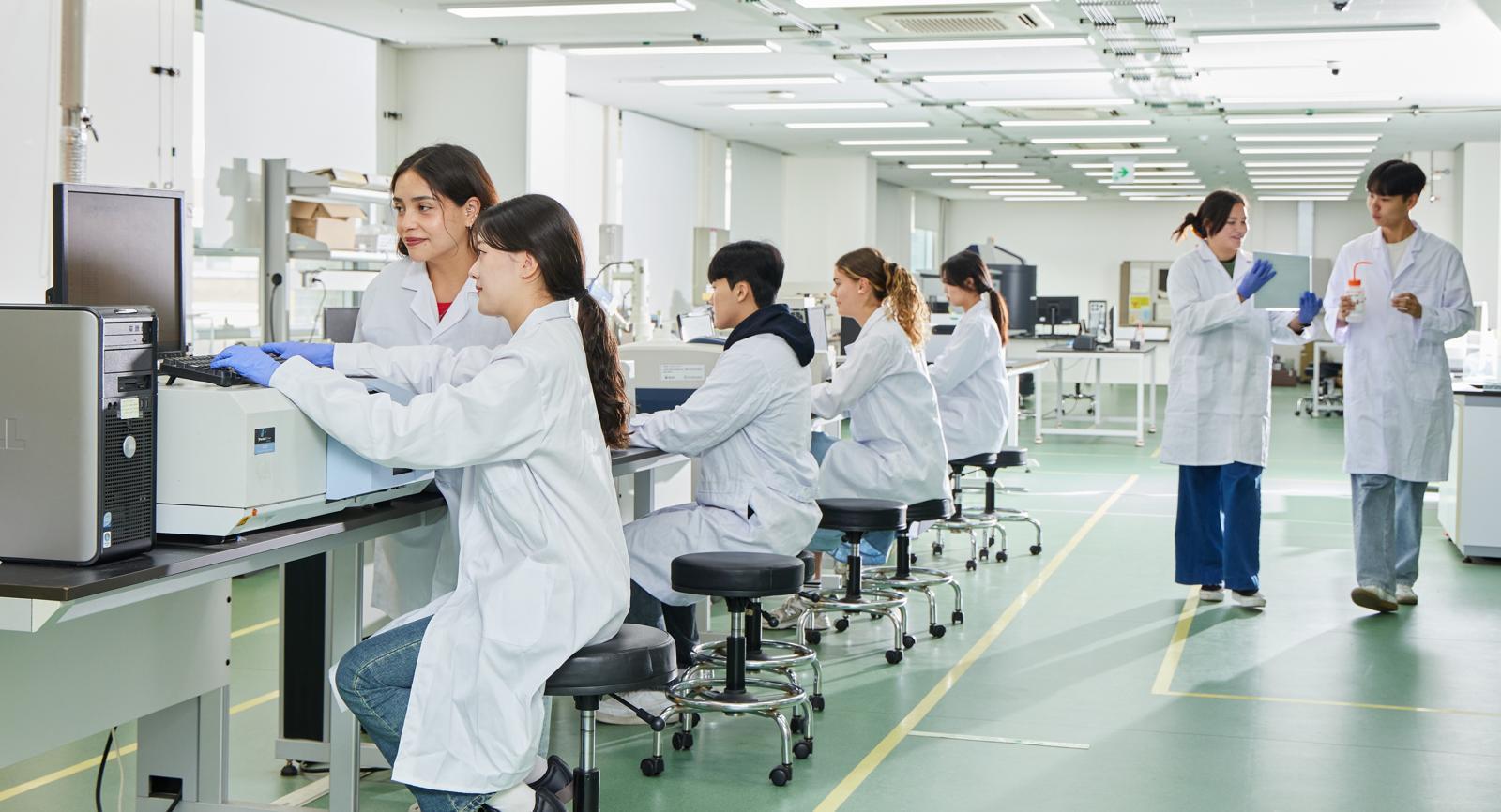
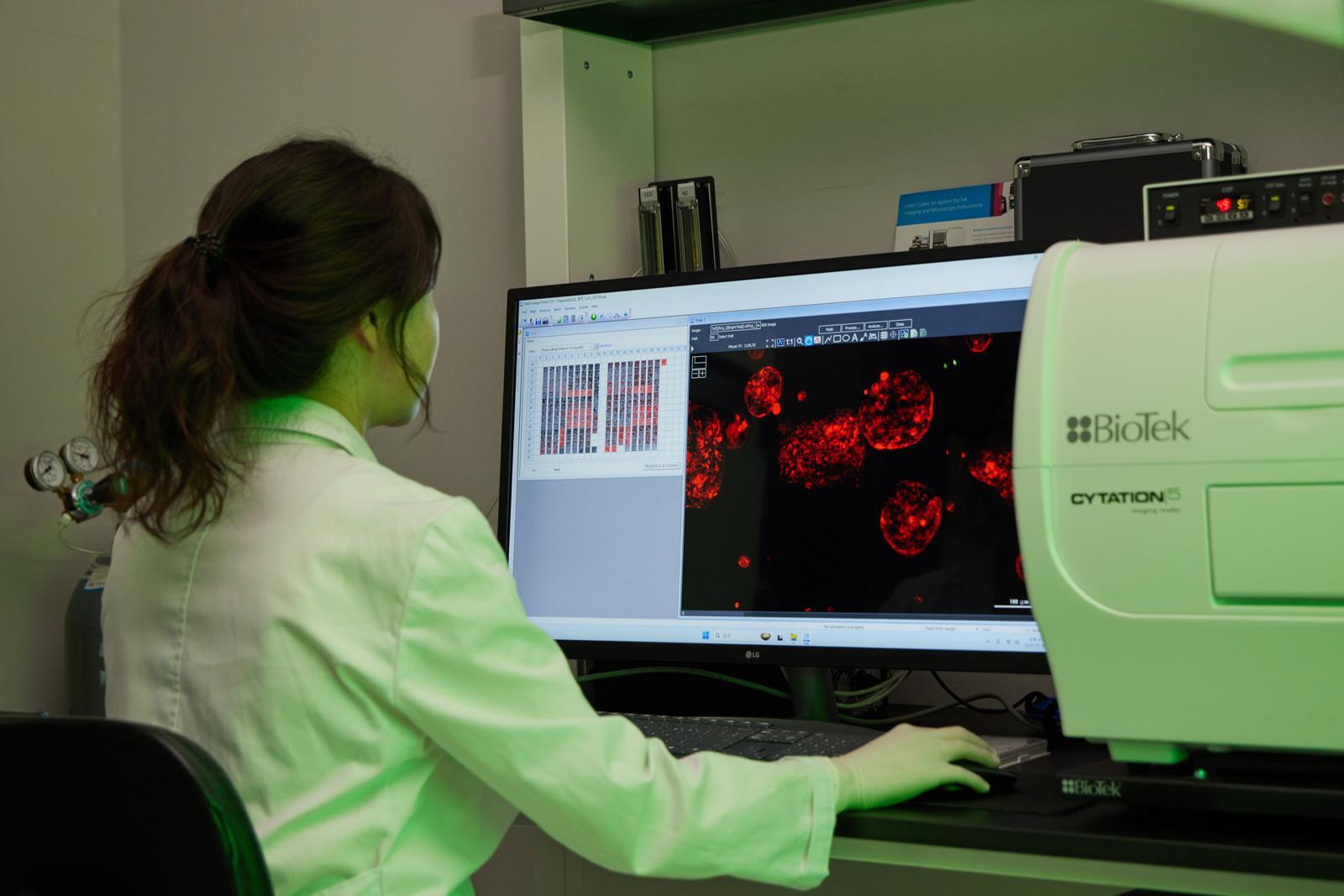
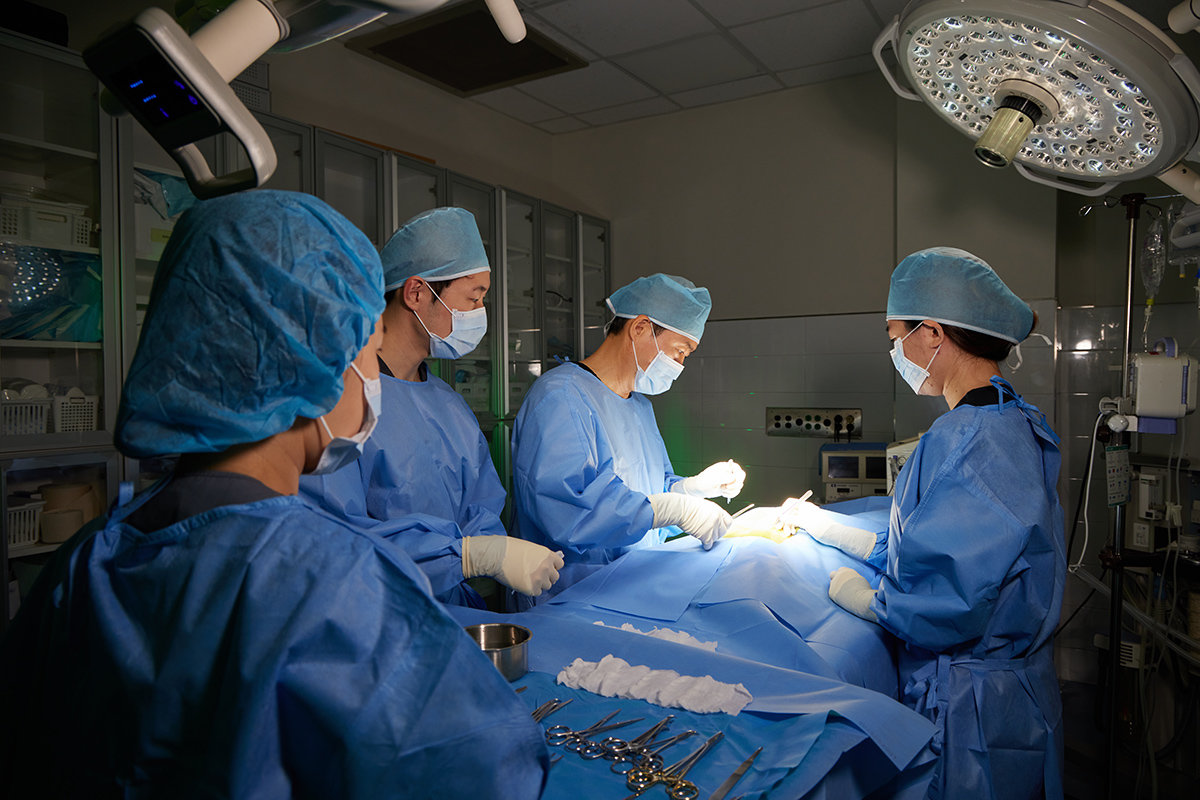
At Konkuk University’s College of Veterinary Medicine, animal hospital, and joint research institutes, medical staff and researchers are dedicated to One Health-related research. Courtesy of Konkuk University
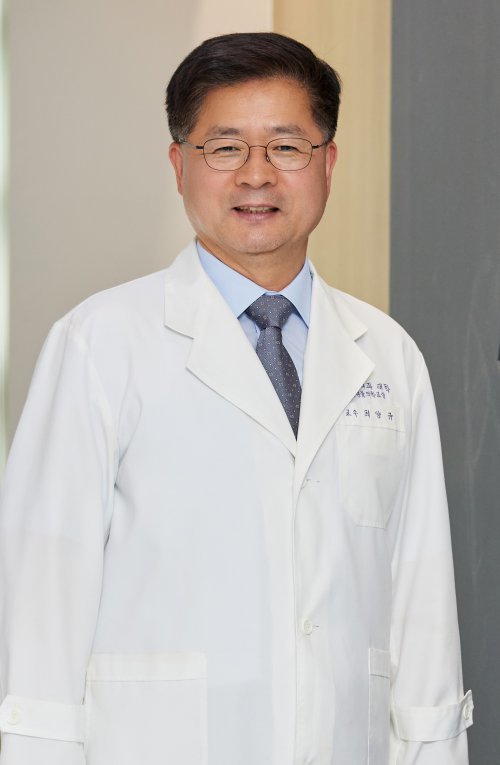
Choi Yang-gyu, Dean of Konkuk University College of Veterinary Medicine
● Beyond Korea’s best to the global top tierThe core of the One Health strategy, which is centered on animal and bio fields, is Konkuk University’s College of Veterinary Medicine. The college and its affiliated animal hospital possess clinical infrastructure at a global level.
In 2024, Konkuk University Animal Hospital became the first university animal hospital in Asia to obtain Level 2 accreditation from the Veterinary Emergency and Critical Care Society (VECCS), an international body. VECCS Level 2, the world’s most prestigious standard in veterinary emergency and critical care, is the highest level attainable by institutions outside the United States.
Konkuk Veterinary Medicine’s acquisition of VECCS Level 2 status means that its emergency and critical care systems—across hospital facilities, clinical systems, staffing, and equipment—are officially recognized as meeting advanced international standards. In practice, Konkuk has led the field of emergency and critical care medicine since 2016, when it became the first in Korea to establish a systematic veterinary emergency medical center. The college’s student council also became the first in Korea to gain official membership in SVECCS, the VECCS student organization, thereby connecting undergraduates to a global academic network and enabling them to learn and help lead cutting-edge veterinary medicine.
● Diverse research outcomes are emergingThe college’s research capabilities are also multilayered. A team led by Professor Kim Si-yoon of Konkuk’s College of Veterinary Medicine is participating in a three-year heart organoid research project worth KRW 7 billion, in collaboration with Harvard Medical School, Asan Medical Center in Seoul, Sejong University, and others. Heart organoids are three-dimensional mini-organs created using stem cells’ differentiation abilities to approximate the complex structure and function of the heart. They can be used for evaluating the efficacy and toxicity of drug candidates, studying diseases, and developing cell therapies.
Heart organoid research can present next-generation experimental methods that replace animal testing. It is particularly significant in that its outcomes could be linked to the drug development ecosystem, opening possibilities for expansion into clinical verification and actual treatment.
The college is also achieving meaningful results in infectious disease research. The study by Professor Lee Dong-hoon’s team, titled “Exploration of mammalian adaptation potential through long-term evolutionary pattern analysis of avian influenza (H5Nx),” is a preemptive analysis of mutation pathways in pathogens that could spread from animals to humans. The research highlighted the need to continuously monitor genomes and rapidly share data with relevant institutions to develop measures to prevent future human infections. Moreover, because responses to zoonotic diseases are no longer just a research topic for specific fields but are directly tied to the overall social safety net, Professor Lee’s work is assessed as possessing strategic value from the perspective of national health security as well.
● Training practice-ready talent with global capabilitiesThe education system at Konkuk’s College of Veterinary Medicine is designed around field practice with the goal of “One Day Skill”—practical skills that can be applied immediately—so that graduates can demonstrate competence in the field as soon as they obtain their licenses. The college strengthens students’ practical response capabilities through simulated clinical training at the university animal hospital and large external hospitals, as well as practical training in the diagnosis and treatment of companion animals and industrial animals. It also provides global clinical experience through an overseas clinical training program in partnership with Pacific States University in the United States. The college is steadily increasing its investment in education, including offering scholarships to all students who participate in this program.
In addition, Konkuk maintains active exchanges with institutions such as California State Polytechnic University, Pomona (Cal Poly Pomona), and Thailand’s prestigious Kasetsart University, expanding joint research and student training programs and reinforcing its global network.
Social responsibility and public interest are also key pillars of the college’s education system. “Biophilia,” a volunteer club for veterinary medical services at Konkuk’s College of Veterinary Medicine, received the Minister of Agriculture, Food and Rural Affairs Award at the recent Korea Animal Welfare Awards in recognition of its long-term and systematic volunteer activities. This demonstrates that Konkuk’s research and educational capabilities are extending into local communities and the international community.
Having started as a university centered on agriculture, livestock, and biotechnology, Konkuk University is concretizing its One Health strategy on the basis of its founding spirit. The roles of the College of Veterinary Medicine and Konkuk University—which link infectious disease response, bio and new drug development, veterinary medical care, and environmental conservation research—are expected to grow further.
“Building Asia’s largest animal hospital to become a world top-30 veterinary school”
[INTERVIEW] Choi Yang-gyu Dean, Konkuk University College of Veterinary Medicine
“Will become a hub platform for One Health research and veterinary services
As pets become family members, veterinarians’ roles are growing”
“Plans to construct the largest university animal hospital in Asia will get fully underway this year. Once the new animal hospital—an advanced infrastructure integrating research, clinical care, and educational functions—is completed, a hub platform combining One Health research and veterinary services will come into being.”
Dean Choi Yang-gyu of Konkuk University’s College of Veterinary Medicine (pictured) explained the significance of building the largest animal hospital in Asia in these terms. The construction of the new animal hospital is not merely a facility expansion, he noted, but carries strategic meaning as the establishment of a research hub that comprehensively addresses the “health” of humans, animals, and the environment.
Dean Choi added, “Konkuk’s College of Veterinary Medicine is currently leading infectious disease control and cancer research, and is also actively conducting research in advanced bio fields including stem cells and exosomes,” and continued, “In the long term, we aim to obtain accreditation from the American Veterinary Medical Association (AVMA) and to rise into the world’s top 30 veterinary schools, and we will continue to take on challenges to achieve this goal.”
Konkuk’s College of Veterinary Medicine places importance not only on medical skills for animals but also on an attitude that centers life and people. Dean Choi emphasized, “With more than 15 million people in Korea now raising companion animals and a social shift toward treating animals like family, the role of veterinarians is growing further,” and said, “Based on the value of respect for life, Konkuk’s College of Veterinary Medicine is focusing on training veterinarians who can comprehensively understand and proactively address the health of animals, humans, and the environment.”
ⓒ dongA.com. All rights reserved. Reproduction, redistribution, or use for AI training prohibited.
Popular News