Expanding the KHU Medical Center Healthcare Ecosystem
Linking clinical-site challenges to industry… Building a research-centered medical institution model
Innovative collaborative research with MS, AWS and others… Developing an mRNA Hantavirus vaccine
NHIS Big Data Center and companies to move in… Jeongneung Medi-Science is the key hub
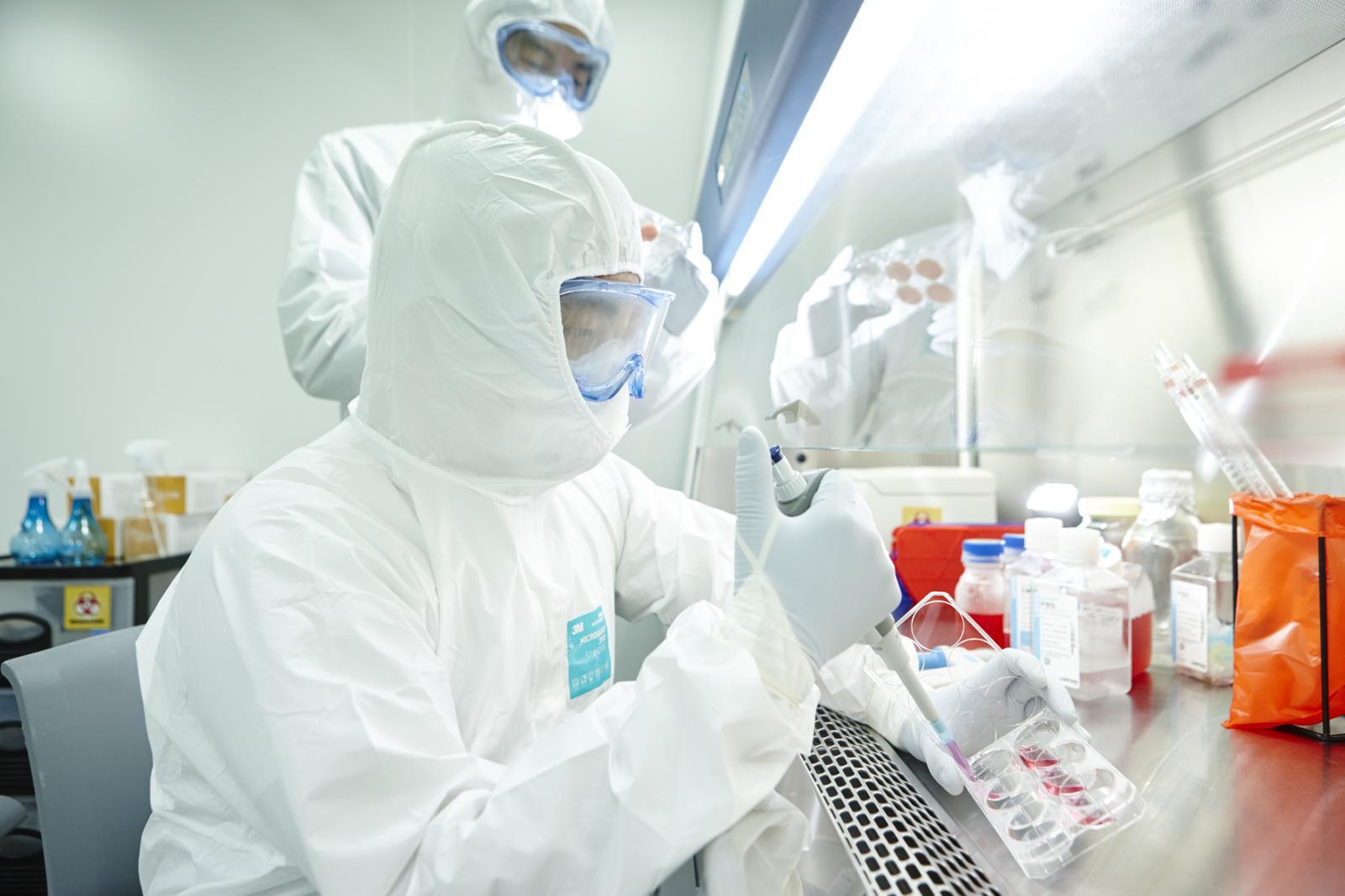
Researchers at Korea University Medical Center wearing protective suits conduct research in a laboratory.
The role of university hospitals no longer stops at treatment and education. Addressing problems encountered in clinical settings through research and then linking this to technology and industry to expand the healthcare ecosystem has taken root as a new mandate.
The Boston biotech cluster in the United States is emblematic of this change. This cluster, where about 1,200 universities, medical institutions, and companies are concentrated, attracted more than USD 7.7 billion (approximately KRW 11 trillion) in investment and employs about 100,000 people as of 2023. Over the past 25 years, hospitals have been at the center of the research ecosystem, winning 66% of the approximately USD 45 billion (KRW 65 trillion) in research funding from the U.S. National Institutes of Health (NIH).
In Korea as well, there is a growing movement to make research and development a growth engine for university hospitals. Korea University Medical Center (Executive Vice President for Medical Affairs and President & CEO Yoon Eul-sik) has long declared “R&D First” and has strengthened its model as a research-centered medical institution. It is focusing on building a virtuous cycle structure that activates industry-academia collaboration based on rich clinical data and basic medical science capabilities and connects research achievements to commercialization.
From research to business… advancement of the industry-academia collaboration model
In July last year, the research team led by Professor Park Yong-doo of the Department of Biomedical Engineering at Korea University College of Medicine was selected for the “2025 2nd Korean ARPA-H Project” worth KRW 15.1 billion. The theme is “Development of AI-based preventive care services for frailty in a super-aged society.” The goal is to go beyond conventional diagnosis focused on cardiopulmonary function, muscle strength, and cognitive function to quantify and predict frailty through integrated analysis that includes metabolic capacity. This is a large-scale convergence project involving six universities and institutions, including CHA University, NewMafit, NHN, and Lonfic, and it is structurally difficult to pursue without collaboration between universities and companies.
Response to emerging infectious diseases and vaccine development are also core pillars of industry-academia collaboration. “Project H,” being promoted around the “Chung Mong-Gu Future Medicine Hall,” Korea’s first full-cycle vaccine development platform, aims to develop an mRNA-based hantavirus vaccine. The project brings together Moderna of the United States, which possesses mRNA technology, and the Vaccine Innovation Center of Korea University College of Medicine, which carries on the research legacy of Dr. Ho-Wang Lee, the first person in the world to discover the hantavirus. The research team is currently conducting non-clinical efficacy tests and aims to complete Phase 1 clinical trials by 2027.
Jeongneung Mediscience Park serves as a hub for this kind of industry-academia-research-hospital collaboration. The GMP facility of CellaresMed, an innovative new drug manufacturing company, has moved in, and the park jointly operates the “Health Insurance Big Data Analysis Center” with the National Health Insurance Service. This has made convergence research possible by combining hospital clinical data with health insurance big data. Through shared offices of the Medical Technology Holdings Company, it supports medical technology start-ups and is expanding its reach by jointly operating the Seoul Bio Hub with KIST.
Open innovation with global companies is also accelerating. In partnership with Microsoft Korea, Korea University Medical Center is promoting the establishment of medical decision support and precision medicine systems using agentic, vertical, and physical AI. With Amazon Web Services (AWS), it is applying high-performance cloud infrastructure to large-scale genomic analysis and new drug development research. With CESCO, it has established a “special laboratory for spatial transmission” at Mediscience Park for the development of technologies to block the spread of infectious diseases.
First ‘triple research-driven hospital’ in the medical sector… a differentiated clinical platform
In the first-phase certification evaluation of research-driven hospitals by the Ministry of Health and Welfare, Anam, Guro, and Ansan Hospitals under Korea University Medical Center all received certification. It is the first case in the medical field where three hospitals under the same medical center were certified simultaneously.
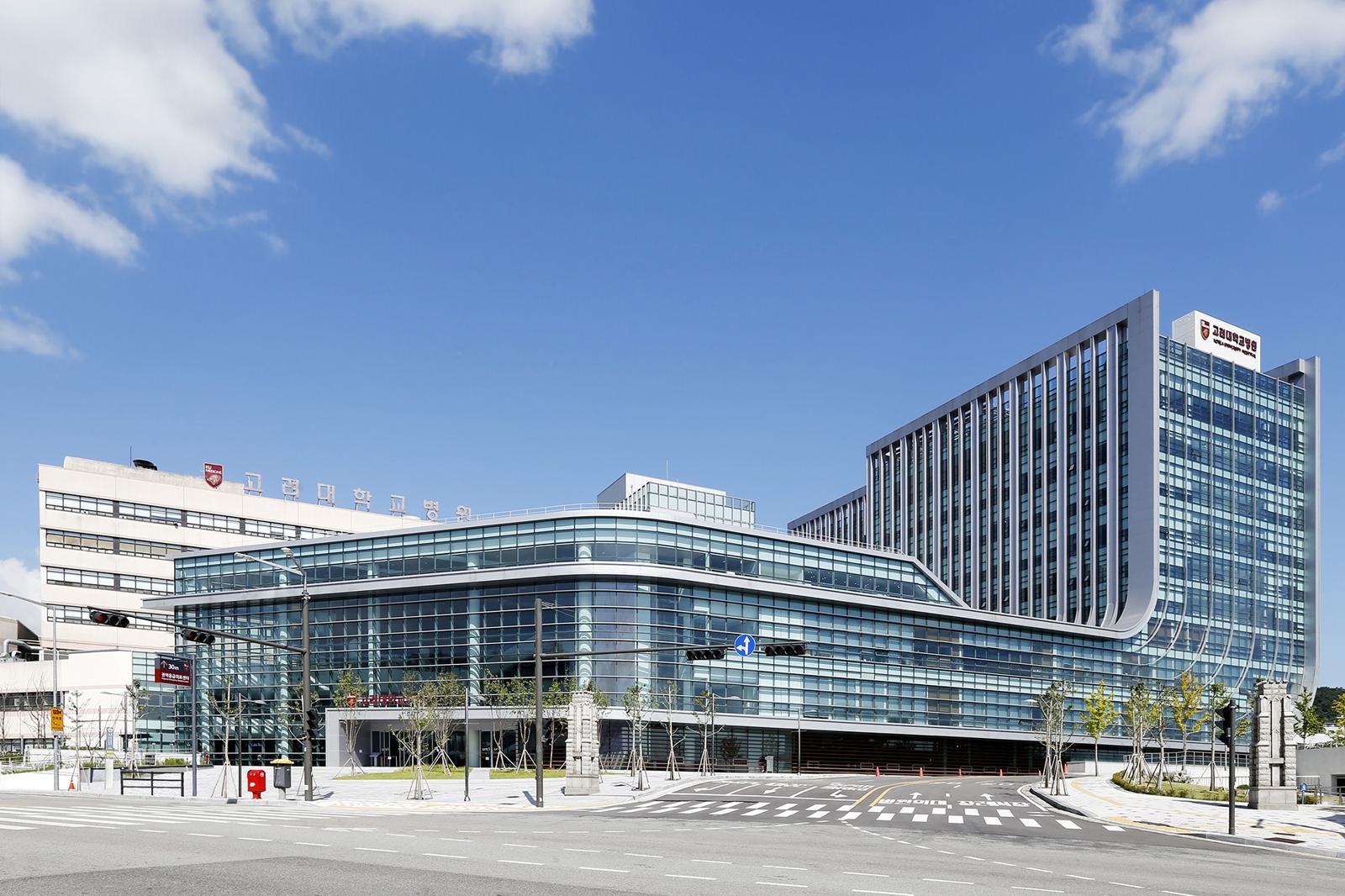
Anam Hospital under Korea University Medical Center. Courtesy of Korea University Medical Center
Anam Hospital has built a cloud-based precision medicine hospital information system and accumulated data on 10,546 cancer patients and 10,158 cancer genomes, laying the foundation for new drug development and personalized treatment. It has reorganized its research governance around four strategic areas: advanced biomedical engineering, innovative precision medicine, smart healthcare, and medical data science. It has also expanded its international network by becoming the first institution in Asia to participate in the American Association for Cancer Research (AACR)’s global project “GENIE.”
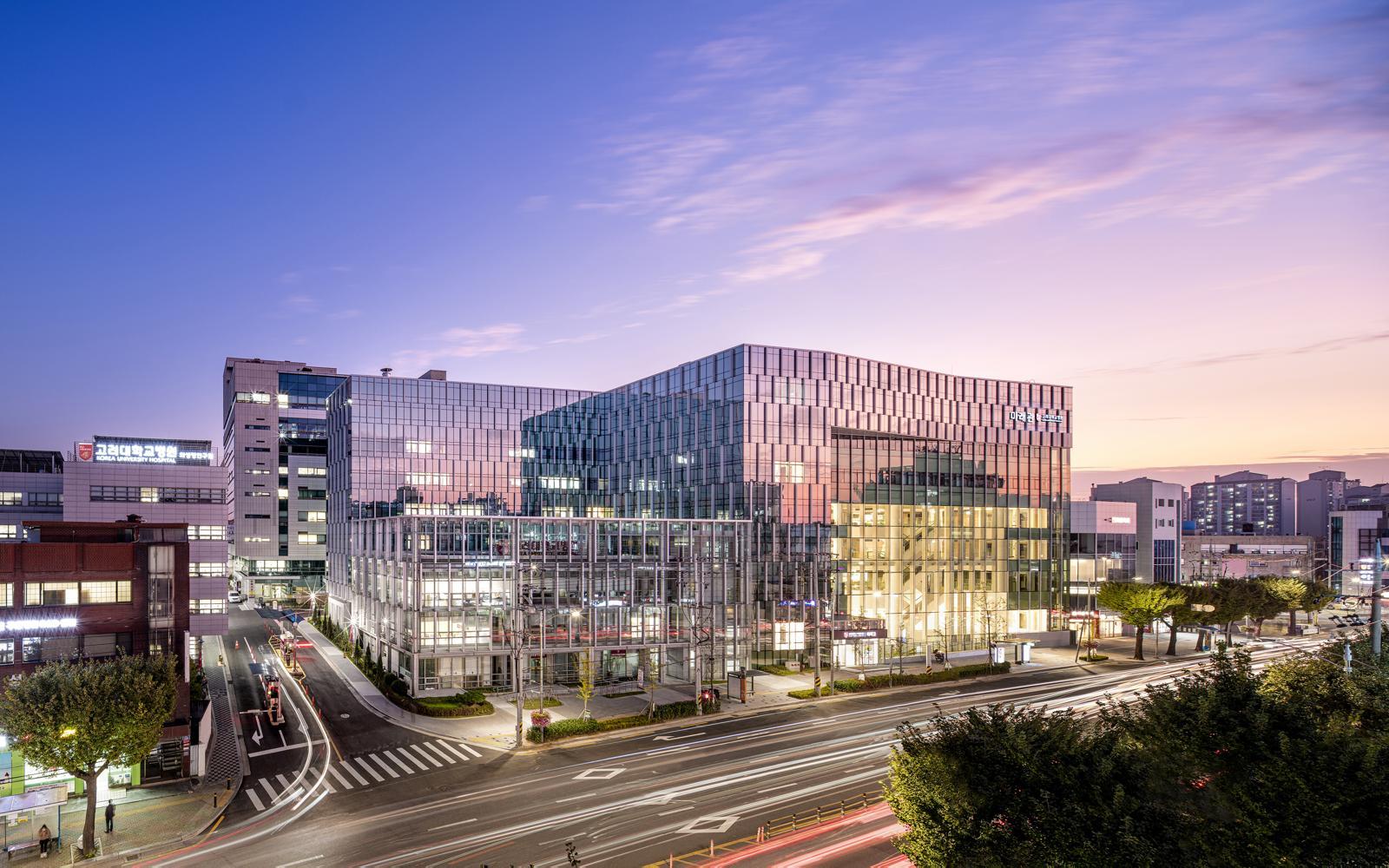
Guro Hospital under Korea University Medical Center. Courtesy of Korea University Medical Center
Guro Hospital has worked to disseminate research achievements by building a sustainable research infrastructure and advancing its R&D support system. It is actively promoting external cooperation and talent development by carrying out projects such as Korea-U.S. joint innovation performance creation R&D and global physician-scientist training. It also operates an open laboratory and the G-Valley Medical Device Development Support Center, strengthening industry-academia collaboration in the field of medical device development.
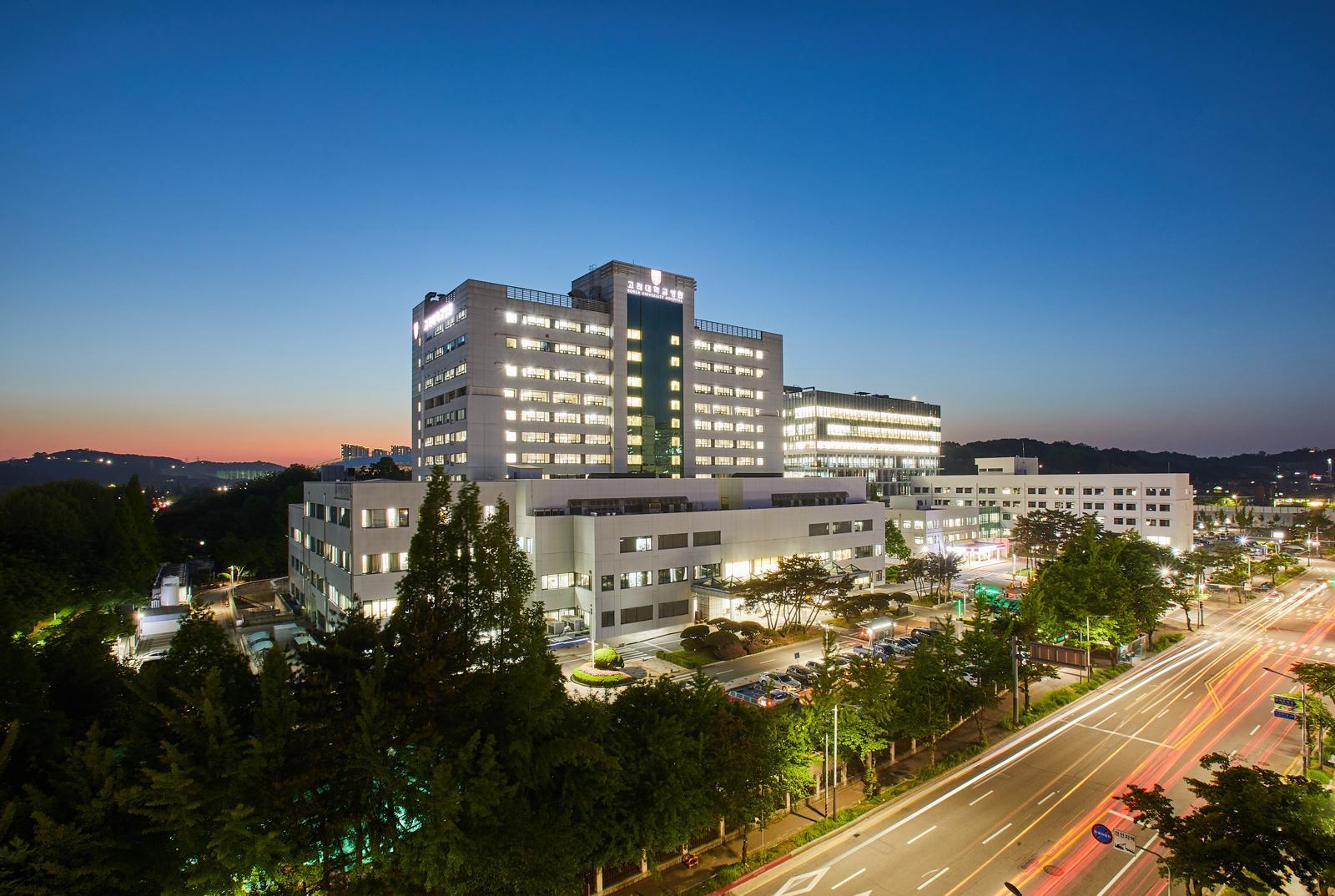
Panoramic view of Ansan Hospital under Korea University Medical Center. Courtesy of Korea University Medical Center
Ansan Hospital has expanded its research space and animal and cell experiment facilities, laying the foundation for basic and translational research. It operates more than 30 cutting-edge shared research instruments (Core Lab) and is focusing on three key priority areas: translational research using zebrafish, healthcare and artificial intelligence, and environment and regeneration.
‘R&D First’ strategy… building a virtuous-cycle ecosystemSince the launch of the Office of Industry-Academia Collaboration in 2004, Korea University Medical Center has expanded its organization and now has a dedicated system encompassing industry-academia collaboration, research strategy, technology commercialization, and clinical research support. Over the past three years, the amount of external research projects it has secured has exceeded KRW 500 billion. During the same period, intellectual property applications have approached 1,000 cases, and contracted lump-sum technology fees have reached KRW 106.7 billion.
Kim Hak-jun, Director of the Office of Medical Research, said, “If university hospitals remain focused solely on patient care as they did in the past, it will be difficult to achieve a quantum leap in growth,” adding, “When industry, academia, and research institutions share ideas and link them to technology industrialization, this leads to the development of treatments and medical devices and creates a virtuous cycle in which both patients and industry benefit.”
A structure in which university hospitals connect with industry through research and the resulting achievements return to patients. The R&D First strategy proposed by Korea University Medical Center is attracting attention as another model for the future direction of Korean university hospitals.
“R&D is the growth engine… We will build a virtuous-cycle system from clinic to industry”
Interview with Kim Hak-jun, Director of the Office of Medical Research, Korea University
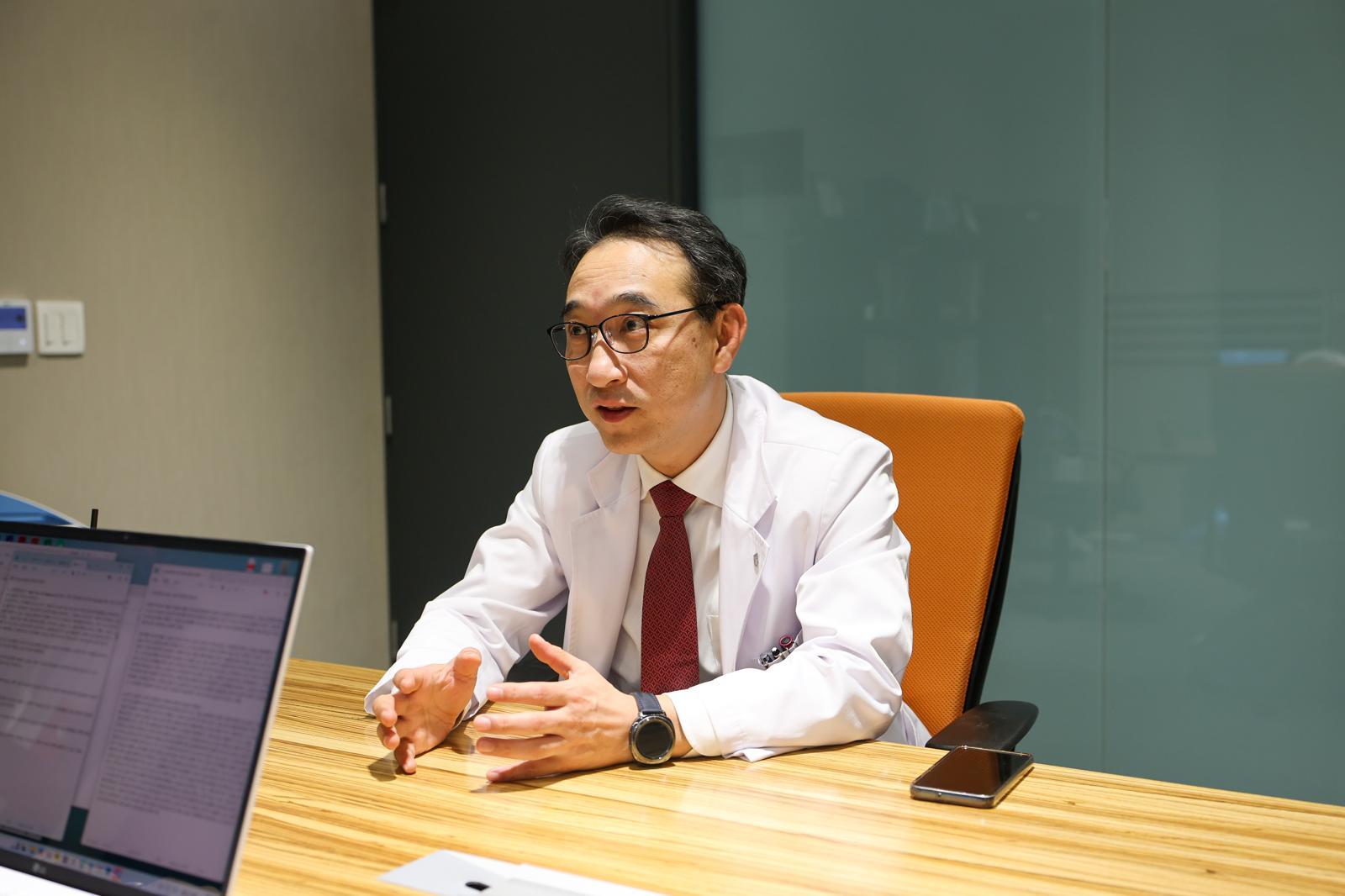
Kim Hak-jun, Director of the Office of Medical Research at Korea University, said, “If university hospitals remain focused only on treatment, it is difficult to achieve leapfrogging growth,” stressing that “medical innovation is only possible when industry, academia, and research break down boundaries and cooperate.” Courtesy of Korea University Medical Center
How far should university hospital research extend? Unless a structure is created in which research goes beyond papers and academic achievements to actual technology development and industrialization, it is difficult for research to break out of the hospital’s walls. Korea University Medical Center has raised the banner of “R&D First,” declaring that it will make research and development the institution’s core growth engine. The fact that Anam, Guro, and Ansan Hospitals have all been designated as first-phase certified research-driven hospitals by the Ministry of Health and Welfare, thereby establishing a “triple research-driven hospital” system, is an extension of this strategy.
The reporter spoke with Kim Hak-jun, Director of the Office of Medical Research at Korea University, about the direction and challenges of university hospital research.
—What is the most fundamental difference compared to traditional university hospital research?“In the past, university hospital research was ‘research that ended with research.’ If the goal was papers and academic presentations, we are now creating a structure that helps ideas emerging from clinical practice lead to start-ups and commercialization. Clinical physicians connect the issues they perceive while seeing patients to technology development, and once domestic clinical trials are completed, we also consider overseas expansion. The key is a virtuous cycle. The aim is to create a structure in which technology generates revenue in the market and this is reinvested in R&D. To this end, we are preparing a transition to a system where researchers and clinicians hold ongoing discussions and receive support all the way to start-ups and management. Taiwan operates this kind of model relatively well. We are also strengthening international networking.”
—Anam, Guro, and Ansan Hospitals have all been certified as research-driven hospitals. Are they operating under the same model, or is there a division of roles?“The shared direction is ‘strengthening the research-based clinical platform,’ but a natural division of roles has emerged. Ansan Hospital is specialized in research in environmental and toxicology fields, and Guro Hospital has strengths in medical device research due to its proximity to the Gasan Digital Complex. Anam Hospital is strong in research imaging equipment, brain disease research, and precision medicine. Important research is conducted at all three hospitals, but you can view it as a division-of-labor structure in which each strengthens its competitiveness around its specialized areas.”
—What is the biggest challenge for medical technology research in Korea?“In the bio field, it takes a long time to obtain approval. On average, it takes about six years for medical technology to enter the market and generate revenue. Bio is an industry that particularly requires patience. The problem is that the domestic market is small. Many companies that develop technology, launch start-ups, and attract investment falter at the scaling stage. In the United States and China, governments and the private sector invest together over the long term. The size of related funds in Korea is about one-tenth that of the U.S. or China. Support is lacking when it comes to embedding technology in industry. In digital healthcare, although approval procedures are being streamlined, once products enter the market, they face issues related to reimbursement versus non-reimbursement and limitations in profitability. Ultimately, strategic government funds and long-term support are needed. Bio is a field with a long time horizon. A culture that is willing to wait, along with institutional backing, is essential.”
—What role should the medical center play in ensuring that research results are actually commercialized?“Open innovation is key. We invite major pharmaceutical companies and investors and hold technology briefings every year. Research alone is not enough. Connecting to investment is crucial. We are also actively pursuing overseas expansion. We are collaborating with the biotech network in Boston, USA, and have made meetings with investors a regular practice. Recently, multinational pharmaceutical companies have increasingly considered conducting clinical trials in Korea instead of China. This is an opportunity for us. In healthcare, there is a need for a strategy of designing ‘technologies that are likely to succeed’ and building start-ups around them. To broaden the early-stage investment ecosystem, we are collaborating with a variety of venture investors.”
—How suitable is Korea’s environment for conducting global clinical trials?“Korea’s clinical trial environment meets international standards. Patient protection systems are in place as well. This is why global pharmaceutical companies conduct clinical trials in Korea. Trials are particularly active in areas with high clinical utility, such as intractable diseases, cancer, and rheumatism. We have made entry into the U.S. our top priority. Our strategy is to enhance the value of our technologies by attracting overseas investment in parallel. We are also in discussions with global pharmaceutical companies.”
—What changes will strengthening the R&D ecosystem bring for patients?“There will certainly be tangible changes. Autonomous logistics robots are already moving around inside the hospital, and the design of smart wards is underway. We intend to use the new Dongtan Hospital to be established in Hwaseong as a test bed, creating an environment in which research can be carried through to clinical application. Ultimately, research must benefit patients. Our goal is to create a structure in which access to treatment improves and new technologies are applied in clinical practice more quickly.”
ⓒ dongA.com. All rights reserved. Reproduction, redistribution, or use for AI training prohibited.
Popular News