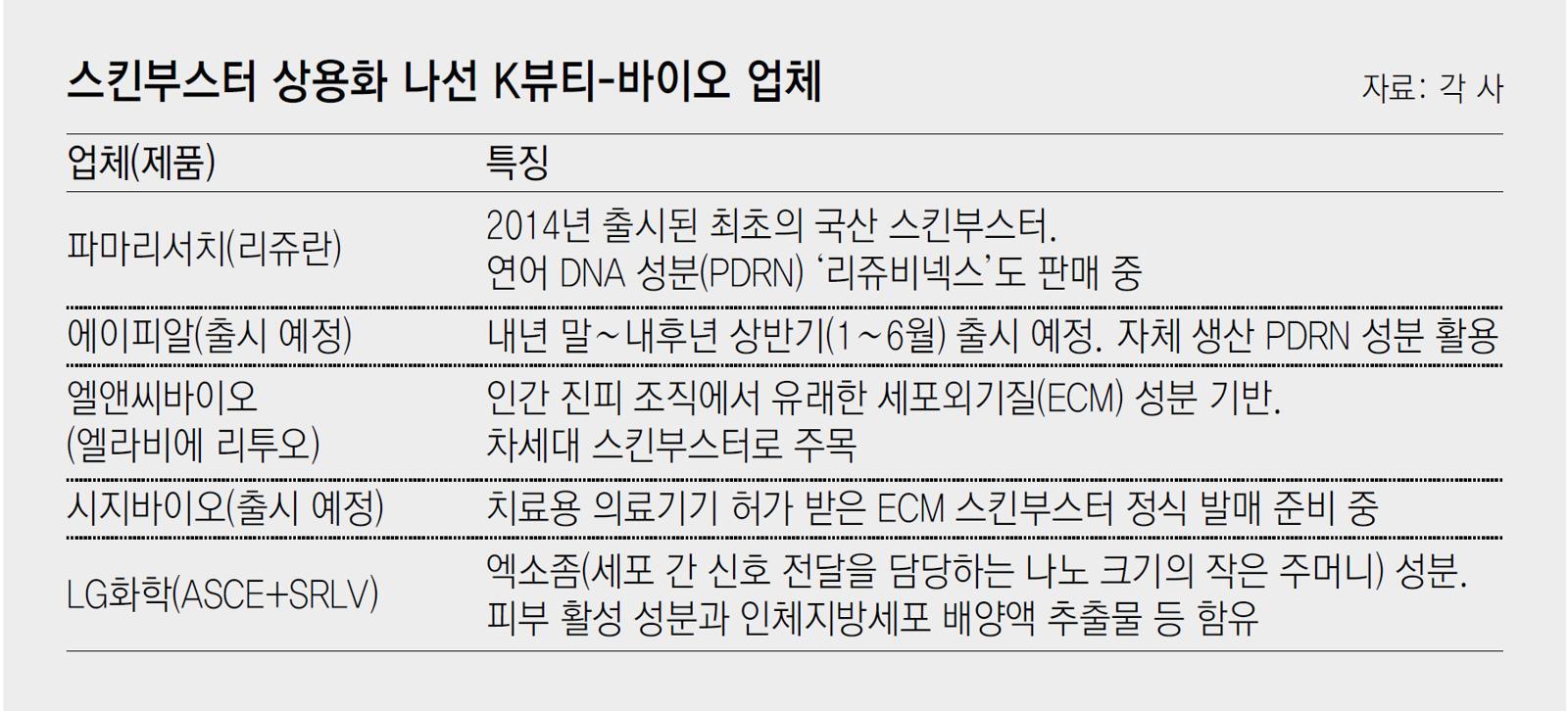
K-beauty companies are accelerating their entry into the “skin booster” market, which is drawing attention for its skin regeneration technology. As global interest in slow aging grows and “skin longevity” comes to the fore, APR and others are preparing to produce skin boosters to compete with PharmaResearch’s “Rejuran,” which currently leads the market.
According to the beauty industry on the 23rd, APR is currently conducting sample tests for the development of business-to-business (B2B) skin booster products at its APR Factory Campus 3 in Pyeongtaek, Gyeonggi Province. The company aims to launch the products on the market as early as the end of next year. An APR representative explained, “We are preparing to enter healthcare businesses such as skin boosters by using our self-produced salmon DNA ingredient (PDRN).”
APR’s move into the B2B-based skin booster business is driven by its assessment that market demand is surging. Skin boosters are characterized by delivering active ingredients directly into the deeper layers of the skin to promote skin regeneration. They typically involve injecting drugs evenly into the skin surface using ultra-fine needles. While botulinum toxin and fillers deliver immediate cosmetic effects, skin boosters focus on skin regeneration. The company believes that combining skin boosters with its strong-performing beauty devices could enable it to dominate the anti-aging market.
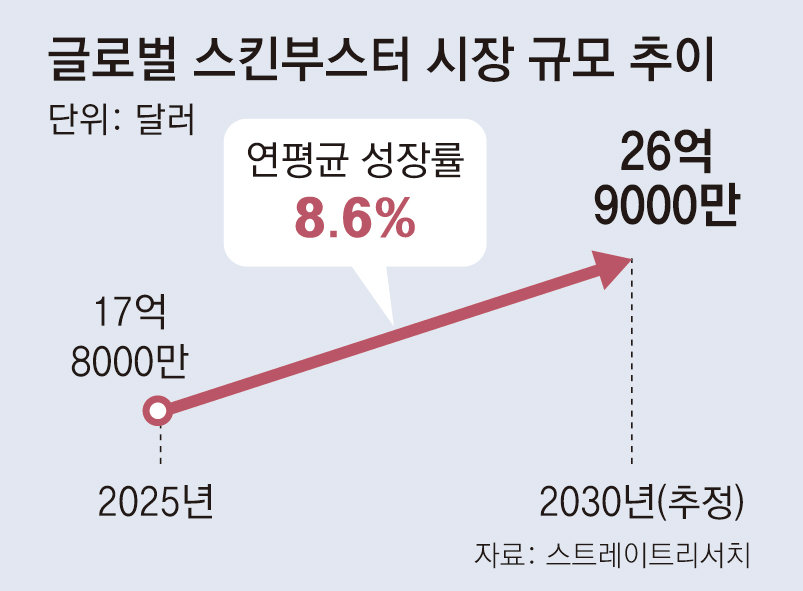
The skin booster market is growing rapidly. According to market research firm Straight Research, the global skin booster market is expected to grow at a compound annual rate of 8.6%, from USD 1.78 billion (approximately KRW 2,564.6 billion) last year to USD 2.69 billion (approximately KRW 3,875.7 billion) in 2030. Cho Eun-ae, an analyst at LS Securities, said, “Skin boosters, which are in the early stages of market development, have begun to establish themselves as a core pillar of global aesthetic medical device company portfolios.”
In the domestic market, PharmaResearch, which launched Korea’s first homegrown skin booster “Rejuran” in 2014, is leading the sector. Rejuran is based on polynucleotide (PN) derived from salmon. Although it has the same origin as the PDRN ingredient that APR is preparing to launch, PDRN focuses on skin regeneration and anti-inflammation, whereas PN focuses on elasticity and hydration. Industry estimates put Rejuran’s current market share at around 60–70%.
Since last year, competition in the skin booster market has intensified with the full-scale launch of new products containing extracellular matrix (ECM) derived from human dermal tissue. A leading example is “E’lavie Lituo” (Lituo), introduced by L&C Bio. Lituo experienced immediate shortages following its release. L&C Bio plans to increase its monthly production volume from 24,000 units last year to around 80,000 units in the second half of this year. CGBio, an affiliate of Daewoong Group, is preparing to officially launch an ECM skin booster that has obtained approval as a therapeutic medical device.
Experts anticipate that the skin booster market will gradually expand in tandem with the growth of K-beauty. In a recently published report, Han Yong-hee, an analyst at Growth Research, stated, “With the K-beauty boom and the high treatment efficacy of skin boosters, the segment has strong medium- to long-term growth potential,” adding, “However, since these are medical products, obtaining regulatory approvals in overseas markets is crucial.”
ⓒ dongA.com. All rights reserved. Reproduction, redistribution, or use for AI training prohibited.
Popular News