※ The Kyungpook National University Startup Support Group is operating the “Startup Leap Package (Large Corporation Collaboration Track)” for startups together with SKT. It promotes innovative growth by activating startups’ ideas and technological capabilities based on collaboration with large corporations. IT Donga introduces promising startups participating in the Kyungpook National University–SKT collaboration track of the Startup Leap Package.
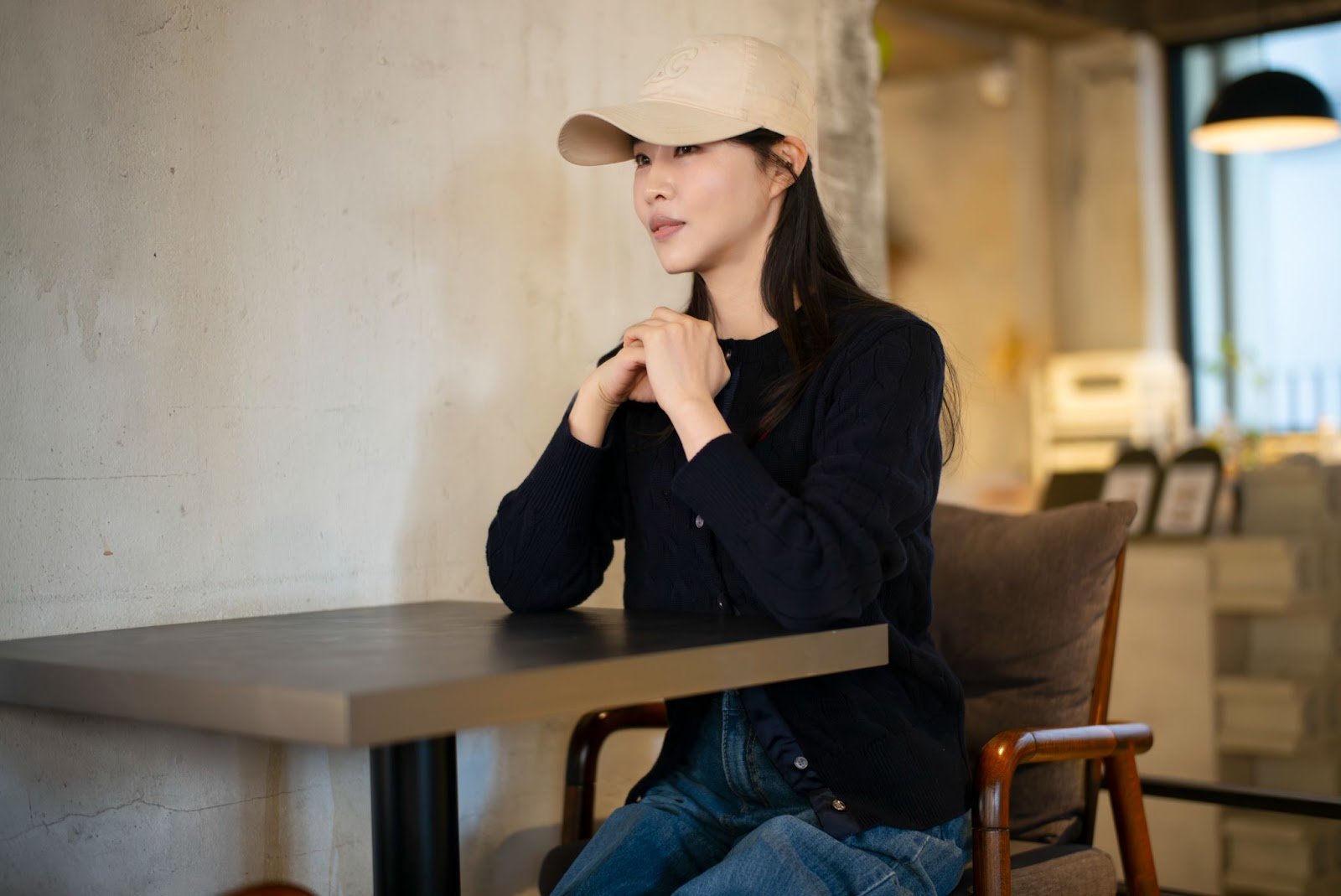
“As a student, it is difficult to obtain fabric samples (swatches) when visiting the Dongdaemun fabric market. From the merchants’ perspective, they invest time and effort to create sample books one by one, so they can only give them to buyers who will purchase in bulk. After going in and out of the market for about 10 years, the idea came to mind to digitalize this process, and that is how the AI-based fabric-specialized brokerage platform ‘iFabric’ was built.”
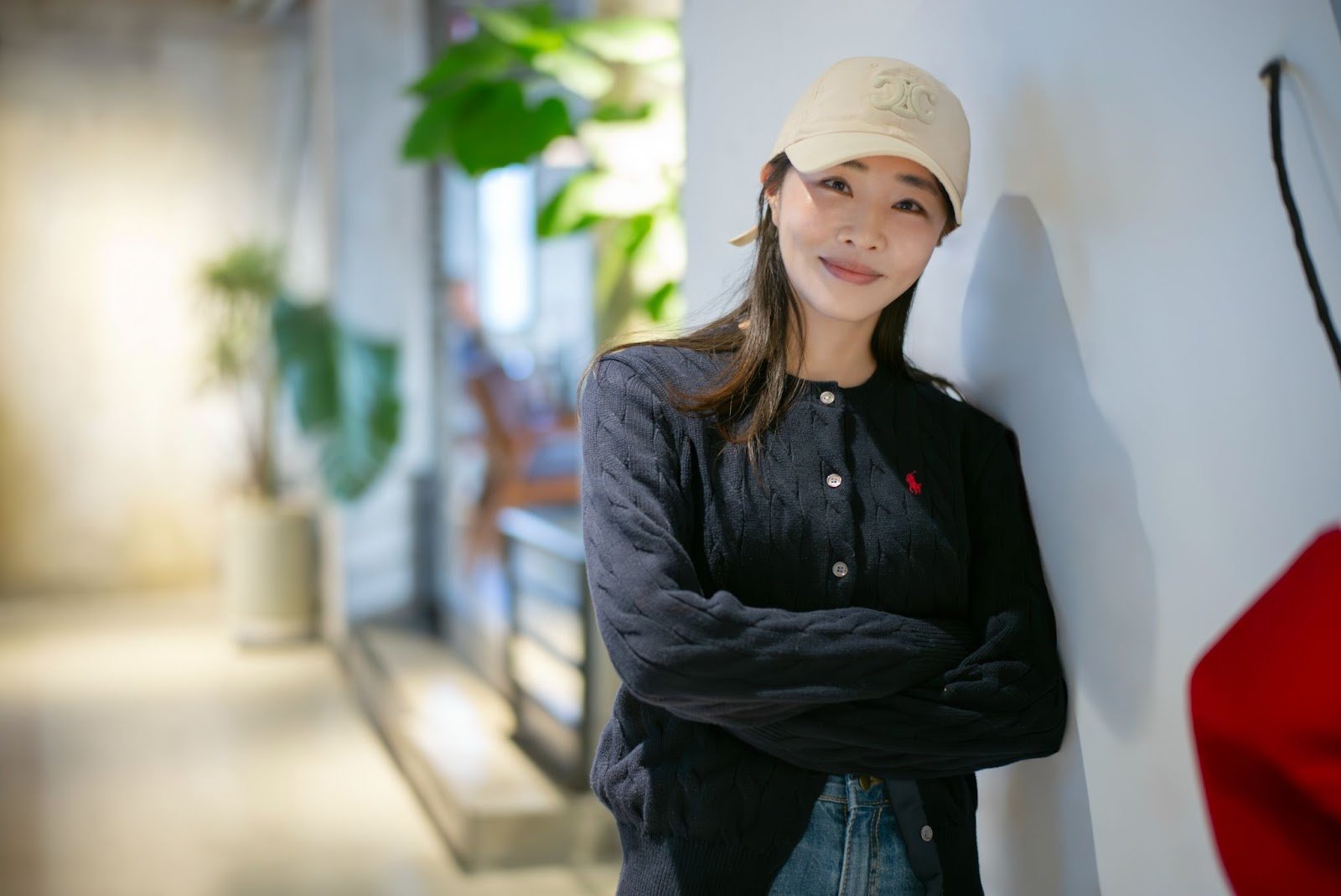
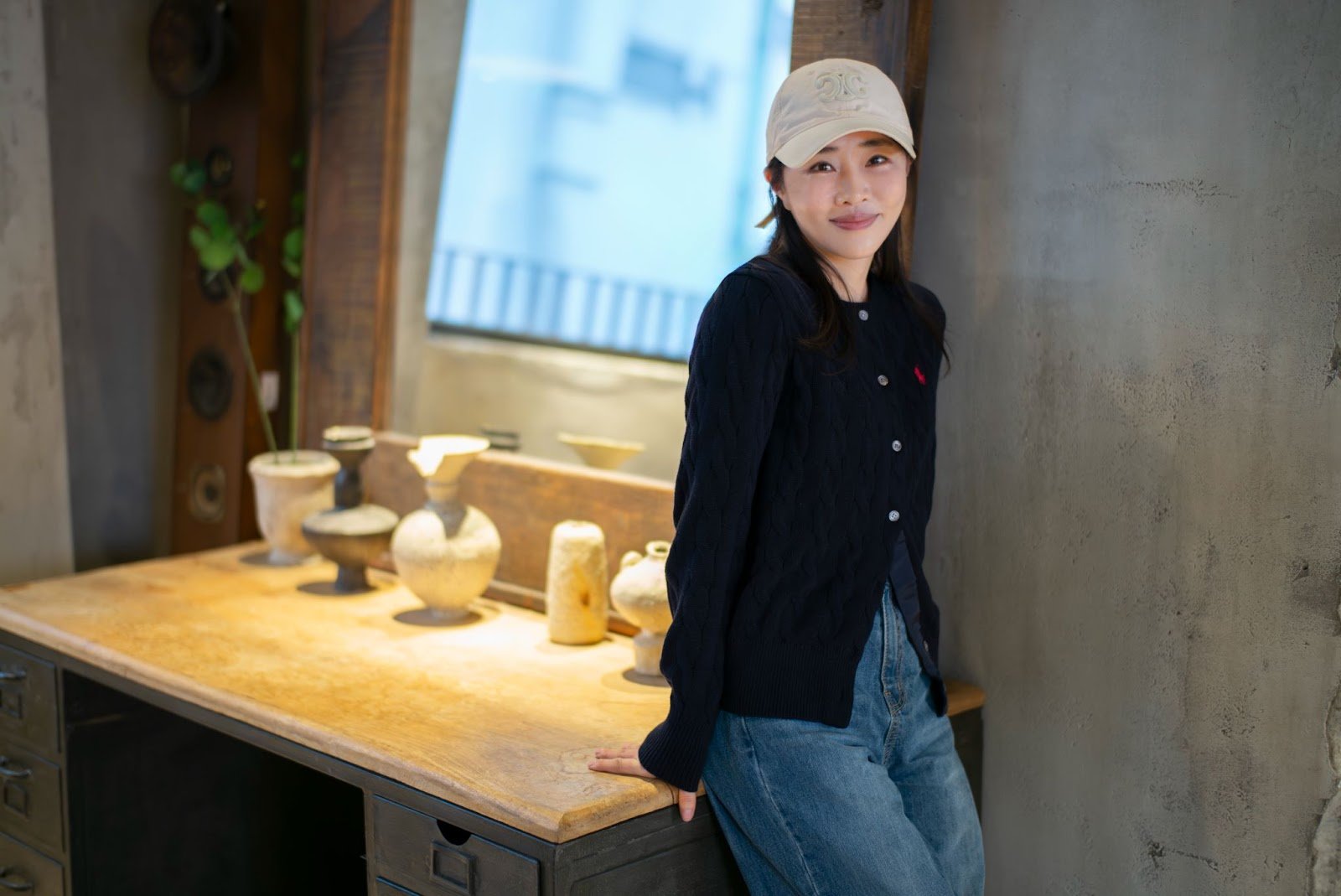
CEO Kang Ji-hyun of Saesaem has worked as an apparel designer for more than 10 years and developed the AI-based fabric brokerage platform ‘iFabric’ based on that experience / Source=IT Donga
After graduating from a clothing design and fashion-related department, Saesaem CEO Kang Ji-hyun worked in the fashion industry for 13 years. During her career, she was recognized for her capabilities to the extent that she handled overall planning and management for the Seoul Fashion Week Seoul Collection for two years. For her, visiting the Dongdaemun fabric market is a routine task, but even after more than 10 years, it is still difficult in practice to obtain swatches.
Initially, Kang also created a fashion brand and ran a business focused on overseas sales, but the situation changed with COVID-19. While brand operations themselves were going well, skyrocketing logistics costs due to COVID-19 reduced sales volumes and naturally led her to look around her surroundings again. What she then faced was herself, walking around the Dongdaemun fabric market to obtain samples, and she built the iFabric platform to help designers like herself who were going around to get samples. IT Donga spoke with CEO Kang Ji-hyun of Saesaem.
What kind of service is an AI-based fabric brokerage platform?iFabric is a platform that brokers fabric sales using AI technology. To understand why fabric sales need to be brokered separately, it is necessary to first look at the situation in this market. CEO Kang explained, “Many fashion designers work as one-person businesses and design new products four times a year in line with the seasons. In this process, they procure fabrics that match the trends. Each fabric is chosen by touching it one by one, but for fabrics that they have already used, they sometimes order non-face-to-face,” and added, “However, because designers purchase in smaller volumes than apparel companies, swatches are only given in cases where there are relatively large order volumes or where the purchase potential is clearly high.”
Unlike ordinary retail markets, the Dongdaemun fabric market is a specialized market targeting business operators. As such, only industry practitioners with a certain level of understanding of the market can attempt commercialization there / Source=IT Donga
In such circumstances, when someone wants to purchase fabric non-face-to-face, they can use iFabric. On the service, CEO Kang separately sells swatches from tenant companies and connects customers who want to purchase samples with those tenant companies. Asked about the scale of tenant companies and service status, she said, “There are 4,300 companies in the Dongdaemun fabric market, and each company holds hundreds of types of fabric. There are overlaps, and each is different depending on the blend. Globally, there are more than 2.5 million types of fabric,” and added, “Development of the iFabric platform has been completed, and full-scale business is scheduled to begin in March. In the earlier pilot phase, 34 companies participated.”
What potential was identified in the pilot phase? CEO Kang explained, “In Seoul, it is faster to send someone directly to pick things up, even if labor is involved. However, if you already have samples, it is fine to purchase non-face-to-face, and a sub-designer can also procure online the samples that the head designer has selected directly. Considering all the time for picking up and shipping the fabric, the process can be about two days faster, and in other regions, about three days can be saved,” and continued, “There were many individual users without business registrations, and the purchase rate of general-purpose fabrics, which did not need to be returned, was very high. About 90% led to repeat purchases.”
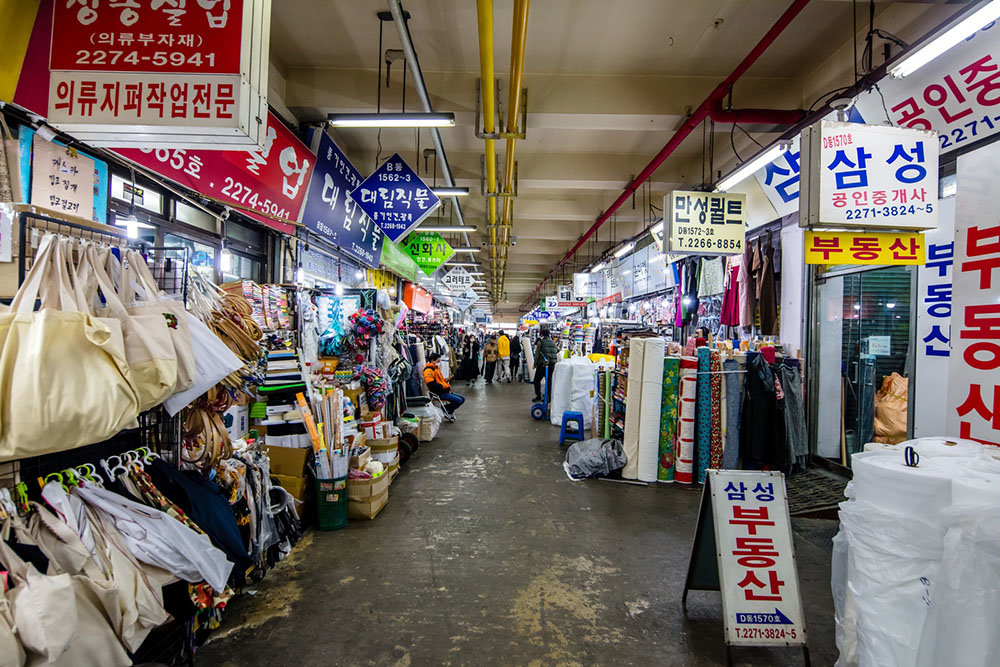
Inside Dongdaemun Pyeonghwa Market. Although this image was taken in 2020, it still appears far from being digitalized / Source=Seoul Research Data Service
However, even if fabrics are digitalized, their physical properties cannot be fully implemented. While the fashion market itself is driven by the latest trends, the fabric market still relies on people physically walking around, touching, and purchasing because of the tactile feel of the actual material. To address this, CEO Kang has considered many aspects and is tackling the issue through image quality, swatch acquisition, and AI advancement.
She said, “No matter how digital the era becomes, fabric remains an analog field. We also understand the difficulties of digital and therefore sell swatches so people can actually touch them. Still, to enable potential buyers to see as many fabrics as possible, we shoot and upload fabric colors and textures in as standardized a shooting environment as possible. Of course, expressions differ depending on the user’s monitor, so it may not have major significance, but we are nonetheless doing the work.”
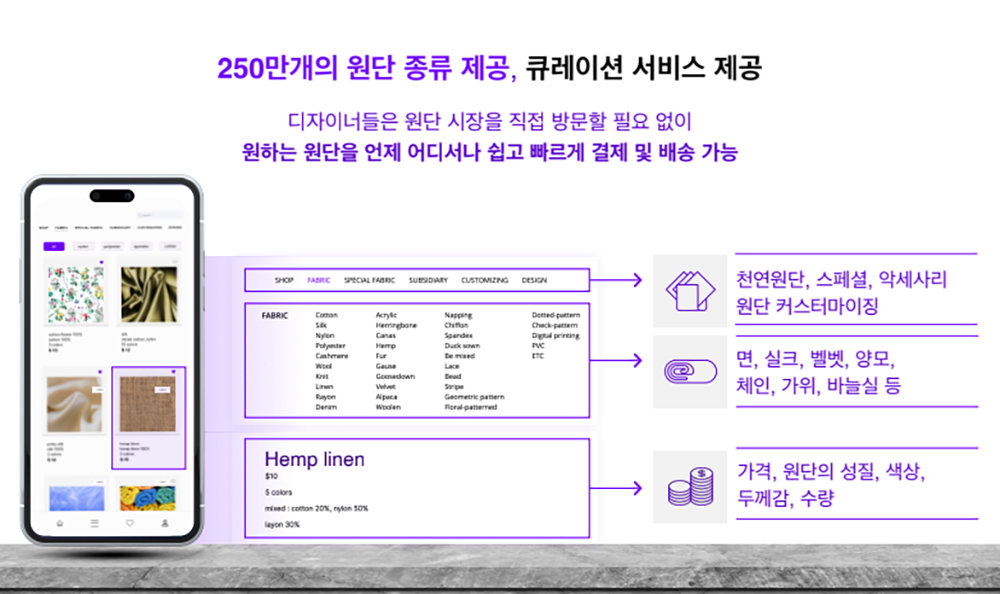
iFabric includes a function where, after entering appropriate fabric conditions, AI recommends suitable fabrics / Source=Saesaem
She continued, “We provide a consumer-tailored fabric recommendation service using AI, in terms of color, pattern, texture, and price. Like Netflix, it automatically analyzes the composition of fabrics that users normally prefer and provides suitable fabrics. In addition, when users take photos of fabrics or garments they own, the AI analyzes the similarity and material of the fabric in the image, then searches the cloud database for similar fabrics or fabrics that meet specific conditions.”
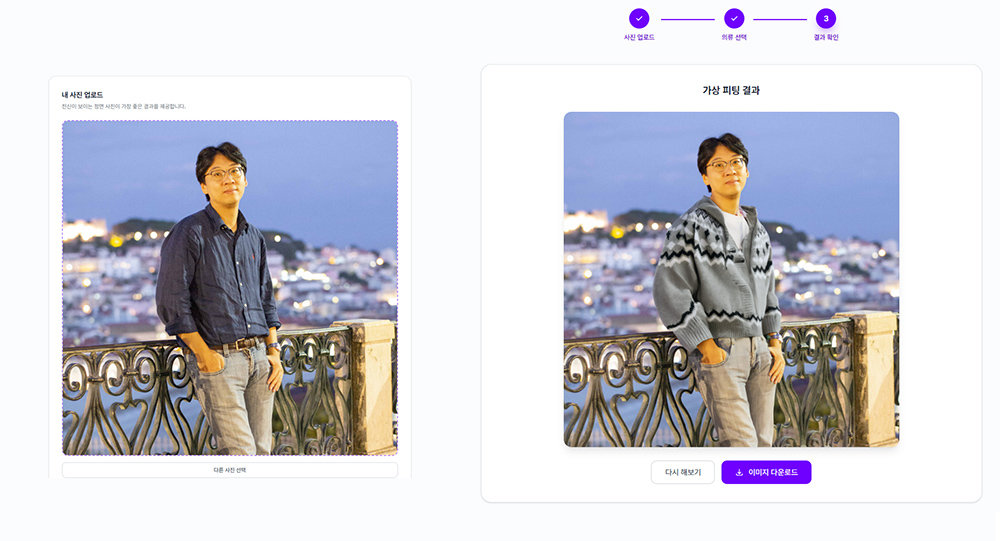
The reporter personally tried iFabric’s virtual garment wearing service. The left is the original photo, and the right is the result of virtually wearing a selected garment through the service / Source=Saesaem
iFabric’s AI fabric matching recommendation service and fabric image texture service were officially launched in February, and a service that maps garments with fabrics through AI and allows users to try them on virtually has also entered pilot introduction. When a user uploads a front-facing full-body photo, the AI recognizes the face, and after the user selects garments and fabrics, a 3D modeling shows how the user looks wearing those garments. CEO Kang believes that this function will enable designers to create expected garments much more easily.
Behind Saesaem’s business growth stand Kyungpook National University and SKTWhile CEO Kang Ji-hyun’s own capabilities are a major driver in Saesaem building its own market, government support programs for startup growth are also contributing in the background. In March last year, Kang was selected for the 2025 Startup Leap Package (Large Corporation Collaboration Track) conducted by the Kyungpook National University Startup Support Group, and has since been collaborating with SK Telecom. The Startup Leap Package is a program by the Korea Institute of Startup & Entrepreneurship Development that supports startups in their leap phase, between three and seven years after founding, and the Kyungpook National University Startup Support Group, as the host organization, has been supporting Saesaem.
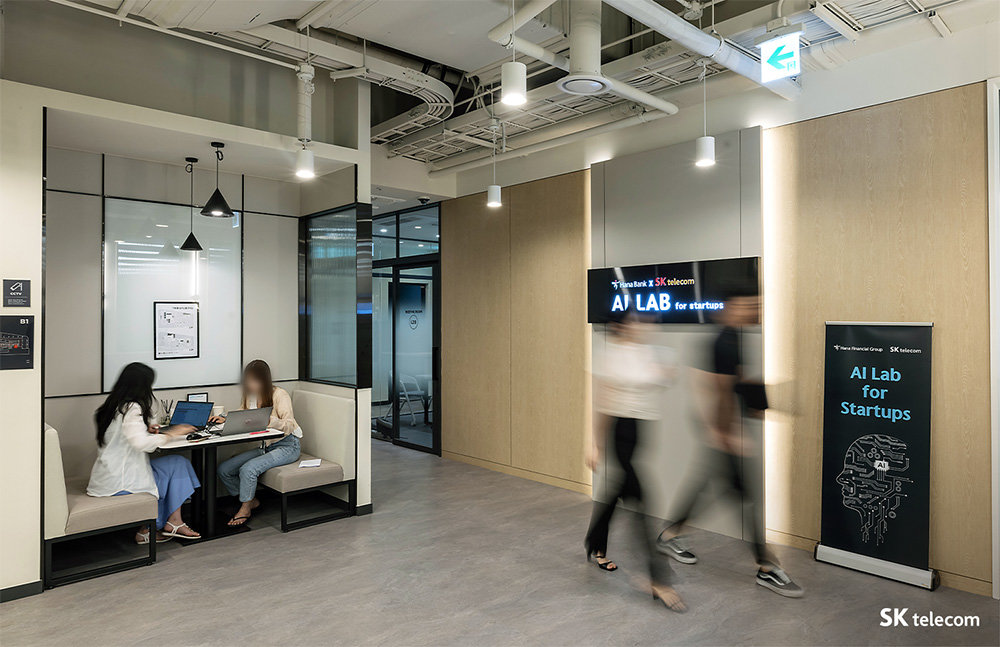
SK Telecom Startup Lab provided to collaboration startups by SK Telecom / Source=SK Telecom
As this is a large corporation collaboration track, Saesaem and SK Telecom have discussed initiatives such as ▲ building a fabric digital twin and digital catalog ▲ AI-based customized fabric analysis and recommendations ▲ 3D virtual fabric simulation ▲ development of a natural language search-based AI fabric image search system. Among these, the AI fabric matching recommendation service, fabric image texture service, and 3D garment mapping service have already been implemented in-house. CEO Kang introduced the cooperation by saying, “With SK Telecom’s support, we are currently based in the SK Telecom Startup Lab and maintaining close communication. All SK representatives respond kindly and are continuously striving to cooperate.”
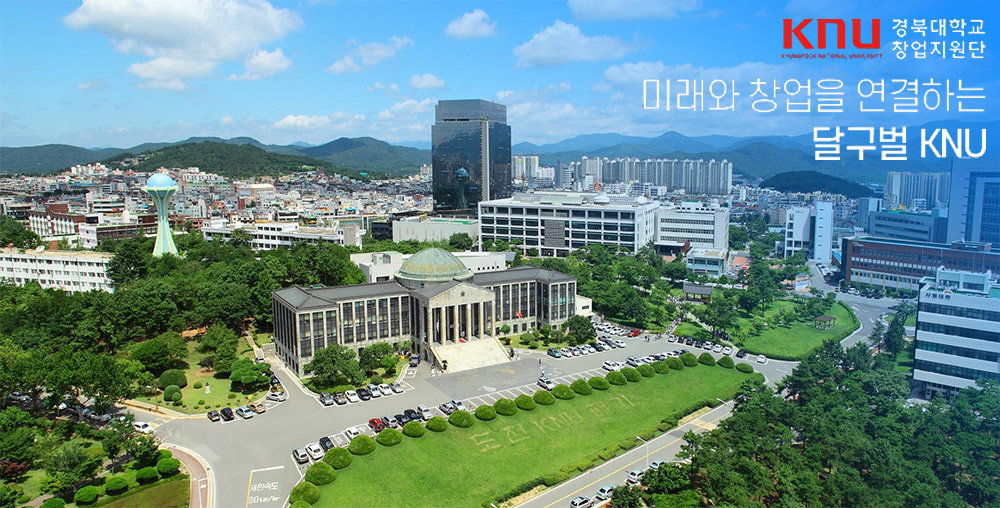
The Kyungpook National University Startup Support Group supports promising startups through the Startup Leap Package, which consists of seven programs / Source=Kyungpook National University Startup Support Group
The host organization, the Kyungpook National University Startup Support Group, is also supporting business expansion for leap-phase startups through seven programs. These programs consist of: ▲ “K-Scale-up Day,” which offers investment capability enhancement mentoring and consulting, and supports linkage to policy finance in cooperation with the Korea Technology Finance Corporation ▲ “Open Global Road,” which supports securing overseas networks and intellectual property ▲ the “Value Innovation Program,” which explores joint commercialization between startups and DGB Financial Group affiliates together with Iambank ▲ “Tech-Up+,” which supports professional R&D consulting and technology development planning ▲ “ESG-Biz Up,” aimed at ESG and related certifications ▲ the “Daegu–Gyeongbuk Startup Festival,” which introduces local anchor companies and startups ▲ and “Ad-Up Startup Media Promotion Support,” which assists with media publicity and short-form video production.
CEO Kang noted, “We are receiving a great deal of support in building the service. When developing platforms or technologies, it is essential to draw up concrete plans and calculate expenditure properly, and we are receiving practical help in this area. It accounts for about half of the important aspects of commercialization,” and added, “The Startup Support Group is working hard to assist from multiple angles. It directly coordinates corporate evaluations with the Korea Technology Finance Corporation and has helped with matters such as cash flows to ensure smooth evaluations. We also received mentoring related to scale-up, investment, and program building. We are consistently receiving support for prompt responses and smooth commercialization.”
“This year’s goals are investment attraction and revenue achievement… We will digitalize the fabric market”
CEO Kang Ji-hyun has begun full-scale service of iFabric and aims to secure investment and generate sufficient revenue this year / Source=IT Donga
Saesaem’s iFabric has now completed preparations for commercialization and is shifting into full-scale business. CEO Kang summarized this year’s goals as follows: “The service has been completed, and we are preparing to increase the number of tenant vendors. In the early phase, we plan to provide the service for free and directly go out into the field to secure business partners. This year, we will actively introduce Saesaem’s business items to the domestic market, and achieve not only investment attraction but also our targeted revenue.”
The Dongdaemun market that CEO Kang is tackling is particularly challenging for startups to enter. First-generation startups such as “Linkshops,” which had created services connecting Dongdaemun wholesalers with domestic and overseas retailers, and “Gollala,” which brokered exports and operated a data-based K-fashion wholesale platform, launched their businesses but later closed them. Meanwhile, Shareground and Delicious have continued their businesses while steadily improving their services. The fabric market that CEO Kang is approaching is also expected to be a difficult market.
Nevertheless, having worked as a designer for more than 10 years, CEO Kang herself has come to understand the fabric market’s ecosystem, and has increased the business’s survivability by targeting not only fabric suppliers but also regional anchor designers. Expectations are high for Saesaem, which has reached an inflection point, to successfully establish itself in the market.
IT Donga reporter Nam Si-hyun (sh@itdonga.com)
ⓒ dongA.com. All rights reserved. Reproduction, redistribution, or use for AI training prohibited.
Popular News