Trust A&C announced on the 23rd that it has completed the registration of a patent for a next-generation “AI Building” that integrates automated logistics equipment into the building structure. Trust A&C plans to file this technology in major overseas markets as well and pursue global expansion.
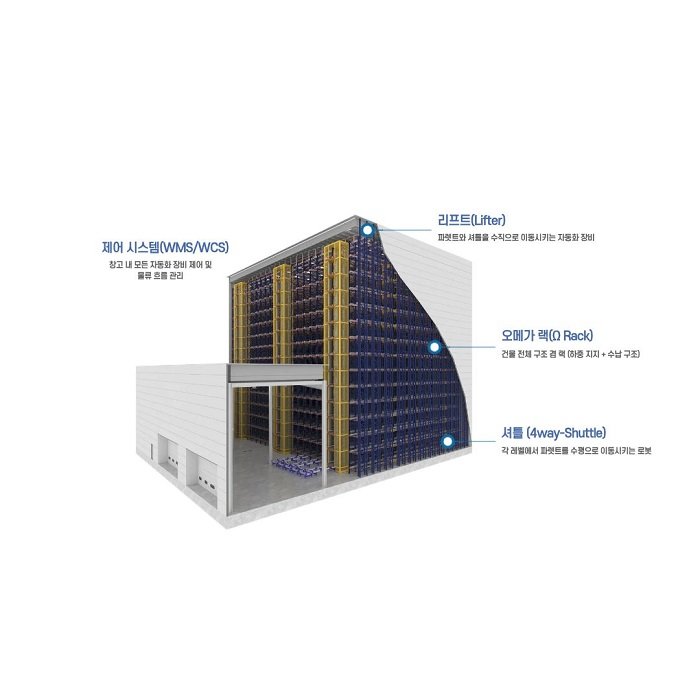
The core of this patent lies in using the automated rack structure itself as a key structural element of the building. Unlike conventional logistics centers, which have been designed by separating the building structure and automation equipment, Trust A&C has designed automated logistics equipment as the structural frame, implementing logistics centers as a “building system premised on automation.”
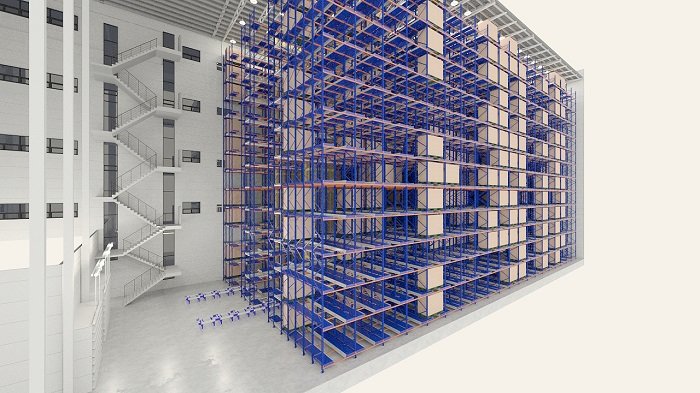
The AI Building is designed based on a vertical rack structure and shuttle system, enabling high-rise, high-density storage. It can maximize land-use efficiency even on constrained sites, while securing space efficiency, structural stability, and cost-effectiveness in both design and construction phases.
Trust A&C’s AI Building applies a construction method in which the shuttle rack structural frame, an automated logistics facility, is first erected to a height of approximately 30–40 meters, followed by the construction of exterior walls and roofing. A distinguishing feature is that the entire logistics center is designed and implemented on the premise of automation.
Construction proceeds in four stages: △ base frame construction and foundation concrete pouring △ installation of the shuttle rack structure △ finishing of exterior walls and roof △ construction of automation equipment such as shuttle racks, lifts, IT systems, WMS, and WCS. All processes are organically linked on the premise of automation equipment installation, enabling planning from design through construction to operation as a single flow. The system can also be expanded or reconfigured according to changes in cargo volume or operating methods, enhancing flexibility in logistics operations.
In addition, the AI Building is based on an integrated automation system that combines shuttles, lifts, and conveyors, thereby strengthening both storage and operational efficiency. It can be extended and applied in various forms, including general ambient logistics centers, cold and frozen warehouses, urban logistics facilities, and high-rise automated warehouses.
Trust A&C explains that applying the AI Building rack can significantly increase storage throughput per the same floor area while also achieving operating cost reductions. It states that this goes beyond simple equipment adoption to structurally improve return on investment (ROI). According to the company’s analysis, for a storage capacity of 5,000 pallets, a conventional logistics center requires a site of about 7,000 pyeong with construction costs of around KRW 10 billion, whereas applying the AI Building method allows construction on a site of about 1,100 pyeong at a cost of around KRW 2.5 billion.
Based on a high-rise, high-density storage structure, the number of stored units per the same site area can be maximized, thereby strengthening competitiveness in logistics operations. It is being assessed as a new logistics center model that simultaneously increases throughput and operational performance while optimizing land and cost structures.
Trust A&C is also further enhancing the operational competitiveness of the AI Building through a warehouse automation solution that combines SaaS-based WMS/WCS with AI technology. The WMS manages the entire logistics process, including inbound, inventory, picking, and outbound, while the WCS controls automation equipment such as shuttle racks, lifts, and conveyors in real time. By adding an AI layer, it can detect inventory placement errors and damage risks in advance and optimize picking routes in real time.
The platform includes cloud-based central control, real-time inventory visibility, predictive maintenance, and dynamic slot optimization, and is provided in a SaaS structure. It allows flexible response to changing logistics environments and maintains system currency through continuous upgrades and performance-based pricing options. In particular, leveraging its own patented automated building rack technology and integration capabilities, the platform is designed to manage the entire process—from equipment and space management to data analytics and operational optimization—within a single system.
Trust A&C’s strategy is to redefine logistics warehouses not as simple storage spaces but as “operational infrastructure,” thereby leading future logistics innovation. A company representative said, “The AI Building is a structure that maximizes storage volume per the same area while simultaneously reducing land acquisition and construction costs,” adding, “The goal is to present an ROI-focused smart logistics infrastructure model.”
Going forward, Trust A&C plans to continue expanding the development of smart logistics technologies, including the advancement of SaaS-based WMS optimized for the AI Building and automated building racks, real-time monitoring based on digital twins, and solutions that respond to evolving trends in humanoids and AI.
ⓒ dongA.com. All rights reserved. Reproduction, redistribution, or use for AI training prohibited.
Popular News