Tesla declares end of car models amid falling vehicle sales U.S. factory lines to be converted into robot mass‑production bases… Reshaping from carmaker into a ‘physical AI’ company Robots emerging from simple assistants to core labor force… “Humanoid robot market to reach $5 trillion by 2050”
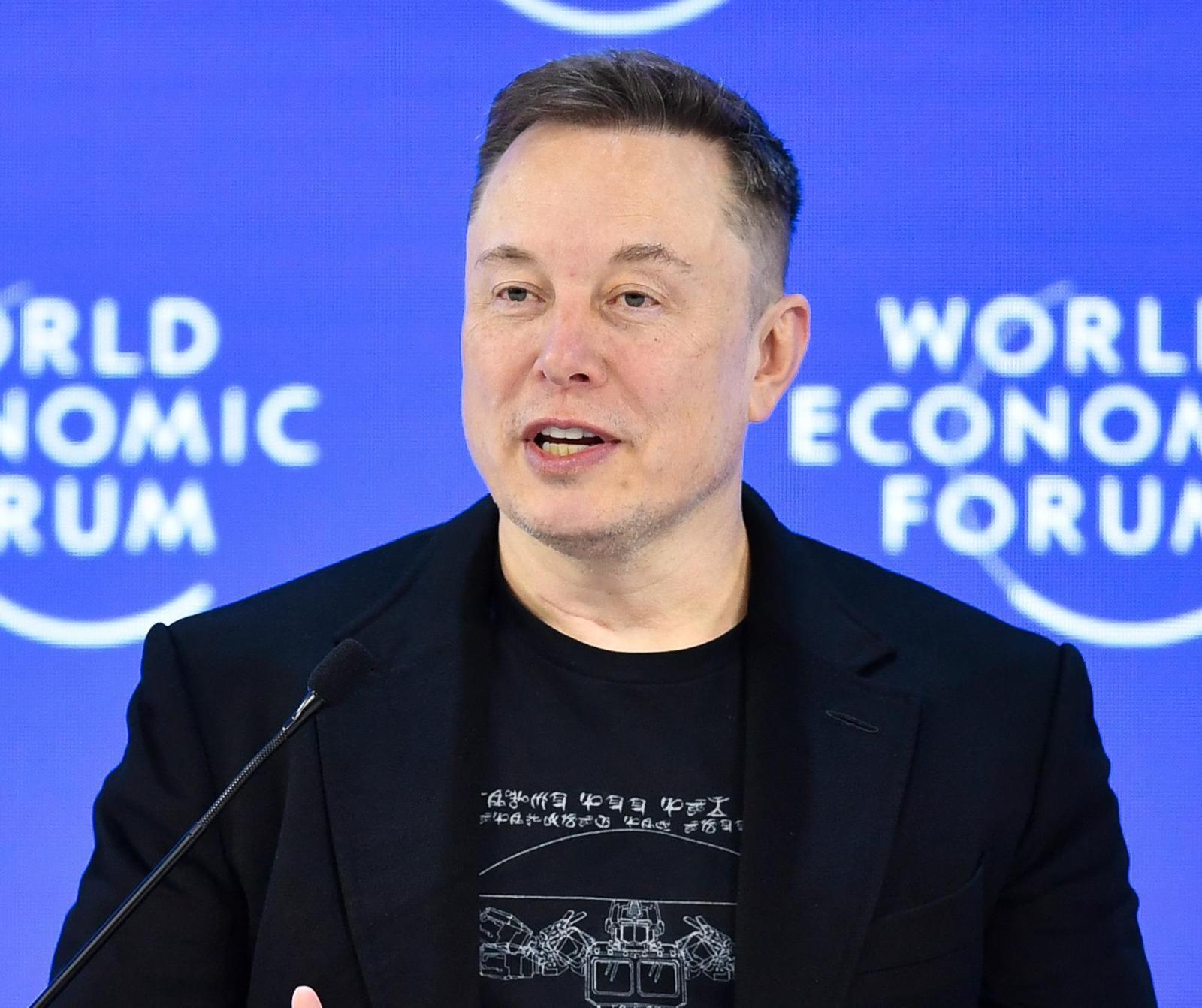
The Tesla premium sedan “Model S” and sport utility vehicle (SUV) “Model X,” which contributed to opening the era of electric vehicles, will be discontinued in the second quarter (April–June). Elon Musk, Tesla Chief Executive Officer (CEO, photo), said production of the two models will end after the next quarter, and announced that the production lines at the Fremont plant in California, United States, will instead be converted into a mass-production base for the humanoid robot “Optimus.” The market is interpreting this not as a simple discontinuation of vehicle models, but as a signal that Tesla is transforming into a “physical AI” company.
According to Tesla’s 2025 earnings report released on the 28th (local time), last year’s annual revenue was USD 94.827 billion (about KRW 135.119 trillion), down about 3% from the previous year (USD 97.69 billion), marking the first year-on-year decline since the company was founded. Fourth-quarter (October–December) net income (GAAP basis) plunged 61% year-on-year to USD 840 million.
As price-cut competition pushed the automotive segment gross margin, which once exceeded 20%, down to the mid-10% range, Tesla has opted for the drastic step of discontinuation. This move is seen as driven by a sense of crisis that it will be difficult to recreate past glory “by selling cars alone.” On a conference call, CEO Musk said, “It is time to grant an ‘honorable discharge’ to the Model S and X,” adding, “Tesla is not an automotive company, but is transforming into a physical AI provider focused on autonomous vehicles and humanoid robots.”
The “Optimus” robots Tesla plans to deploy on the now-vacant lines are regarded not as simple machines but as “substitutes for labor.” The long-term goal is annual production of 1 million units. Tesla intends to apply electric vehicle components and battery technology to robots to secure price competitiveness and to transplant FSD (Full Self-Driving) vision data into robot brains. The company’s strategy is to preempt this market at a time when the manufacturing paradigm is shifting toward “dark factories,” in which AI operates plants without human intervention, and to build high value-added service models such as subscriptions for robot operating software, in addition to hardware sales.
Global automakers are also moving quickly in response to Tesla’s “speed race.” Hyundai Motor Group unveiled the next-generation “Atlas” at “CES 2026,” the world’s largest consumer electronics and information technology (IT) exhibition held in the United States at the beginning of the year, combining Boston Dynamics’ robot technology with Nvidia chips and Google AI. Starting with deployment at the Metaplant America (HMGMA) in Georgia, United States, in 2028, Hyundai has chosen a phased validation roadmap that ranges from simple parts sorting to complex assembly. BMW, in partnership with robot startup Figure AI, has deployed “Figure 02” at its Spartanburg plant in the United States since August last year and completed commercialization testing on actual production lines.
Robots are emerging not just as auxiliary tools but as the main labor force at industrial worksites of the future. In a report released in May last year, Morgan Stanley projected that 1 billion humanoid robots will be in operation by 2050, forecasting that the market will reach USD 5 trillion (KRW 7,158.5 trillion).
Kim Jae-hyung
AI-translated with ChatGPT. Provided as is; original Korean text prevails.
ⓒ dongA.com. All rights reserved. Reproduction, redistribution, or use for AI training prohibited.