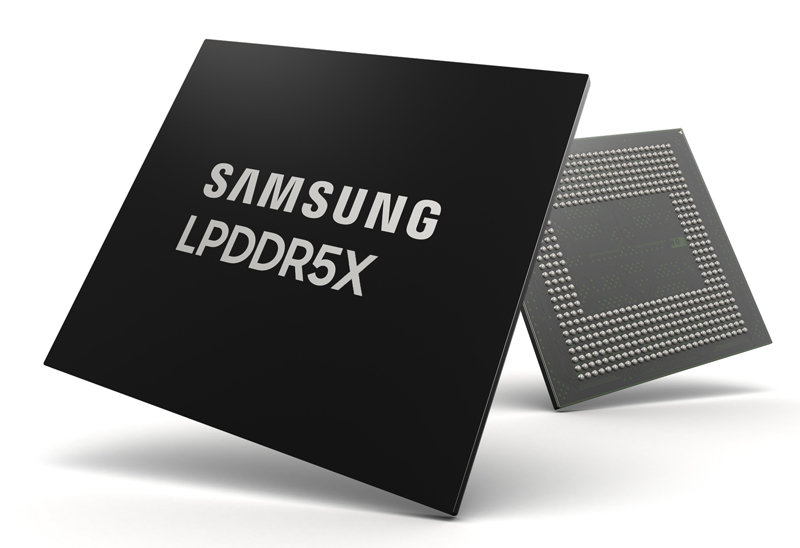
Samsung Electronics ‘DRAM’
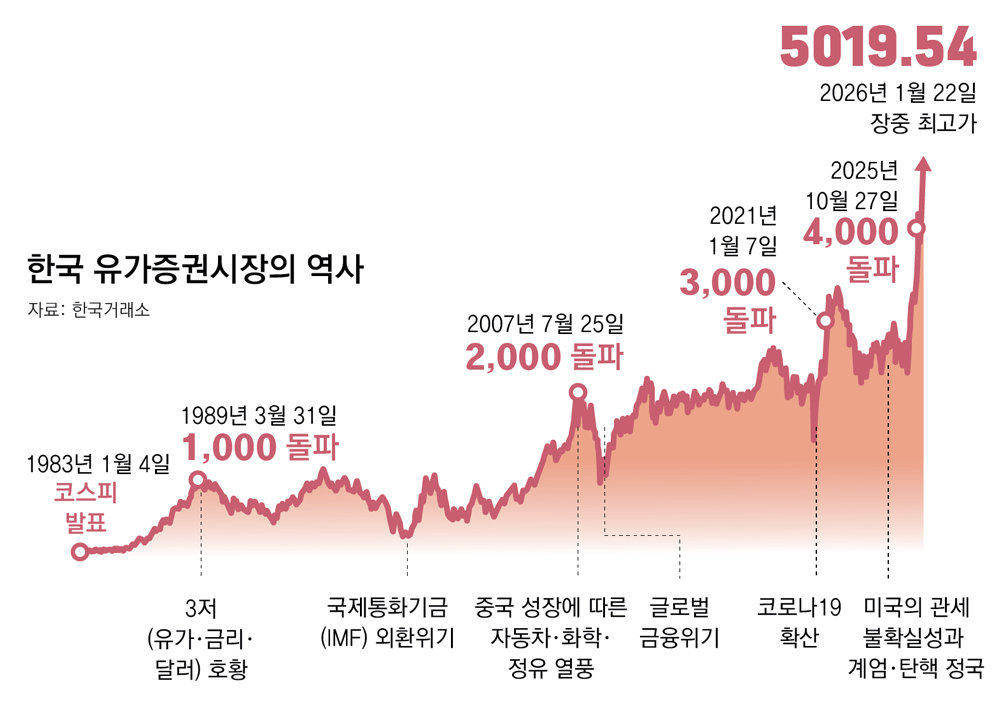
The KOSPI, which surpassed 4,000 three months ago, has now exceeded 5,000 during intraday trading. This represents a steep rise that renders meaningless the criticism, widespread across the market up to 2024, that investors should “escape the domestic stock market (gukjang).” Anticipated record-breaking earnings in semiconductors, the revaluation of automotive companies as robotics players, and the enhancement of corporate competitiveness in the age of artificial intelligence (AI), together with the government’s aggressive stock market-boosting measures, have broken the so‑called “Boxpi” range. The global expansion of liquidity has also fueled the market’s rally.
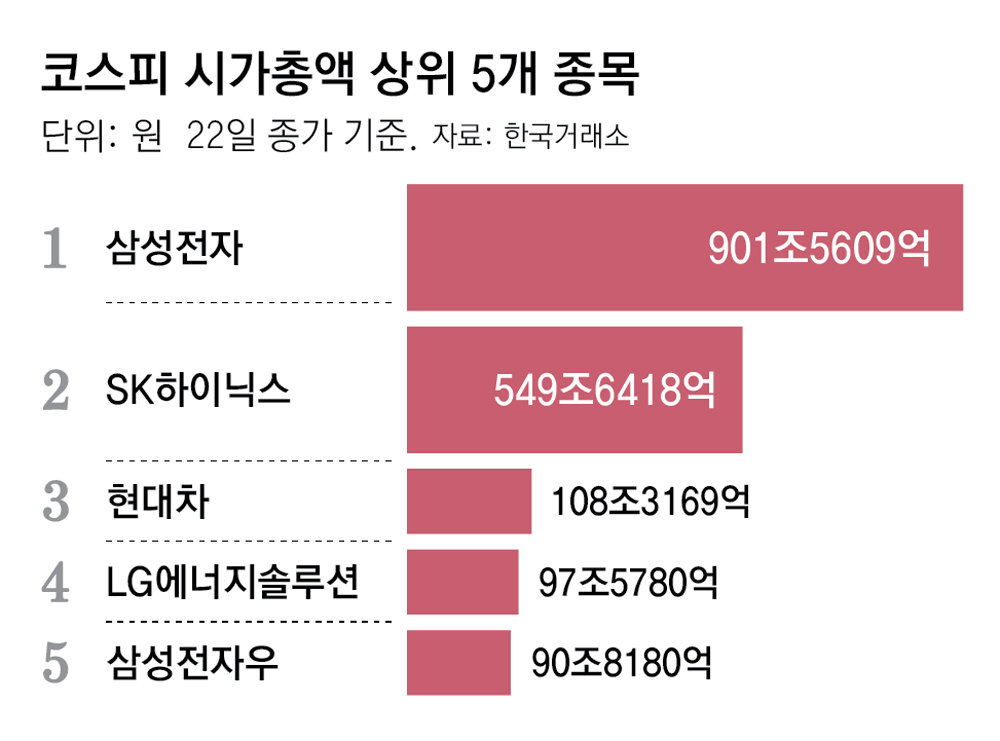
① Earnings improvement led by semiconductors and automobilesAccording to the Korea Exchange on the 22nd, the market capitalization of KOSPI-listed companies, which stood at KRW 1,963 trillion based on the closing price on 2 January last year, increased to KRW 4,095 trillion as of this day. Nearly half, or 49.7%, of this increase came from gains in the market capitalizations of Samsung Electronics (including preferred shares) and SK hynix.
In fact, the rise of the KOSPI from the 2,400 level to near 5,000 was heavily influenced by these two “semiconductor twin engines.” As AI investment fever led to a shortage in semiconductor supply, the profits of both companies surged sharply.
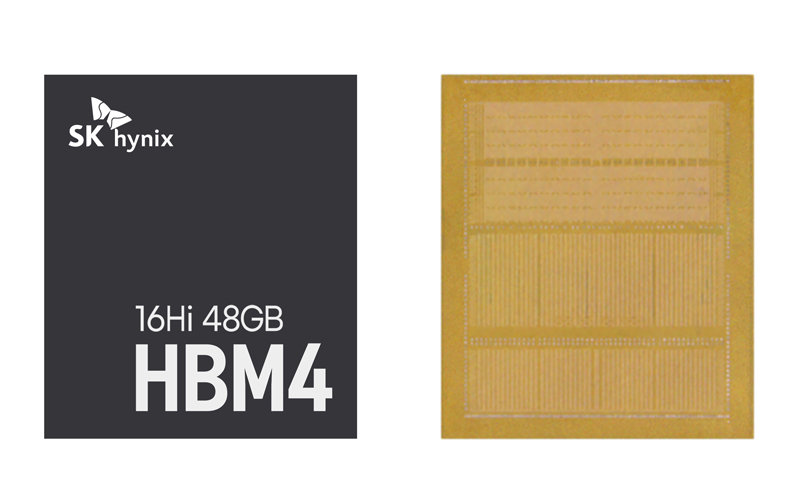
SK hynix ‘HBM4’
Securities firms project that Samsung Electronics and SK hynix will each generate annual operating profit of more than KRW 100 trillion this year and next. The share price of Samsung Electronics, which was in the KRW 50,000 range in the first half of last year (January–June), rose to KRW 152,300 on 22 January. Including preferred shares, Samsung Electronics’ market capitalization exceeded KRW 1,000 trillion during intraday trading, surpassing China’s Tencent to rank 16th among global listed companies and 3rd in Asia. SK hynix’s share price rose 341% over the same period. Converted into US dollars, SK hynix’s market capitalization has grown larger than that of Japan’s Toyota Motor, France’s LVMH, and the UK’s AstraZeneca.
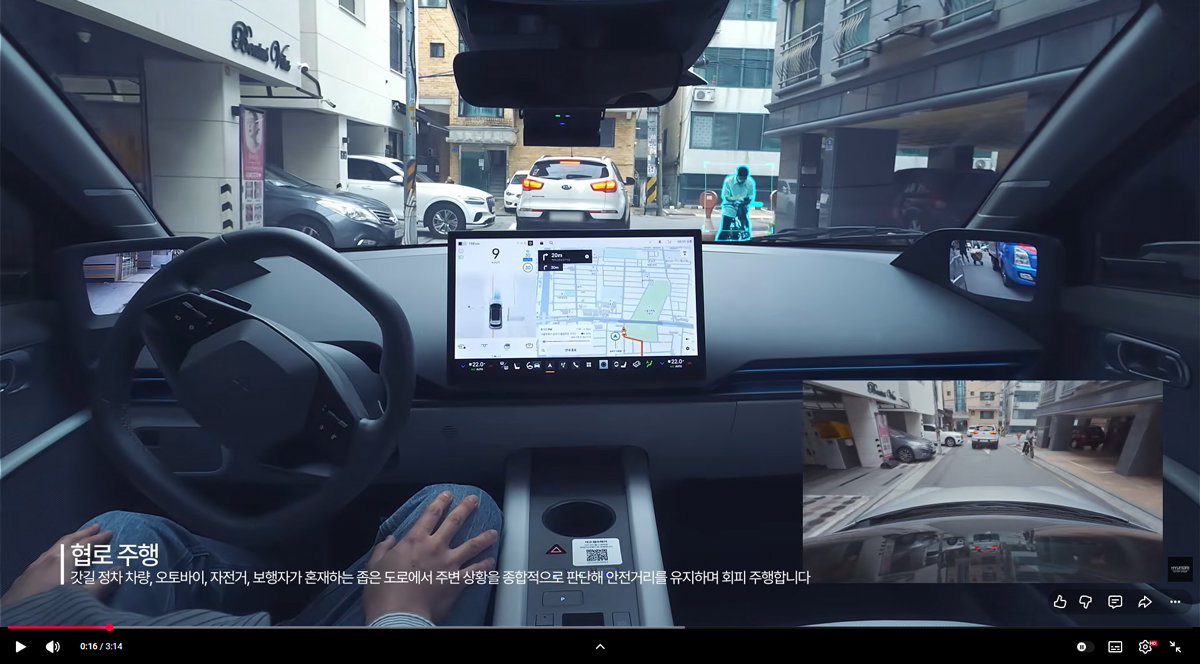
Hyundai Motor Group ‘Atlas’
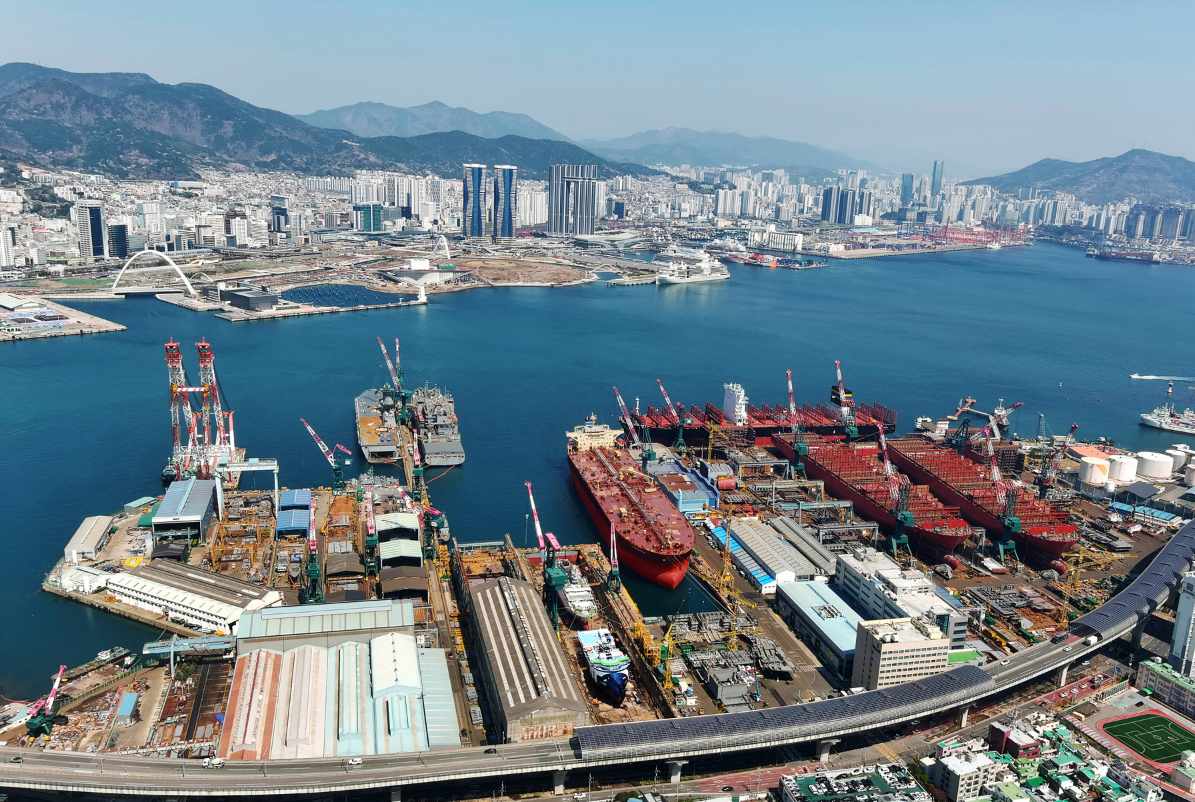
Traditional industry companies that have entered new industries or markets and reignited growth momentum have also driven the stock market. A prime example is Hyundai Motor, which is undergoing revaluation as a robotics company after unveiling its humanoid robot Atlas. From 27 October last year, when the KOSPI first broke through 4,000, to 22 January this year, 13% of the increase in KOSPI market capitalization came from affiliates of Hyundai Motor Group. The defense industry, which has expanded beyond the domestic market onto the global stage, and the shipbuilding industry, which has found a breakthrough in highly profitable eco-friendly vessels, have also contributed to the market’s revaluation.
② Government’s aggressive market-friendly policies
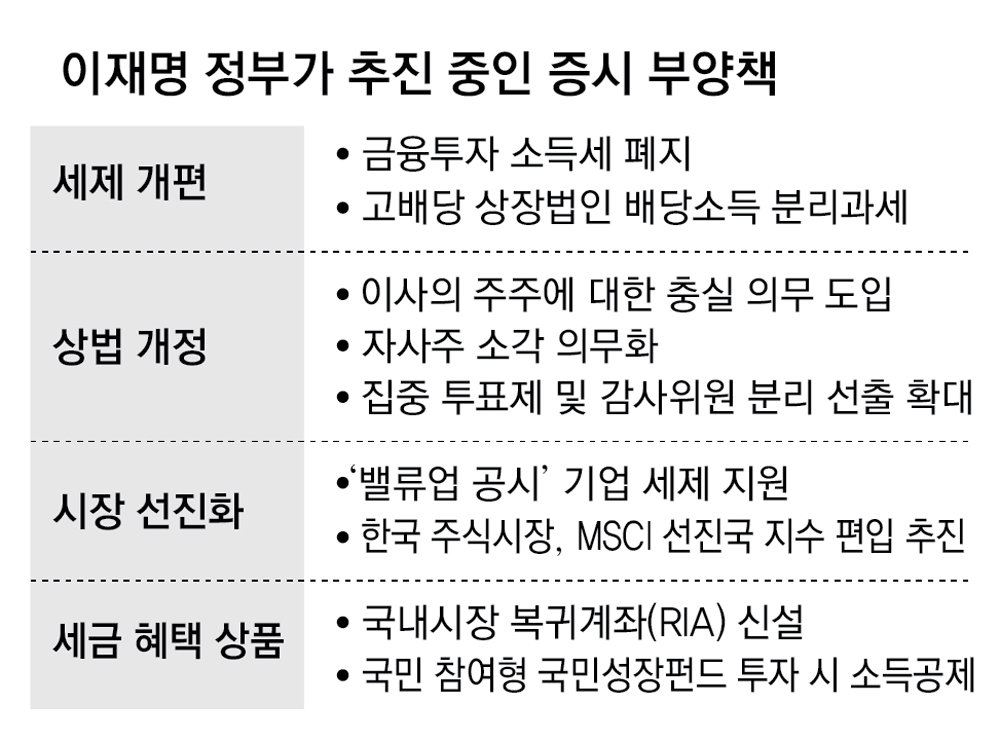
The stock market support measures of the Lee Jae-myung administration, which pledged to usher in the “KOSPI 5,000 era,” are also seen as having played a role. The UK’s Financial Times (FT) assessed on the 22nd that “the surge in semiconductor stock prices and the effects of corporate governance reform have become evident.” Choi Woon-yeol, president of the Korean Institute of Certified Public Accountants, explained, “The government has signaled efforts to make governance more transparent by pushing for amendments to the Commercial Act, and the market has evaluated this positively.” Market participants note that practices such as split listings and rights issues structured to benefit only the largest shareholders have declined compared to the past.
③ Global liquidity as fuel for the domestic market
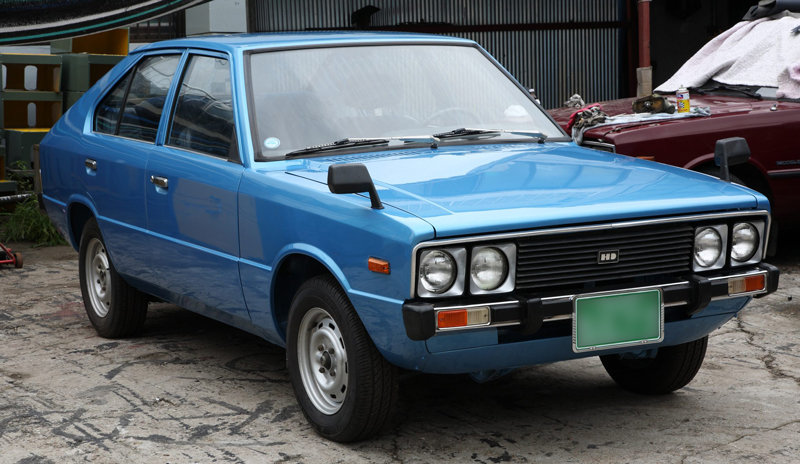
Hyundai Motor ‘Pony 1’
Ample liquidity worldwide is also acting as a driver of the stock market rally in Korea. The US Federal Reserve cut interest rates three consecutive times in the second half of last year (July–December), while the United States, China, and major European countries continue to maintain expansionary fiscal stances. As a result, the US S&P 500, the Nasdaq Composite Index, Japan’s Nikkei 225 Average, and Taiwan’s Taiex have all continued to hit record highs into this year.
However, issues that need to be addressed include the fact that the rally has been steep and concentrated in a few large-cap stocks, and that individual investors still question the domestic market’s remaining upside potential.
ⓒ dongA.com. All rights reserved. Reproduction, redistribution, or use for AI training prohibited.
Popular News