In 1986, Dr. Robert G. Cooper proposed a new management methodology called "Stage-Gate" in his book "Winning at New Products." Stage-Gate divides the process from idea to launch into six stages, where decisions on passing, supplementing, or discontinuing are made at the end of each stage. 80% of North American companies use Stage-Gate, and it has been implemented in over 3,000 new product projects by thousands of companies, including P&G, 3M, BASF, and Pfizer over the past 40 years.
Stage-Gate is divided into the following processes: ▲ 'Discover' for idea discovery and validation ▲ 'Scope' for assessing technical feasibility and preliminary business viability ▲ 'Design' for building prototypes and outputs ▲ 'Develop' for verifying prototype reliability and business viability, gathering customer feedback ▲ 'Scale Up' for checking mass production readiness, targets, and regulations ▲ 'Launch' for market response and KPI (Key Performance Indicator) verification, and initial performance review. The core of Stage-Gate is refining business potential and growing promising projects within limited time and budget.
Korean-style 'Stage-Gate' Prepared by Institutions to Support Manufacturing Startups
This methodology is a good way to quickly sort out projects with low potential and increase the likelihood of business success. The problem is that implementing Stage-Gate is extremely difficult unless it is a global company with abundant funds and manpower. For startups, they must succeed with one project at a time to survive, let alone manage multiple projects.
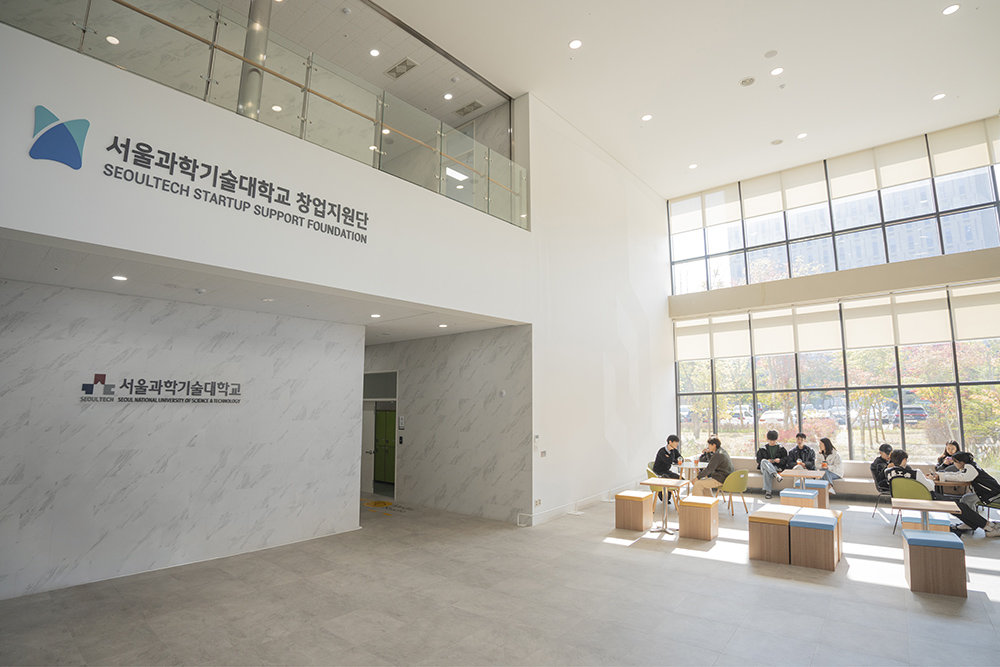
Entrance of the Maker Space Construction and Operation Business Center at Seoul National University of Science and Technology / Source=IT Donga
The Maker Space Construction and Operation Business Center at Seoul National University of Science and Technology (hereinafter referred to as Seoul Tech Maker Space Center) operates a step-by-step support program called the 'Product Development Package' to assist the systematic growth of manufacturing startups in the northeastern region of Seoul. The Product Development Package is a project that supports four stages: product viability diagnosis, sourcing directing, product development, branding, and growth marketing, and is now in its fifth year.
The goal of the Product Development Package is to put startups on a growth trajectory through a Stage-Gate tailored to the level of domestic manufacturing startups. IT Donga participated in the field and development process of the Product Development Package conducted in the past and directly confirmed the growth stories and effectiveness of the support measures.
Detailed Support from Product Viability Diagnosis to Sourcing Directing
Since April, the Maker Space Center has been recruiting participants for the 'Product Viability Diagnosis Program' targeting prospective entrepreneurs and startups. Selected participants received assessments of the product viability and revenue model feasibility of their ideas or products and confirmed their product planning capabilities before prototype production. Through face-to-face consulting, they also verified the specifics of the product manufacturing process and realistic business potential, with results issued in the form of a product viability diagnosis report.
Companies that received high evaluations for business potential among the participants in the product viability diagnosis were selected through screening to receive continuous support, including sourcing directing to review product manufacturing know-how and processes, product development linked to prototype production, and branding and growth marketing support for promoting the completed product.
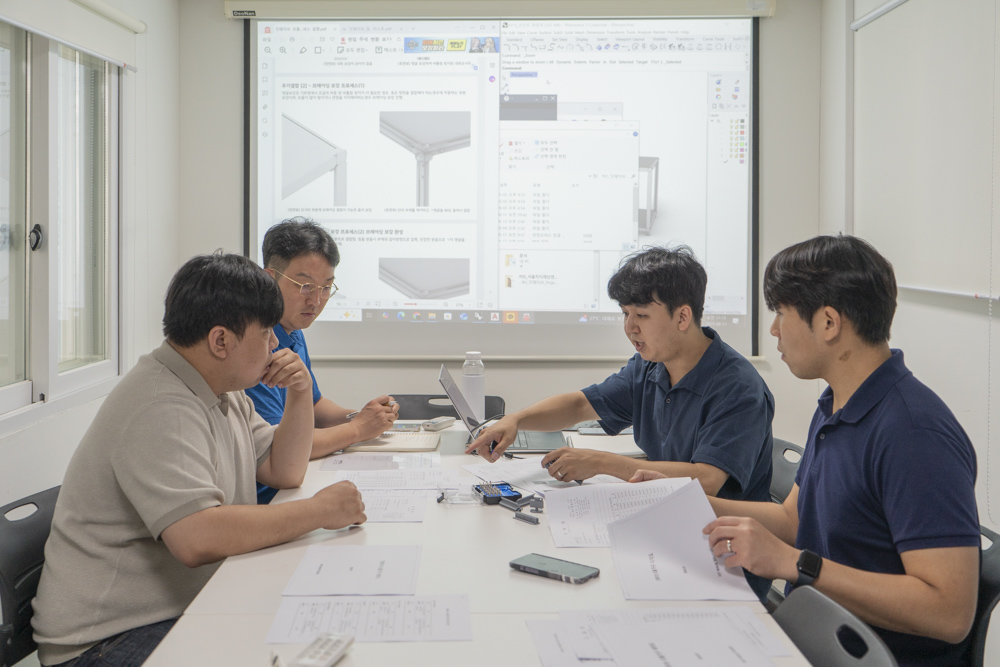
Jinkyu Kim, CEO of Dotwave (second from the right), is discussing product manufacturing with a mentor / Source=IT Donga
From June to August, sourcing directing was conducted for 10 companies. Sourcing directing is a process that directly connects entrepreneurs with manufacturing experts to provide technical advice necessary for product manufacturing, specific manufacturing, and networking. Two design consultations and two manufacturing consultations were conducted. Dotwave and Pobu were two of the companies observed during the sourcing directing.
Jinkyu Kim, CEO of Dotwave, is designing a product that allows users to assemble and create furniture in their desired form. Kim requested advice on realistic product pricing, processing methods, load capacity of the results, and related accessories. Kim stated, "Since it was my first time making a product, predicting potential issues was challenging. I initially thought of designing the product, entrusting it to a production plant, and sending it directly to a logistics center," adding, "Thanks to the mentoring, I decided to commission product manufacturing to a company contracted with Seoul Tech and was advised on making simple parts myself to significantly reduce costs and improve profitability."
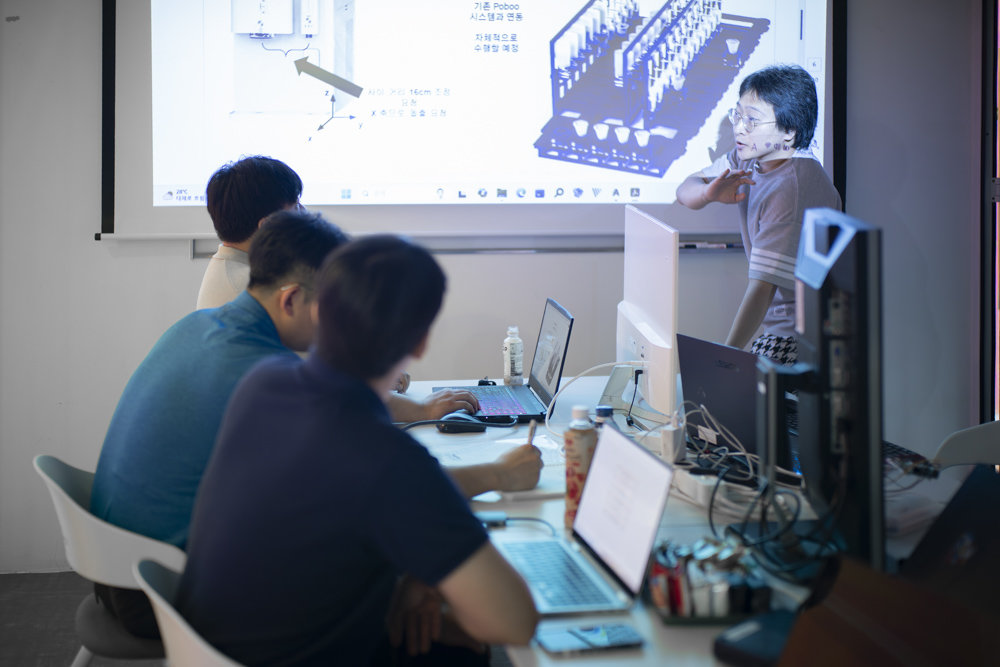
Hyungseon Ko, CEO of Pobu, is explaining the product operation method before receiving advice from mentors / Source=IT Donga
Hyungseon Ko, CEO of Pobu, is developing a fully automated one-stop barista tool. Ko explained, "The prototype has been self-produced since September 2024, but I applied for sourcing directing for functional improvements. Specifically, prototype development and mechanical modifications of the steam device installed in the equipment, and the development of a function to automatically serve 16-ounce cups are needed," adding, "While I can handle the electrical, electronic, and software aspects needed for product development, I need help with the mechanical parts. Through mentoring, I received advice on machine design and production, points to be cautious of when selecting outsourcing companies, and was connected to specific manufacturing companies."
Continued Concrete Product Development Support Following Sourcing Directing
Following sourcing directing, Dotwave, Pobu, and eight other companies began product development aiming for the end of November. Customized prototype production support, product design and engineering, circuit, mold, prototype production, and initial production volume were provided to entrepreneurs. The product development process was completed in four stages to enhance completeness.
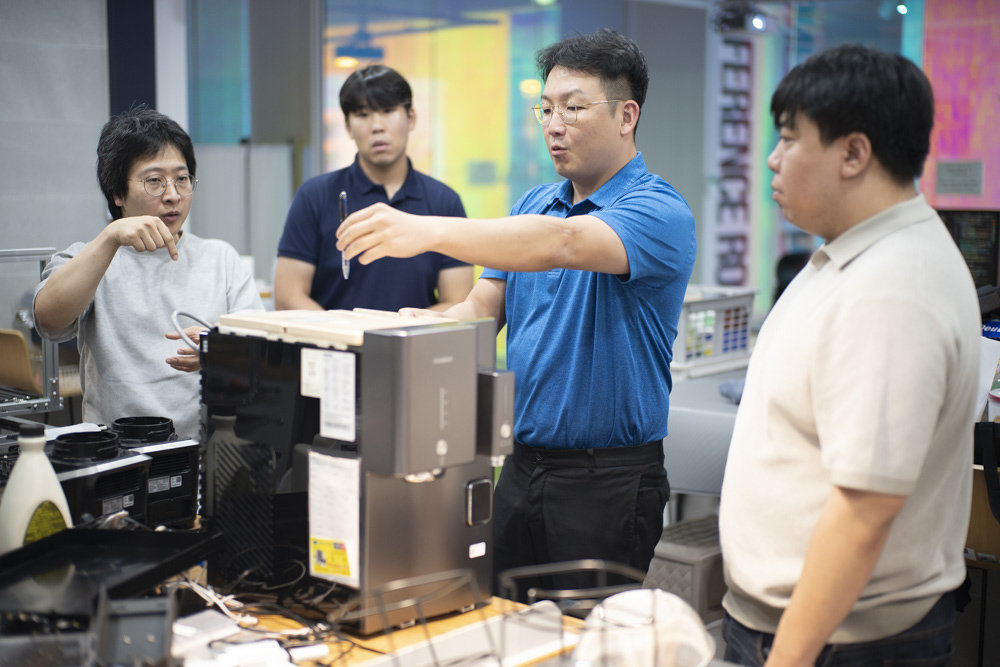
Mentors are advising on reverse engineering of commercial products / Source=IT Donga
In the first stage, the feasibility of the idea is confirmed through simple mockups, electronics, and coding. The second stage supports software development, creating coding, circuit diagrams, and providing beginner-level product design. From the third stage, selected ideas are concretized to start producing minimum viable products. In this process, manufacturing specialists from the Maker Space Center and external developers join to build hardware and software. Finally, the fourth stage involves producing the circuit boards installed in the product and conducting small-scale mass production based on the actual product.
Once this process is completed, a product ready for mass production is completed, and the final mass production decision is made after adjusting product costs and production process efficiency. In terms of Stage-Gate, this corresponds to the Scale-Up stage. When entrepreneurs conduct the four-stage production process themselves, they face numerous trial and error and technical challenges, but these issues were neatly resolved based on the expert mediation of the Maker Space Center at Seoul Tech. The Maker Space Center also directly visited contract manufacturing companies nationwide to verify the transparency of the manufacturing process and product completeness.
Securing Future Product Outlets Through Marketing SupportBy the end of October, all participating companies completed the project and participated in the final stage, the Manufacturing Startup Growth Marketing Program. This program produces online short forms and offline promotional materials and brochures to facilitate future product sales or introductions by companies. Conversations were held with Yoon Tae-hyun, CEO of Unium, and Kim Hee-young, CEO of Your Leaf, who visited the studio for support in the Manufacturing Startup Growth Marketing Program. Jinkyu Kim, CEO of Dotwave, was also met again to discuss the production process.
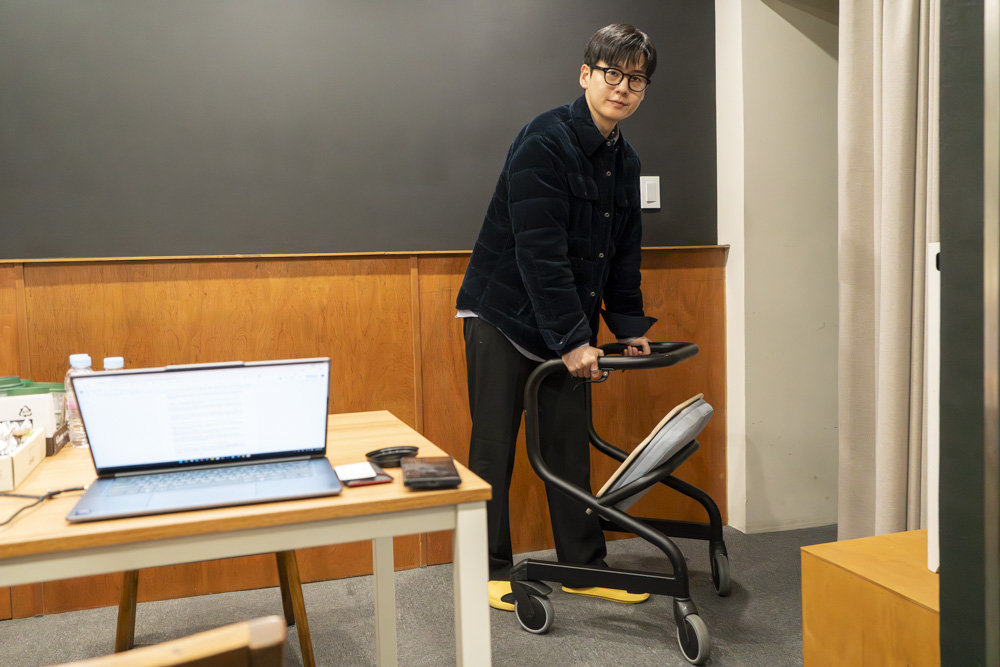
Yoon Tae-hyun, CEO of Unium, is introducing a walking aid device he personally made / Source=IT Donga
Yoon Tae-hyun, CEO of Unium, produced a walking aid device with improved design. Yoon stated, "Walking aid devices are mainly for the elderly. However, there is a negative perception of their use, and some people are reluctant to use them. While there are many walking aid devices with elegant designs overseas, only products with minimal functionality are available domestically. I wanted to create a walking aid device that feels like furniture while also satisfying practicality," he said.
He continued, "I was at a loss due to lack of experience in product manufacturing, but through the sourcing directing process, I was introduced to manufacturing companies and received consulting on product reliability, proper manufacturing, and cost issues. The process of turning an idea into a prototype alone is not easy. Receiving advice from business seniors and being able to work together became a psychological support," he said.
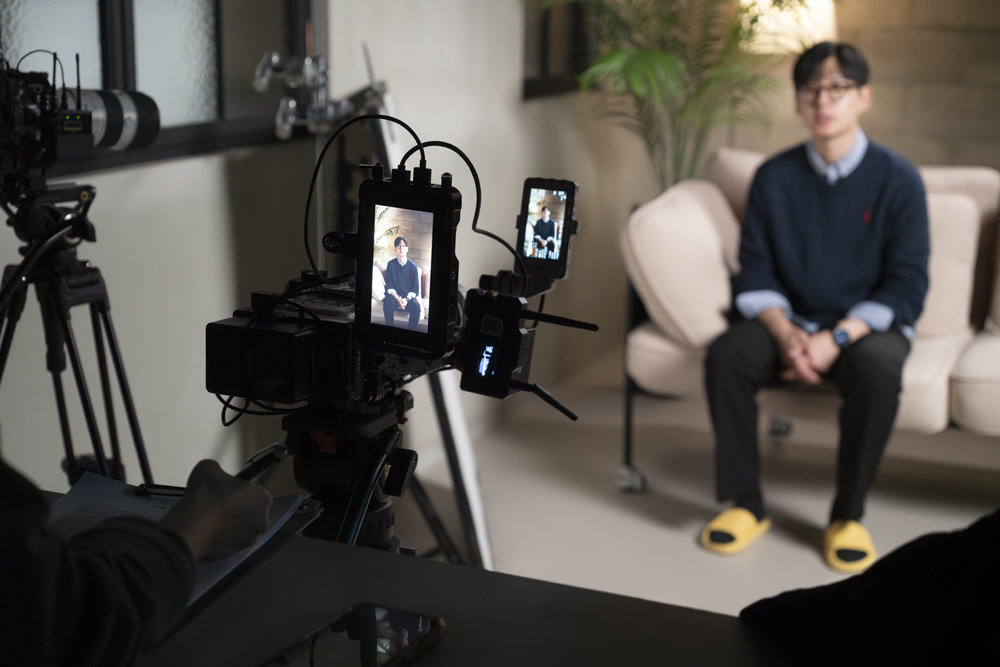
Photos and videos for marketing support, the final stage of the Manufacturing Startup Package, were taken / Source=IT Donga
Unium's product will enter mass production from December after some improvements in equipment design. Additionally, support for creating product images, videos, and detailed pages will begin to introduce the product to the public. Yoon stated, "It is important to use walking aid devices while there is still muscle strength. The goal of the business is to have the elderly encounter walking aid devices earlier and increase social health lifespan," he said.
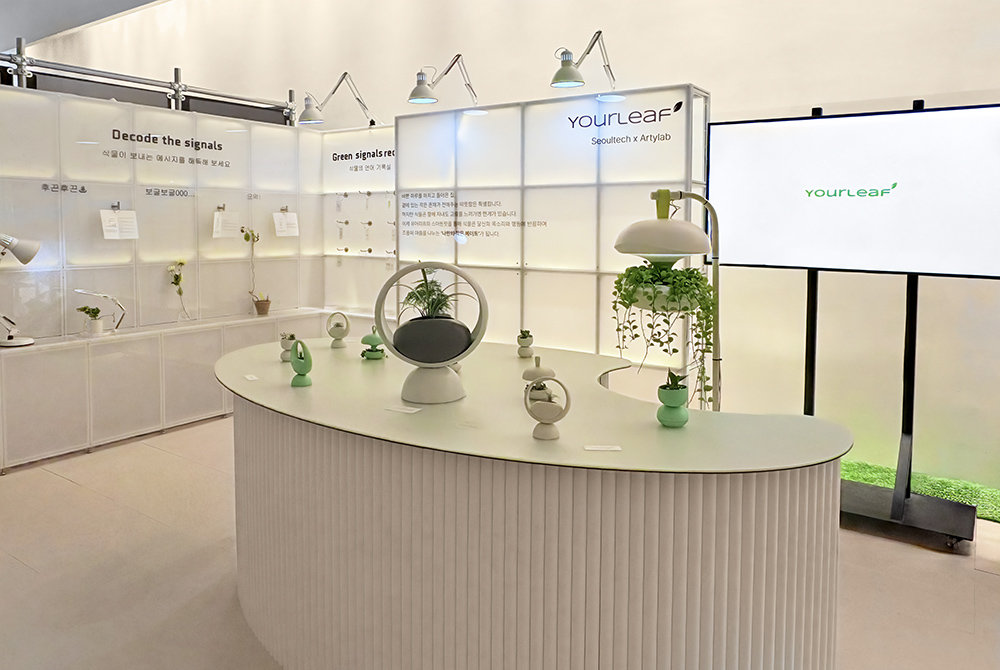
Your Leaf manufactured a smart pot (flowerpot) in collaboration with Art Lab, which has plant management system technology. Kim Hee-young, CEO of Your Leaf, said, "Our team started with majors from the Department of Metal Craft Design at Seoul Tech, and we planned a reactive device that goes beyond plant management to emotional interaction with people. Through the product viability diagnosis, we specifically understood the basic structure and procedures of entrepreneurship and received practical help in finding a balance between design differentiation and marketability," he introduced.
Your Leaf exhibited the manufactured product at the Seoul Design Week held on October 15 / Source=Your Leaf
In the sourcing directing process, they received comprehensive guidance on technology implementation, production methods, and commercialization strategies for actual market entry. Kim stated, "During the sourcing directing process, I received advice on product manufacturing and business perspectives, including sensor structure, rotation implementation methods, user feedback, and market goal setting. The initial design-focused tendency was concretized into a form where technology, business, and user experience were all connected through sourcing directing, and the overall completeness of the project improved," he said.
Additionally, support for commercialization funds, mentoring, and networking with external experts was provided, and in the marketing process, brand story organization, major customer analysis, and promotional content direction were imparted. Recently, they participated in the '2025 Seoul Design Fair,' exhibited the product, and gained opportunities for commercialization and market entry through media coverage by terrestrial and comprehensive programming broadcasters.
What Practical Business Changes Resulted from the Sourcing Directing Experience?Jinkyu Kim, CEO of Dotwave, clarified the business outline through sourcing directing. Kim stated, "Even after four rounds of sourcing directing mentoring, continuous adjustments were made to set prices and product completeness that matched market demand. After commissioning product manufacturing to three factories, I reviewed appropriateness with mentors and decided on the method of matching costs through post-processing, etc. Now, the product is at a stage where mass production is possible, and I plan to start selling the initial volume through crowdfunding. Based on initial sales, I plan to create drawers and additional expansion modules beyond frames and tops," he said.
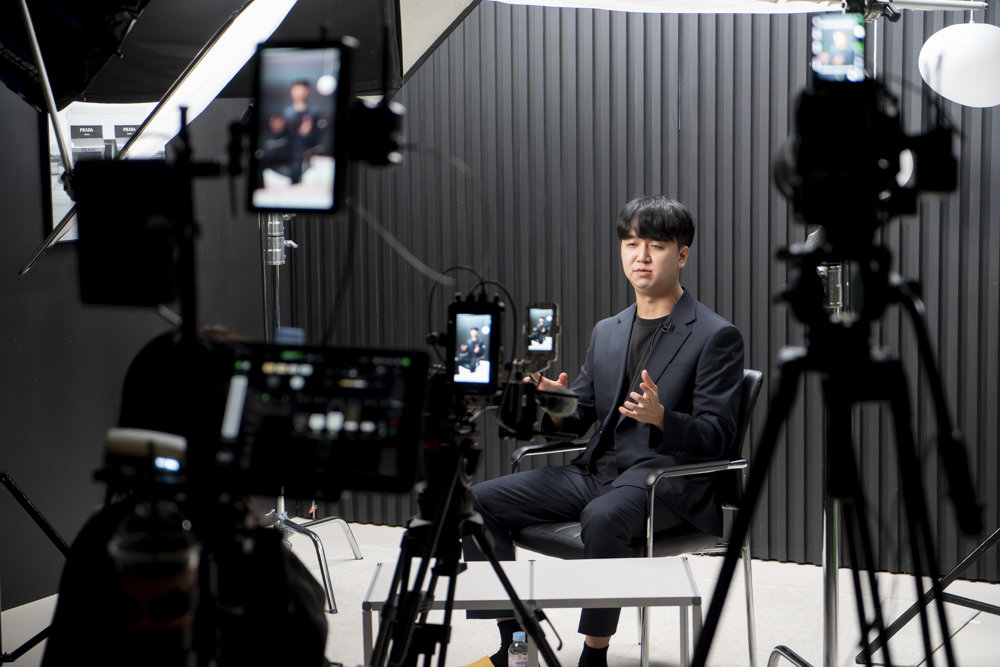
CEO Kim Jinkyu is participating in video shooting related to marketing support / Source=IT Donga
The final participation in the Manufacturing Startup Growth Marketing Program is expected to aid in smooth crowdfunding. Kim stated, "The studio arranged understood the product in detail and covered the entire assembly process. Thanks to this, it will greatly help consumers understand the product. Based on this, if initial sales are secured, additional product upgrades and overall mass production trajectory can be achieved. Next year, I plan to challenge the preliminary startup package and smoothly generate sales," he revealed his goal.
Seoul Tech's Step-by-Step Product Manufacturing Support Reduces Trial and Error and Increases Survival Rate
In 2024, the number of domestic companies founded was 1.183 million, a 4.5% decrease from the previous year, the lowest since 2016. Nevertheless, venture capital investment in the startup market increased by 9.5% year-on-year to KRW 11.9 trillion, and the number and scale of government support projects increased. However, the tendency to focus on AI and technology companies, bio, healthcare, materials and parts equipment, mobility, and robot fields is expected to intensify further.
As support projects and market investments are concentrated in proven and high-value-added industries, fields like manufacturing startups naturally fall into blind spots. However, specialized support institutions like the Maker Space Center at Seoul Tech are building and providing step-by-step and systematic support measures to help startup companies fully settle in the market.
Through six months of tracking, it was confirmed that the support measures of the Maker Space Center are as effective as the 'Stage-Gate' of global companies. It was also confirmed that the satisfaction and survival rate of supported companies increased. It is hoped that support institutions in various fields nationwide will focus on systematic and effective projects like this case.
IT Donga Reporter Nam Si-hyun (sh@itdonga.com)
ⓒ dongA.com. All rights reserved. Reproduction, redistribution, or use for AI training prohibited.
Popular News