One of the main reasons hindering the spread of electric vehicles (EVs) is the 'concern over battery fires.' In fact, in the first half of 2024 alone, there were 139 cases of electric vehicle battery fires in South Korea. These types of fires are inherently difficult to extinguish and cause significant damage. An electric vehicle fire in the underground parking lot of an apartment complex in Incheon resulted in damage worth tens of billions of KRW to 480 households across five buildings. In the UK, a thermal runaway in the battery of an electric vehicle during sea transport led to the sinking of a ship.
In response, the industry is actively researching and developing technologies to periodically inspect electric vehicle batteries for abnormalities, detect fire possibilities early, and suppress them in a timely manner. Among these efforts, Metamobility, led by CEO Kim Ji-won, proposes a different approach. If the fear is of electric vehicle battery fires, the focus should not be on technology to suppress fires just before or after they occur, but rather on developing technology that detects 'early signs of battery abnormalities' long before an actual accident occurs, thereby preventing major accidents at the source.
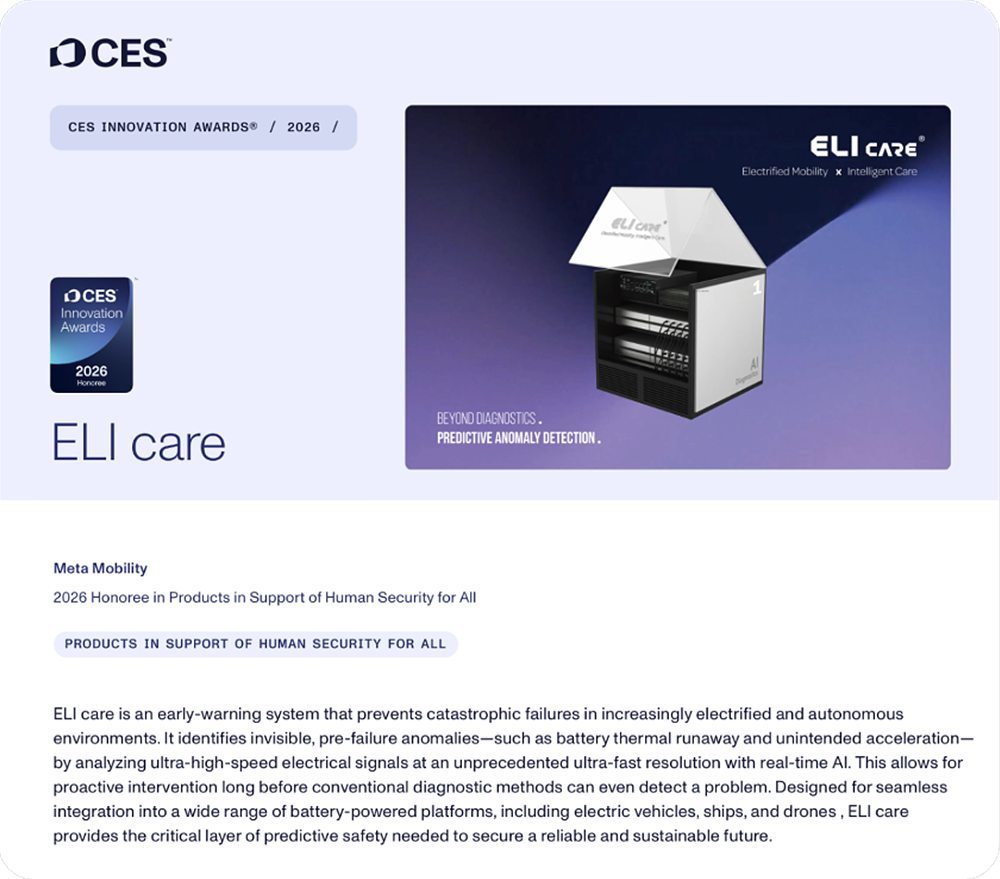
Metamobility's ELI care, winner of the CES 2026 Innovation Award / Source=Metamobility
Metamobility has conducted a detailed analysis of the precursor processes to thermal runaway in electric vehicle batteries. Abnormal temperature or overvoltage in specific cells within an electric vehicle battery results from the accumulation of various abnormal signs. The starting point of an electric vehicle battery accident is not inside the cell but in the minute changes occurring in the electrical and thermal environment surrounding the cell. The causes of abnormalities in battery cells are very diverse and complex, making individual responses difficult. However, they exhibit specific patterns long before leading to an accident. Metamobility focuses on technology that accurately captures these minute changes in the very early stages in real-time.
In fact, technology to detect problems in electric vehicle battery cells already exists. The BMS (Battery Management System) inside the vehicle and the ECU (Electronic Control Unit) that includes it perform this role. However, if the BMS exposed to a specific environment malfunctions, it cannot accurately capture battery cell thermal runaway, system malfunctions, or sudden acceleration. External electric vehicle diagnostic technology can quite accurately detect battery cell problems but is more suitable for post-incident vehicle inspection. Impedance, X-ray, or IR (infrared) technology also cannot detect abnormalities in real-time.
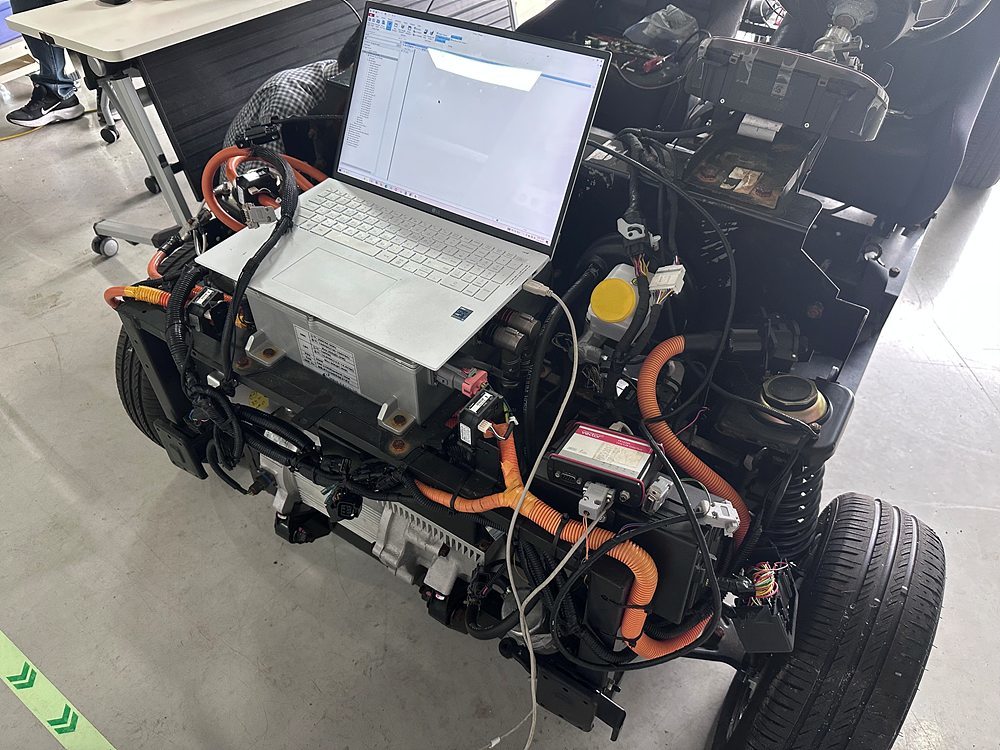
Detecting abnormalities in electric vehicles with Metamobility's ELI care / Source=Metamobility
Metamobility believes that ultra-fast sampling technology, including artificial intelligence, will solve this problem. After about three years of research and development, they developed a technology called 'AI Signal Logging.' This technology uses artificial intelligence to detect and analyze analog signals throughout the ECU at a speed of 20ns (nanoseconds, 1ns is 1/100 millionth of a second) in real-time, accurately capturing even the smallest abnormalities.
They then implemented AI Signal Logging as the mobility-mounted hardware 'ELI care' and software 'ELI connected.' ELI care consists of edge-computer-based multifunctional devices. As a result, it can be custom-designed and installed not only in electric vehicles but also in various electrified assets. It uses artificial intelligence to ensure both speed and accuracy when detecting the entire power and drive system in real-time.
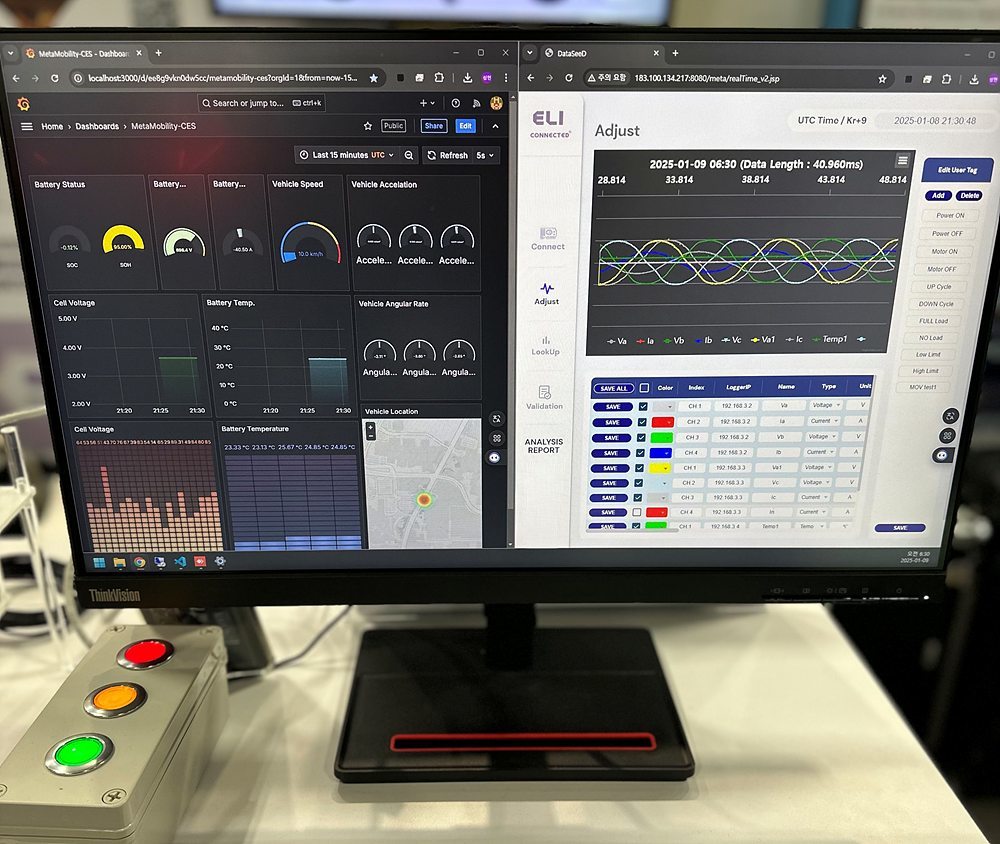
Detecting abnormalities in electric vehicles with Metamobility's ELI care and ELI connected / Source=Metamobility
ELI care, which captures signals within the abnormality zone, sends the data to ELI connected, guiding managers to inspect their electrified assets. It helps detect and respond immediately if there is even a slight possibility of a fire occurring in an electric vehicle battery. In other words, it assists manufacturers in conducting recalls or responses long before users recognize problems with their electric vehicles. The same principle applies to predicting sudden acceleration abnormalities due to system malfunctions.
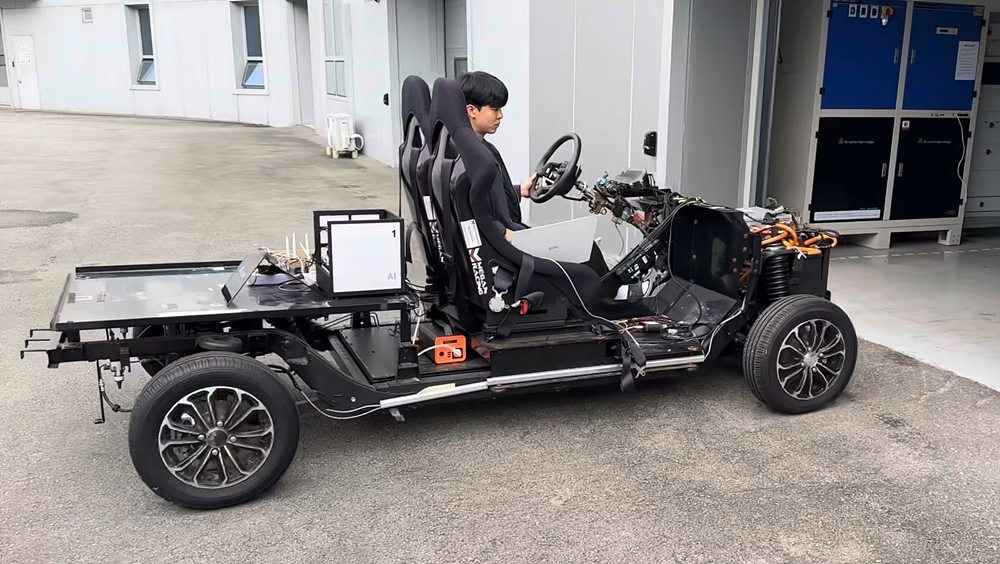
CEO Kim Ji-won introduces ELI care's abnormality prediction accuracy as the highest in the world. Recent PoC (Proof of Concept) results successfully completed with the Korea Automotive Technology Institute's E-Mobility Research Center prove this. The results, which involved installing ELI care in electric vehicles and reproducing actual mobility operation scenarios such as flat and inclined driving, harsh road driving, stopping and accelerating, and charging, captured ultra-precise abnormality signals compared to conventional electric vehicles.
Demonstrating the performance and utility of ELI care installed in electric vehicles / Source=Metamobility
They also completed a demonstration with AWS's mobility tool FleetWise. This involves handling electric vehicle abnormality data via the cloud for real-time monitoring. ELI care utilizes both cloud services and edge computers to detect abnormalities in electric vehicles and transmit issue data to managers, regardless of whether they are in communication areas or dead zones. It is gaining attention as a technology that ensures safety by helping to respond to mobility abnormalities at a very early stage.
Based on these achievements, Metamobility created the final prototypes of ELI care and ELI connected. They then showcased them at global ICT exhibitions such as Germany's IFA, France's Viva Tech, Spain's MWC, and the US's CES. In addition to the proven electric vehicle operation demonstrations, they introduced applicable areas such as electric vehicle management for passenger, freight, and rental car companies, quality verification for vehicle and vehicle parts manufacturers, and vehicle recall management. As a result, they received the Innovation Award at CES 2026.
Metamobility employees / Source=Metamobility
CEO Kim Ji-won credits the achievements to the employees. Metamobility's CTO (Chief Technology Officer) is an MIT graduate with extensive experience in developing secondary battery materials at large corporations. The CAIO (Chief Artificial Intelligence Officer), renowned in AI computation, a senior engineer with 20 years of experience in developing fire safety management platforms, and an engineer with 30 years of experience in energy monitoring for power plants and plants also contribute to Metamobility's growth.
Adding achievements to their experience, Metamobility expressed its determination to contribute to creating a sustainable future mobility market. By introducing the motivation behind the development of ELI care, which protects people and prevents property damage, they received the Innovation Award in the CES Human Security category.
Metamobility introducing technology and achievements at CES / Source=Metamobility
CEO Kim Ji-won plans to strengthen AI development capabilities to take the next step. The focus is on recruiting engineering talent. Metamobility already possesses a wealth of high-quality data from various demonstrations and PoCs conducted over three years. They have completed research and development on the ELI care and ELI connected solutions. They aim to crown their efforts by recruiting elite AI talent active globally.
Metamobility plans to strengthen AI development capabilities while also engaging in joint research and demonstrations with global mobility companies. They are already discussing cooperation plans, including BMS advancement, with major global automobile manufacturers. As an Innovation Award winner, they plan to participate in CES 2026 to showcase the data and achievements accumulated so far and collaborate with global companies in various fields to spread AI mobility safety technology.
CEO Kim Ji-won introducing growth plans / Source=Metamobility
CEO Kim Ji-won stated, "Many companies research mobility safety technology, but most operate in the realm of inspection or detection just before an accident. Metamobility implants 'predictive AI' in mobility to detect and preemptively identify abnormalities in real-time, preventing accidents and malfunctions at the very early stages. We will actively promote this technology to help everyone use mobility safely and conveniently."
ⓒ dongA.com. All rights reserved. Reproduction, redistribution, or use for AI training prohibited.
Popular News