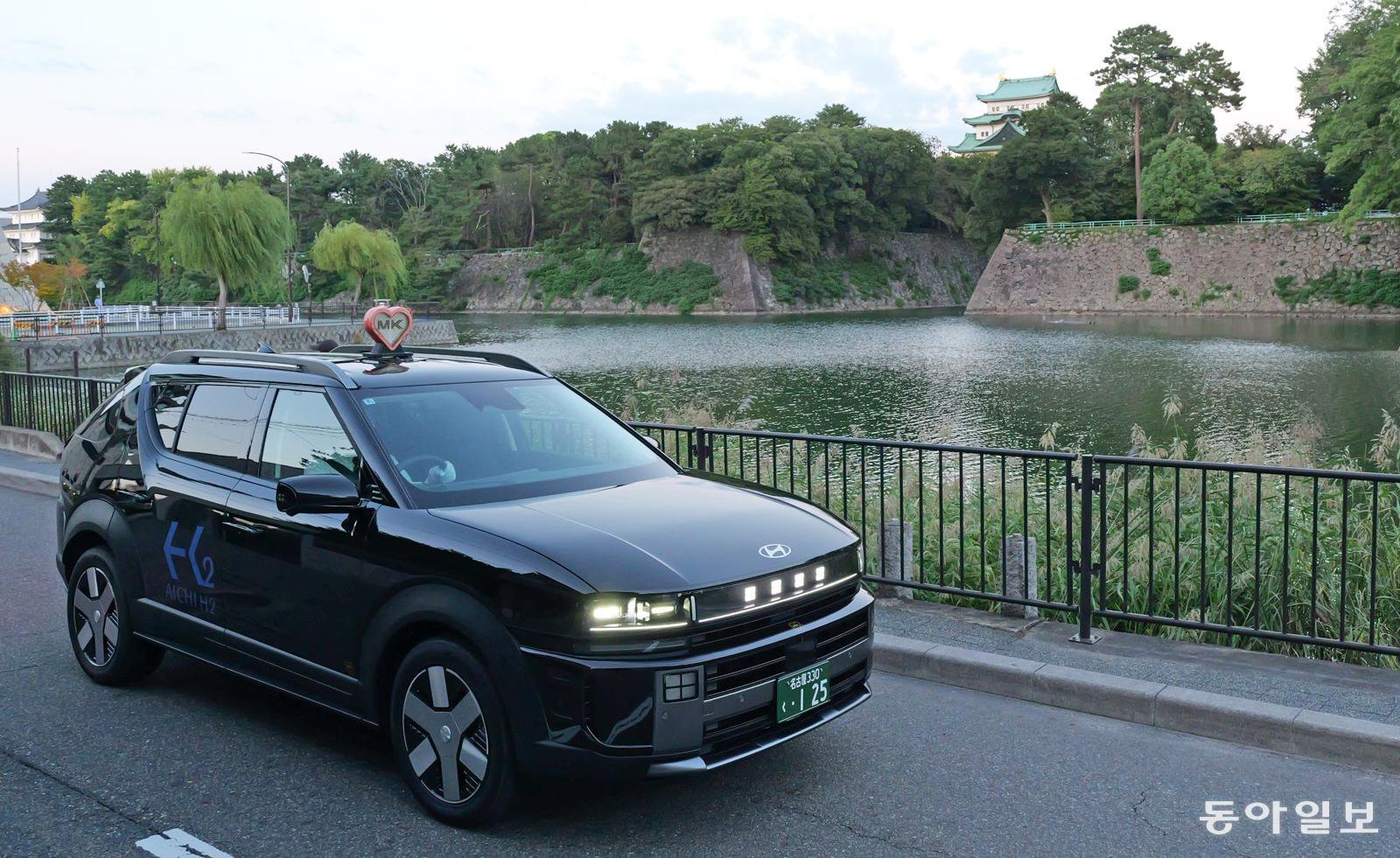
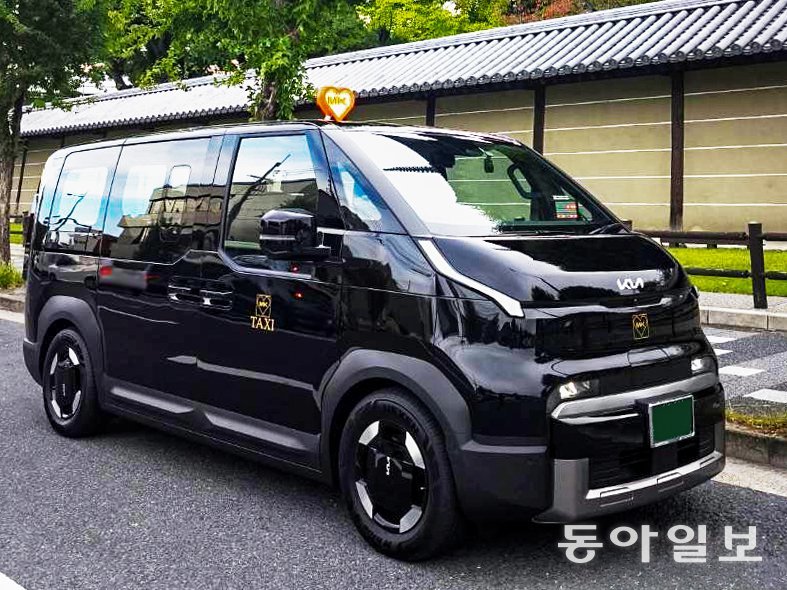
Hyundai Motor Company and Kia are targeting Japan, known as the “graveyard of imported cars,” by pushing eco-friendly vehicles without internal combustion engines, such as electric vehicles and hydrogen fuel cell vehicles (FCEVs). By partnering with transportation companies and putting Kia’s purpose-built vehicles (PBVs) and Hyundai’s NEXO hydrogen sport utility vehicle (SUV) at the forefront, the group aims to expand its share of the local eco-friendly vehicle market.
Kia announced on the 3rd that it had signed a memorandum of understanding (MOU) on “Cooperation for PBV Business in Japan” with MK Holdings, a leading passenger transportation company in Japan, at Hyundai Motor Group’s Yangjae headquarters, and agreed to supply PBVs to the company. MK Holdings is a major Japanese transportation company that operates various businesses such as MK Taxi and sightseeing buses. Kia plans to jointly export PBVs to Japan with MK Holdings and to pursue projects to build exhibition and sales service networks together. A Kia official stated, “Starting with supplying 50 units of the PV5 to MK Holdings by the end of this year, we plan to sell a total of 1,000 PBVs in Japan by 2030.”
Hyundai Motor is seeking to gain an early lead in the hydrogen vehicle ecosystem in Japan. It began exporting the NEXO to Japan in April. Although exports totaled only 20 units by August, the NEXO accounted for 10.9% of all FCEVs sold across Japan during that period.
The reason Hyundai Motor Group is attacking the Japanese market with “non-internal combustion eco-friendly vehicles” is that the local finished vehicle market is centered on internal combustion engines and hybrid vehicles. According to the Japan Automobile Dealers Association (JADA), electric vehicles represented only 4.5% of all vehicles sold in Japan in September this year, not even one-tenth of hybrid vehicles, which accounted for 50.2%.
Conversely, this indicates that growth potential is that much greater. UK-based market research firm Strategic Revenue Insight forecast that the size of Japan’s electric vehicle market, which stood at USD 2.55 billion (about KRW 3,605.7 billion) at the end of last year, will grow 10.3% annually to reach USD 6.78 billion (about KRW 9,586.9 billion) by 2035. Hyundai Motor Group believes it has a good chance of success if it leverages its advanced eco-friendly vehicle technologies to target the market, particularly as one out of every five electric vehicles sold in Japan is an imported vehicle.
Hyundai Motor Group has also tailored its export models for Japan to suit local conditions. Kia’s PBV vehicles adopt “CHAdeMO,” Japan’s rapid-charging standard for electric vehicles, as the default charging method, and their turning radius has been minimized in consideration of Japan’s narrow road widths. Hyundai’s NEXO has been launched with the “V2H (vehicle-to-home)” function as standard, enabling electric energy stored in the vehicle to be supplied to homes or household appliances, reflecting Japan’s environment where earthquakes and other disasters are frequent.
Kim Sang-dae, Executive Vice President and Head of Kia’s PBV Business Division, said, “Japan has set a carbon neutrality target to convert 30% of new commercial vehicles of 8 tons or less to electric vehicles by 2030,” adding, “We plan to actively explore sales channels for commercial electric vehicles as well as passenger cars going forward.”
ⓒ dongA.com. All rights reserved. Reproduction, redistribution, or use for AI training prohibited.
Popular News