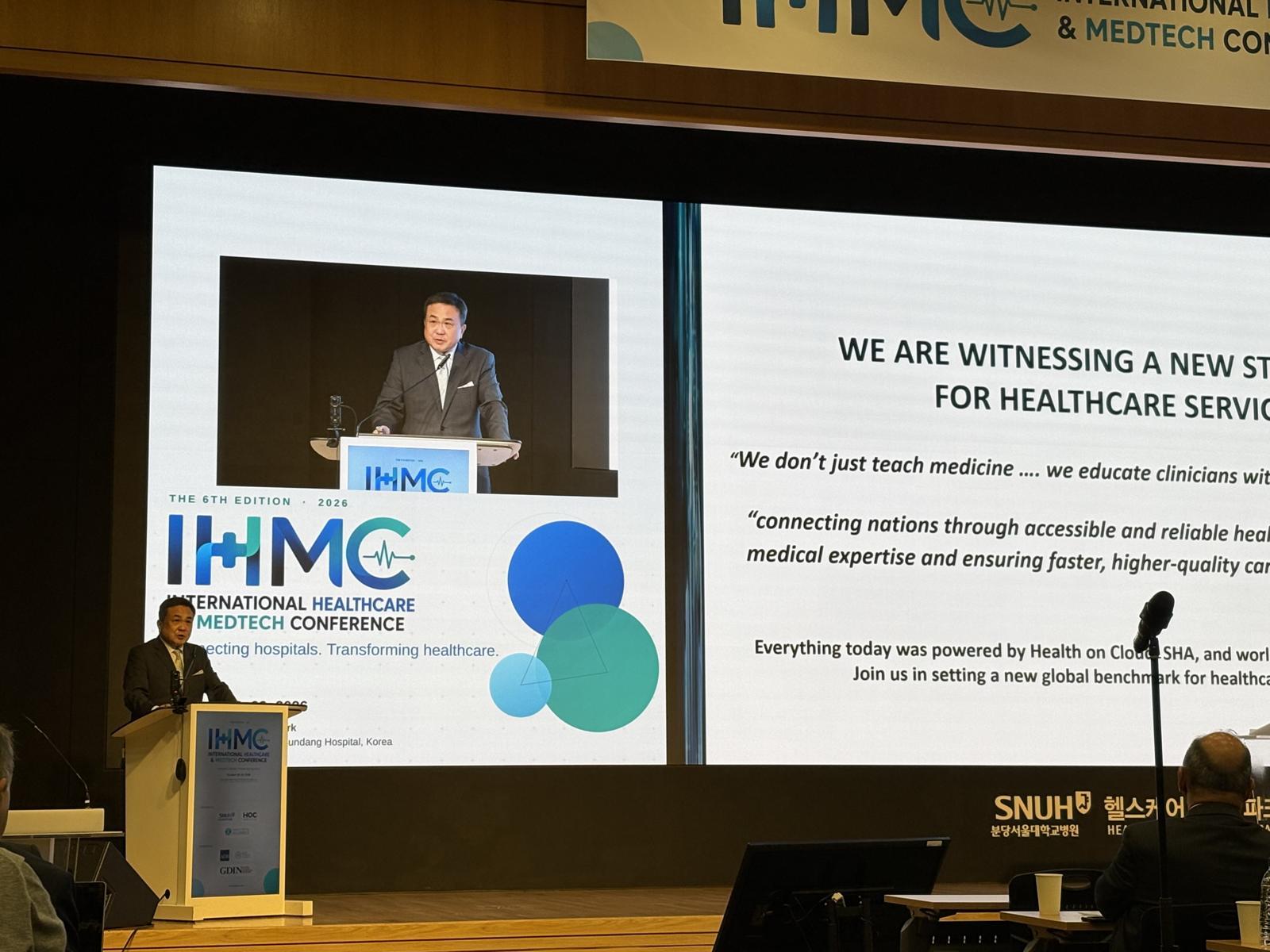
Former Bundang Seoul National University Hospital President Jeon Sang-hoon, now CEO of HealthOnCloud. Reporter Lee Hye-won hyewon@donga.com
An “AI-native hospital” concept has been proposed in which artificial intelligence (AI) and digital technologies are applied across the entire continuum from hospital design to diagnosis, surgery, and patient management. Under this model, medical staff and patients are no longer confined to the physical space of the hospital, and care is extended to homes and even other countries through telemedicine, wearables, and AI services.
At the 6th International Healthcare Medtech Conference (IHMC), held on the 28th at the Healthcare Innovation Park of Bundang Seoul National University Hospital in Seongnam, Gyeonggi Province, participants from the medical, academic, industrial, and international organization sectors of 19 countries discussed how AI and digital technology will transform healthcare services. This year’s theme is “Connecting Hospitals. Transforming Healthcare.”
Bundang Seoul National University Hospital stated, “The aim is to ensure that promising ideas lead to better healthcare by sharing experiences across institutions and borders.”
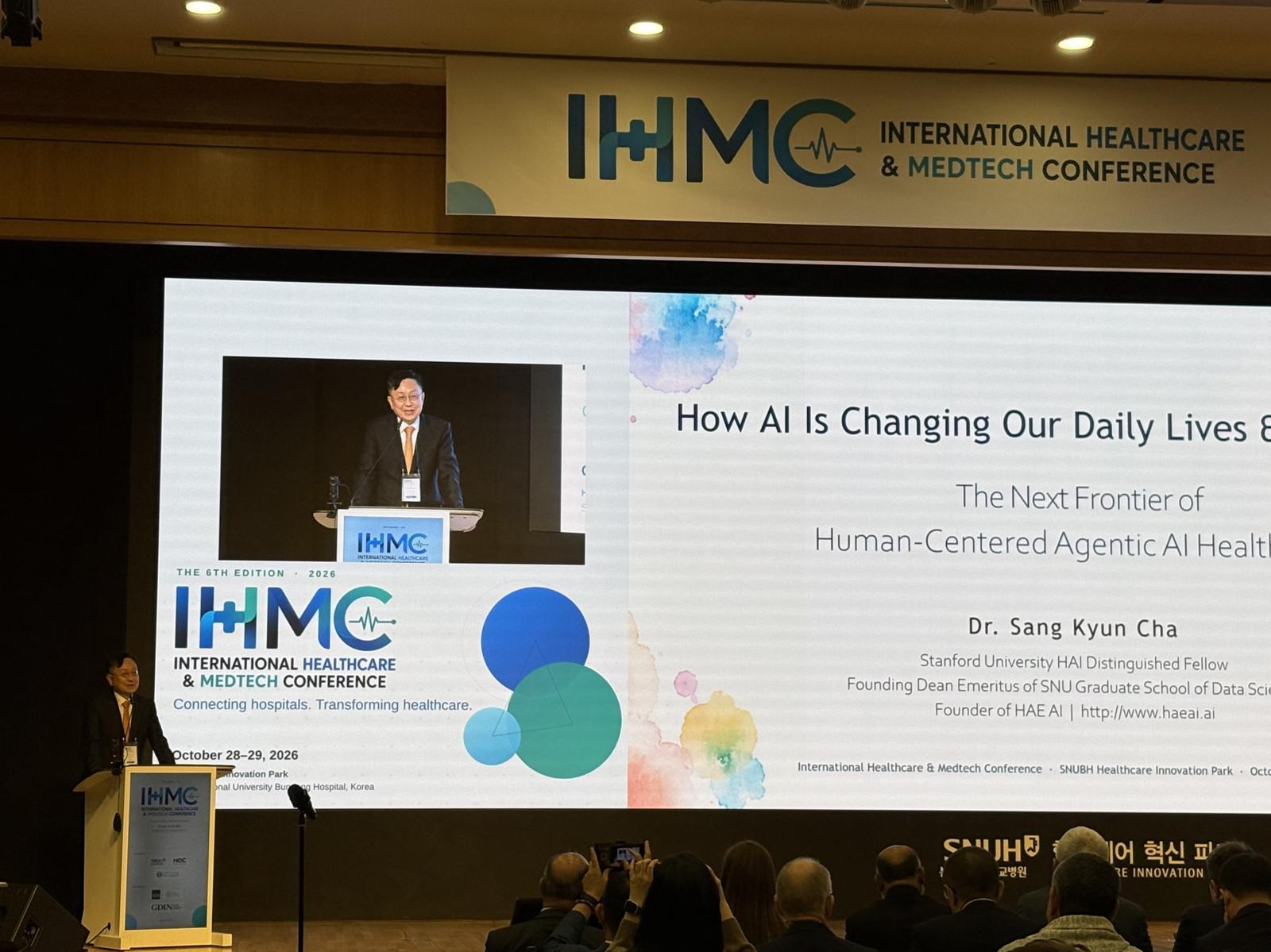
● Building hospitals for AI from the ground up… Emergence of ‘AI-native’ hospitalsCha Sang-kyun, Distinguished Fellow at the Stanford Institute for Human-Centered Artificial Intelligence (HAI) in the United States, explained in a lecture titled “Everyday Life and Healthcare Transformed by AI” that “agentic AI”—in which multiple AI agents collaborate under human supervision to perform tasks—can also be used in hospital operations.
He noted that he himself has significantly reduced the time required to prepare presentation materials by using AI chatbots, and projected that in future hospitals multiple AI agents will share roles to support clinical care, administration, and decision-making.
Cha Sang-kyun, Distinguished Fellow at the Stanford Institute for Human-Centered Artificial Intelligence (HAI) in the United States. Reporter Lee Hye-won hyewon@donga.com
Jim Lim, Chief Strategy Officer (CSO) of FiveNine Ventures, went a step further, stressing that AI and robots must be considered from the hospital construction stage.
In a lecture titled “From Digital Healthcare to AI-Native Healthcare,” he said that factors such as bed layout, traffic flow, and corridor width must first be assessed to determine whether they are suitable for the movement of robots. The argument is that hospitals themselves must be designed for AI utilization, going beyond simply adding AI technologies onto existing facilities.
The scope of clinical spaces will also expand beyond hospital walls. CSO Lim forecast that for chronic diseases, it will become increasingly important to continuously monitor a patient’s condition after discharge using wearables and remote monitoring.
●
AI assists diagnosis and surgery, and care continues into the home
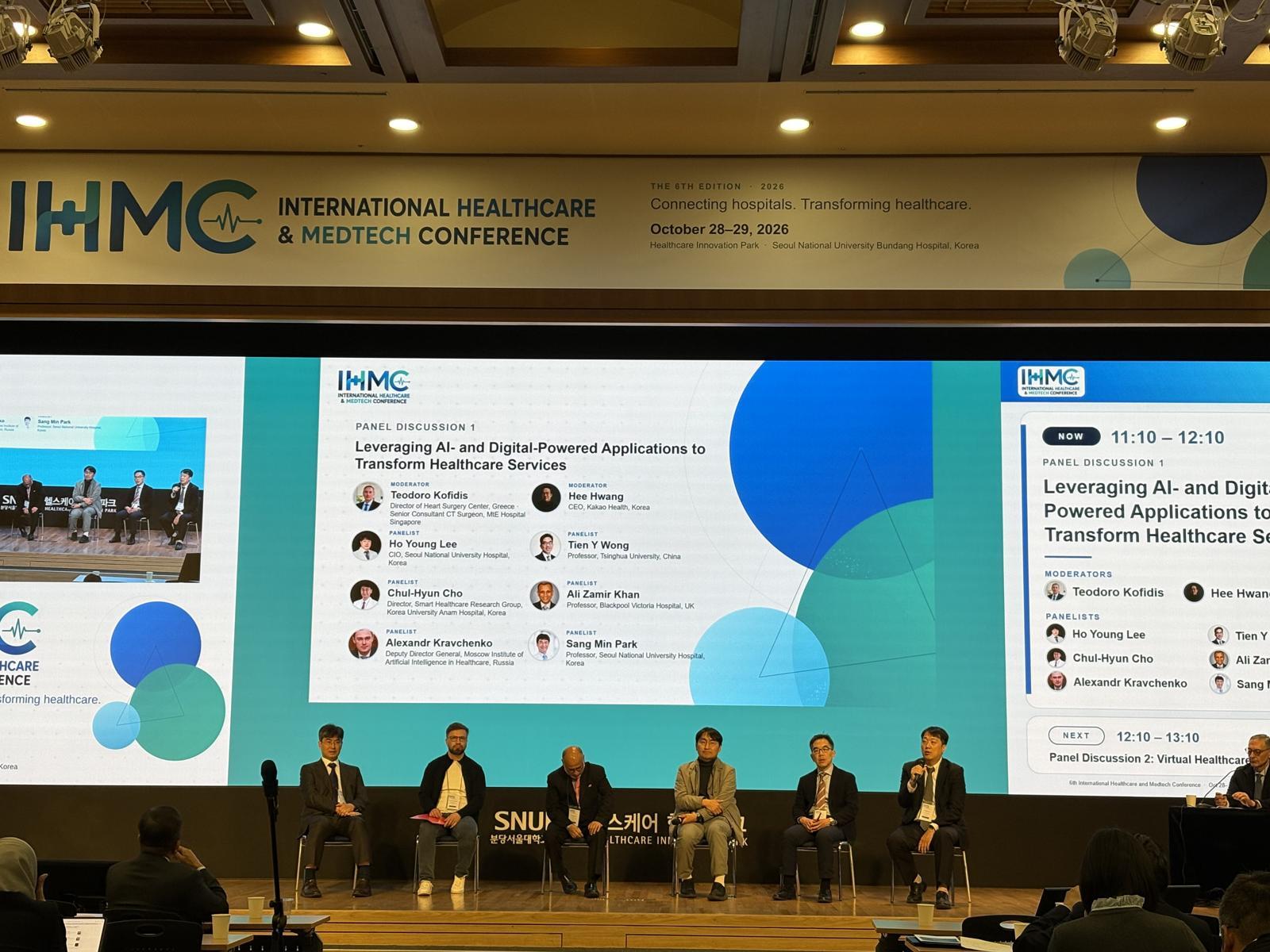
Discussions also addressed how AI and digital technologies can be applied in actual clinical practice.
Lee Ho-young, Director of Medical Informatics at Seoul National University Hospital, presented the “AI Highway” project, which provides a variety of AI services to regional national university hospitals. The initiative aims to link AI services of major hospitals to local medical institutions in a situation where it is difficult for each hospital to build its own AI system.
Tien Yin Wong, an ophthalmologist and professor at Tsinghua University, shared his research experience on a deep learning algorithm that detects diabetic retinopathy using fundus photographs, and stated, “We are now looking at larger-scale AI transformations that change multiple areas of the healthcare system, rather than single tasks.”
Cho Chul-hyun, Head of the Smart Healthcare Research Group at Korea University Anam Hospital, emphasized that as AI use increases, systems to protect patient medical information and strengthen security must be developed in tandem. He also introduced examples of digital therapeutics (DTx) used at Korea University Anam Hospital.
Ali Zamir Khan, a cardiothoracic surgeon and professor at Blackpool Victoria Hospital in the United Kingdom, explained that AI can help improve diagnostic accuracy and support surgical planning. Robotic surgery was also presented as a tool that enables more precise operations and personalized treatment for patients.
Panel discussion on innovation in medical services using AI- and digital-based apps. Reporter Lee Hye-won hyewon@donga.com
●
Telemedicine expands across oceans, pediatrics, and bordersA panel discussion on virtual medical services and telemedicine examined how far healthcare services can be extended beyond the hospital.
Naveed Alam, a cardiothoracic surgeon and professor at the University of Melbourne in Australia, presented a telemedicine case study for the health management of seafarers who spend prolonged periods at sea. Nam Seong-woo, President of Woori Idel Children’s Hospital, discussed the potential for telemedicine tailored to pediatric patients.
Jung Jin-woong, CEO of Doctor Now, introduced domestic remote consultation services and suggested the potential for AI-linked clinical support in the future. Yuri Vasiliev, Head of the Center for Clinical Research in Diagnostic and Telemedicine Technologies at the Moscow Department of Health in Russia, outlined Russian policies that use AI platforms and telemedicine to reduce regional disparities in healthcare.
The role of the Global Smart Hospital Alliance (GSHA) was also discussed at the event. GSHA is an international cooperation network that connects medical institutions worldwide to share experiences in operating smart hospitals and medical technologies, and to reduce cross-border healthcare disparities.
Jeon Sang-hoon, CEO of HealthOnCloud and founder of GSHA, said, “We aim to build a sustainable cooperation platform that connects AI and digital technologies with cross-border clinical collaboration, medical workforce training, and the global expansion of industry, so that the benefits can be returned to more patients.”
This conference runs until the 29th. On the second day, participants will discuss the current status of medical AI, smart health systems in emerging countries, universal health coverage in developing countries, and AI-based senior living, and will also adopt the “Seoul Declaration 2026” on global smart and digital healthcare norms.
ⓒ dongA.com. All rights reserved. Reproduction, redistribution, or use for AI training prohibited.
Popular News