KakaoTalk is introducing an “AI agent” (artificial intelligence assistant) that directly handles tasks on behalf of users such as sending messages, managing schedules, and making reservations. Following last year’s integration of ChatGPT with Kakao services to answer users’ questions, the aim now is to have AI perform actual tasks. With personal AI assistants like Meta’s “Muse” gaining significant traction in the United States, attention is focusing on whether competition in AI agents will intensify in Korea as well.
● “Organizes work messages and even replies”… Remembers past conversations
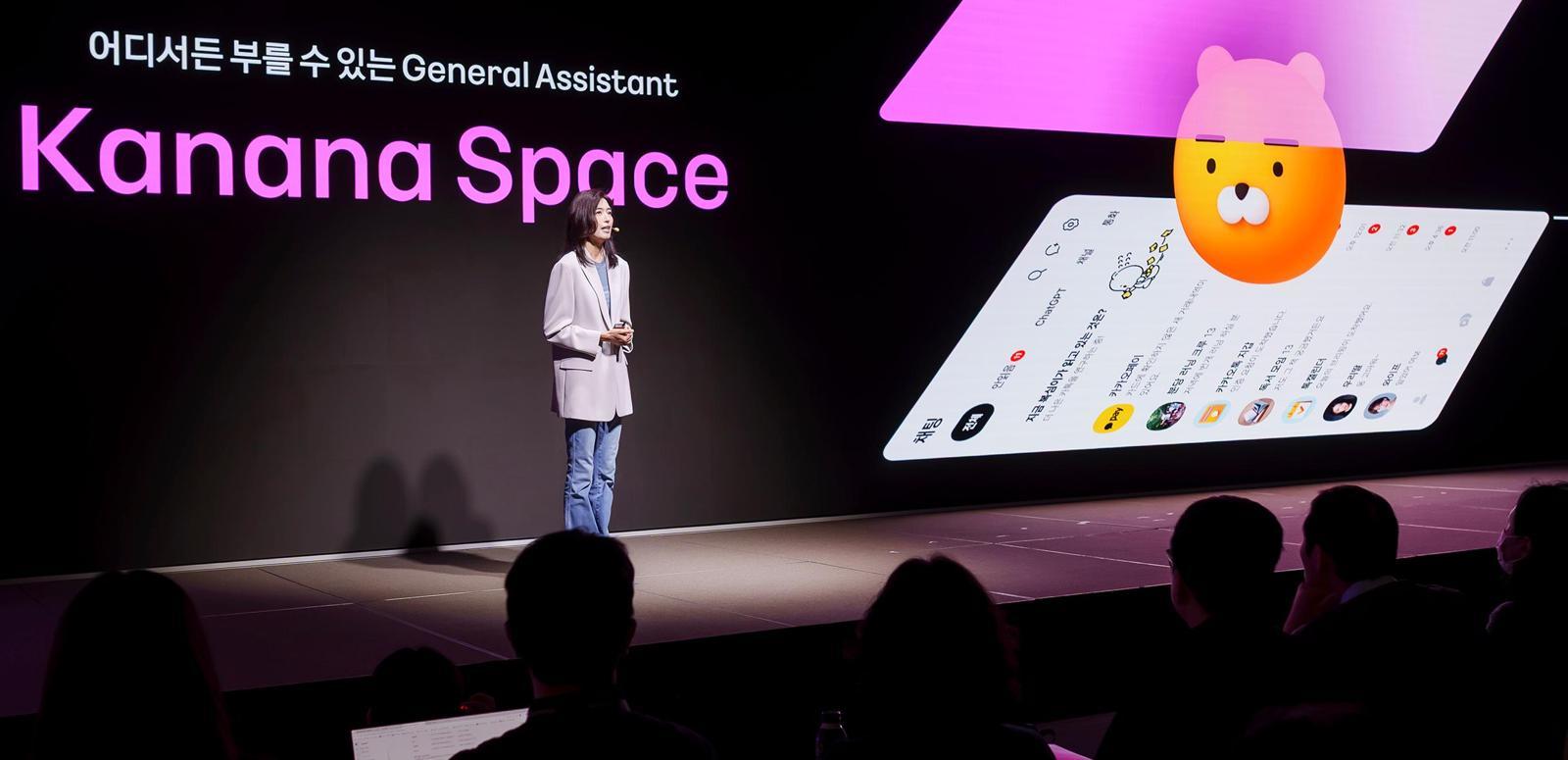
On the 13th, Kakao CEO Chung Shin-a delivers a keynote speech at the annual developer event “if(kakao) 26” held at Kakao AI Campus in Yongin, Gyeonggi Province. On this day, Kakao unveiled “Kanana Space,” an artificial intelligence (AI) assistant service that can be summoned within KakaoTalk to handle tasks such as sending messages and managing schedules. Provided by Kakao
Kakao on the 13th held its annual developer conference “if(kakao) 26” at Kakao AI Campus in Yongin, Gyeonggi Province, and unveiled its AI assistant “Kanana Space.” This service allows users to call up AI from any KakaoTalk screen and delegate necessary tasks such as sending messages and managing schedules. Whereas users previously had to manually find and execute the functions they wanted, the new concept is to enable handling of multiple tasks simply by issuing voice commands to the AI.
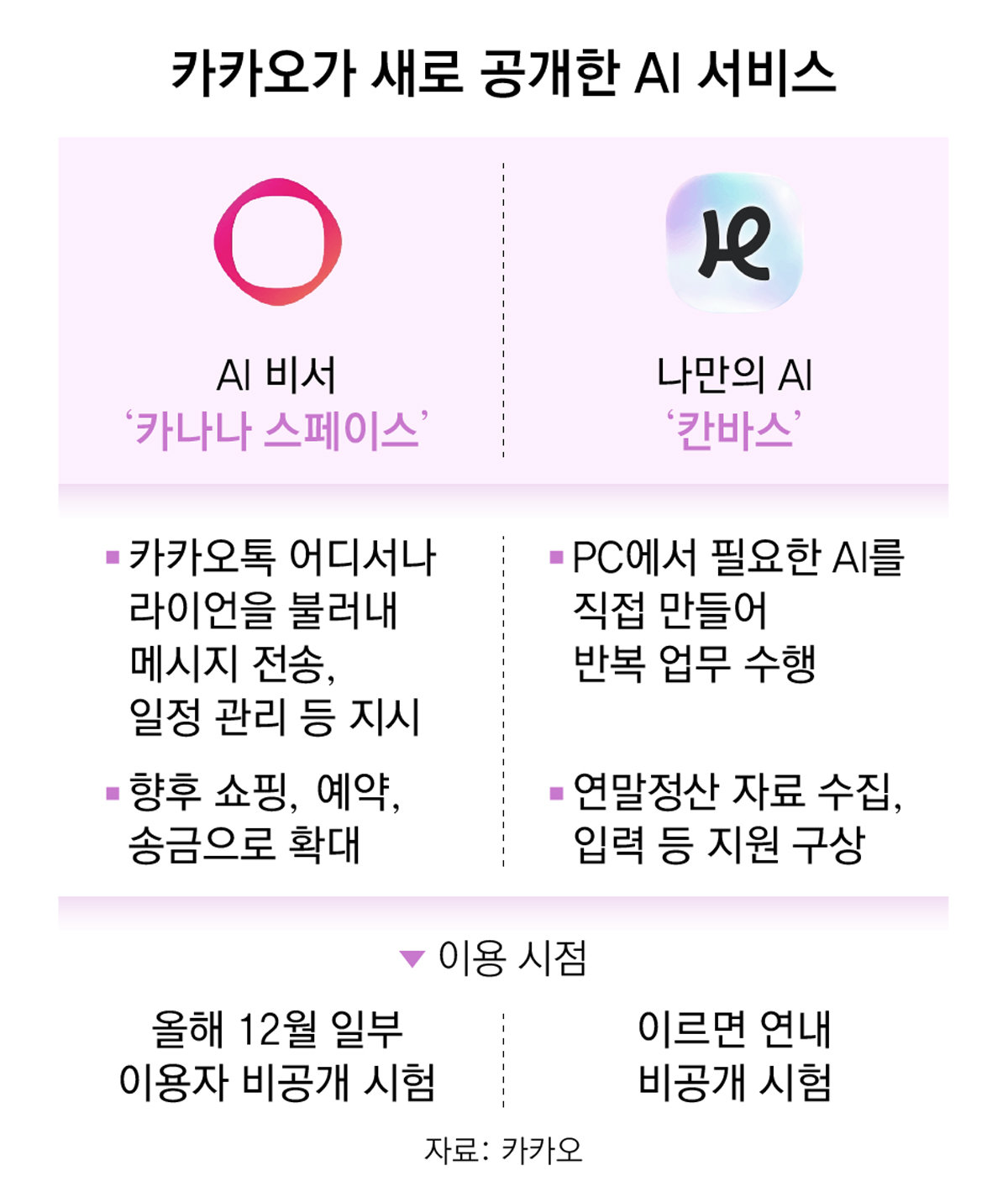
The usage method is simple. When users swipe the KakaoTalk screen with two fingers, the flagship character “Ryan” appears, and they can delegate tasks via voice or text. In a demonstration that day, when asked, “Organize only the unread, work-related messages,” the AI identified tasks that needed replies by 11 a.m. and even sent the responses. It also remembers past conversations. When asked, “What did my wife say last week?” it recalled and informed the user of the request to buy a birthday cake for their daughter. Kim Dae-nyeon, Head of Design at Kakao, explained, “The key point is that it does not end with a simple summary, but immediately leads to the next action.”
The company also unveiled “Kanvas,” which allows users to create their own AI assistants. After installing the Kanvas program on a PC and verbally explaining the required role, it links appropriate functions to configure the agent and perform tasks. For example, an agent could be tasked with collecting documents needed for year-end tax settlement and entering them into relevant websites, with the user only confirming key steps. In the first half of next year (January–June), Kakao plans to enable not only these user-created AIs but also externally developed AIs to be connected to KakaoTalk.
Kakao plans to further expand the role of AI to ordering, gifting, reservations, and remittances. However, to prevent AI from arbitrarily handling tasks, critical actions such as sending messages or making payments will require final approval by the user. Kanana Space will begin a closed beta test with a subset of users in December, and Kanvas is also scheduled for testing as early as within the year. The official launch schedule has not been decided.
● Splitting the company in two for an AI bet… Monetization is key
This announcement comes as Kakao is restructuring its business portfolio around AI. In August, Kakao resolved to carry out a spin-off, creating “KakaoAI,” responsible for KakaoTalk, AI, advertising, and commerce, and “KakaoX,” in charge of affiliate management and investment. It has set a target for KakaoAI of more than KRW 6 trillion in revenue by 2030, including KRW 1 trillion from AI services. The company is also participating in the government’s “AI for All” initiative to broaden the touchpoints of AI services.
The key issue is whether AI services can be developed into a new revenue source. As global companies such as Meta, OpenAI, and Google expand their presence in the AI assistant market, attention is turning to whether Kakao can leverage the user base of the country’s dominant messenger as a competitive edge in its AI business. CEO Chung Shin-a stated, “Over the past 15 years, Kakao has connected friends, colleagues, and families through KakaoTalk and sustained their daily lives,” adding, “Now, with AI technology, we will build the connections for the next 10 years.”
ⓒ dongA.com. All rights reserved. Reproduction, redistribution, or use for AI training prohibited.
Popular News