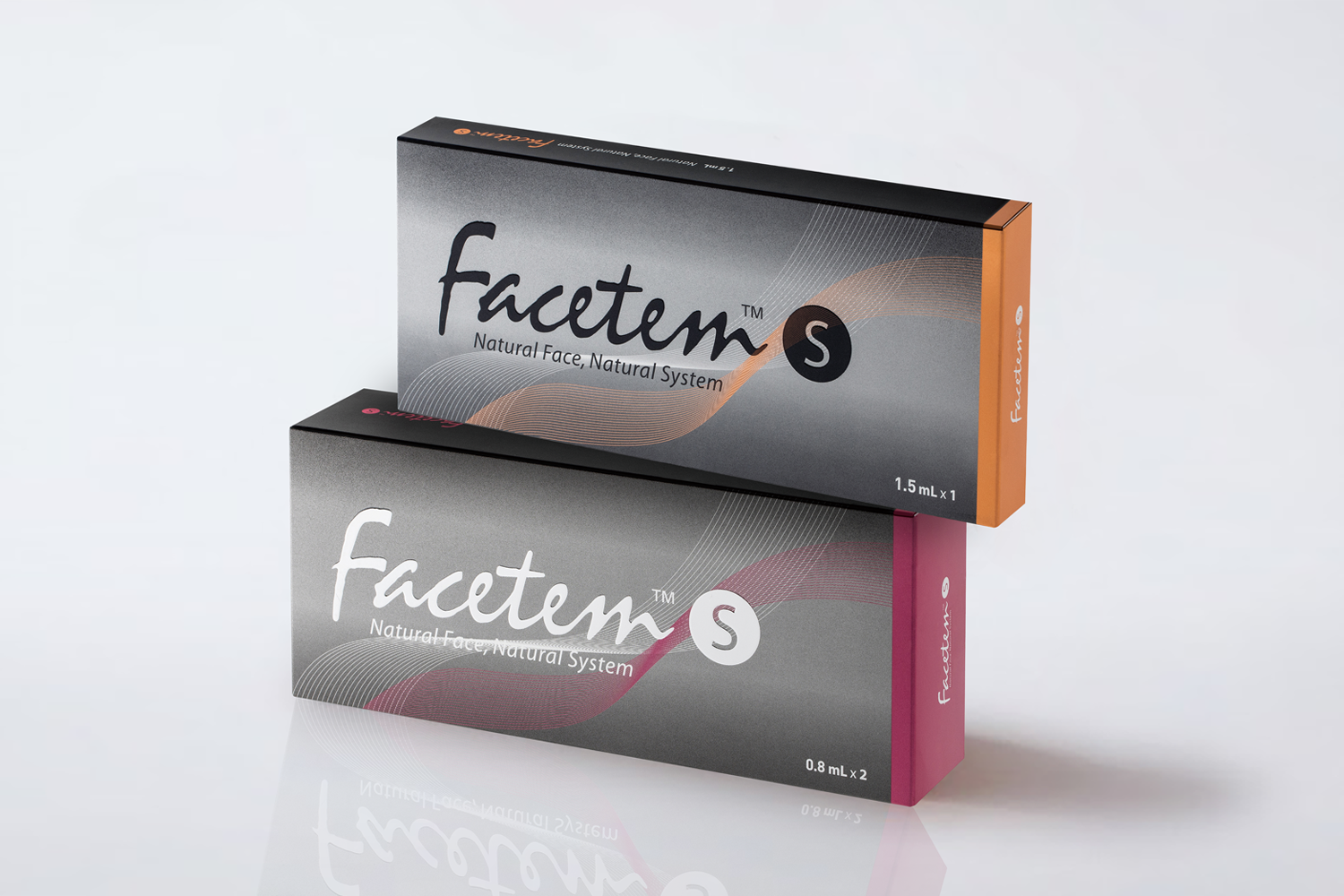
CGBio FACETEM. Courtesy of CGBio.
CGBio has obtained medical device approval in Taiwan for its calcium hydroxylapatite (CaHA)-based filler “FACETEM” and is moving to expand its presence in the local market. Leveraging a network of more than 500 medical institutions held by its local partner, the company aims to achieve cumulative supply sales of more than KRW 5 billion over the next three years.
CGBio announced on the 13th that it obtained medical device approval for FACETEM from the Taiwan Food and Drug Administration (TFDA) on 6 May.
FACETEM is a filler product sold in Korea under the name “DCLASSY CaHA.” The approved indication is for augmentation of the deep dermis and subcutaneous soft tissue.
The entry into Taiwan was pursued based on a Taiwan regional license-out agreement signed in 2024 with Hong Kong-based HTDK Holding. Local regulatory approvals, distribution, and sales will be handled by HTDK’s Taiwanese distribution partner, INDEX International.
INDEX International has a collaborative network with more than 500 medical institutions in Taiwan. CGBio plans to utilize this network to expand product supply and operate academic programs that educate healthcare professionals on product characteristics and usage methods.
According to market research firm Grand View Research, the Taiwanese filler market is estimated to reach USD 41.8 million in 2025. It is projected to grow at a compound annual growth rate of 12.4% from 2026 to 2033, reaching USD 105.9 million by 2033.
FACETEM incorporates CGBio’s patented LPF (Lattice-Pore Formation) technology. It is characterized by the formation of lattice-shaped pores within CaHA particles, taking into account the structure and degradation properties of the particles.
FACETEM is currently exported to 32 countries worldwide. CGBio plans to increase the number of countries under export contracts to more than 50 within this year. In China, the company is working with HTDK to conduct local clinical trials and regulatory procedures.
CGBio CEO Yoo Hyun-seung said, “In Taiwan, we plan to expand supply based on the local medical institution network and physician education,” adding, “By establishing regulatory and distribution infrastructure in each country while building physicians’ understanding and experience with the product, we will connect this to long-term growth.”
ⓒ dongA.com. All rights reserved. Reproduction, redistribution, or use for AI training prohibited.
Popular News