In collaboration with LabGenomics… analyzing two blood-based biomarkers to support Alzheimer’s disease diagnosis
Daewoong Bio CEO Ryu Jae-hak of LabGenomics explains Lumipulse. Provided by Daewoong Bio.
Daewoong Bio announced on the 7th that it will work with LabGenomics to expand the domestic market for “Lumipulse,” a blood-based diagnostic test for Alzheimer’s disease. The company plans to extend its business capabilities beyond its existing focus on central nervous system (CNS) therapeutics into the diagnostics field.
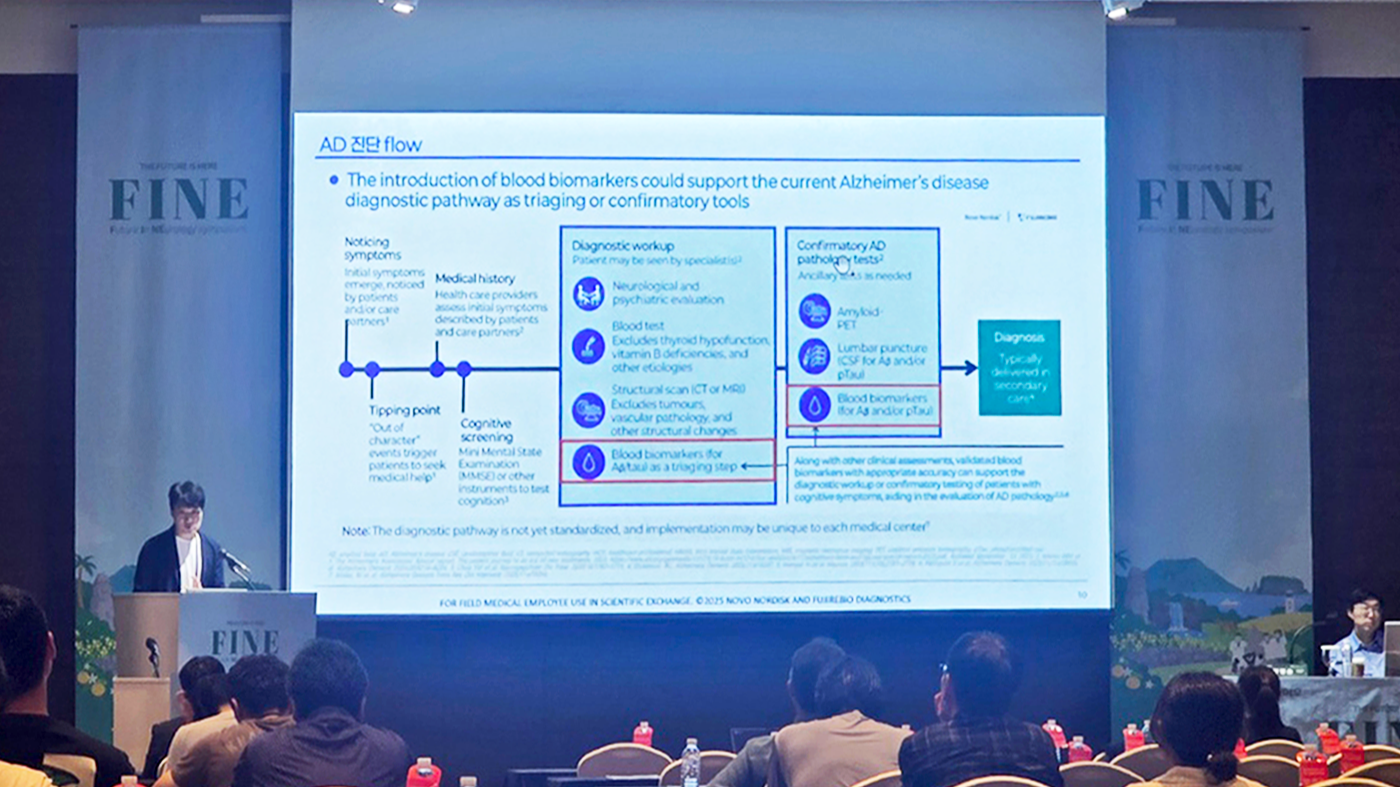
Daewoong Bio held the “FINE Symposium” from 5 to 6 September for dementia specialists, introducing the technical features and clinical applicability of “Lumipulse,” a blood test for Alzheimer’s disease that has received approval from the U.S. Food and Drug Administration (FDA).
Lumipulse is a test that helps detect pathological changes in the brain associated with Alzheimer’s disease by analyzing two types of proteins present in the blood. It measures levels of phosphorylated tau protein related to Alzheimer’s disease (pTau217) and amyloid beta (Aβ1-42), and evaluates the likelihood of the disease by calculating the ratio of these two values.
Previously, to confirm pathological changes of Alzheimer’s disease, positron emission tomography (PET), which visualizes the accumulation of amyloid protein in the brain, or cerebrospinal fluid tests were used. In contrast, blood tests can identify relevant biomarkers through a simple blood draw, reducing the testing burden on patients and helping to screen those who need additional, more precise examinations.
In particular, Lumipulse does not rely on a single protein level but uses the ratio of two indicators. Since levels of individual proteins may be affected by comorbidities such as kidney disease or by various interfering factors in the blood, analyzing both indicators together is said to help compensate for these limitations.
According to clinical trial results presented by Daewoong Bio, Lumipulse showed a positive predictive value (PPV) of 91.8% and a negative predictive value (NPV) of 97.3%. Positive predictive value refers to the proportion of individuals who test positive and actually exhibit the corresponding pathological findings, while negative predictive value refers to the proportion of individuals who test negative and do not exhibit such findings. However, these values may vary depending on the characteristics of the clinical trial population, and Alzheimer’s disease cannot be definitively diagnosed based on blood test results alone.
Professor Yang Young-soon, a neurologist at Soonchunhyang University Cheonan Hospital and chair of the symposium, said, “In the past, the main approach was to check for brain atrophy through imaging, but recently the importance of biomarkers that can more directly identify the pathological changes of Alzheimer’s disease has been increasing.”
He continued, “In blood tests, single pTau levels can potentially be affected by comorbidities such as chronic renal failure or by various interfering factors in the blood,” adding, “Simultaneously measuring pTau217 and amyloid beta and checking the ratio of the two indicators can help compensate for the limitations of each individual marker.”
At the symposium, LabGenomics presented the technical features and clinical utility of Lumipulse. Daewoong Bio plans to leverage the sales and marketing capabilities it has accumulated in the central nervous system field and link them with LabGenomics’ diagnostic infrastructure to expand the use of blood-based Alzheimer’s disease testing in the domestic medical setting.
LabGenomics CEO Ryu Jae-hak said, “Based on Lumipulse’s FDA approval data and the testing infrastructure in the United States, we will work closely with Daewoong Bio to lead the domestic Alzheimer’s diagnosis market.”
Yoo Young-gi, head of the Marketing Division at Daewoong Bio, said, “Leveraging the professional sales and marketing capabilities we have built up in the central nervous system field, together with LabGenomics’ diagnostic technologies, we will drive the expansion and establishment of the blood-based Alzheimer’s disease diagnostic market,” adding, “We will provide an integrated solution that encompasses everything from diagnosis to treatment.”
ⓒ dongA.com. All rights reserved. Reproduction, redistribution, or use for AI training prohibited.
Popular News