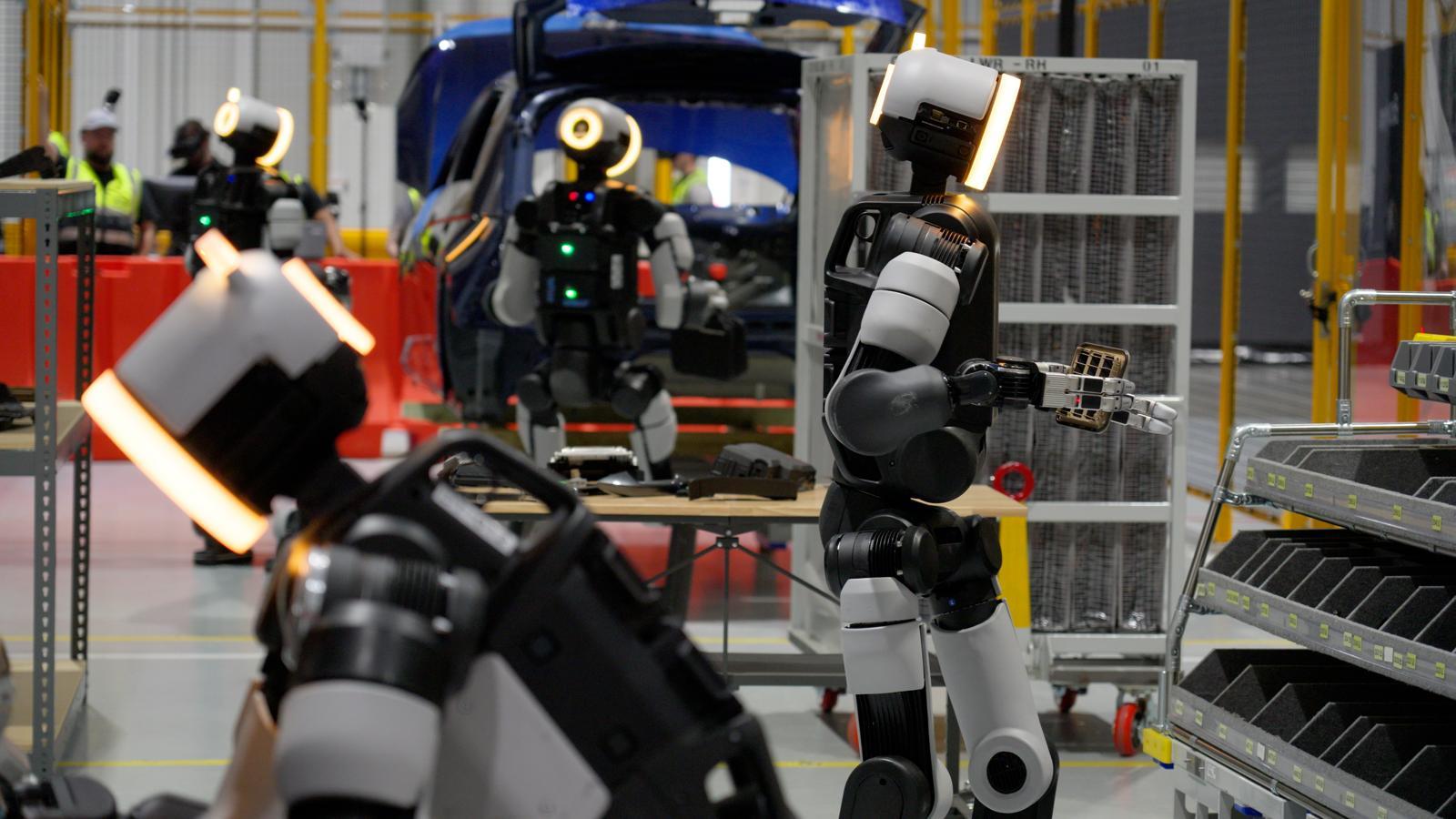
(File photo not directly related to the article) Atlas, a humanoid robot developed by Boston Dynamics, a robotics subsidiary of Hyundai Motor Group, is learning automotive manufacturing tasks at the Robotics Metaplant Application Center (RMAC). 22 September 2026. Provided by Boston Dynamics
Demand for DRAM installed in humanoid robots is projected to expand to about 20 times this year’s level by 2030. Robots are emerging as a new demand source for memory companies such as Samsung Electronics and SK hynix.
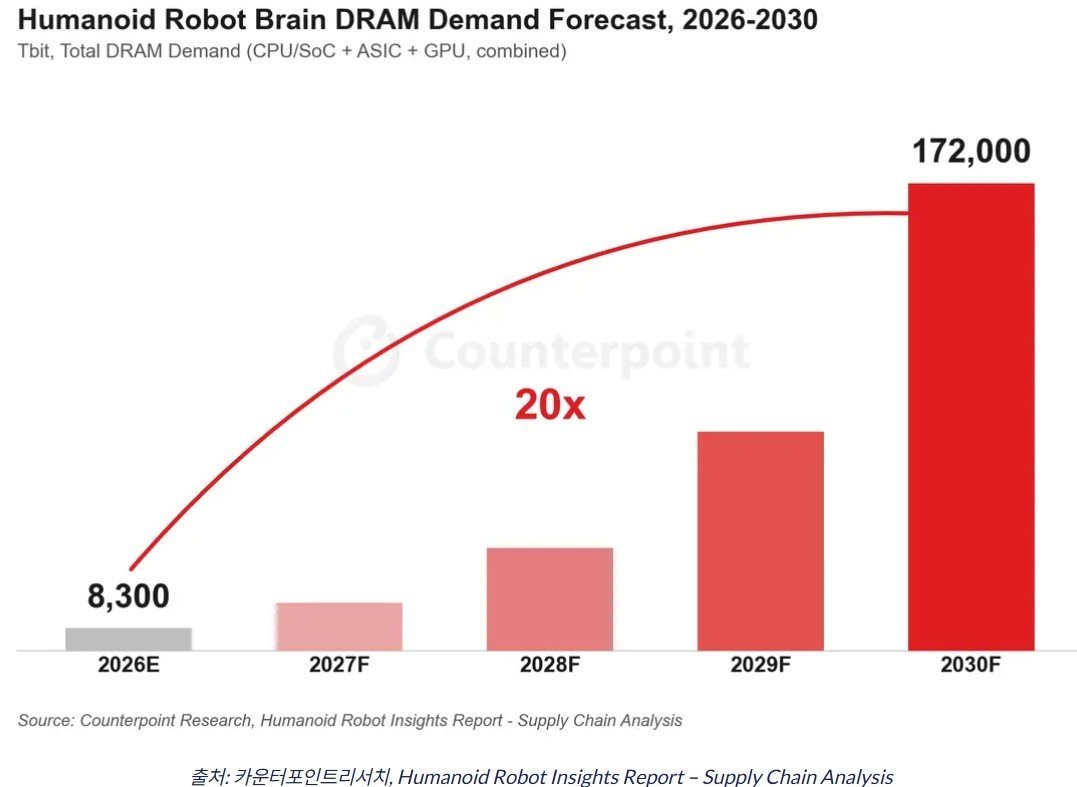
On the 11th, market research firm Counterpoint Research forecast that demand for DRAM used as a computing device serving as the “brain” of humanoid robots will surge from around 8,300 terabits (Tb) this year to 172,000 Tb in 2030, a 20.7-fold increase. DRAM capacity per robot is also expected to more than double over the same period, from 19 gigabytes (GB) to 39 GB. This is attributed to the advancement of artificial intelligence (AI) models that autonomously make decisions by analyzing camera and sensor data in real time.
Forecast of DRAM demand for humanoid robot “brains,” 2026–2030. Provided by Counterpoint Research
Counterpoint assessed that, given the battery-powered nature of robots, demand will grow more for low-power DRAM (LPDDR) and high-capacity NAND flash than for high-bandwidth memory (HBM), which consumes more power.
Samsung Electronics and SK hynix, which compete for the top two positions in the global memory market, are moving to preempt the humanoid memory market. In its July earnings conference call, Samsung Electronics outlined plans to supply semiconductor solutions for physical AI—such as robots—by bundling high-bandwidth and low-power memory, image sensors, foundry services, and advanced packaging. In June, SK hynix partnered with NVIDIA to jointly develop next-generation memory to be used in the “Jetson Thor” computing platform for robots.
Lee Dong-hoon
AI-translated with ChatGPT. Provided as is; original Korean text prevails.
ⓒ dongA.com. All rights reserved. Reproduction, redistribution, or use for AI training prohibited.