Commercialization with conversational capabilities and more by 2030
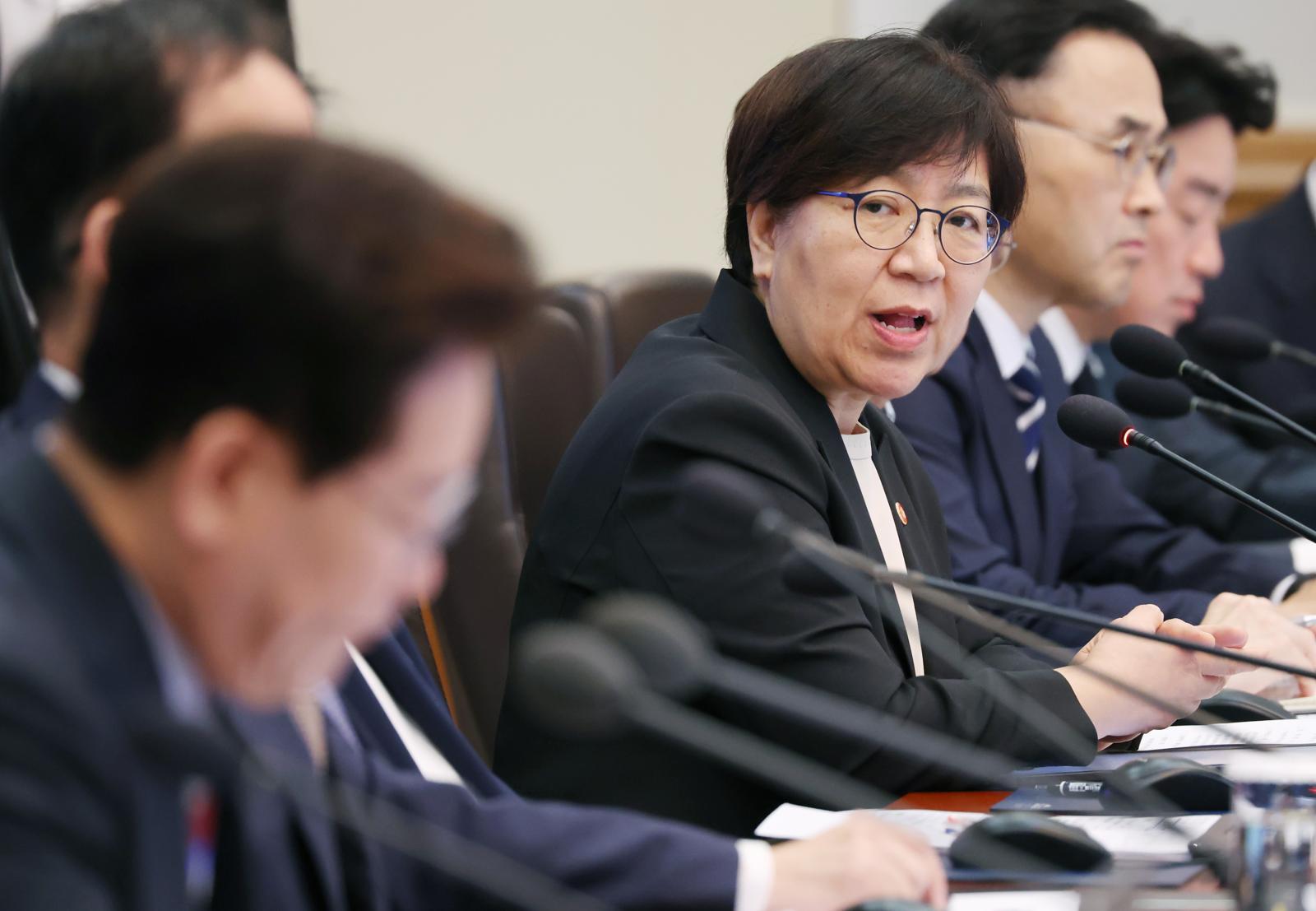
Jeong Eun-kyeong, Minister of Health and Welfare. 2026.09.29 Seoul=Newsis
From next month, a pilot “smart home” project will begin in which artificial intelligence (AI) monitors elderly people living alone who require care around the clock. From 2030, household care robots that provide health management and companionship will also be introduced.
The Ministry of Health and Welfare on the 6th announced the “AI Grand Transition Roadmap for Welfare and Care” at a Cabinet meeting. The move is intended to prepare for rising care demand driven by rapid population ageing and an increase in single-person households. The Korea Development Institute (KDI) has forecast a shortage of 990,000 care workers by 2043.
Currently, an at-home care recipient must remain motionless for up to six hours before a crisis alert is sent. With smart homes, AI analyzes users’ lifestyle patterns and conversation content to detect signs of crisis within one hour. In care facilities such as nursing homes, the government plans to introduce smart diapers and fall/movement detection sensors to reduce the burden of night-time care. The government has decided to gradually roll out these “smart care” services to 400 households and 12 facilities by next year. From 2030, AI care robots equipped with crisis detection, health management, and conversational functions will also be commercialized.
Bang Sung-eun
AI-translated with ChatGPT. Provided as is; original Korean text prevails.
ⓒ dongA.com. All rights reserved. Reproduction, redistribution, or use for AI training prohibited.