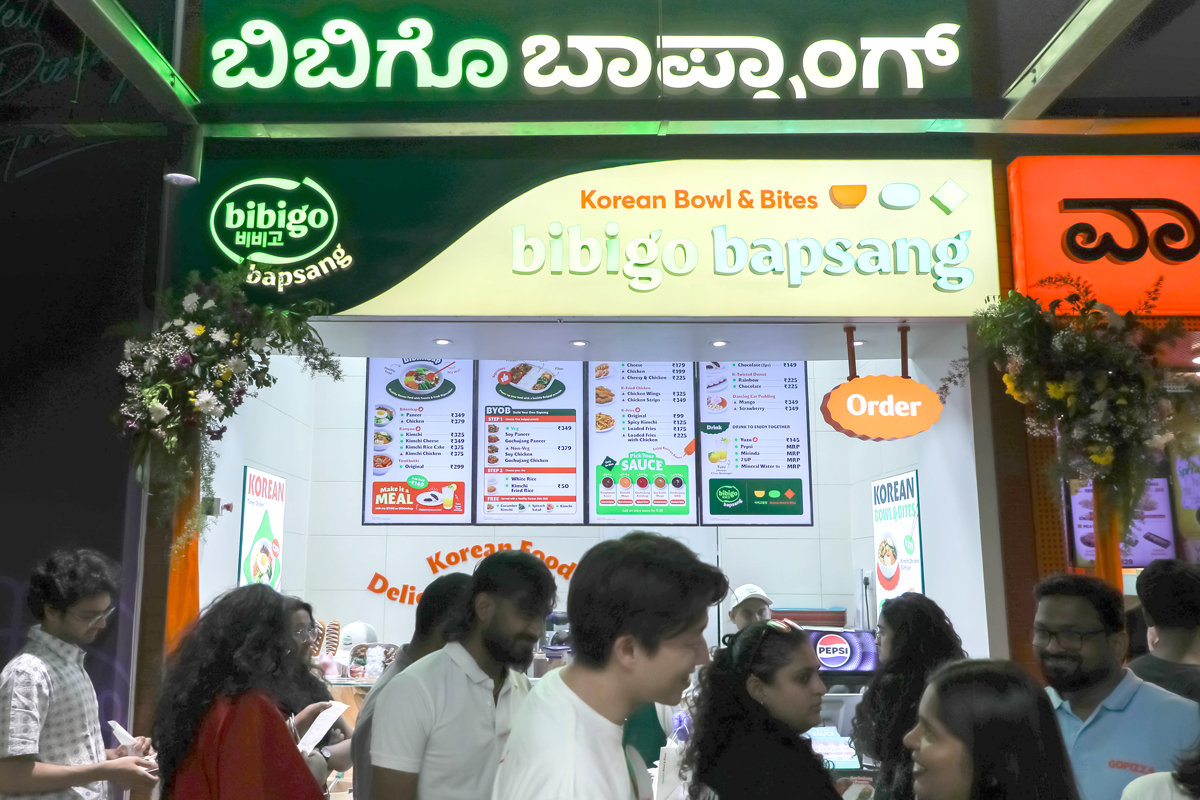
The first local ‘Bibigo Bapsang’ outlet in India, which opened on 2 October at the Orion Mall, a large shopping mall in Bengaluru, India. Reader provided
CJ CheilJedang is accelerating its push into India, a populous giant with 1.4 billion people, by opening a Korean food outlet in the country. As its global food sales surpassed domestic sales for the first time last year amid stagnant domestic demand, the company is putting greater weight behind its overseas expansion. Recently, growing interest in K-food in India driven by the Korean Wave, combined with the rapid expansion of the consumer market, has prompted other Korean food and restaurant companies to rush into India as well.
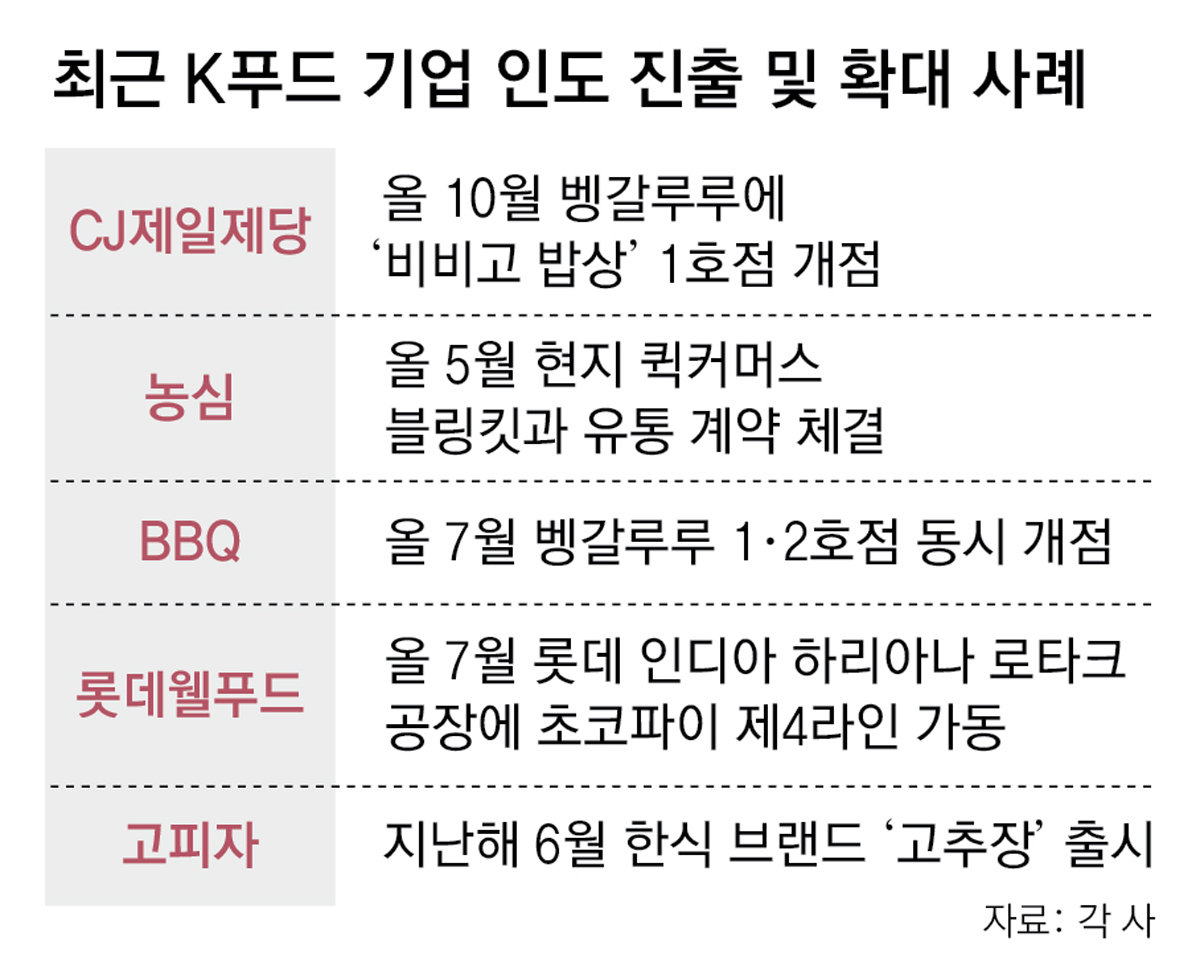
According to the local retail industry on 6 October, CJ CheilJedang began trial operations of the first Indian outlet of ‘Bibigo Bapsang’ at the Orion Mall, a large shopping mall in Bengaluru, India, on 26 September and officially opened it on 2 October. Bibigo Bapsang is a Korean quick service restaurant (QSR) under CJ CheilJedang’s Bibigo brand, which currently also operates outlets in Vietnam. The first Indian outlet has a floor area of about 8 pyeong (26㎡). Bibimbap is the signature menu item, prepared using Bibigo sauces. Local operations are handled by Korean restaurant startup GTGO (formerly Gopizza). CJ CheilJedang plans to open a second outlet at Bengaluru International Airport in November together with GTGO, and a third outlet by the end of the year.
CJ CheilJedang’s focus on the Indian market is seen as stemming from its population size and growth potential. India overtook China in 2023 to become the world’s most populous country, and its median age is around 30. The Organisation for Economic Co-operation and Development (OECD) last month projected India’s economic growth rate this year at 7.1%, outpacing China (4.5%) and the United States (2.2%), underscoring the speed of its economic expansion. The size of the middle class with purchasing power is also rising rapidly. According to UK economic analysis firm Oxford Economics, the number of middle-class Indian households with annual disposable income of USD 10,000 or more is expected to grow from 280 million last year to more than 360 million by 2033.
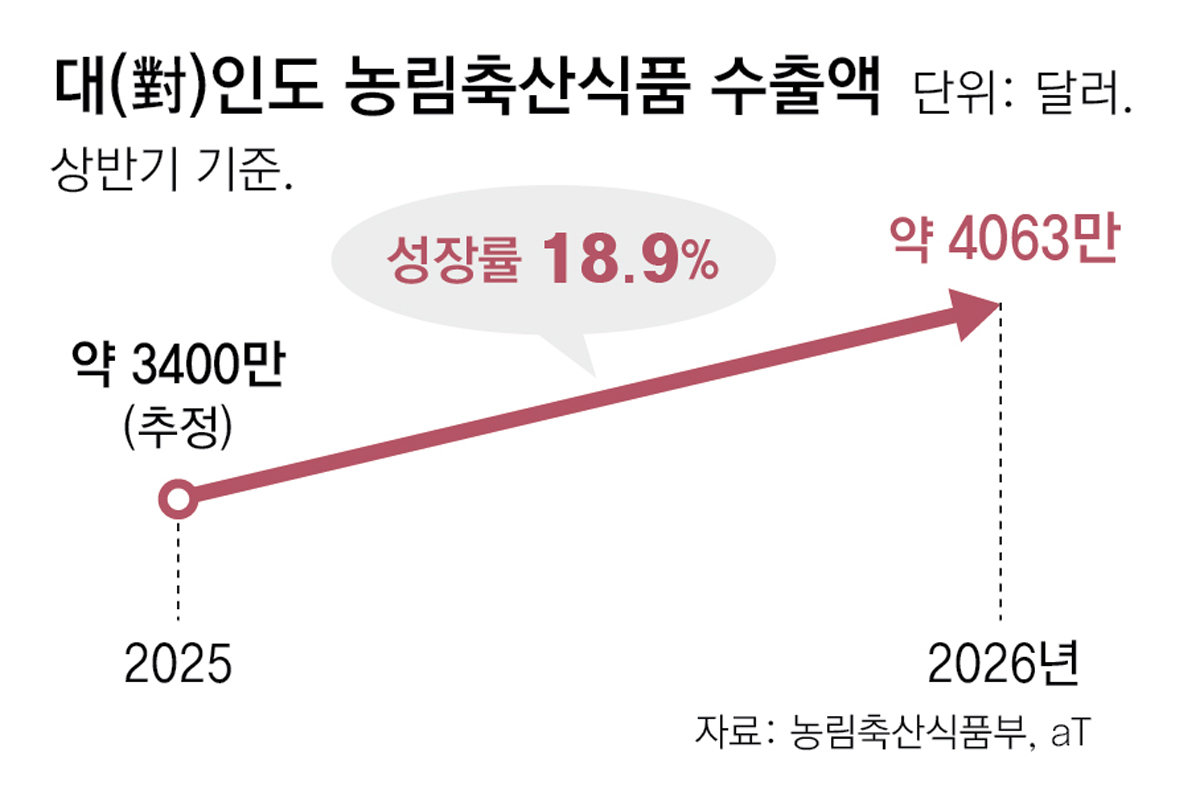
As the Korean Wave spreads, demand for K-food is also increasing. According to the Ministry of Agriculture, Food and Rural Affairs and the Korea Agro-Fisheries & Food Trade Corporation (aT), exports of agricultural, livestock and food products to India in the first half of this year (January–June) reached USD 40.63 million (about KRW 54.5 billion), an 18.9% increase from the same period last year (about USD 34 million). In its “India Market Entry Strategy 2026” report, the Korea Trade-Investment Promotion Agency (KOTRA) assessed that “K-food and beverages are a high-growth market where the Korean Wave image and premiumisation converge,” adding that “online exposure to K-food is surging and is spreading mainly among the young middle class.”
Improved entry conditions are also supporting expansion into India. In September last year, the Indian government overhauled the Goods and Services Tax (GST), cutting the tax rate on processed foods such as instant noodles and sauces from the previous 12–18% range to 5%. This has reduced the price burden and increased the potential for higher consumption. The widespread adoption of the Unified Payments Interface (UPI), a real-time mobile payment system, has also enhanced payment convenience. Since the Indian government announced the National Logistics Policy (NLP) in 2022, it has been increasing investment in transport infrastructure such as roads and railways, thereby expanding the logistics base essential to the food business.
As a result, Korean food companies have recently been entering India one after another. In May, Nongshim partnered with Blinkit, India’s No. 1 quick commerce company, to begin selling its Shin Ramyun brand in cities such as New Delhi and Mumbai. In the restaurant sector, Genesis BBQ opened its first and second outlets simultaneously in Bengaluru in July. GTGO, which operates Bibigo Bapsang, entered India earlier in 2019 and currently operates around 60 outlets across three brands: Gopizza, Dal.komm, and Gochujang.
ⓒ dongA.com. All rights reserved. Reproduction, redistribution, or use for AI training prohibited.
Popular News