Leveraging its Nvidia partnership to begin mass production of L2+ in 2028, followed by integration of its own AI in 2029
Building a “data flywheel” system where driving information is collected, trained, and verified in a continuous loop
Researching VLA models that combine language-based reasoning
Real-road evaluations to begin early next year
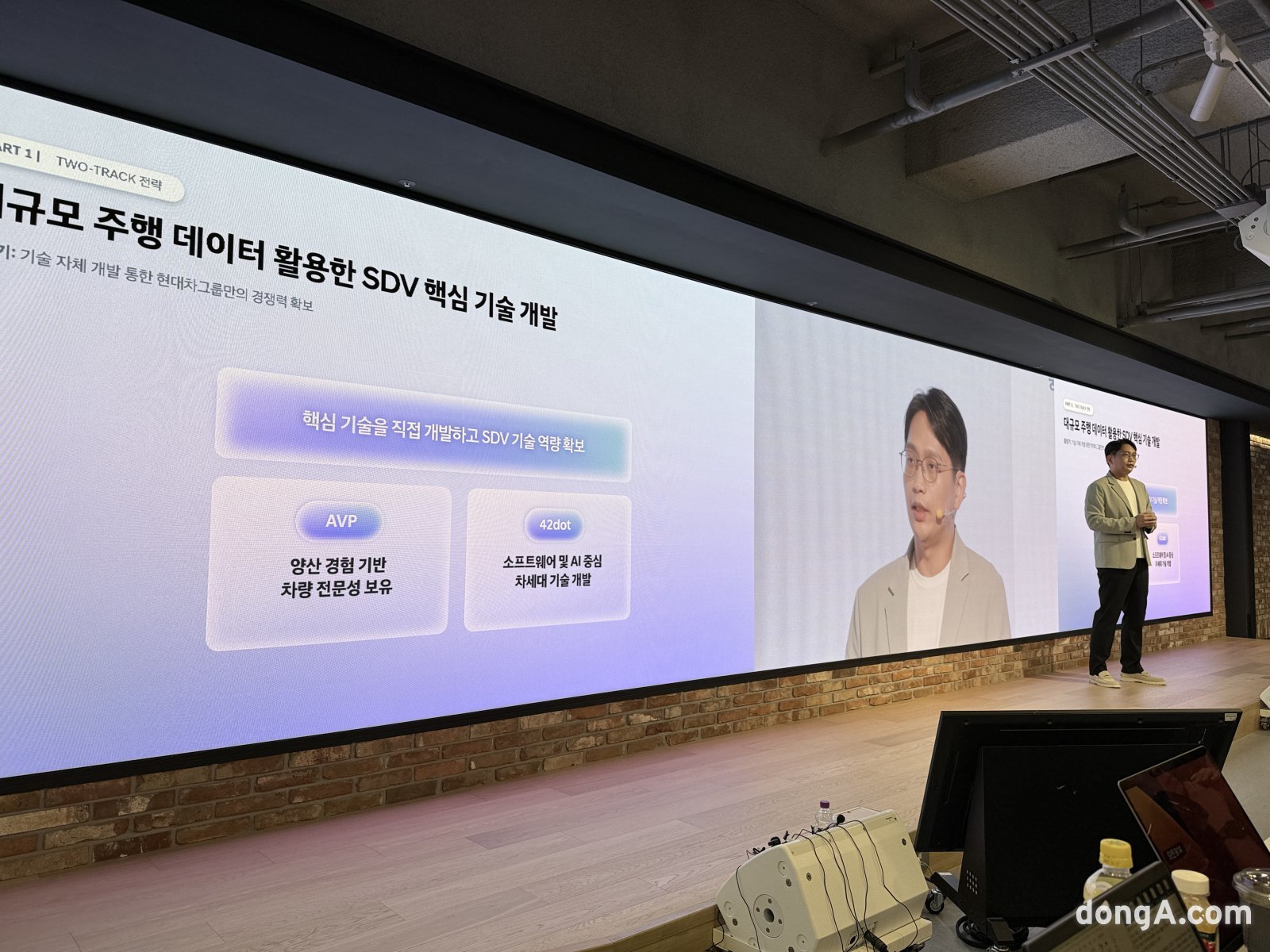
Hyundai Motor Group has fully activated a “data flywheel” system to accelerate the learning and advancement of autonomous driving algorithms and has disclosed on-road verification results. The group is pursuing a two-track strategy: bringing forward commercialization by leveraging external semiconductor technology while internalizing its proprietary artificial intelligence (AI) solution.
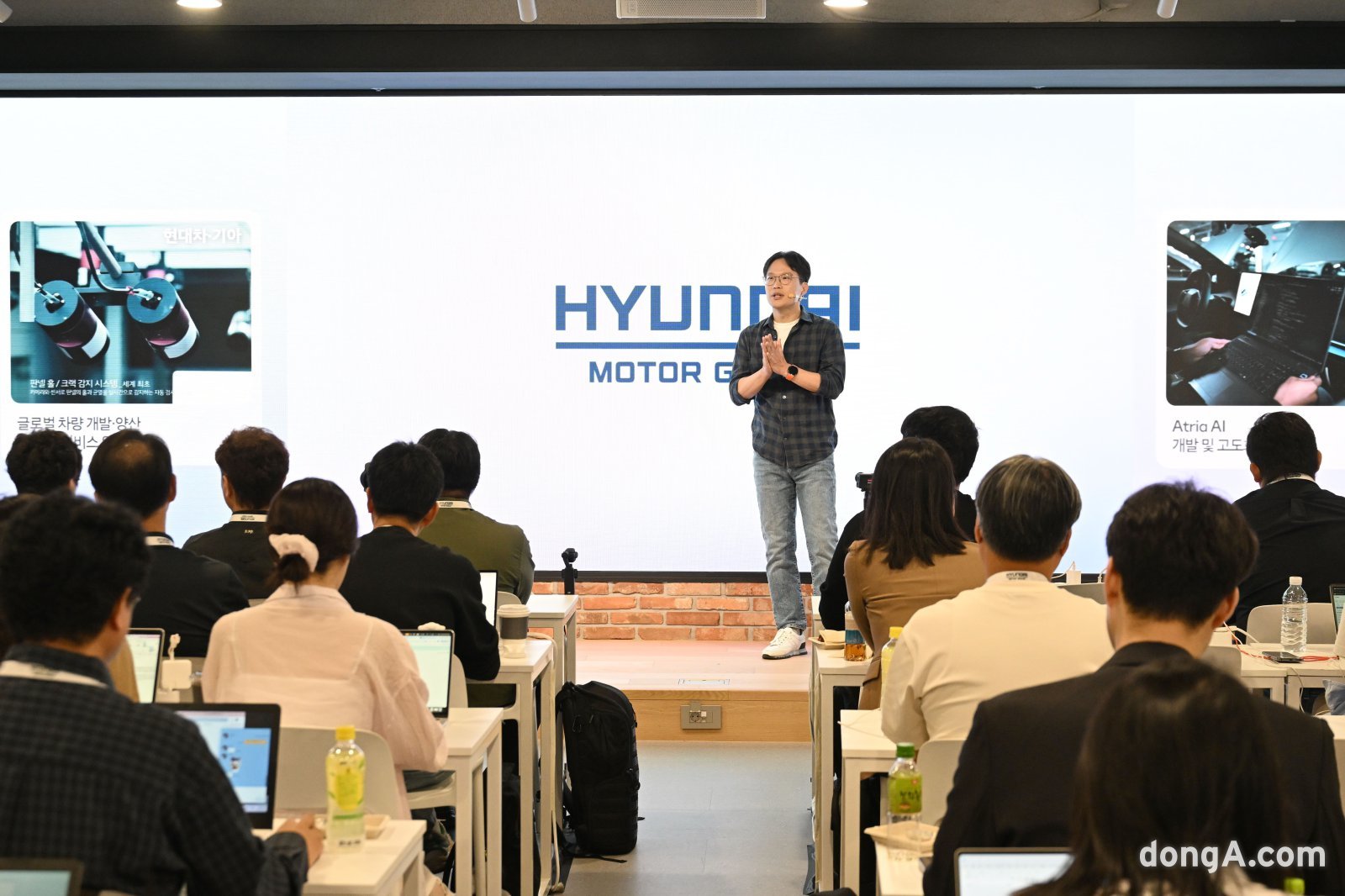
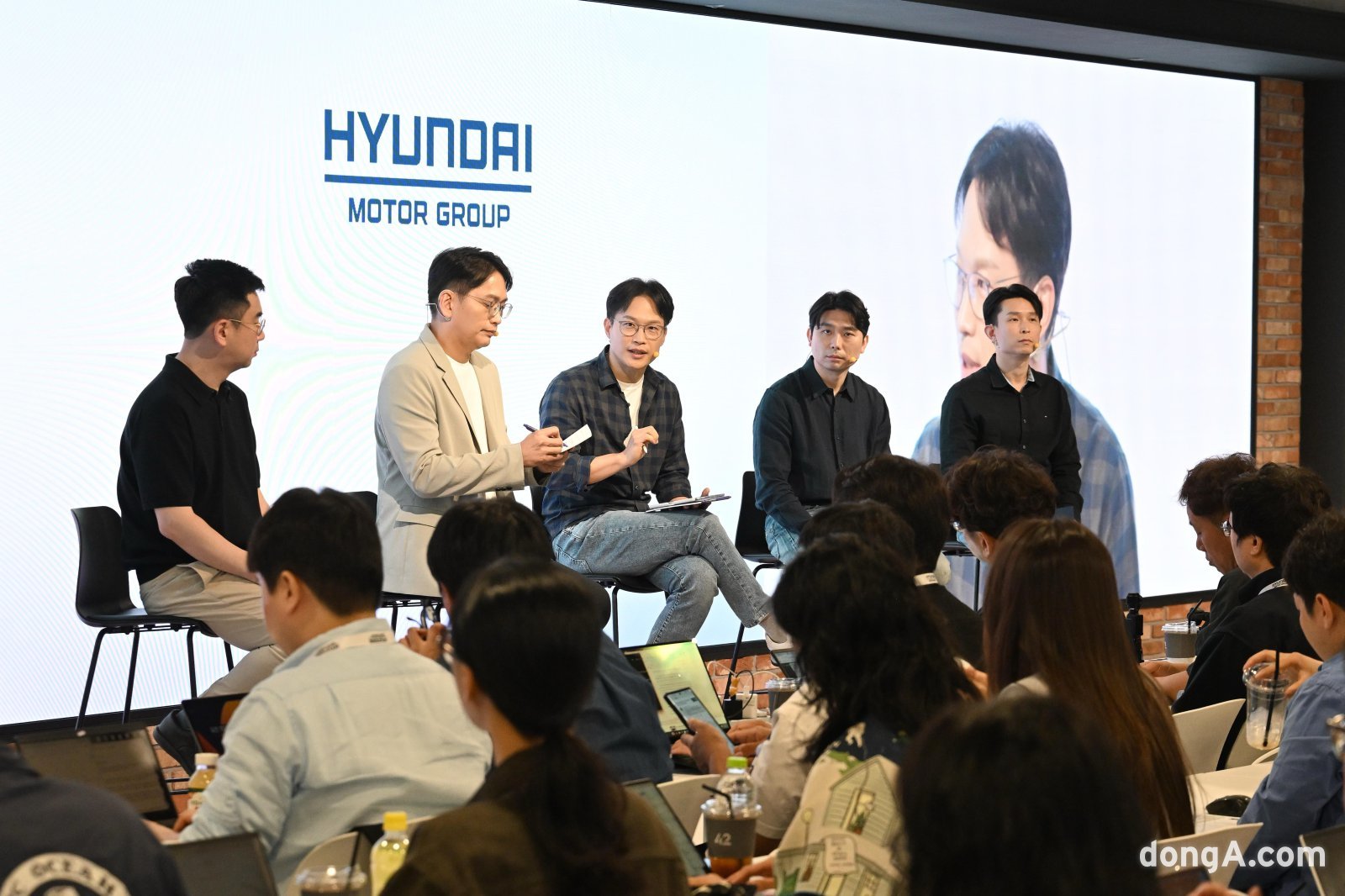
On the 11th, Hyundai Motor Group held an “Autonomous Driving Media Day” at the headquarters of 42dot in Seongnam, Gyeonggi Province, and announced its technology development roadmap and verification status. The event was attended by key development executives, including Park Min-woo, head of the AVP Division (President) at Hyundai Motor and Kia and CEO of 42dot, and Kwon Jung-hyun, head of the Autonomous Driving Development Center (Executive Vice President) at Hyundai Motor and Kia, who presented driving solutions and the future vision.
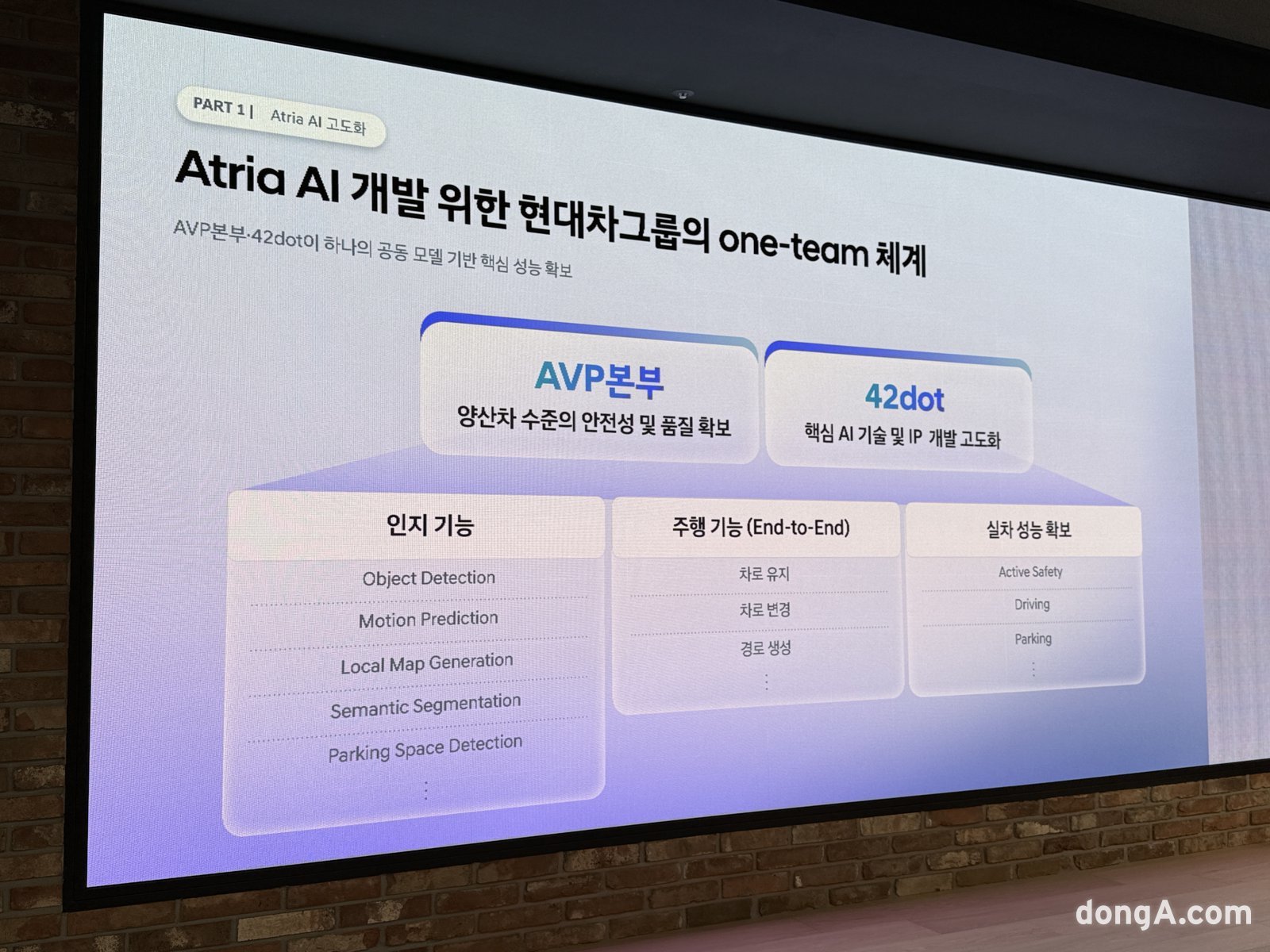
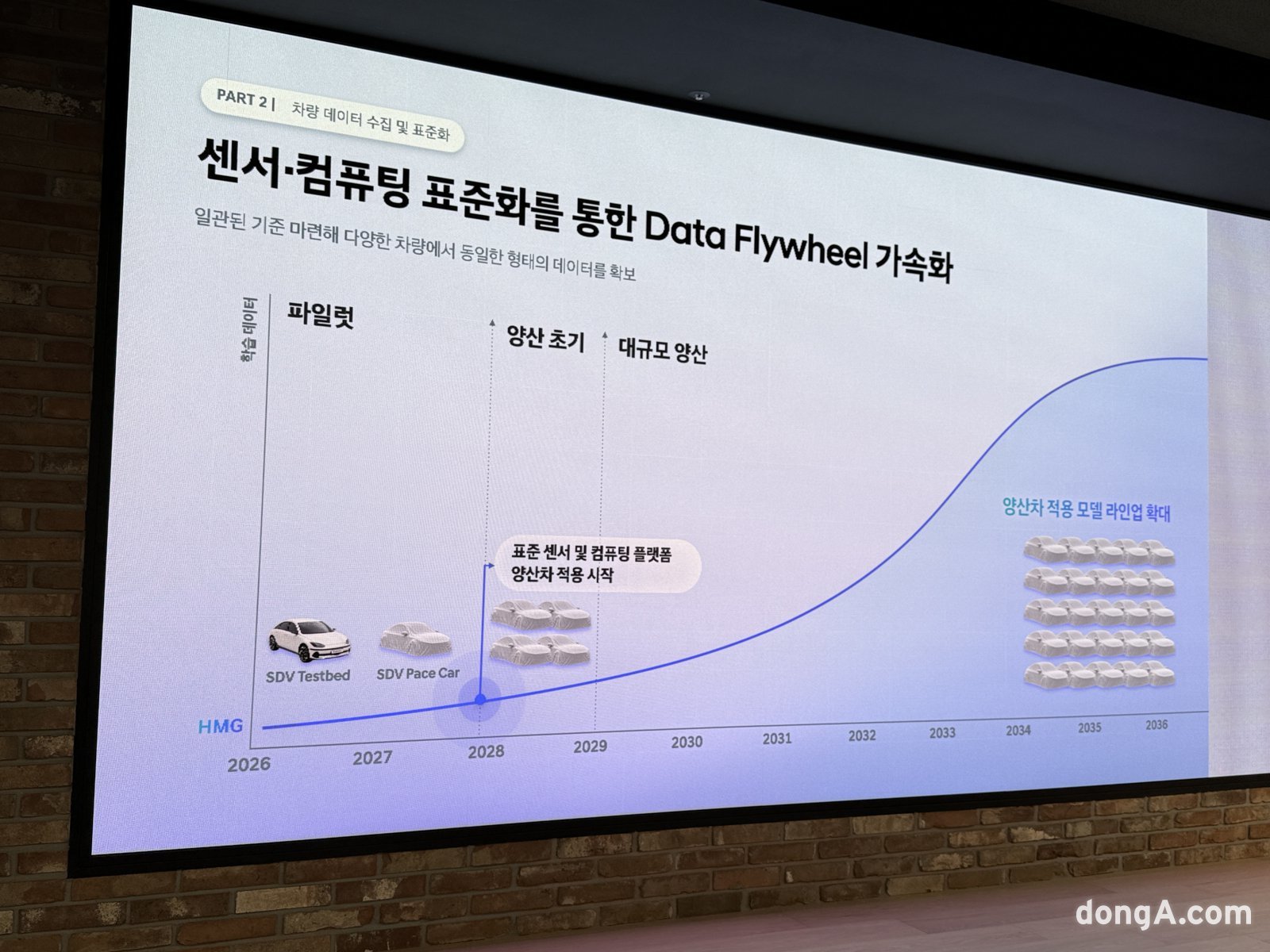
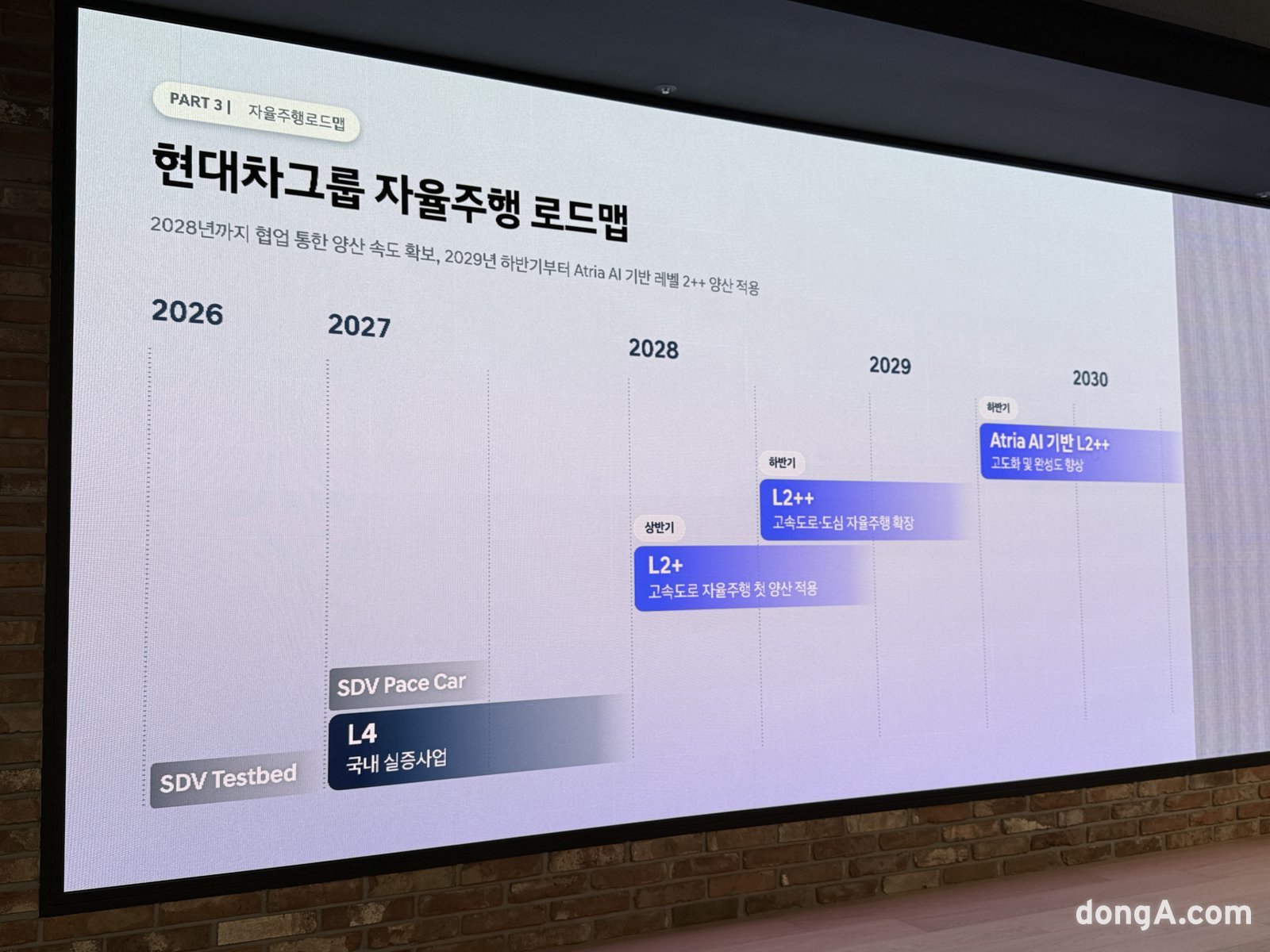
The core strategy presented by Hyundai Motor Group is the parallel pursuit of cooperation with Nvidia and the development of its proprietary AI, “Atria AI.” In the first half of 2028, the group plans to first apply Level 2+ capabilities to mass-produced vehicles based on Nvidia’s computing platform and autonomous driving software, and expand to Level 2++ in the second half of the same year. To this end, the sensor specifications previously used by various in-group organizations such as the AVP Division, 42dot, and Motional will be integrated under Nvidia’s “Drive Hyperion 10” standard to ensure data consistency.
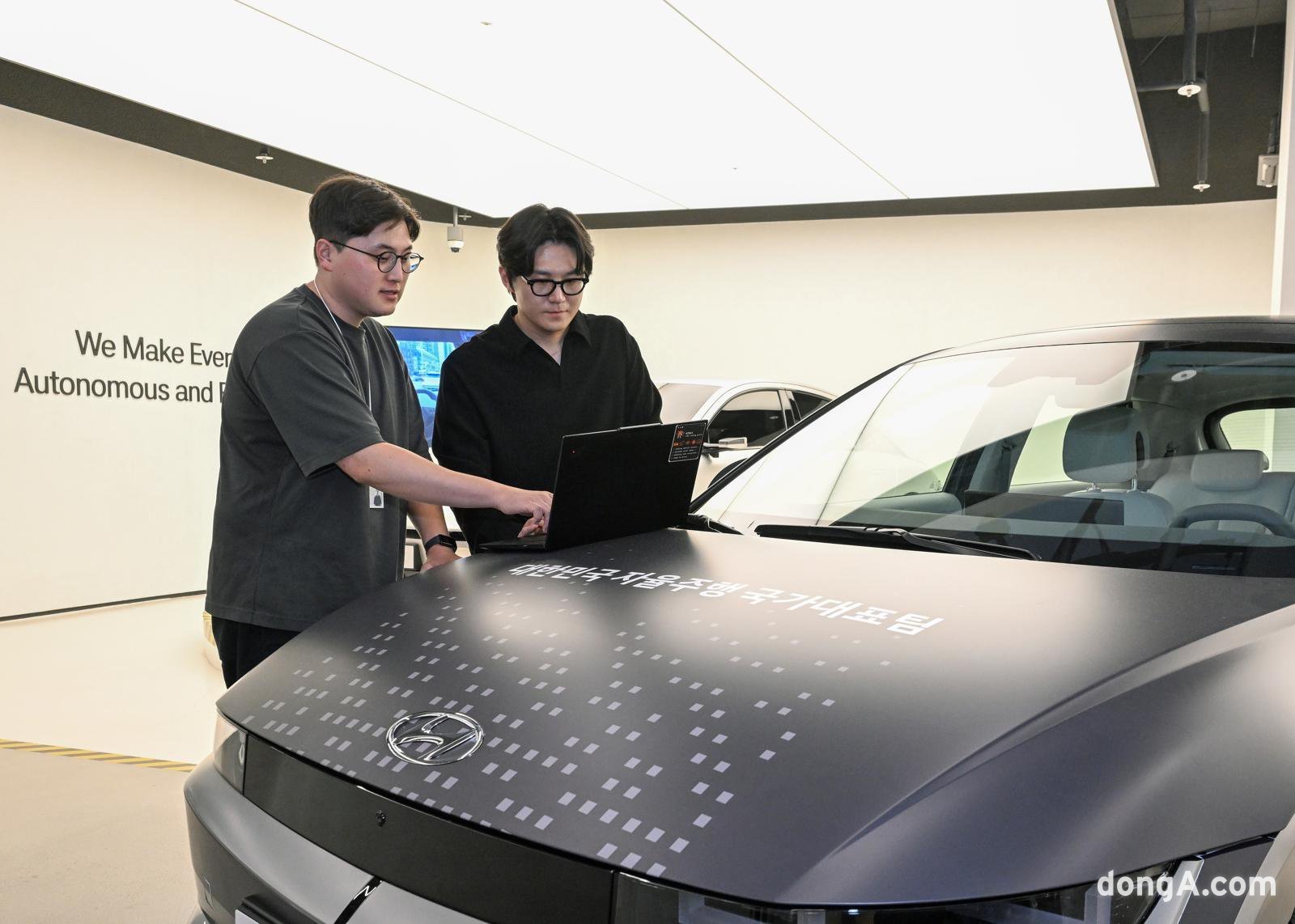
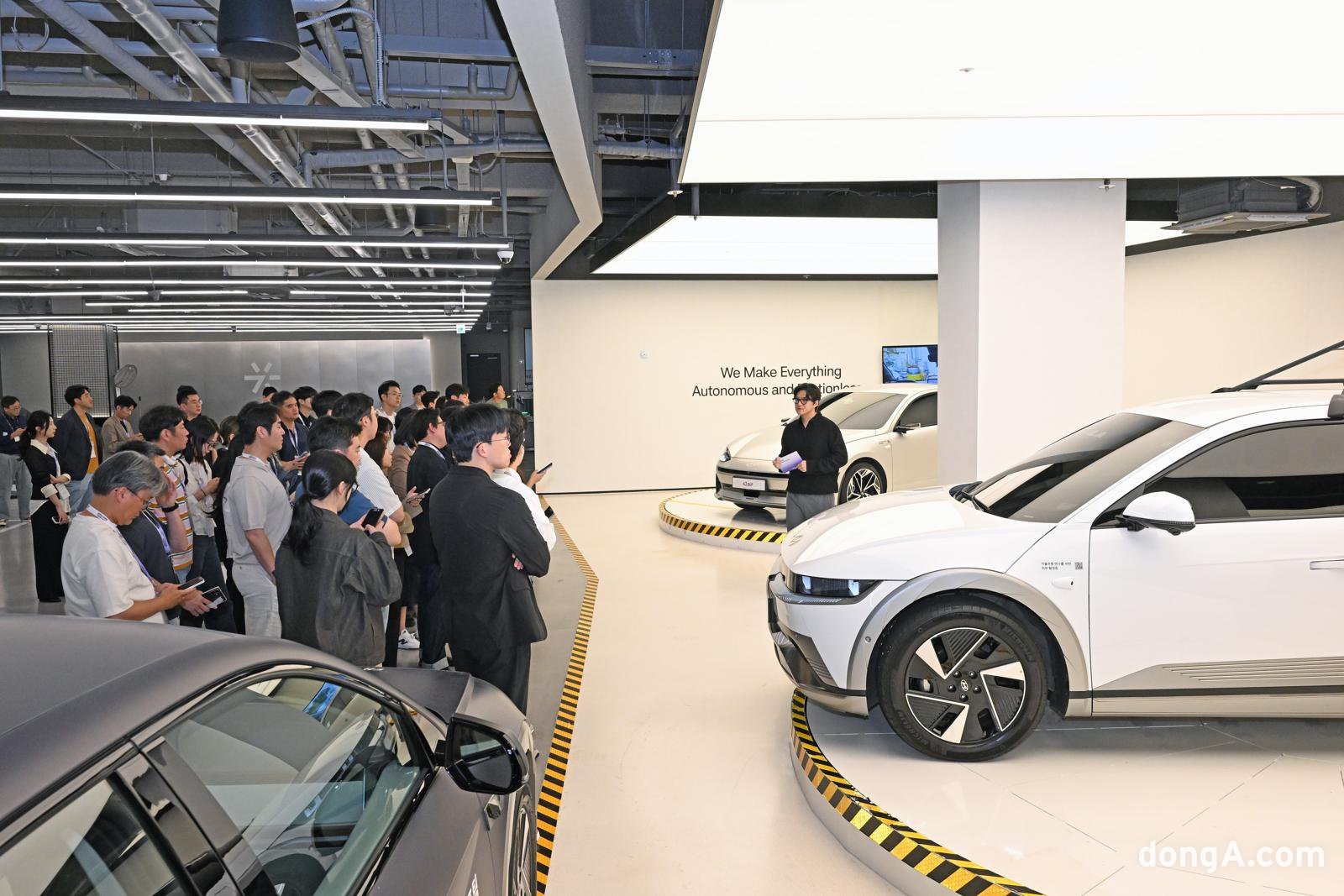
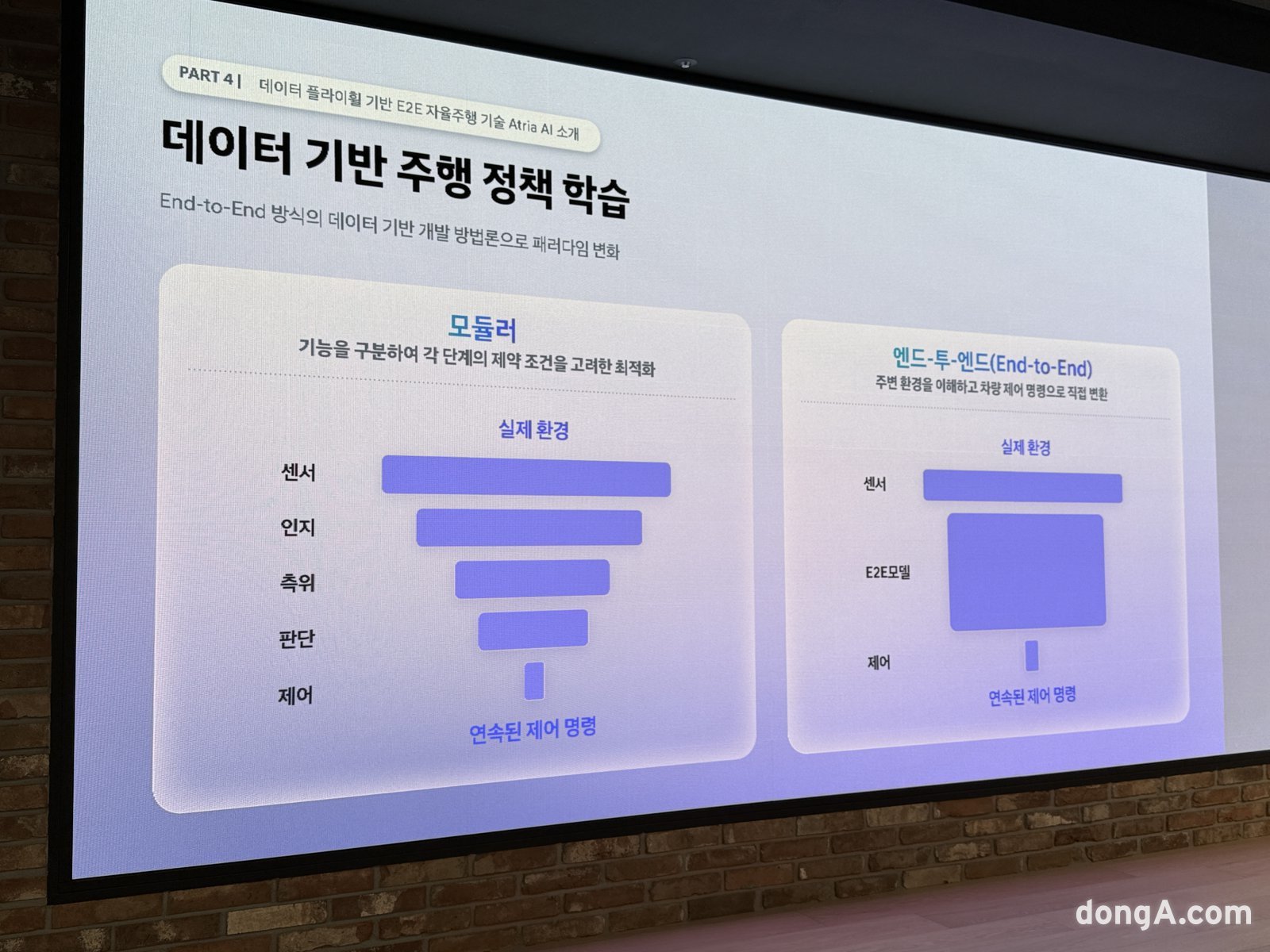
Atria AI, the group’s proprietary technology, is being developed with the goal of mass-production application in the second half of 2029. Based on an end-to-end (E2E) approach, Atria AI is being refined through collaboration between the AVP Division and 42dot, which are working together as a single development team. After mass production begins, the technology will be continuously enhanced using real-world driving data collected from roads.
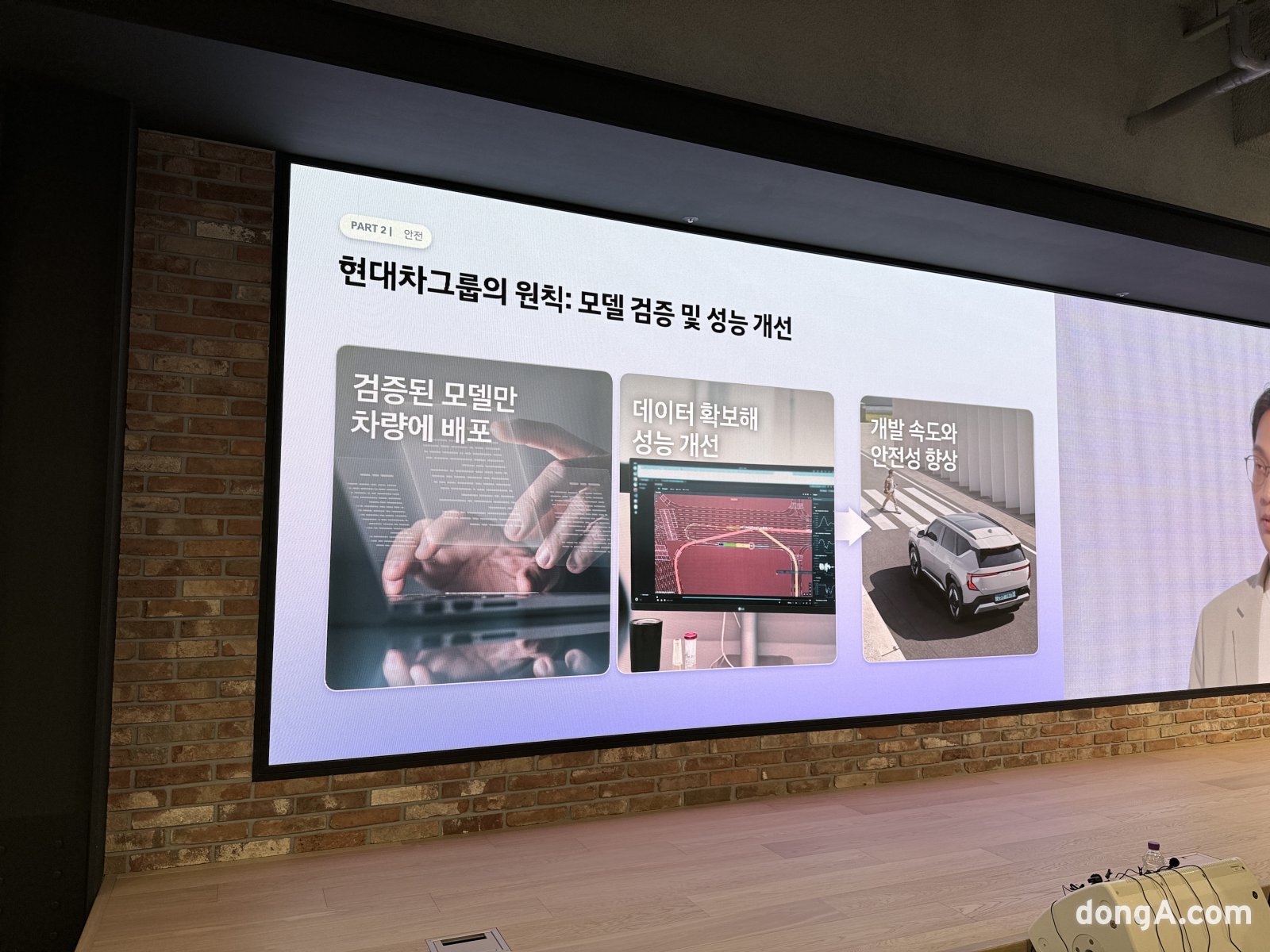
The data flywheel, which underpins technological advancement, is a development framework in which driving data collection, AI training, virtual verification, and software deployment operate in a continuous loop. Hyundai Motor Group plans to leverage its network that sells more than 7 million vehicles annually in global markets to build a large-scale driving data ecosystem. Currently, the group operates around 40 dedicated pilot vehicles to collect so-called “edge case” information—such as road construction sections, severe weather, and on-street parking on side roads.
For efficient learning, the group has also built a “hard example mining” system that automatically selects high-difficulty driving environments, along with a “continuous training” system that constantly incorporates new information. In addition, by applying 3D Gaussian splatting technology, it reproduces and verifies hazardous situations in a virtual 3D space. The group is shortening development stages by combining a 24-hour development system (Follow-the-Sun), which utilizes the time difference between Korea and the United States, with a special event recorder (SER) that automatically records unusual situations.
A “data union” ecosystem is also being formed to share standardized driving data internally within the group and with external partners. After first improving information-sharing efficiency among Hyundai Motor, Kia, 42dot, and Motional, the group plans to gradually expand the scope of application. In addition, by the end of the year, in cooperation with the Ministry of Land, Infrastructure and Transport, it will promote a Level 4 autonomous driving demonstration project using software-defined vehicles (SDVs) equipped with Atria AI in the Gwangju-Jeonnam Special Integrated City, thereby securing additional large-scale demonstration data.
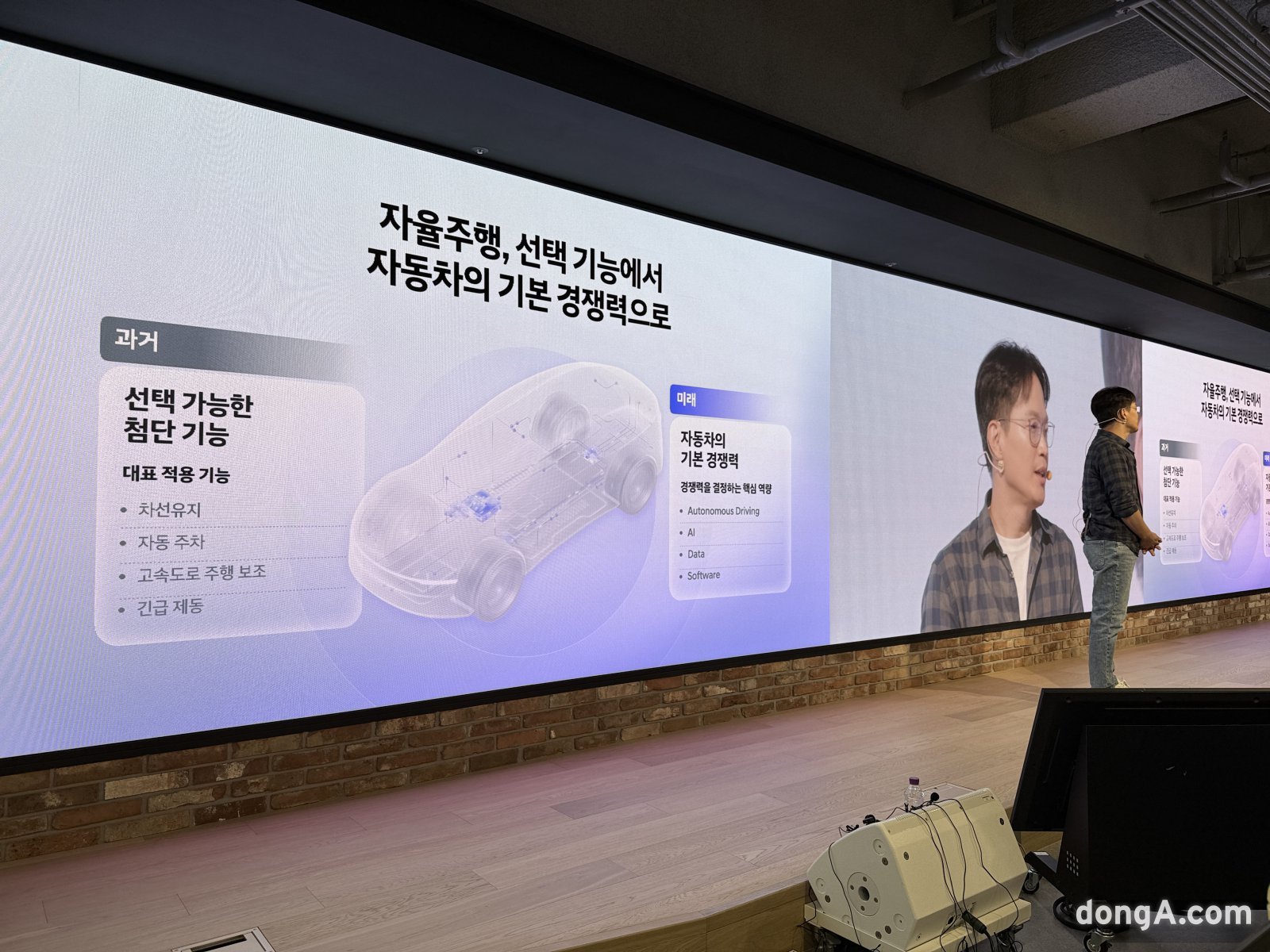
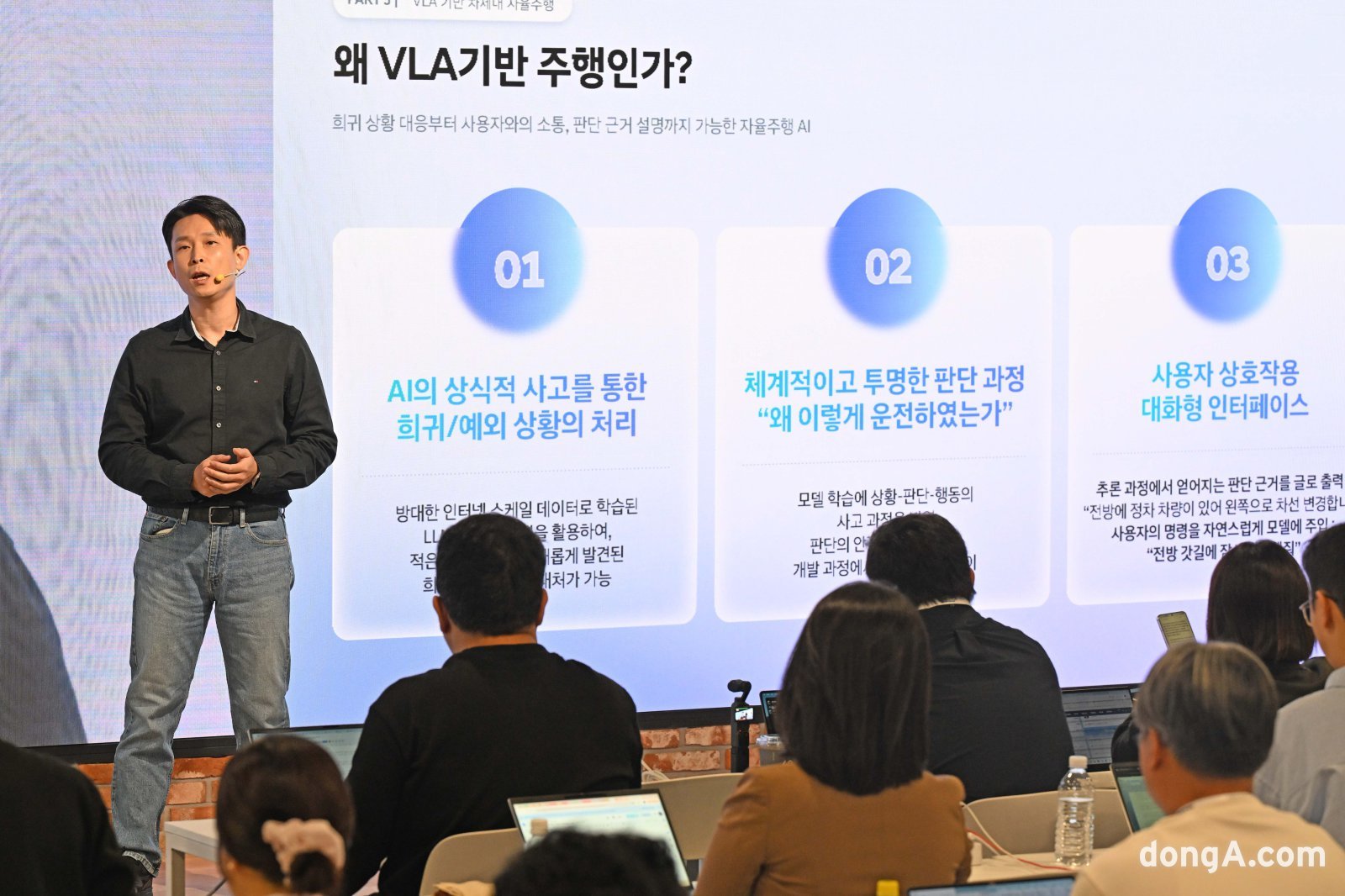
As a next-generation driving technology, the group unveiled research on a VLA model that combines visual information (Vision), linguistic reasoning (Language), and driving behavior (Action). This technology enhances decision-making capabilities in unpredictable driving environments by adding language-based perception and reasoning functions to existing E2E models. Following simulation-based evaluation, 42dot plans to launch an on-road testing process early next year.
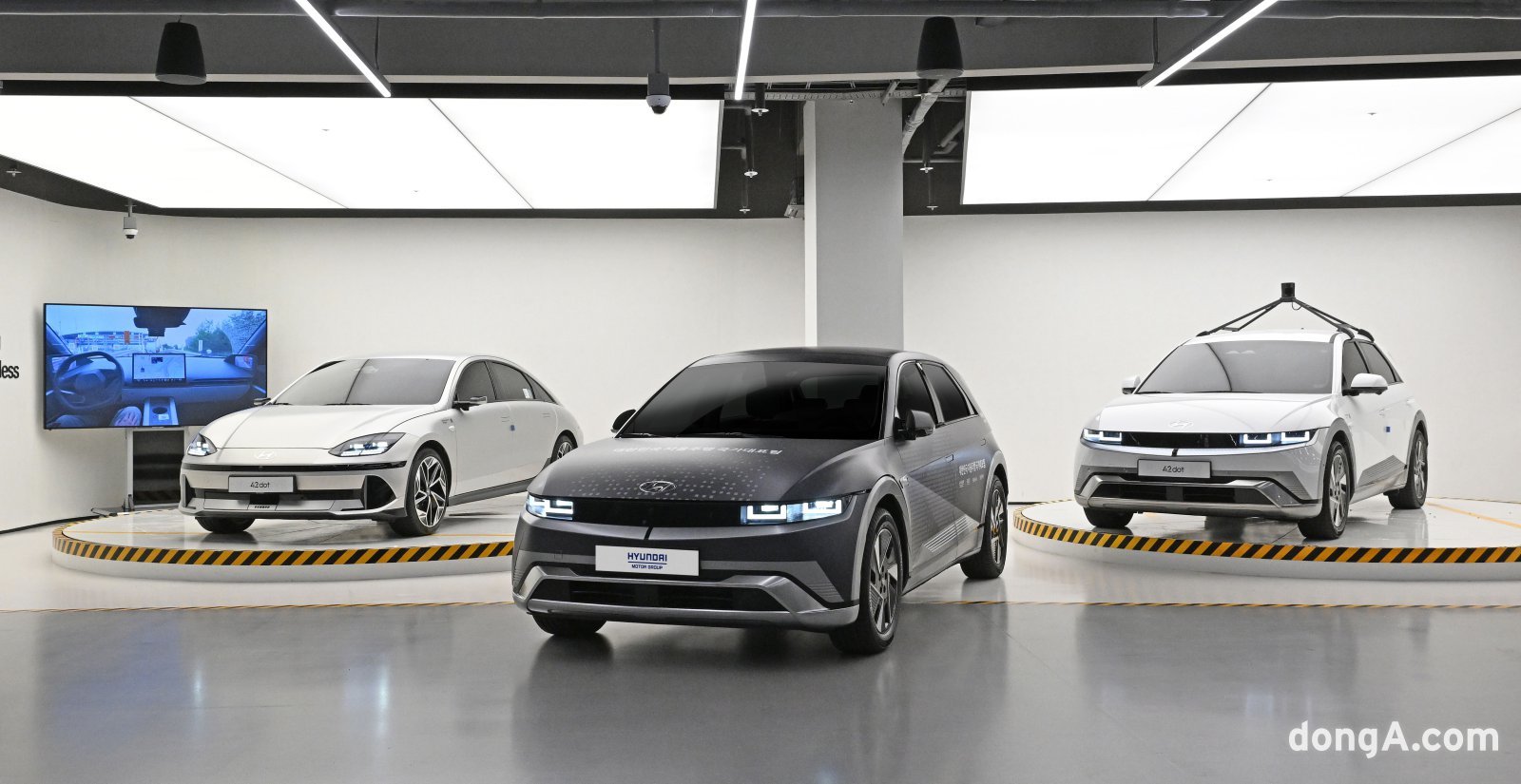
At the event, Hyundai Motor Group also released a video of real-world testing in downtown Seoul using an SDV test vehicle equipped with Atria AI. The footage included executive ride-along driving, one-take drives through congested areas such as Gangnam, Jamsil, and Pangyo, and responses to 10 types of unexpected situations, including avoiding vehicles stopped on the shoulder and unprotected left turns.
President Park Min-woo said, “The essence of competition in autonomous driving lies in how much data can be secured, how quickly it can be trained, and how rapidly it can be reflected in actual services. Based on sufficient verification, the group will enhance both development speed and driving safety.”
ⓒ dongA.com. All rights reserved. Reproduction, redistribution, or use for AI training prohibited.
Popular News