[The Driving Force of Innovation: Venture Capital] ① Playing a Key Role as Unicorn Enablers
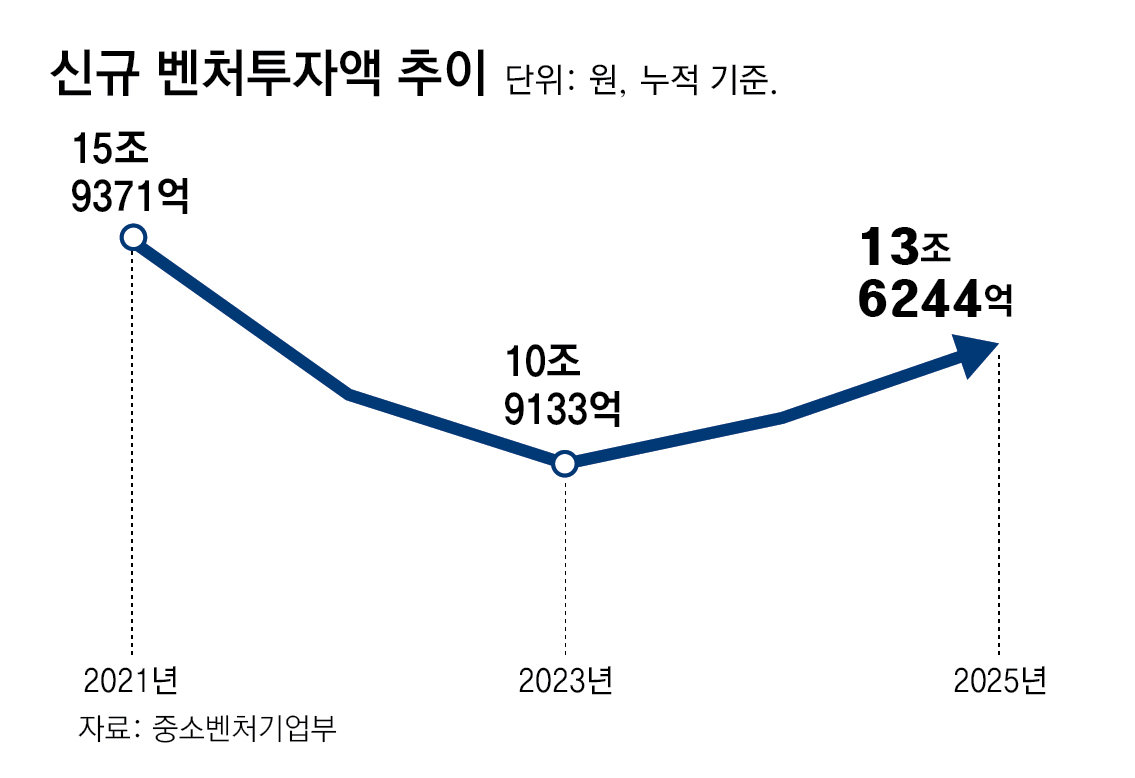
New venture investments reached KRW 13.6 trillion last year… Second-largest amount ever since 2021
Wave of AI startup unicorns… 90 created worldwide in the first half alone
Beyond a symbol of success, now leading innovation in finance and beyond
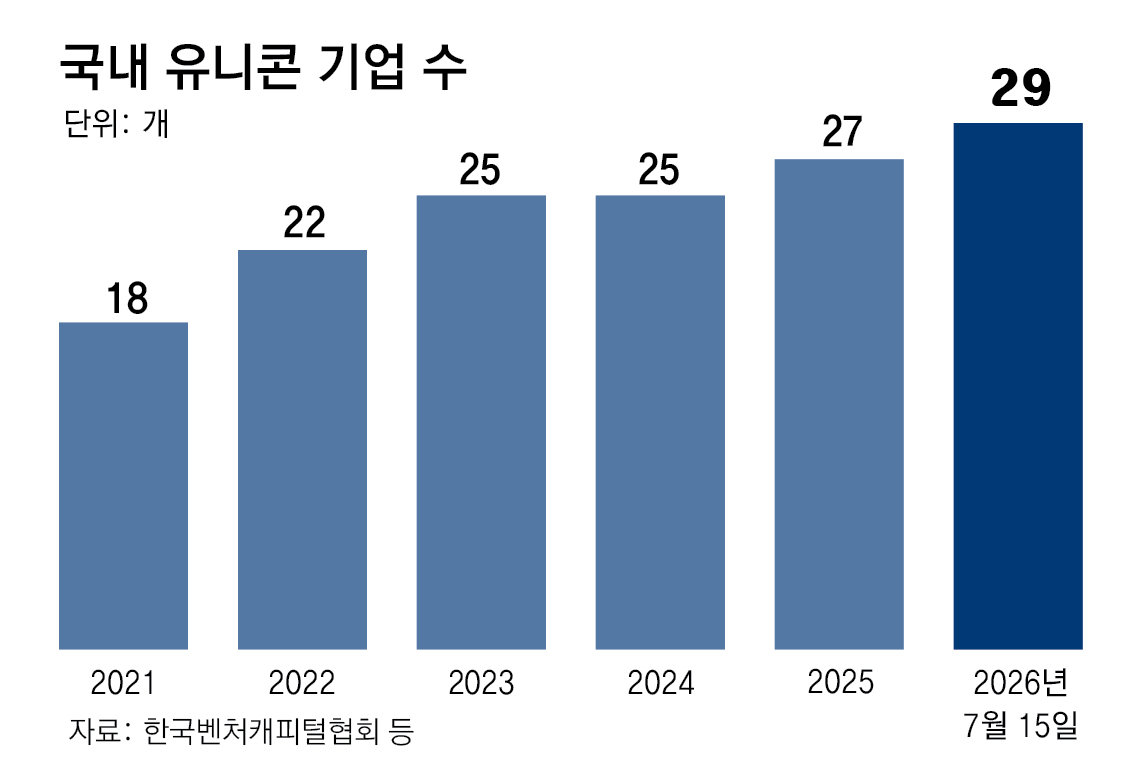
As the government has unveiled a blueprint to become one of the “world’s top four venture powerhouses,” the number of domestic unicorns (unlisted companies valued at KRW 1 trillion or more) is expected to exceed 30 this year. Venture capital, which plays the role of risk capital, has been effectively acting as a facilitator by providing early-stage funding to founders and helping to materialize the blueprint.
According to the Korea Venture Capital Association and others on the 15th, there are currently 29 unicorn companies in Korea. Last year, four unicorns emerged, including Rebellions, FuriosaAI, BeNow, and Galaxy Corporation, followed by two more in the first half of this year (January–June), Upstage and The Black Label, which joined the ranks of unicorns. In particular, new venture investment last year reached KRW 13,624.4 billion, the second-largest annual figure on record after 2021.
A notable recent trend is that AI startups such as Rebellions, FuriosaAI, and Upstage have rapidly risen to unicorn status. IT-focused media outlet TechCrunch estimated that the global AI boom led venture investment, creating 90 unicorns worldwide in the first half of this year alone. Chinese startup data platform ITjuzi reported that among the 67 companies that reached unicorn status in China between January and June this year, AI and robotics accounted for 53% (36 companies).
Unicorns are also significantly transforming everyday life for consumers by realizing innovative business models. Toss, a domestic unicorn, opened the era of easy money transfers and integrated financial services that were previously scattered across banking, securities, and insurance into a single application (app). MUSINSA and Yanolja each built fashion and leisure platforms that broke down the barriers between suppliers and consumers and created new lifestyles. Kim Mookhan, head of the Economic Innovation Research Office at the Seoul Institute, analyzed, “Unicorns are not only symbols of startup success but also key drivers of innovation-led economic growth,” adding, “This is why governments around the world are paying attention to and pursuing policies to foster unicorns.”
Unicorns are also making a significant contribution to job creation. Toss hired 1,030 new employees (including experienced hires) over the past year. This is equivalent to 76% of the total 1,360 new hires made by the four major banks (KB Kookmin, Shinhan, Hana, and Woori Bank) during the same period. As of the end of last year, Toss had 3,746 employees, up 37.9% from a year earlier. The number of employees at secondhand marketplace platform Karrot (Danggeun) and online fashion platform MUSINSA also increased by 12.6% and 16.6%, respectively, compared with a year earlier.
According to an analysis by the Ministry of SMEs and Startups of 4,439 startups that received venture investment between 2023 and 2025, these companies increased their number of employees by 10.3% on average in the year they received investment compared with the previous year. Over the same period, the annual average employment growth rate among small and medium-sized enterprises with fewer than 300 employees was only 1.37%. Hwang Sun-hee, director of Investment Management and Supervision at the Ministry of SMEs and Startups, said, “This is a case demonstrating that startups receiving venture capital investment generate a greater employment effect than general SMEs.”
Venture capital is risk capital that raises funds from corporations, pension funds, and policy-based finance and invests in early-stage companies or startups. Beyond simple capital injection, it helps startups expand their businesses and at times accelerates additional hiring and growth. It serves as the priming water that enables fledgling companies to grow into unicorns. Song Eun-kang, CEO of Capstone Partners, an early investor in Karrot, explained, “Venture capital invests after assessing who the founder is and how they intend to change the world through entrepreneurship,” adding, “Venture capital and startups are like ‘friends who grow together.’”
In January this year, the government announced a plan to foster 50 unicorns and decacorns (startups valued at USD 10 billion or more) by 2030 as part of its strategy to become one of the world’s top four venture powerhouses. Kim Jin-young, a research fellow at the Korea Capital Market Institute, suggested, “A foundation must be created in which institutions capable of bearing the long-term risks of venture investment actively allocate capital to venture capital funds,” adding, “An institutional incentive structure needs to be established.”
ⓒ dongA.com. All rights reserved. Reproduction, redistribution, or use for AI training prohibited.
Popular News