POSCO Future M unveils prototype plant for the first time
Preparing in earnest for the high-efficiency battery market
In operation since two years ago… a scaled-down version of the mass-production plant
Secured proprietary technology through seven years of R&D… “Recently, we’ve been receiving many inquiries from U.S. defense contractors”
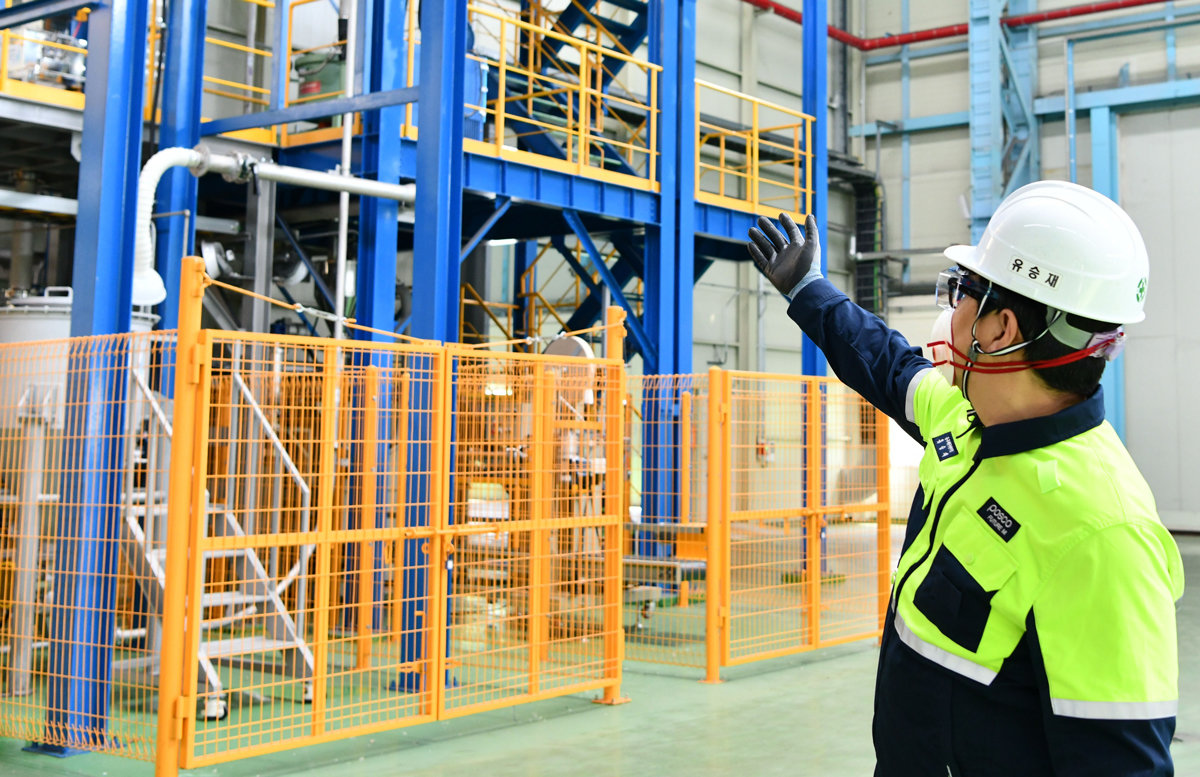
On the 7th, at the silicon anode material demo plant of POSCO FUTURE M in Buk-gu, Pohang-si, Gyeongsangbuk-do, Anode Research Center Director Yoo Seung-jae explains the silicon anode material production equipment. The company plans to begin mass production of silicon anode materials in 2028. Provided by POSCO FUTURE M
On the 7th, at POSCO FUTURE M’s silicon anode material demo plant (pilot plant) located in the Yeongilman Industrial Complex in Buk-gu, Pohang-si, Gyeongsangbuk-do. A researcher entering the product warehouse entered a password and opened a humidity-controlled sample storage unit that looked like a large safe.
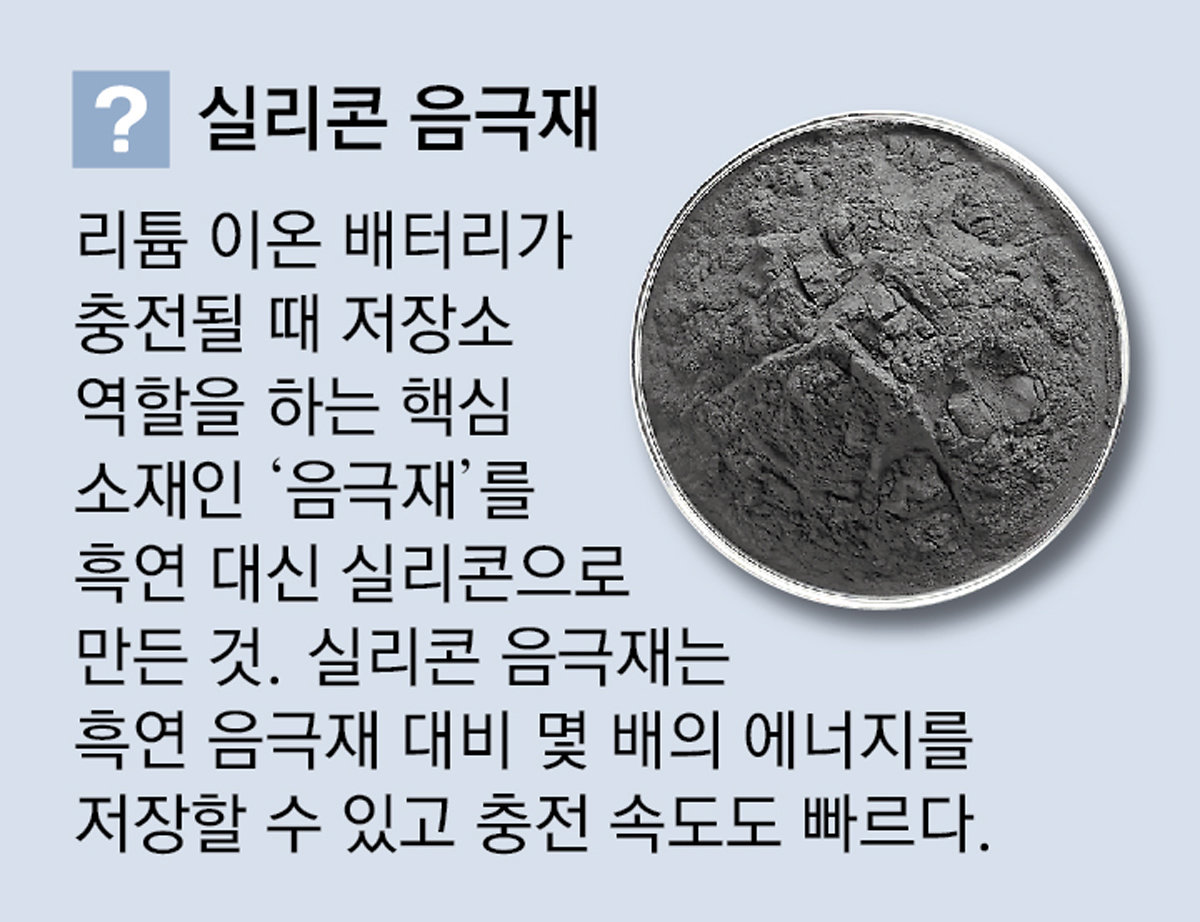
Inside, fine dark gray powder was stored in multiple glass bottles of several tens of milliliters and neatly arranged. This powder is the actual silicon anode material, which is expected to become the “dream material” of the future battery market. This is the first time that this plant, which began operations in 2024, has been opened to the media.
Silicon anode material is an anode, the key material that serves as a storage medium when lithium-ion batteries are charged, produced from silicon instead of graphite. Thanks to silicon’s characteristic swelling behavior, it can store more than four times as much energy as graphite anode materials. Charging speeds are also faster.
● “Preparing with a target of mass production in 2028”In the battery industry, there are widespread expectations that once markets related to high-performance autonomous electric vehicles and humanoid robots—where high-efficiency batteries are essential—enter full swing, a “silicon anode material era” will open. The unit price is also up to about 10 times higher than that of graphite anode materials, making it a high value-added future revenue source for global battery materials companies. POSCO FUTURE M plans to start mass production of silicon anode materials from 2028.
POSCO FUTURE M’s silicon anode material demo plant has an annual production capacity of 50 tons and a floor area of about 2,810 m². It corresponds to a scaled-down version of the future mass-production plant to be built. It is operated whenever prospective customers request samples. Once mass production begins, the facilities will be scaled up and production capacity further expanded.
Moving to the innermost part of the building, two production lines come into view. Silicon feedstock first goes through a “silicon nano-sizing line,” where it is finely pulverized. It is then mixed with carbon, baked, crushed again, and coated in the “carbon compositing line,” where the final product is completed. In simple terms, it is akin to making coating balls that contain silicon.
Silicon’s swelling characteristic is a “double-edged sword,” making it critical to control the expansion rate to an appropriate level. Heo Jun, principal researcher at the Silicon Anode Material Development Group of POSCO FUTURE M, explained, “Silicon can swell up to 300%, but silicon that has gone through this process swells by only about 40%.”
There are currently no companies in Korea selling carbon-based silicon anode materials. POSCO FUTURE M began related research and development (R&D) in 2019 and has secured its own technology. At present, silicon anode materials are entering a full-scale phase as Chinese companies supply mainly to their domestic market.
● “Inquiries mounting from U.S. defense contractors”
Because of its swelling properties, silicon anode material cannot be used alone and must be blended with graphite anode material to manufacture batteries. POSCO FUTURE M has succeeded in raising the silicon anode blending ratio, which had remained in the single digits, to over 20%. The higher the silicon proportion, the broader the application range. For example, while the silicon blending ratio in anode materials for electric vehicles is below 10%, in defense batteries for drones or submarines, the silicon proportion can reach up to 50%.
As geopolitical risks such as the U.S.-Iran conflict continue, inquiries regarding the use of silicon anode materials in defense markets such as drones are increasing. Yoo Seung-jae, Head of the Anode Research Center at POSCO FUTURE M, said, “Recently there have been many inquiries from U.S. defense contractors,” adding, “Because these are defense applications, there is a trend toward preferring products from outside China.”
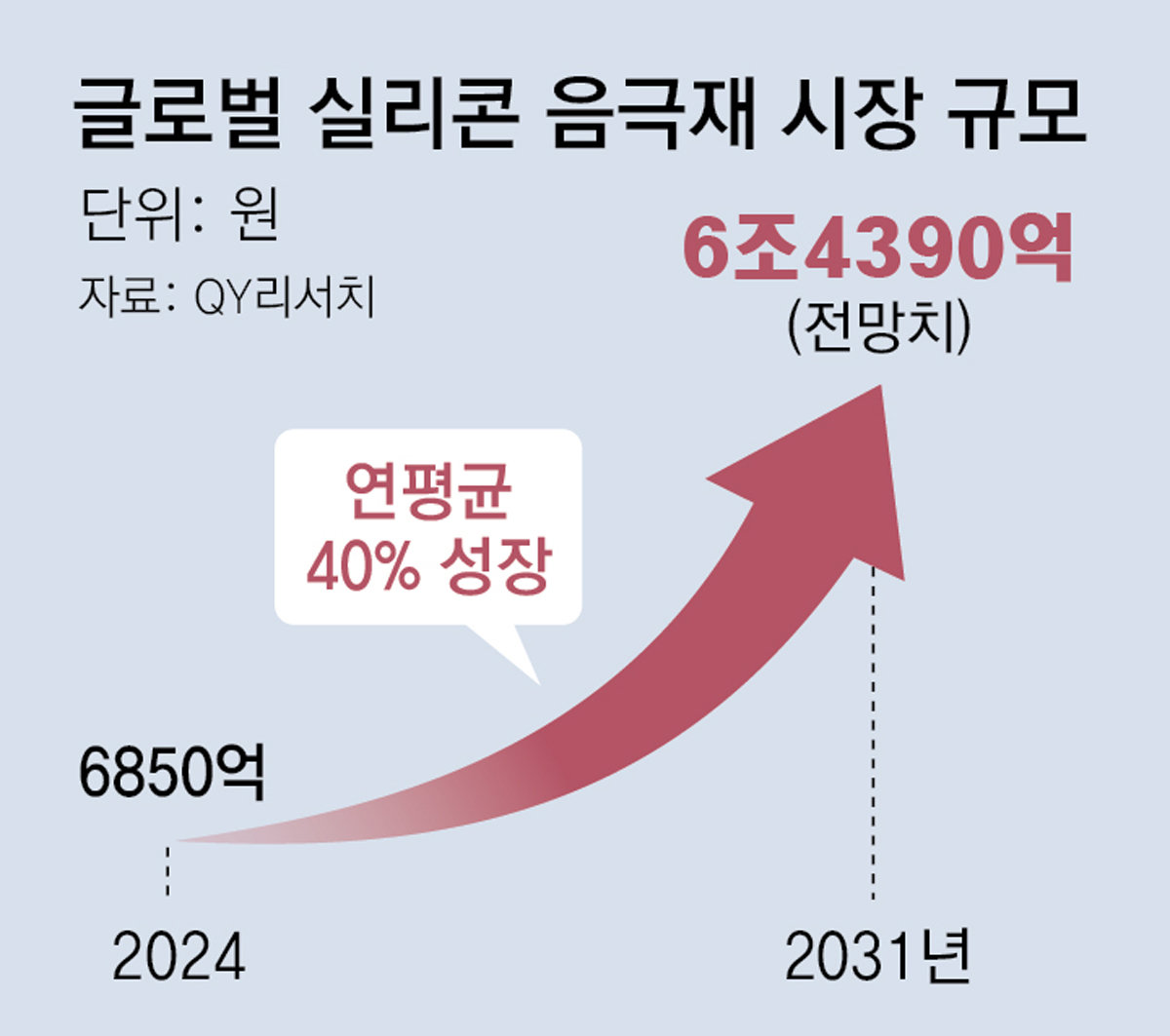
Among battery materials, silicon anode materials are expected to see particularly rapid growth in demand. Global market research firm QY Research forecasts that the global silicon anode material market, estimated at about KRW 685 billion in 2024, will grow at an average annual rate of 40% to reach around KRW 6.439 trillion by 2031.
ⓒ dongA.com. All rights reserved. Reproduction, redistribution, or use for AI training prohibited.
Popular News