On-site at Hanwha Aero’s Changwon Plant 1 in Gyeongnam
Maiden test of 5,500-pound-class turbo engine imminent
Capable of thousands of operational hours… applicable to drones and more
Enables development and operation free from foreign approvals and export controls
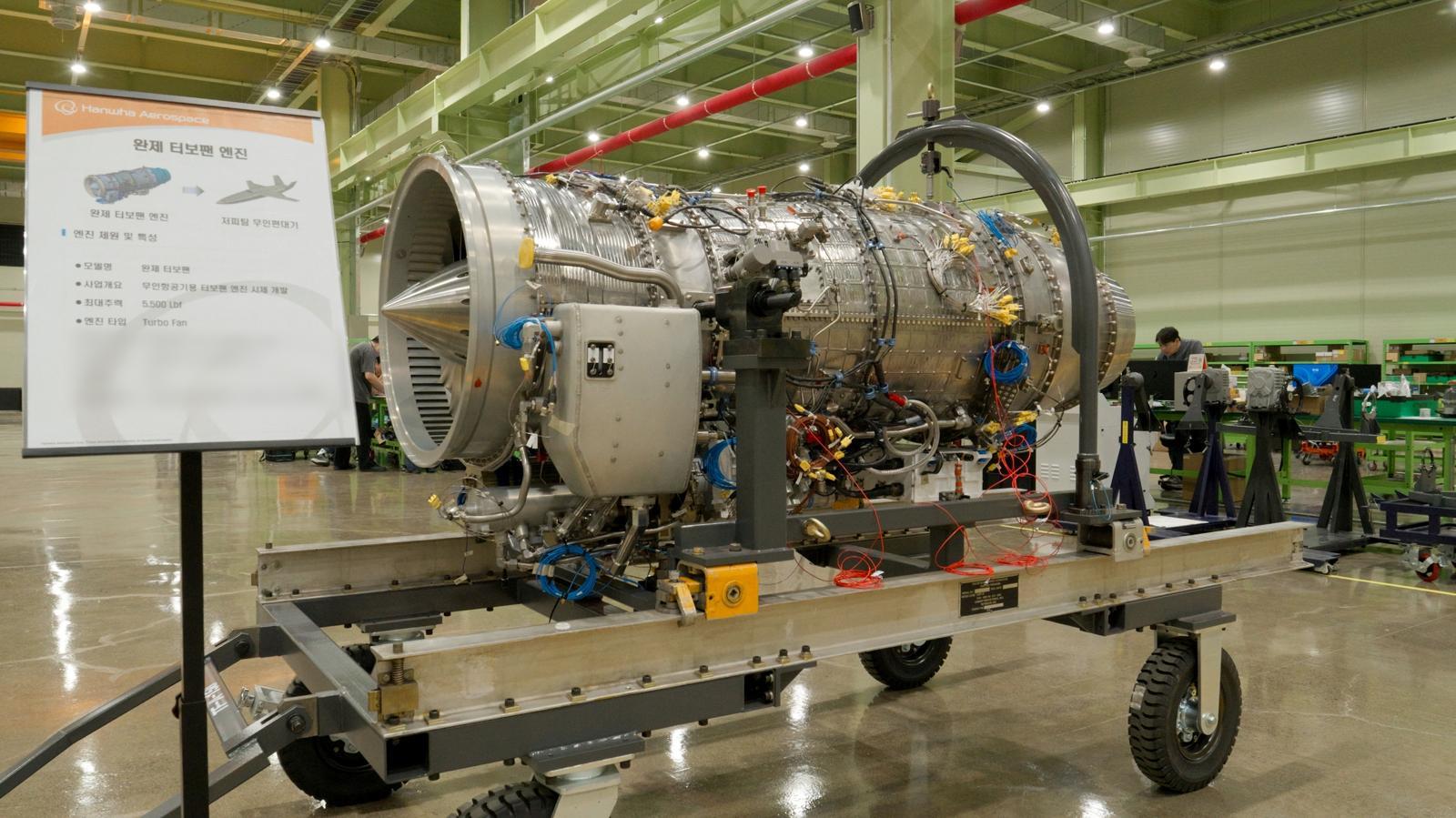
Prototype 5,500-pound turbofan engine for low-observable unmanned wingman aircraft. Provided by Hanwha Aerospace
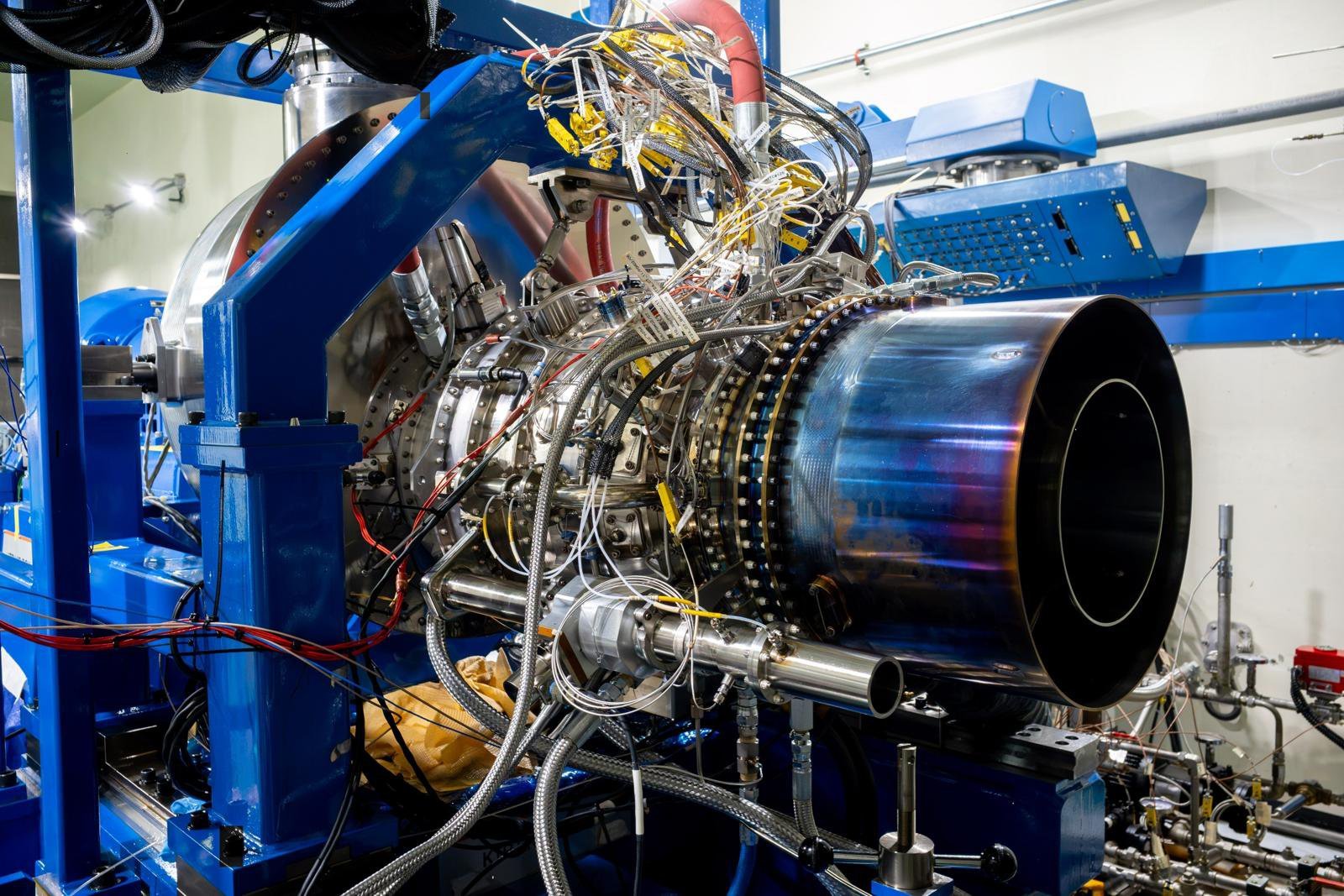
On the 6th, at Hanwha Aerospace’s Changwon Plant 1 in South Gyeongsang Province, two engines made of silvery metal were unveiled. Dozens of electrical wires, pipes, and sensors densely wrapped the exterior of each engine. Hundreds of bolts and gear-shaped components were intricately interlocked. The round exhaust nozzles appeared ready to withstand thousands of degrees of heat and powerful thrust.
The two engines awaiting their first ignition are a 5,500-pound-class turbofan engine and a 1,400-horsepower-class turboprop engine. These engines are more than simple prototypes. They are the first domestically developed long-life aircraft engines, created entirely with domestic technology by Hanwha Aerospace, the Agency for Defense Development (ADD), and Korean partner companies, and are now undergoing tests for mass production.
A long-life engine is designed to operate stably for thousands of hours. Unlike single-use engines mounted on missiles, it can be used over extended periods on unmanned aerial vehicles (UAVs), fighter aircraft, and civil aircraft. This is the first time a long-life aircraft engine has been developed in Korea.
The newly unveiled 5,500-pound-class turbofan engine is scheduled to be installed on a “low-observable unmanned wingman aircraft.” This low-observable unmanned wingman is a stealth-type unmanned combat aircraft that minimizes radar detection and forms a formation with manned fighters to perform a wide range of missions, including reconnaissance, electronic warfare, and strike operations, as a next-generation unmanned asset.
The Defense Acquisition Program Administration (DAPA) and the Agency for Defense Development (ADD) on the 7th unveiled for the first time prototype engines for fighter aircraft and unmanned reconnaissance aircraft being developed together with domestic companies including Hanwha Aerospace. The photo shows the 1,400-horsepower-class turboprop engine. 2026.7.7 Provided by DAPA
The 1,400-horsepower-class turboprop engine unveiled alongside it is intended for medium-altitude unmanned aircraft that loiter for extended periods while conducting wide-area surveillance and reconnaissance. Although their roles differ, both platforms will serve as key capabilities on future battlefields. In effect, domestic engines will power the “hearts” of future aircraft. The two engines revealed on this day have completed assembly and are currently undergoing ground run tests.
The development of domestic engines is expected to significantly enhance the self-reliance of the aerospace industry and the export competitiveness of the defense sector. Securing indigenous aircraft engines will enable the country to develop and operate fighters and other aircraft freely, without being constrained by export controls or the approval of foreign engine-producing states.
Kim Jong-ho, head of the Advanced Engine Business Team at Hanwha Aerospace, said, “This domestic engine development is meaningful in that it has laid the foundation for future advanced aircraft engine development,” adding, “We will not only expand localization of core materials but also drive self-reliance in aircraft engine technology.”
ⓒ dongA.com. All rights reserved. Reproduction, redistribution, or use for AI training prohibited.
Popular News