Oasis Studio is developing “CAMEL,” a content creation pipeline platform. CAMEL is a platform that improves the overall workflow of content production, from scenario planning to video generation and editing, based on generative artificial intelligence (AI) technology. Oasis Studio recently appointed CTO Lee Yu, who has capabilities in AI and platform development, and is expanding its existing cloud-based visual effects (VFX) production platform “OVP (OASYS VFX Pipeline)” into CAMEL. IT Donga met with Lee Yu, CTO of Oasis Studio, to discuss Oasis Studio and CAMEL.
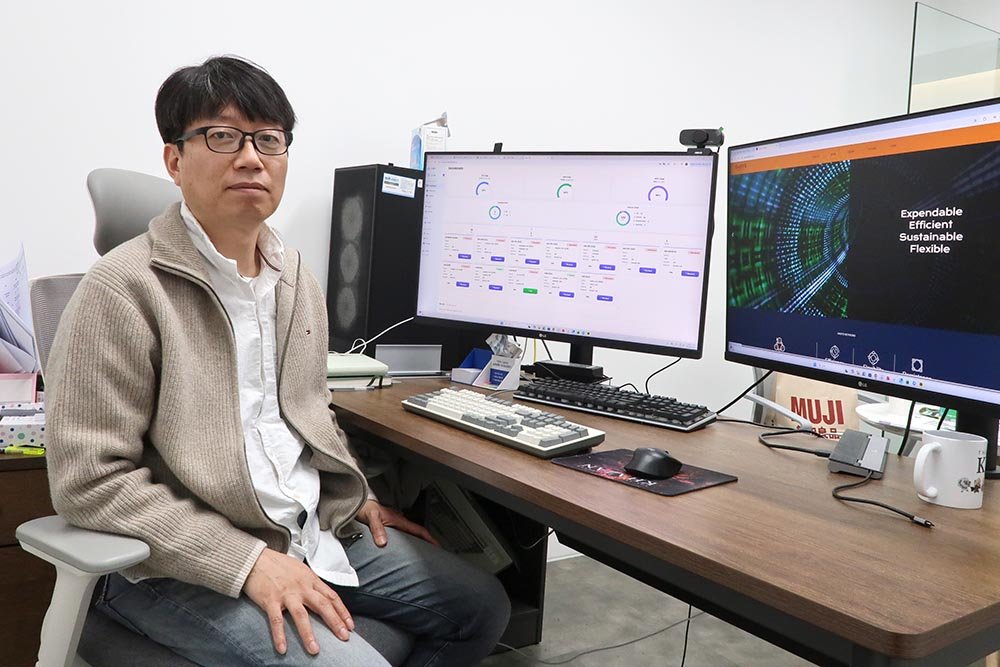
CTO Lee Yu of Oasis Studio / Source=IT Donga
Joined the company in alignment with its vision for a content production platformIT Donga: Hello, CTO Lee. Please introduce yourself.
CTO Lee: Hello, I am Lee, overseeing research and development at Oasis Studio. I previously worked at FXGear, a 3D simulation software developer, where I developed 3D shape restoration and augmented reality (AR) and virtual reality (VR) solutions, and at KT Research Institute, where I developed AR technologies. After that, I returned to FXGear and led the development of digital human technology. I then joined Oasis Studio in April 2025.
My major is computer vision, and more specifically, I researched reflection model optimization. It is a field that studies methods to quickly find maximum and minimum values in nonlinear equations. Based on this, I mainly worked on physical realism and visualization-related tasks that implement 3D images in a realistic way using efficient methods.
IT Donga: What led you to join Oasis Studio?
CTO Lee: Last year, I was introduced to Oasis Studio CEO Lee Ji-yoon through an acquaintance. At that time, CEO Lee was considering how to strengthen and expand the company’s research and development (R&D) capabilities. We discussed practical aspects together, and this became an opportunity for CEO Lee to propose that I take on the role of overseeing R&D at Oasis Studio.
IT Donga: It probably was not an easy decision to join a startup.
CTO Lee: If Oasis Studio had been merely a VFX production house, I would have declined. However, as I spoke with CEO Lee, I felt that Oasis Studio’s current situation, objectives, and vision were similar to what I had in mind and what I aimed for. At that time, CEO Lee was pushing to expand into a content production platform that could be used across multiple industry sectors, based on the technological capabilities and know-how accumulated in the VFX field. In fact, the company was already developing the VFX production platform OVP and actively using it internally.
Since my work has mainly been in development and R&D, and I also have experience in AI and platform development, I could fully relate to the need for a platform. Of course, platform development is not easy. Oasis Studio also had areas that needed to be reinforced. However, I judged that if Oasis Studio’s VFX production capabilities and experience in building OVP, CEO Lee’s marketing and networking capabilities, and my own experience and know-how could create synergy, the company’s vision could be fully realized. That is why I decided to join.
Developing the “CAMEL” content production platformIT Donga: From your perspective, what kind of company is Oasis Studio?
CTO Lee: Oasis Studio is a company that is actively pursuing expansion into a platform business, based on solid technological capabilities. Within just three years of its founding, it has produced VFX footage for large-scale projects such as dramas and films, and developed the cloud-based VFX production platform OVP.
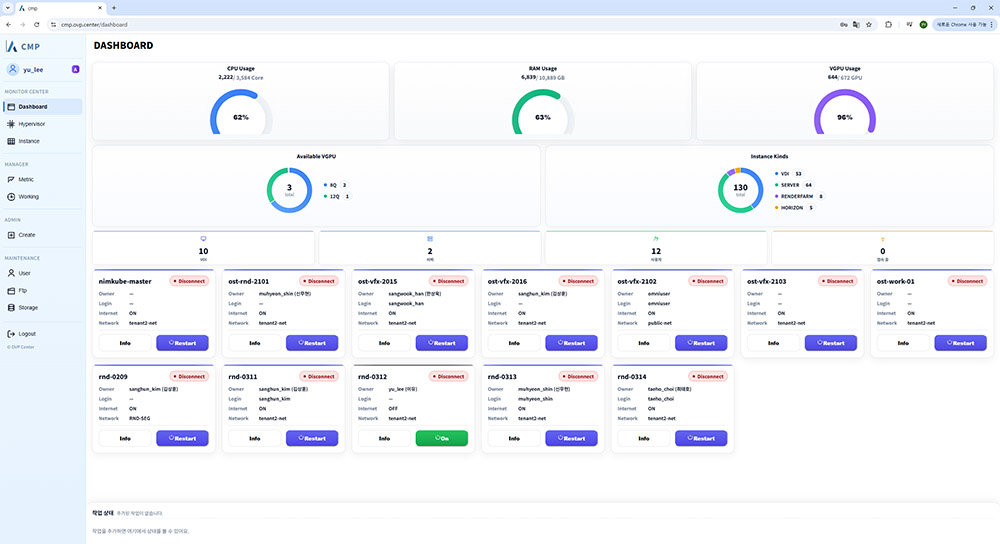
In the case of OVP, it was built based on the USD (Universal Scene Description) format to improve the domestic VFX production environment and enhance work efficiency and data management convenience. USD is a file format that integrates digital assets such as fonts, videos, and images that constitute a single piece of content. OVP is currently used internally at Oasis Studio for video production.
Dashboard of the OVP VFX production platform / Source=Oasis Studio
The company is also securing its own IP and building a content asset library. This is to create a content production ecosystem in which users can freely utilize content assets.
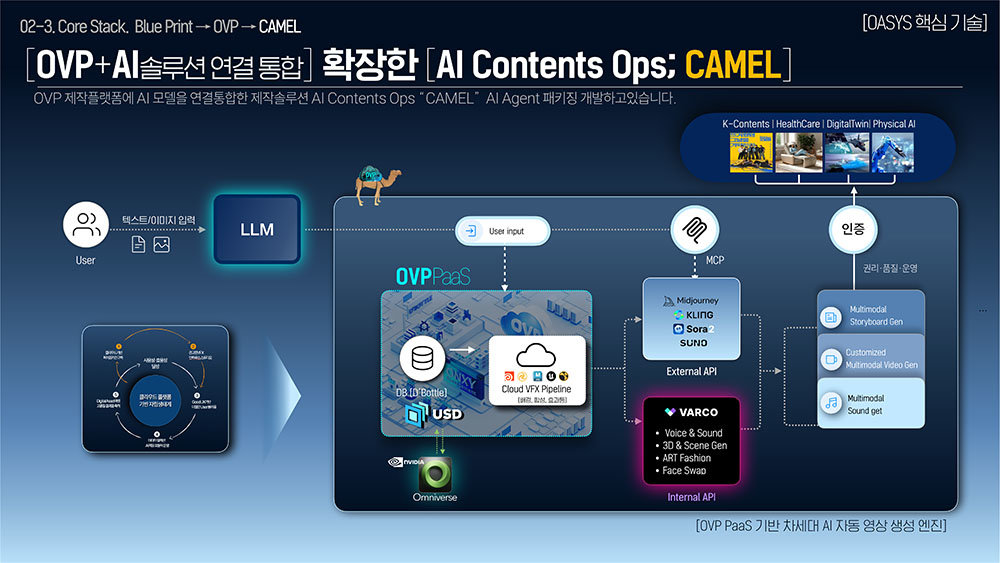
Based on this, Oasis Studio is developing the CAMEL content production pipeline platform. Through CAMEL, the company aims to provide an environment where content can be created easily and quickly, and collaboration can be conducted efficiently using various solutions, including generative AI.
IT Donga: What are your current responsibilities at Oasis Studio?
CTO Lee: As head of research and development, I am conducting R&D to expand OVP into CAMEL. While OVP is a platform that handles the post-production stage of video content creation, CAMEL is a platform that encompasses the entire content production process, including scenario planning, shooting, and editing. The goal is to build a pipeline that efficiently improves the overall workflow. Storyboarding, video generation, and editing will leverage generative AI. CAMEL is expected to become a solution that can be used in various industries beyond the video sector, such as healthcare, defense, manufacturing, safety, and smart cities.
At the same time, we are also developing a collaboration management tool. Large-scale video production projects often require collaboration among personnel from multiple fields. The production process and deliverables need to be frequently updated, and feedback is exchanged constantly. In response, we are developing a dashboard-type collaboration management tool that manages the production process and schedule and allows users to view the workflow at a glance.
We are also developing AI models. These are AI models that reflect specific concepts, camera movements, and lighting in content in real time. Using these, we plan to build therapy videos to be utilized in the healthcare field.
CAMEL is a domain-specific content production pipeline platform / Source=Oasis Studio
Strength lies in rapid quality improvement through internal validationIT Donga: From the platform development standpoint, what is Oasis Studio’s strength?
CTO Lee: Most platform developers are not actual users. In some cases, platforms are developed without accurately identifying the needs of real users. As a result, the output has low utility and is ultimately rejected by the market. However, it is not easy to accurately identify the needs of real users, because it is difficult to secure actual users during the development phase.
Oasis Studio has video creators in-house. While developing CAMEL, we can simultaneously obtain accurate feedback from actual users. The structure allows for immediate platform validation and rapid identification and improvement of issues. This is extremely important for a platform developer, because it allows development direction to be aligned with real user needs and raises the platform’s level of completeness. I believe this is Oasis Studio’s greatest strength.
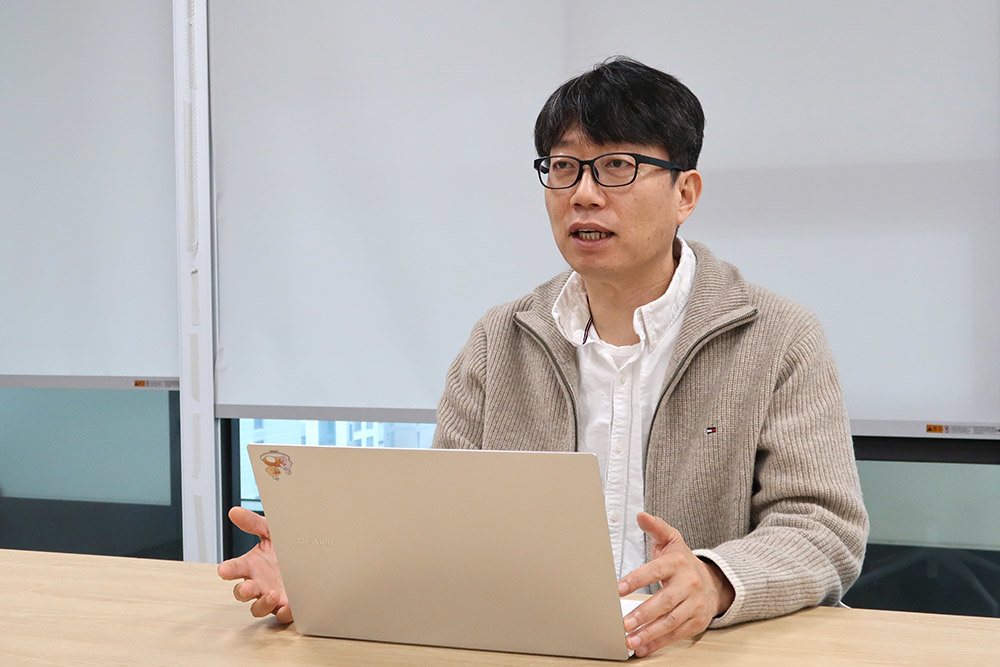
CTO Lee explaining Oasis Studio and CAMEL / Source=IT Donga
IT Donga: Finally, please share your plans and goals at Oasis Studio.
CTO Lee: As with all developers, my personal goal is for the platforms and technologies I create to achieve strong results. Although, by nature, platform development takes a considerable amount of time, we intend to accelerate the development of CAMEL by actively leveraging Oasis Studio’s development capabilities and video production infrastructure. By evolving CAMEL so that it can be used across various industrial domains, we will realize Oasis Studio’s vision step by step.
IT Donga reporter Han Man-hyuk (mh@itdonga.com)
ⓒ dongA.com. All rights reserved. Reproduction, redistribution, or use for AI training prohibited.
Popular News