Plans to feature Nvidia’s ‘Rubin’ AI chips Targeting shipments of next‑generation HBM4E in the second half of the year
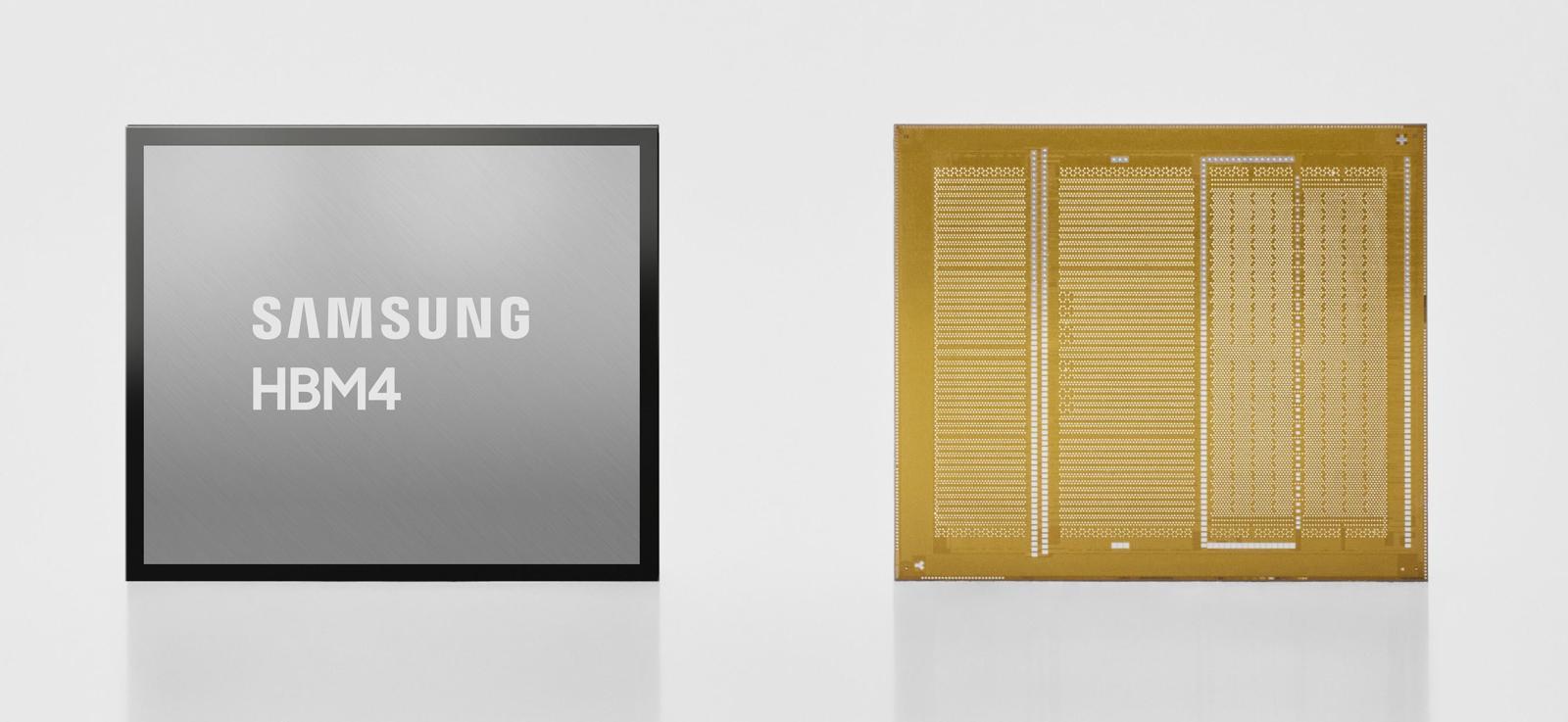
Samsung Electronics’ HBM4 product, which the company announced as the world’s first to be mass-produced and shipped. Provided by Samsung Electronics
Samsung Electronics announced on the 12th that it has begun mass production and shipment of 6th-generation high bandwidth memory (HBM4), becoming the first in the world to do so. The company emphasized that it is the earliest among the three major global DRAM manufacturers to begin volume production of next-generation memory semiconductors for latest artificial intelligence (AI) chips, ahead of SK hynix and Micron.
HBM4 is next-generation HBM that will be installed in AI chips such as Nvidia’s “Rubin” and AMD’s “MI450,” which are scheduled for release this year. HBM is a core component of AI chips, created by vertically stacking multiple DRAM chips to increase data processing capacity and speed.
On the same day, Samsung Electronics stated that it has applied its 6th-generation DRAM fine process (1c), featuring semiconductor circuit line widths in the 10-nanometer (nm, one nanometer is one-billionth of a meter) class, to HBM4. This is one generation ahead of SK hynix, which uses the 5th-generation process (1b). As semiconductor processes become finer, integration density increases, resulting in faster data processing speeds and higher power efficiency. However, yield (proportion of non-defective products) management becomes more difficult accordingly. Market assessments are that Samsung Electronics’ announcement of mass production and shipment has dispelled previously raised concerns.
Samsung Electronics also said it has applied a 4-nanometer process, which offers advantages in performance and power efficiency, to the “base die (substrate)” that serves as the brain of HBM. In this regard, Samsung Electronics stressed, “We have stably secured an operating speed of 11.7 gigabits (Gb) per second, which is 46% higher than the JEDEC (Joint Electron Device Engineering Council) international standard of 8 Gb per second.”
Samsung Electronics stated, “This year’s HBM revenue will increase more than threefold compared with the previous year,” and announced plans to ship samples of 7th-generation HBM (HBM4E) in the second half of the year (July–December). From next year, it plans to introduce customized HBM tailored to customer requirements. The company also highlighted that Line 5 in the second complex of its Pyeongtaek plant, scheduled to begin operations in 2028, will serve as a core production hub for HBM.
The mass production and shipment of HBM4 is also being seen as evidence that Samsung Electronics has succeeded in gaining recognition from big tech customers. The original shipment schedule, which had been set for after the Lunar New Year holidays, was moved up to before the holidays, reportedly in response to requests from customers such as Nvidia.
Lee Min-a
AI-translated with ChatGPT. Provided as is; original Korean text prevails.
ⓒ dongA.com. All rights reserved. Reproduction, redistribution, or use for AI training prohibited.