※ Kyungpook National University Startup Support Foundation is operating the “Startup Leap Package (Large Enterprise Collaboration Track)” for startups in partnership with SK Telecom (SKT). The program promotes innovative growth by activating startups’ ideas and technological capabilities through collaboration with large corporations. IT Donga introduces promising startups participating in the Kyungpook National University–SKT collaboration track of the Startup Leap Package.
College entrance exam–oriented education currently dominates the education landscape in Korea. Most learning tools also focus on improving test scores. While this can be understood as a natural development, given that education has long been viewed as a pathway to better universities, jobs, and social status, literacy skills—reading, writing, speaking, and listening—as the foundation of humanity and basic academic ability must first serve as solid nourishment.
However, according to the recent OECD Programme for International Student Assessment (PISA), students’ literacy scores have been gradually declining not only in Korea but across the globe. The deterioration in comprehension and expressive abilities caused by weakening basic academic skills is regarded as a critical issue, as it can lead to deficiencies in becoming social beings who empathize and build relationships with others, beyond merely affecting grades.
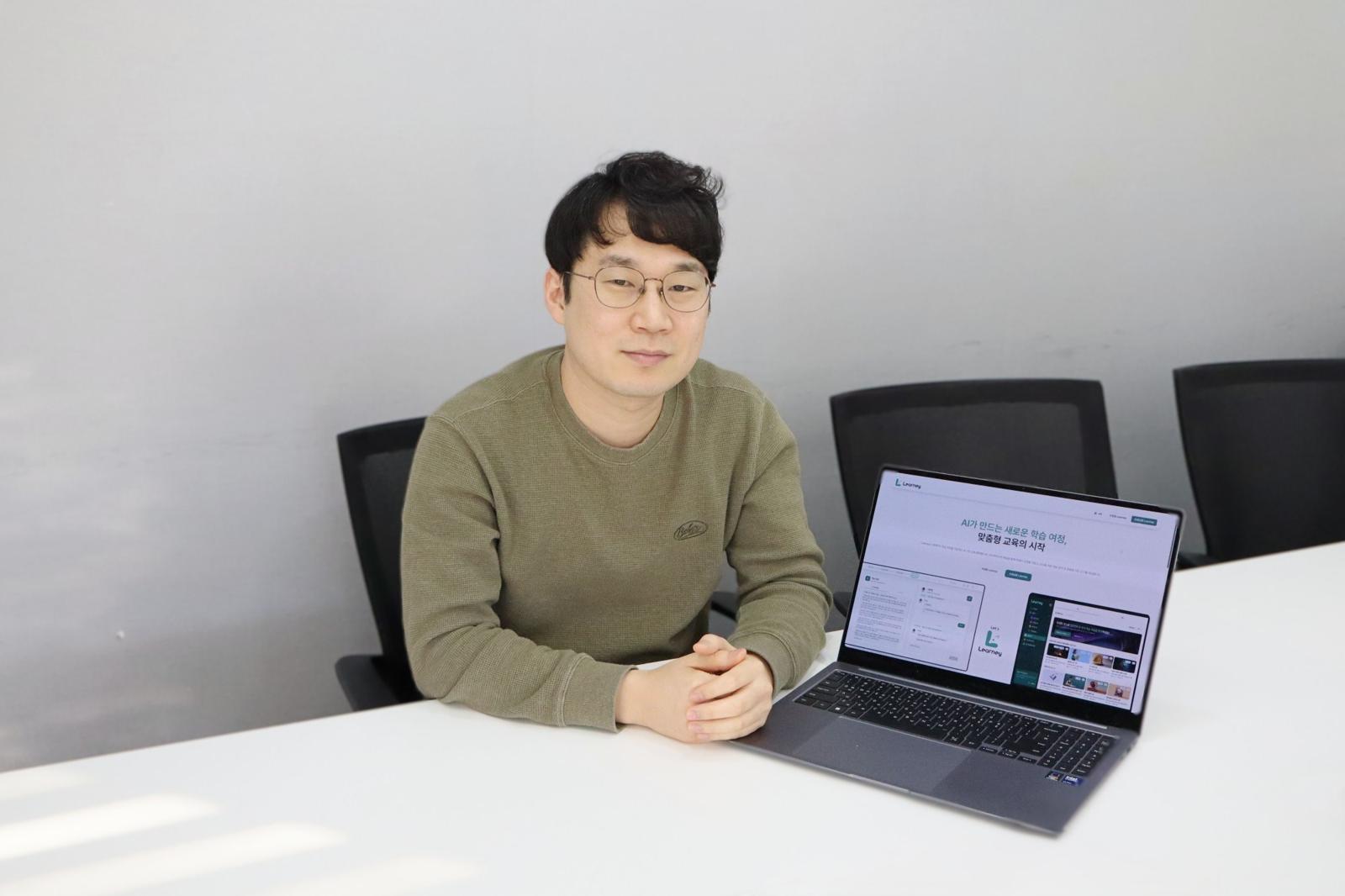
Kim Ki-young, CEO of Artificial Society / Source = IT Donga
Artificial Society, which created “Learney,” an AI-based personalized basic academic skills education platform, focused on addressing this problem. Rather than simply leading students to choose correct answers, the company provides process- and achievement-oriented educational content that helps students genuinely develop the ability to read, write, and speak.
From solving problems to “cultivating thinking”: Edtech platform “Learney”Kim Ki-young, CEO of Artificial Society, has sensed changes in the education field through family members who are high school teachers. He assessed, “The original purpose of textbooks is to cultivate ‘achievement standard–based competencies,’ such as understanding the emotions of characters in literary works and organizing thoughts through writing, but students’ basic literacy skills have recently weakened noticeably.” In particular, the prevailing view among educators is that learning loss across reading, writing, and speaking has been structurally accumulating since the COVID-19 pandemic.
Learney is an AI-based personalized basic literacy learning platform. As its name combines “Learn” and “Journey,” learning is designed not as simple problem solving but as a “process of cognitive growth.” Learney’s curriculum consists of ▲ subject content linked to the national curriculum and ▲ basic literacy enhancement content encompassing reading, writing, listening, and speaking, enabling teachers to use it flexibly at all stages—before, during, and after class.
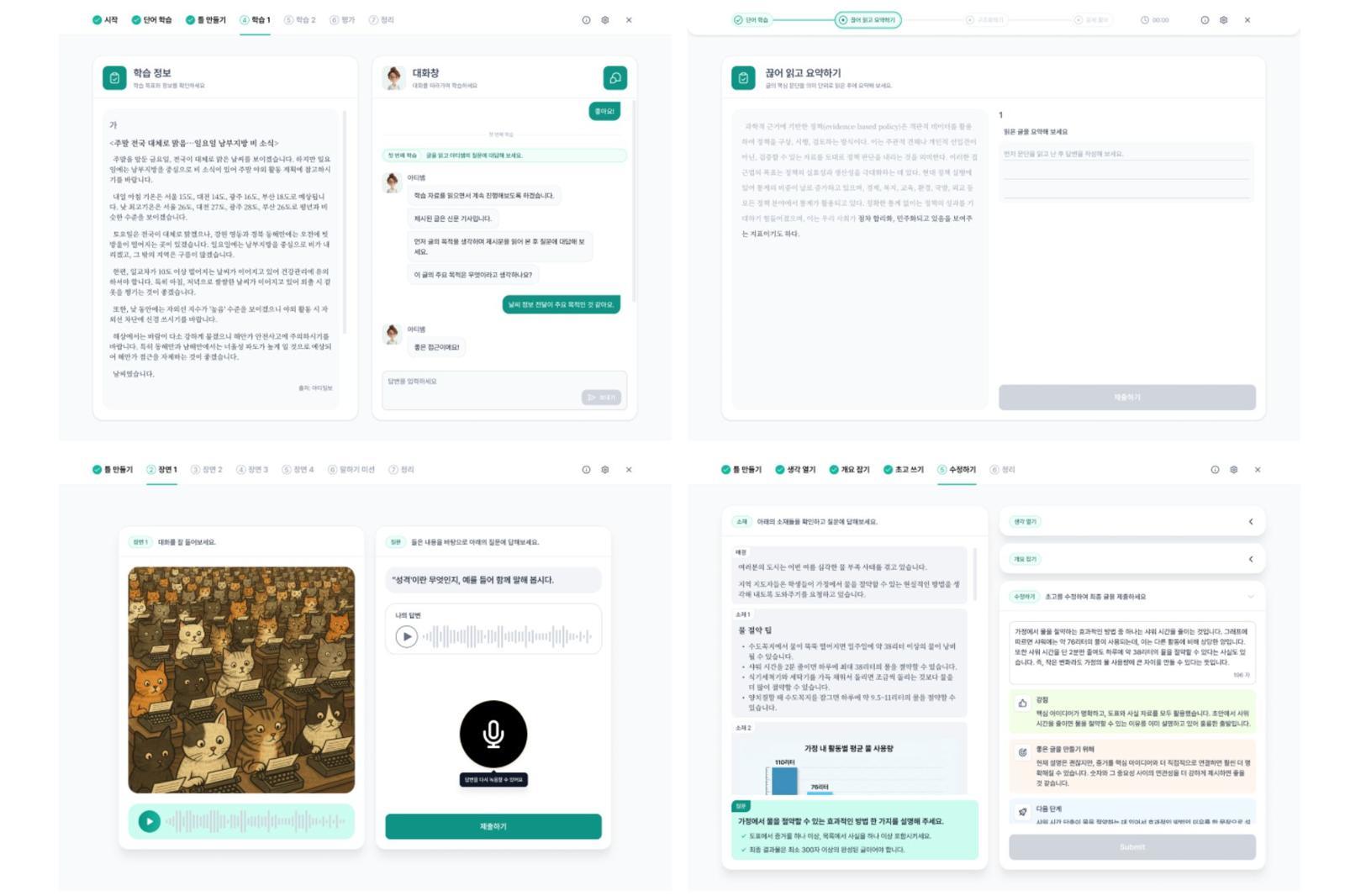
Learney is an AI personalized basic academic skills education platform / Source = Artificial Society
The key differentiator of Learney lies in its learning approach that directly improves students’ capabilities. Instead of selecting correct answers, students strengthen fundamental thinking skills by identifying text structure, summarizing key points, and practicing recalling content with the passage hidden. Speaking training also develops social-emotional communication skills by practicing utterances in real-life contexts, such as “refusing” or “asking politely.” During this process, AI analyzes students’ learning data to optimize passage difficulty and types, thereby enhancing achievement levels.
Introduced in 1,300 schools nationwide…expansion into global marketsFounded in 2021, Artificial Society upgraded its existing AI Korean language learning tutor “Lesser” and officially commercialized “Learney” last year. The service covers students from grade 3 in elementary school to grade 12 in high school, and supports integrated learning of listening, writing, and speaking as well as curriculum-linked instruction via web and app.
Currently, Learney has been introduced in about 1,300 elementary, middle, and high schools nationwide, around 60% of which are elementary schools. Based on its validation in Korea, the company has also entered the U.S. public education market. CEO Kim said, “The Korean edtech model is drawing industry attention as a case where it is being applied to improve basic English proficiency among local students.”
Through the Ministry of SMEs and Startups’ Korea Institute of Startup & Entrepreneurship Development “Startup Leap Package (Large Enterprise Collaboration Type),” Artificial Society has received support from Kyungpook National University’s Startup Support Foundation and SKT, strengthening its technological capabilities and market strategy. CEO Kim commented, “It was an opportunity to simultaneously validate AI utilization methods that can practically contribute to the education field and our global expansion strategy.”
From this year, Artificial Society plans to focus on full-scale overseas expansion and reference building. CEO Kim stated that “mother tongue learning is a universal domain of human development” and announced plans to accelerate expansion, mainly in English-speaking countries.
Lastly, CEO Kim defined Learney as “a platform that supports human-centered growth.” He added, “What matters more than test scores is the wisdom to persuade and show consideration for others,” and said, “We hope Learney will become a reliable partner that helps children think deeply and communicate warmly.”
IT Donga reporter Kim Ye-ji (yj@itdonga.com)
ⓒ dongA.com. All rights reserved. Reproduction, redistribution, or use for AI training prohibited.
Popular News