※ Seoul National University of Science and Technology supports early-stage startups in the deep tech (AI·Big Data) sector. Based on Seoul National University of Science and Technology’s customized growth support program, ITDongA looks into promising deep tech startups that are achieving clear results in the market.
As exposure time to smartphones and tablets increases, children’s language development delay is becoming a serious issue. According to the Health Insurance Review and Assessment Service, the number of patients aged 0 to 19 receiving treatment for developmental delay rose from 64,085 in 2018 to 126,183 in 2022, approximately doubling. Among them, treatment for developmental delay increased particularly in children aged 0 to 9. Since the COVID-19 pandemic, non-face-to-face activities have become routine, reducing opportunities for communication with peers, while time spent watching video content has surged, further accelerating this problem.
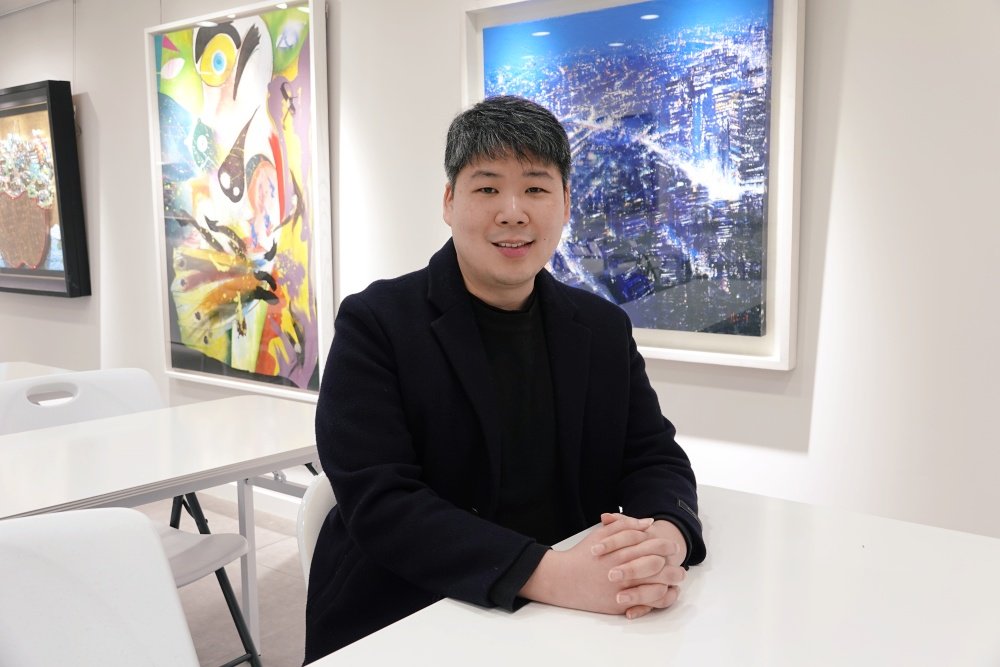
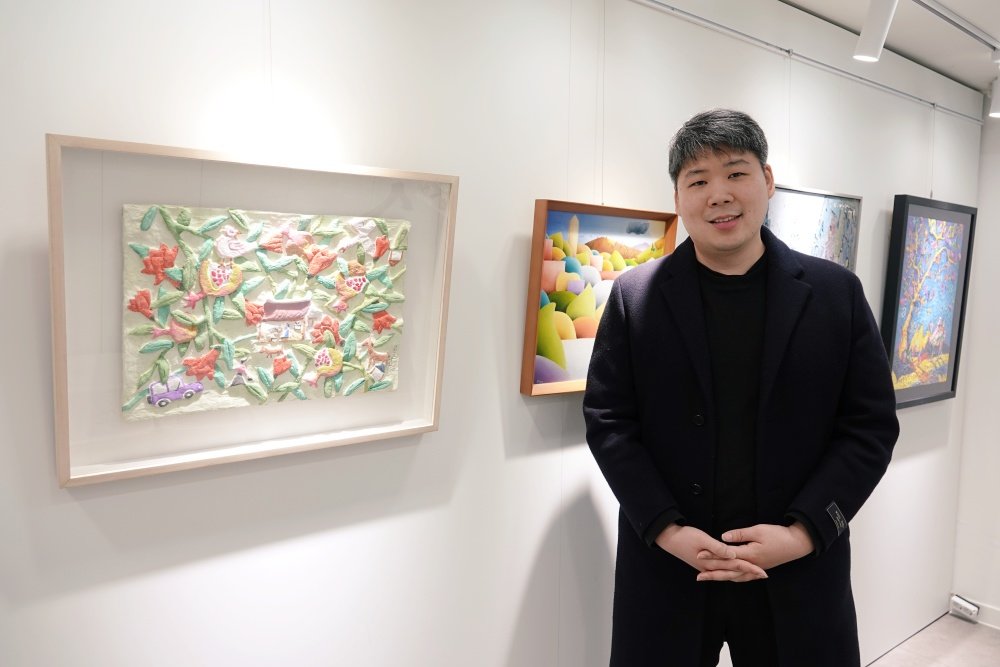
Song Wan, CEO of Song & Stark Co-Operation / Source=ITDongA
In cases of delayed language development in children, early detection and proper intervention are also very challenging. Many parents say “let’s wait a bit longer,” missing the golden time, or visit language rehabilitation centers only to leave with vague anxiety due to a lack of objective data. Communication between centers and homes is not smooth, which is cited as a limitation that prevents consistent care. Standardized language assessment tools do exist, but they require direct evaluation by experts and involve significant time and cost, inevitably reducing accessibility.
In this context, the AI voice analysis-based language development diagnosis platform “Speech Map” (provisional name), developed by startup Song & Stark Co-Operation, is emerging as an alternative. With a paradoxical approach of “solving the problem created by AI with AI,” the company aims to enhance both accessibility and efficiency in the language rehabilitation market. ITDongA interviewed CEO Song Wan of Song & Stark Co-Operation about the company’s business strategy and vision.
Joint founding that began at KAIST SE MBAFounded in 2022, Song & Stark Co-Operation combines the name of CEO Song and the English name “Stark” of his co-founding partner. The two met in 2021 in the KAIST SE (Social Entrepreneur) MBA program and decided to work together. The SE MBA was launched jointly by KAIST and SK Group to cultivate capable entrepreneurial talent who can solve a wide range of social problems through innovative business models. One of the graduation requirements of the program was founding a company, which led to the establishment of Song & Stark Co-Operation, a startup developing innovative AI-based services.
CEO Song said, “My co-founding partner and I shared the same vision. We believed we could create synergy, so we decided to establish Song & Stark Co-Operation,” adding, “Song & Stark Co-Operation is a startup developing innovative services using AI, such as an AI-based language development screening system using children’s voices and an AI art value evaluation platform.”
This is not Song’s first startup. Back in his university days in 2011, with support from organizations such as the Korea International Cooperation Agency (KOICA), he founded “Lazmanna,” a bakery café and social enterprise in Rwanda, Africa. Lazmanna is a Hebrew word meaning “sacred bread,” an idea proposed by one of Song’s teammates.
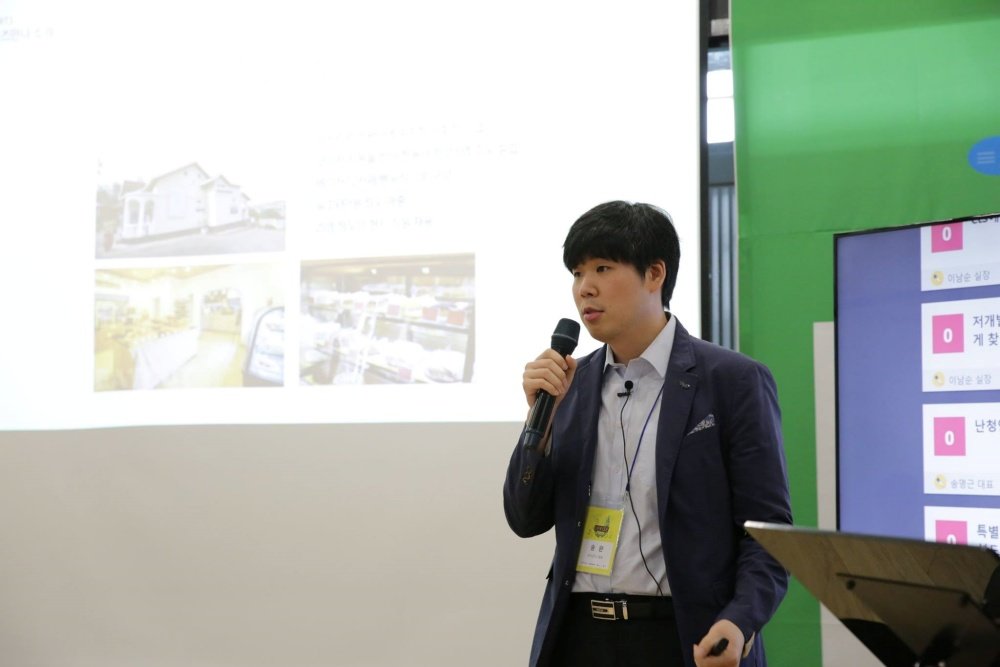
Lazmanna achieved results beyond expectations, including average monthly sales of KRW 2 million and being ranked No. 1 in service evaluation in the Rwanda region. CEO Song recalled, “At that time, European bread was popular in Rwanda. I judged that Korean bread would be competitive and decided to run a bakery café. We succeeded in making Korean-style bread using local ingredients from Rwanda, and the local response was also positive. We even ranked No. 1 in TripAdvisor reviews.”
CEO Song presenting Lazmanna’s performance / Source=Song & Stark Co-Operation
After returning from Africa, Song shifted to the IT field and spent more than 10 years as a serial entrepreneur in IT startups. It was not easy. At times, teams broke up due to conflicts, and there were cases of funding shortages. Through this, he gained considerable experience and his attitude toward business changed. In the past, he focused on team members such as specialized personnel; now he has shifted to maximizing efficiency through the use of AI. Accordingly, Song & Stark Co-Operation, his fifth startup, is operated with a minimum team of three people.
Song emphasized, “The experience of solving problems in Africa by trial and error on bare ground became a major asset. The same goes for walking the path of a serial entrepreneur in IT startups. These experiences help reduce trial and error and serve as strong fertilizer in focusing on the essence of business.”
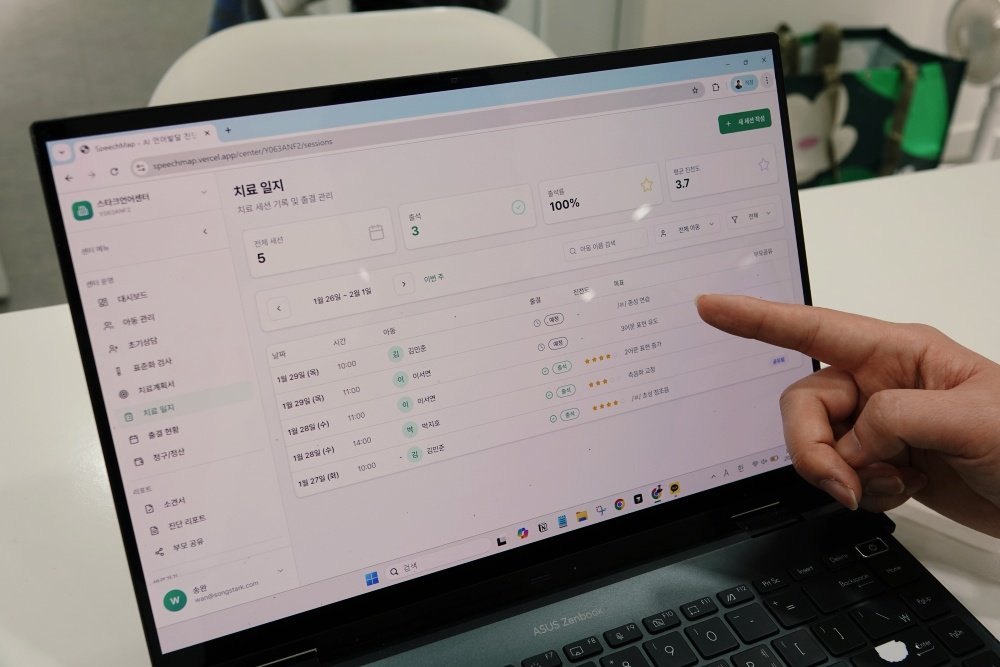
A platform connecting language rehabilitation centers and homesThe flagship solution of Song & Stark Co-Operation is Speech Map. Speech Map is a solution that diagnoses children’s language development levels through AI voice analysis and continuously tracks and manages their developmental progress. The core of this solution is not to present direct treatment methods, but to provide an environment in which language rehabilitation centers and homes can share and communicate about children’s conditions using objective data.
Song explained, “Speech Map provides data-based, objective, and efficient language development assessment. This allows us to overcome the limitations of existing subjective language development assessment methods,” adding, “Through Speech Map, language rehabilitation centers can prove children’s changes with data and gain trust. Parents, instead of vague anxiety, can use visible indicators to provide consistent care at home. This is the ‘language development management platform’ we are pursuing.”
CEO Song explaining Speech Map / Source=ITDongA
In particular, according to Song & Stark Co-Operation, AI technology can help secure the golden time for language diagnosis. It enables cause analysis of children’s language development delays from both ▲linguistic (STT text post-processing) and ▲acoustic/prosodic (direct analysis of original voice) perspectives. The core technology used here is an AI convergence analysis engine. By analyzing both the content of children’s speech and the characteristics of their voices simultaneously and combining these two datasets, the true causes can be identified. A detailed analysis report is then produced as the final output. As this is Song & Stark Co-Operation’s proprietary technology, it has strong competitiveness.
Song played a decisive role in developing Speech Map. Although he majored in law and business administration, he naturally acquired developer capabilities while managing IT startups. The advancement of AI technology also had an impact.
In this situation, Song & Stark Co-Operation chose a unique strategy to overcome the limited resources of a startup: using AI as an R&D partner. Song directly communicated with AI in designing complex algorithms and implementing deep tech technologies, validating code and advancing the architecture.
Song said, “In the past, countless engineers would have been needed to solve such technical difficulties, but we resolved them by relentlessly analyzing references and collaborating with AI. Thanks to this, we were able to develop an engine with a high level of technical completeness with a small team,” adding, “All team members understand both business and technology, so we can execute quickly and respond immediately to technical challenges.”
Proving correlation with standardized tests is the key taskSong & Stark Co-Operation has verified the potential of Speech Map in the public sector. The company developed a diagnostic system for the Gangwon Special Self-Governing Province Office of Education’s “Language Development Assessment and Treatment Support Project for Young Children.” Through this public platform, which is used for language development screening and in-depth assessments by more than 3,500 users, the company not only gained the business idea for Speech Map, but was also able to build an initial version. In addition, it is strengthening its expertise through close cooperation with Hallym University and Durubareun Social Cooperative. Going forward, the company plans to advance Speech Map based on PoC (Proof of Concept) results.
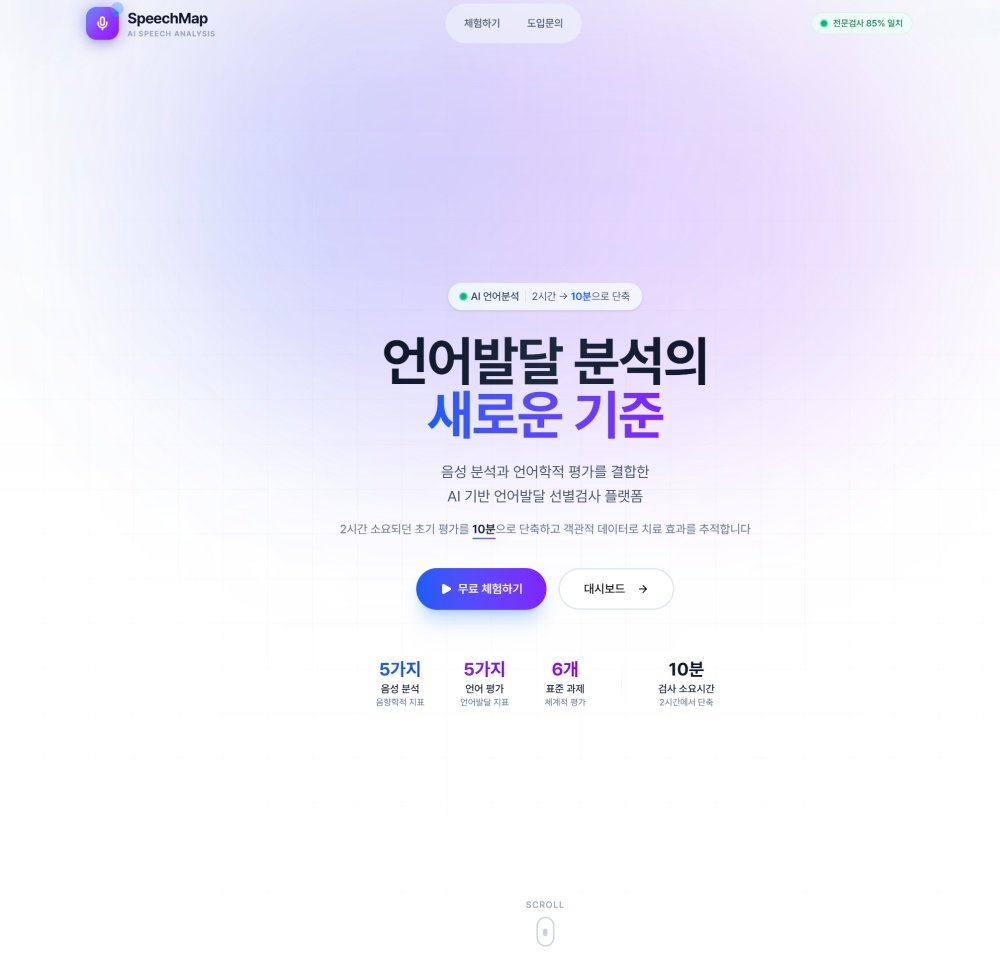
Speech Map is an AI-based language development screening platform that combines voice analysis and linguistic assessment / Source=Song & Stark Co-Operation
Currently, the most important task for Song & Stark Co-Operation is to ensure that its proprietary AI diagnostic model has a statistically significant correlation with existing standardized language assessment tools. To this end, the company is conducting intensive R&D and plans to secure scientific evidence through the publication of academic papers.
Ultimately, securing high-quality data is crucial for Speech Map. Song & Stark Co-Operation is focusing on acquiring children’s language development data from language rehabilitation centers and pediatric specialty hospitals. Song said, “We are strategically focusing on connecting language rehabilitation centers or pediatric specialty hospitals with homes. Through a high-performance engine that can understand a child’s condition with only short voice samples, we will complete an integrated management system that enables centers and parents to communicate organically and maximize treatment effectiveness.”
Aiming to expand the ecosystem through API opennessThe strengths of Song & Stark Co-Operation lie in its technological expertise and proven execution capabilities. The company holds two patents jointly filed with a KAIST professor and is pursuing additional patents. It has also obtained venture business certification, been selected for the Early-Stage Startup Package and the Data Voucher program, and attracted seed investment, thereby gaining external recognition for its technological prowess and business potential.
Song & Stark Co-Operation plans to introduce a platform that combines art and AI in the future / Source=ITDongA
In particular, the company was selected in 2025 for the Deep Tech sector Early-Stage Startup Package program of the Startup Support Group at Seoul National University of Science and Technology, receiving various forms of support. Song commented, “Competition is intense to be selected for government support programs, so we were grateful to be chosen for the Early-Stage Startup Package,” adding, “Such support provides momentum. It greatly helped us secure the data we needed most.”
Song & Stark Co-Operation aims to eventually open its AI model for children’s language diagnosis in the form of an API (Application Programming Interface). The intention is to allow various industries—such as smart toys, kids’ platforms, and education services—to utilize this engine to help detect children’s language development issues at an early stage.
Song presented his vision, saying, “Paradoxically, more children are experiencing language development delays due to media and AI. Through that same AI technology, Song & Stark Co-Operation aims to become a ‘good technology company’ that helps children find their voice and supports healthy communication.”
Song & Stark Co-Operation is pursuing both technological capability and social value, striving to lead the digital transformation of the child language rehabilitation field. Expectations are rising over what results this paradoxical approach of “solving the problem created by AI with AI” will deliver.
ITDongA reporter Park Gwi-im (luckyim@itdonga.com)
ⓒ dongA.com. All rights reserved. Reproduction, redistribution, or use for AI training prohibited.
Popular News