Government’s Comprehensive Plan for the Rare Earth Supply Chain
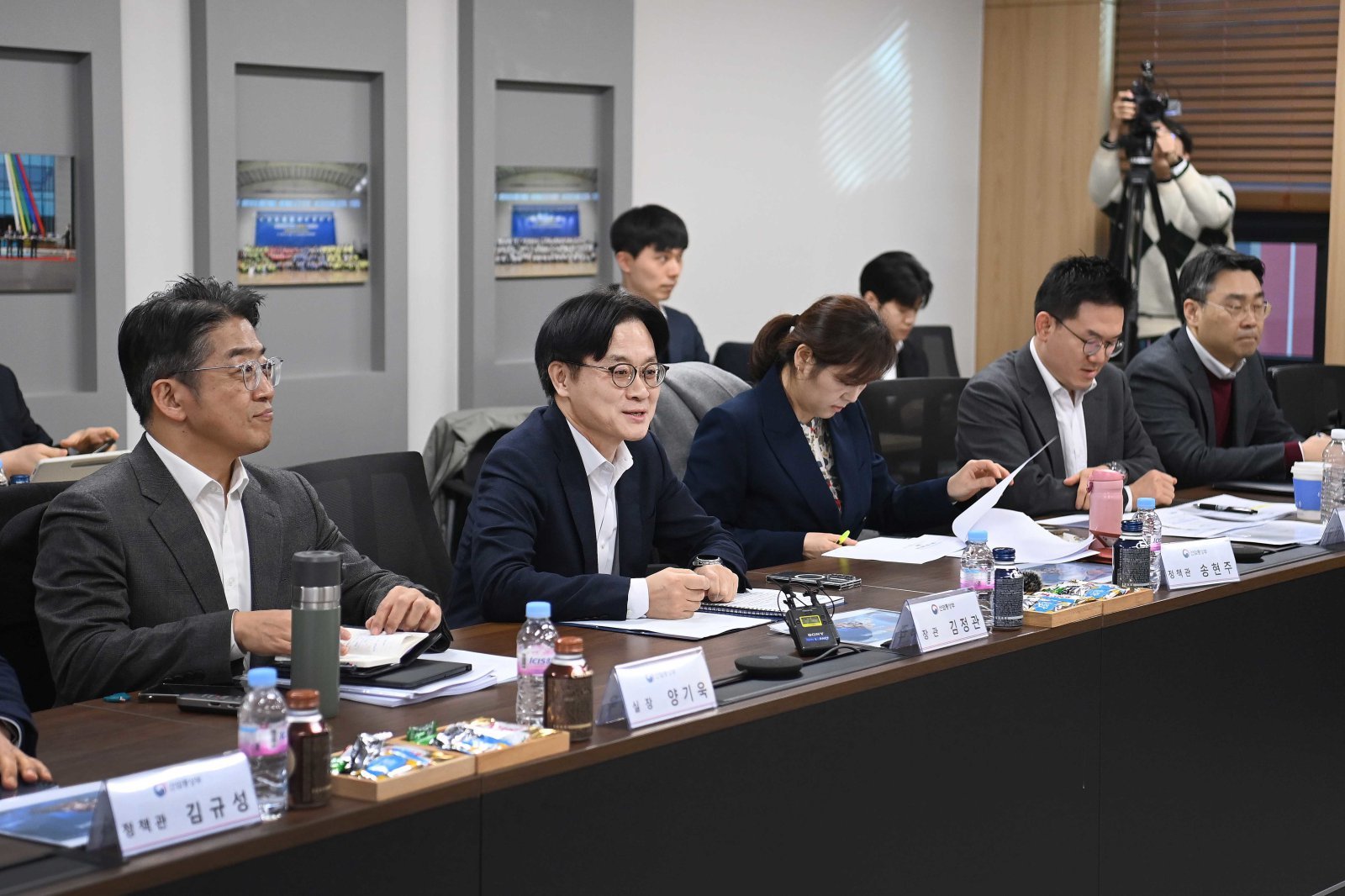
Minister of Trade, Industry and Energy Kim Jeong-kwan speaks at a meeting with rare earth-related companies held on the morning of the 5th at the Seongrim Advanced Industry Hyeonpung Plant in Dalseong-gun, Daegu. Provided by the Ministry of Trade, Industry and Energy
The government will designate 17 types of rare earths, core materials for advanced industries that are currently monopolized by China, as national critical minerals and strengthen supply and demand management. It is also pushing to again allow Korea Mine Rehabilitation and Mineral Resources Corporation (KOMIR) to make direct overseas investments.
On the 5th, the Ministry of Trade, Industry and Energy announced a “Comprehensive Rare Earth Supply Chain Measure” that includes these policies. Rare earths are key raw materials used in the production of major industrial products such as semiconductor manufacturing equipment, electric vehicle motors, various electronic products, and generators. The government has decided to comprehensively cover the entire rare earth production process—from resource development and refining to finished product manufacturing and recycling—by systematizing supply measures for rare earths, which had not been addressed in an integrated manner.
At present, China monopolizes 60–70% of mine production, 85–90% of smelting and separation processes, and more than 80% of the market for finished rare earth magnets. In the short term, the government plans to minimize supply and demand risks by strengthening communication with the Chinese government.
It is also pushing to ease regulations on KOMIR’s overseas investment, which had been banned due to past failures in overseas resource development, and to grant the corporation a project comprehensive management function to support private companies. An official at the Ministry of Trade, Industry and Energy explained, “There is a consensus in the National Assembly as well, so the goal is to amend the KOMIR Act within this year.”
This year, the government plans to expand support for private companies by increasing the loan budget for firms engaging in overseas resource development by KRW 28.5 billion from the previous year to KRW 67.5 billion and raising the funding support ratio from 50% to 70%.
Sejong=Lee Sang-hwan
AI-translated with ChatGPT. Provided as is; original Korean text prevails.
ⓒ dongA.com. All rights reserved. Reproduction, redistribution, or use for AI training prohibited.