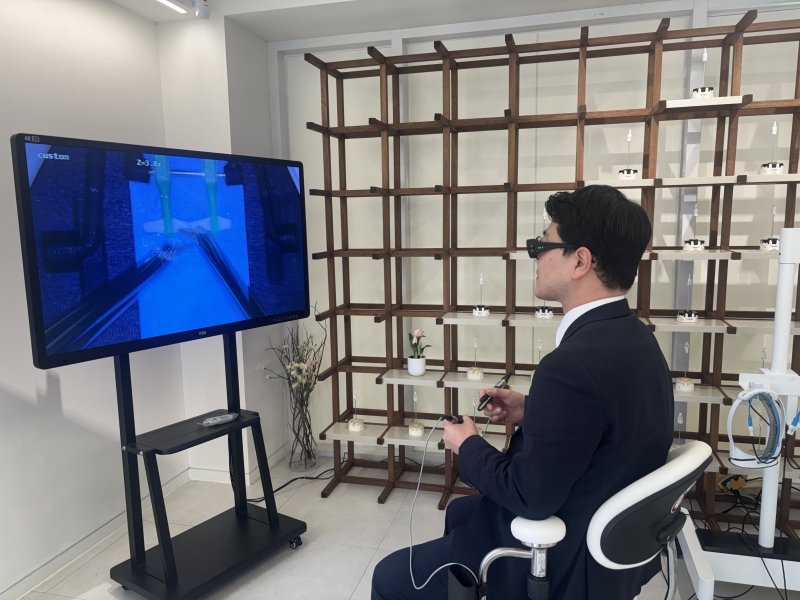
TRM Korea obtained approval from the Ministry of Food and Drug Safety (MFDS) on the 30th of last month for the ultra-microsurgical robot “Symani,” declaring a digital transformation in the domestic microsurgical reconstruction field.
The MFDS cited “reduction of surgical variability depending on skill level” and “provision of standardized surgical quality” as the expected benefits of introducing Symani.
Symani corrects human hand tremor and provides precise movements in highly complex procedures that involve microvessels measuring 0.1–2.5 mm. To meet these expectations from the MFDS, TRM Korea is operating the “Symani Training Center,” serving as an academic hub that disseminates standardized robotic surgical protocols to medical professionals.
With the introduction of Symani, already validated in countries such as the United States, Australia, and Hong Kong, Korea has joined the global microsurgical robot trend. TRM Korea plans to expand its academic scope starting with free-flap surgery and lymphaticovenous anastomosis, which are currently approved.
The company will focus on breast and limb reconstruction, where clinical application is currently feasible, and will establish standard protocols for robotic microsurgery through collaboration with academic societies. Furthermore, it intends to concentrate its capabilities on demonstrating the technological superiority of robots in areas that require a high degree of precision, such as the treatment of lymphedema, and on improving patient outcomes.
Choi Yong-seok
AI-translated with ChatGPT. Provided as is; original Korean text prevails.
ⓒ dongA.com. All rights reserved. Reproduction, redistribution, or use for AI training prohibited.