[Top 10 Conglomerates to Boost Investment and Jobs]
SK to build new semiconductor packaging facility in Cheongju… LG to establish battery R&D hubs in Daejeon and beyond
KRW 66 trillion in regional investment by the top 10 groups this year alone
Production inducement effect expected to reach up to KRW 525 trillion… “Government must move quickly on deregulation and other support”
At a corporate meeting held at the Blue House on the 4th, the ten largest conglomerates announced plans to invest KRW 270 trillion over the next five years in regions outside the Seoul metropolitan area, in line with President Lee Jae-myung’s “region-led growth” initiative. These companies plan to increase regional investment this year by more than 30% compared with last year. As they intend to expand investment particularly in new industries such as artificial intelligence (AI) and semiconductors, expectations are rising that, if realized, this will serve as a catalyst for revitalizing regional economies.
● Regional investment driven by AI and semiconductors
The Korea Enterprise Federation (KEF) stated, based on its “Survey on Regional Investment Plans” conducted among major conglomerates, that the ten largest groups—Samsung, SK, Hyundai Motor, LG, Lotte, POSCO, Hanwha, HD Hyundai, GS, and Hanjin—plan to invest a total of KRW 270 trillion in regions outside the Seoul metropolitan area by 2030. In particular, they will execute KRW 66 trillion in regional investments this year alone, an increase of KRW 16 trillion from last year. Lee Gyu-yeon, Senior Presidential Secretary for Public Communication, evaluated at a briefing after the meeting that “the KRW 16 trillion increase reflects a considerable effort by the companies.”
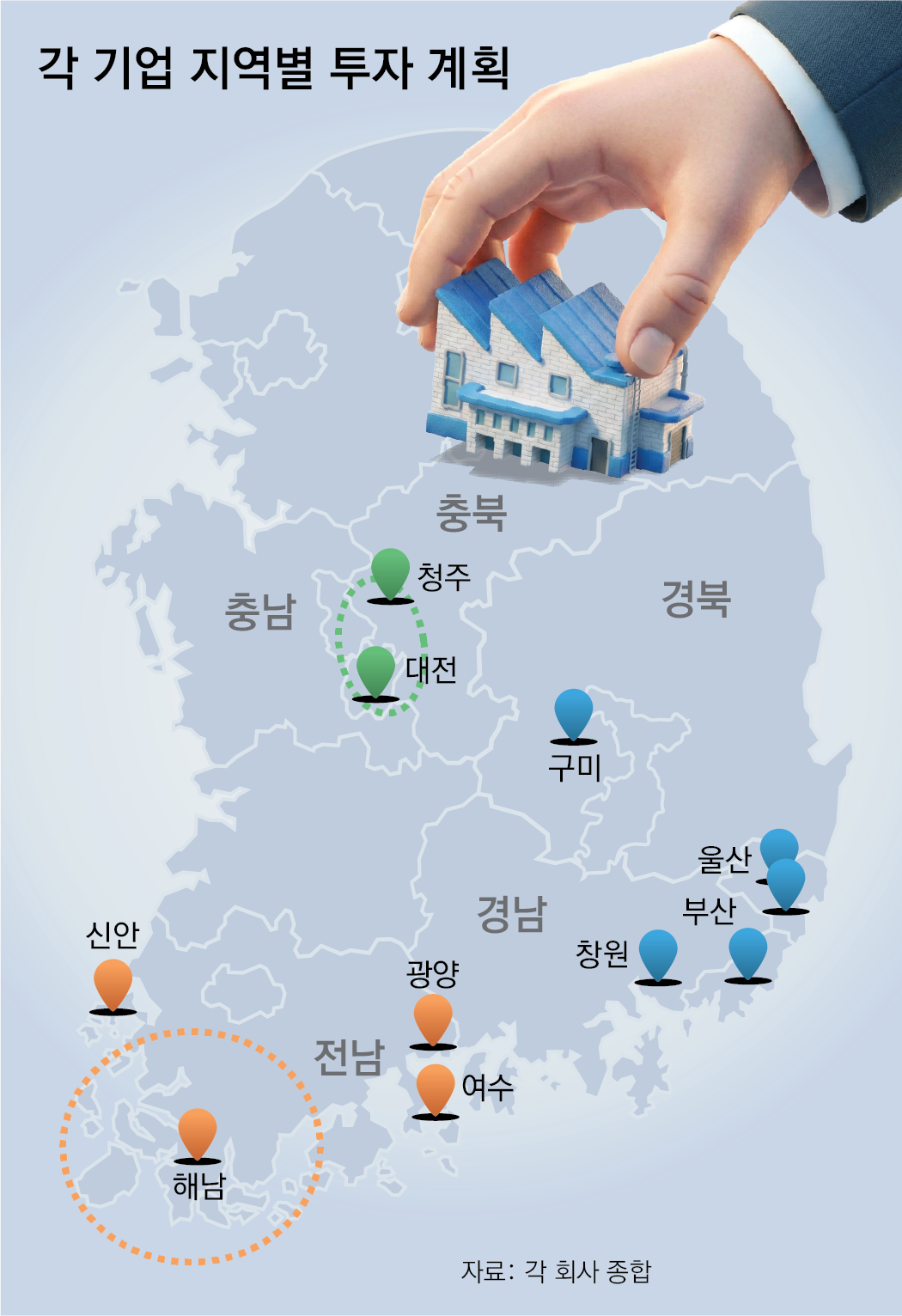
This regional investment is expected to be carried out largely in advanced industries. Although the Blue House and each company did not disclose detailed investment plans by region on the day, major corporations are already drawing up and implementing substantial regional investment projects. The KEF said that “investment will be made in advanced industrial sectors such as AI, semiconductors, batteries, and carbon-neutral infrastructure.” As companies foster advanced industries that offer new business opportunities, each region is gaining fresh opportunities to attract investment.
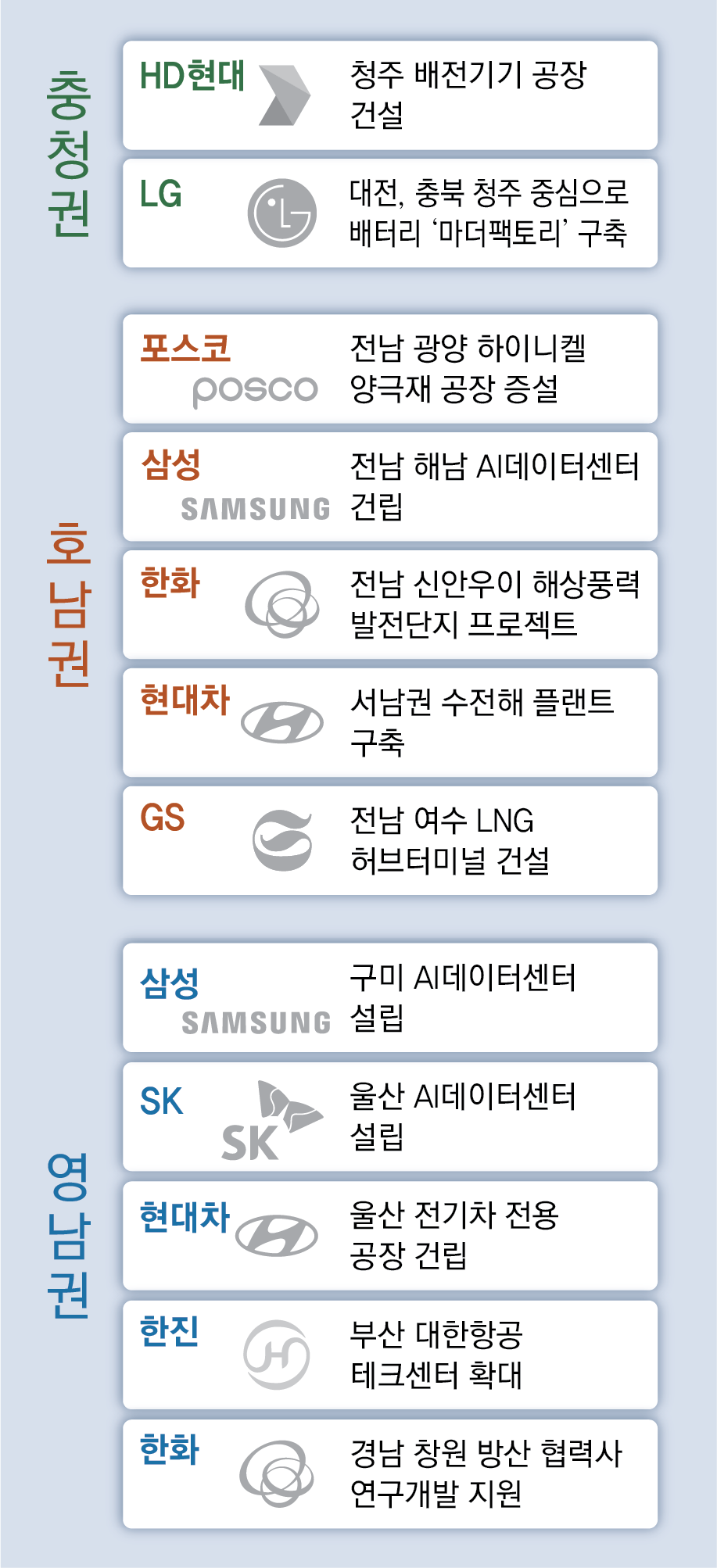
A representative example is Samsung’s plan to build AI data centers in Haenam County, South Jeolla Province, and Gumi City, North Gyeongsang Province. Samsung is pursuing the construction of AI data centers—an essential industrial infrastructure in the AI era—not in the Seoul metropolitan area but in the regions. Samsung is also reviewing a plan to establish a heating, ventilation, and air conditioning (HVAC) production line in Gwangju. This line would produce cooling systems and other equipment required for operating AI data centers.
SK, through SK hynix, plans to build an advanced semiconductor packaging plant worth KRW 19 trillion in Cheongju City, North Chungcheong Province. SK Telecom, in partnership with Amazon Web Services (AWS), intends to invest in a large-scale AI data center in Ulsan, while SK On plans to convert its electric vehicle battery production facility in Seosan City, South Chungcheong Province, into a line for energy storage system (ESS) batteries.
Hyundai Motor Group will invest KRW 125.2 trillion in Korea by 2030 to expand its production bases. Hyundai Motor’s dedicated electric vehicle (EV) plant is scheduled for completion in Ulsan within this year, and a new hydrogen fuel cell plant is also under construction with a target completion date next year.
LG plans to invest KRW 60 trillion of its KRW 100 trillion domestic investment budget over the next five years in regional areas. Centered on Daejeon and Cheongju in the central region, LG will establish a battery research and development (R&D) hub, known as a “mother factory.” The company plans to develop this into a core of the Korean battery materials, parts, and equipment (MPE) ecosystem.
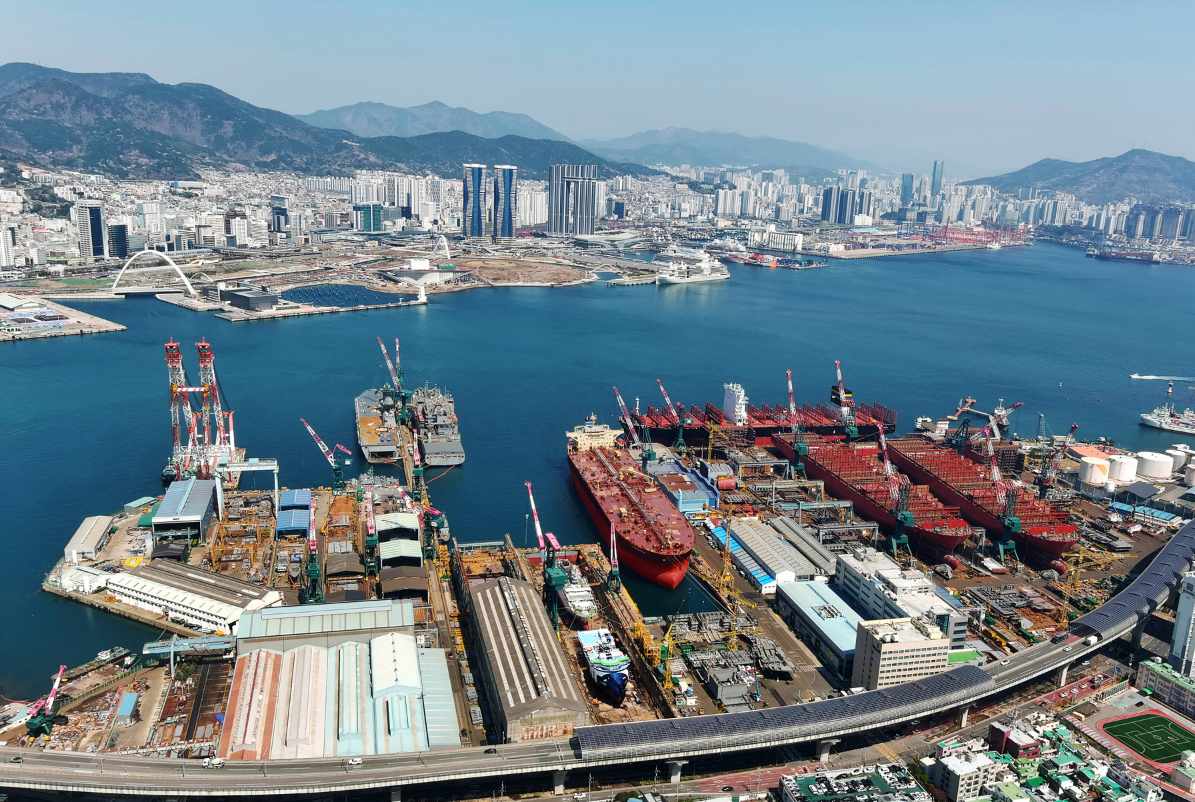
POSCO Group has begun construction of a lithium iron phosphate (LFP) cathode material plant in Pohang City, North Gyeongsang Province, while Hanwha, through Hanwha Ocean, is creating an offshore wind power complex worth about KRW 2 trillion in Sinan, South Jeolla Province. HD Hyundai, having completed HD Hyundai Electric’s transformer core plant in Ulsan, plans to build a new power distribution equipment plant in Cheongju City.
● “Production inducement effect up to KRW 525 trillion”Experts believe that if regional investment is concentrated in advanced industries such as AI, semiconductors, batteries, and EVs, the resulting economic impact will be considerable. Compared with general manufacturing or services, advanced industries require accompanying MPE firms and R&D infrastructure to form a full industrial ecosystem. This implies significant forward and backward linkage effects on regional economies.
In addition, when regions attract advanced industries, they can expect a “talent retention” effect, keeping local talent in their home regions. These sectors generally offer high wages and feature many jobs favored by young people. Hong Ki-yong, Emeritus Professor in the Department of Business Administration at the University of Incheon, said, “Regional investment in advanced industries such as AI and semiconductors will contribute to revitalizing local economies through higher productivity, inflows of high-income earners, and expanded tax revenues and consumption.”
The industrial sector similarly expects positive spillover effects such as expanded regional production and income growth if companies embark on large-scale regional investments. The KEF presented analysis indicating that, if the ten largest groups’ regional investment plans are executed as scheduled, they will generate up to KRW 525 trillion in production inducement effects for the Korean economy over five years. This figure was calculated by multiplying the total investment amounts of the ten groups by the “investment-induced production and value-added coefficients” estimated by the Bank of Korea. The value-added inducement effect of the investment plans was estimated at KRW 221 trillion.
However, some argue that improving investment conditions must come first to facilitate corporate investment in the regions. This is because past governments have repeatedly announced measures to boost regional investment and job creation that later faded away. Given that President Lee stated at the meeting with the ten largest groups that fiscal allocation and policy decisions will be focused on regional growth, there are calls for regulatory easing to follow.
Lee Sang-ho, head of the Economic Division at the KEF, said, “For the newly announced regional investment plans to be smoothly executed, the government, the National Assembly, and local governments must move quickly to support corporate investment by removing regulations related to site selection and permits and approvals.”
ⓒ dongA.com. All rights reserved. Reproduction, redistribution, or use for AI training prohibited.
Popular News