When researching and developing new drugs or biotechnology, Contract Research Organizations (CROs) play a critical role. They handle the entire sequence of procedures, including subject selection and overall study design, patient recruitment and experimentation, data analysis, and submission of approval applications to relevant authorities. Among these, data analysis and management are considered the most important procedures. If data are not handled accurately, neither the process nor the outcome of clinical trials can proceed smoothly.
As artificial intelligence reshapes existing industries, attempts are emerging to use this technology to resolve inefficiencies in clinical research and enhance its completeness. Mediplexus, led by CEO Kim Dong-kyu, is one of the companies pursuing this approach.
Shift in CRO paradigm: from “on-site operations” to “data-driven design and validation”Mediplexus is a “data CRO” specialized company that actively utilizes Real World Evidence (RWE) from hospitals. Recently, the industry has begun to distinguish CRO roles into “on-site operations-oriented” and “data-driven design and validation-oriented.” Mediplexus positions itself as the latter, emphasizing its identity as a “data CRO.” The industry is also seeing more cases that combine on-site operational capabilities with data capabilities. Mediplexus believes that this combination will generate synergies by aligning “traditional CRO on-site operations” with “data-driven design and validation.”
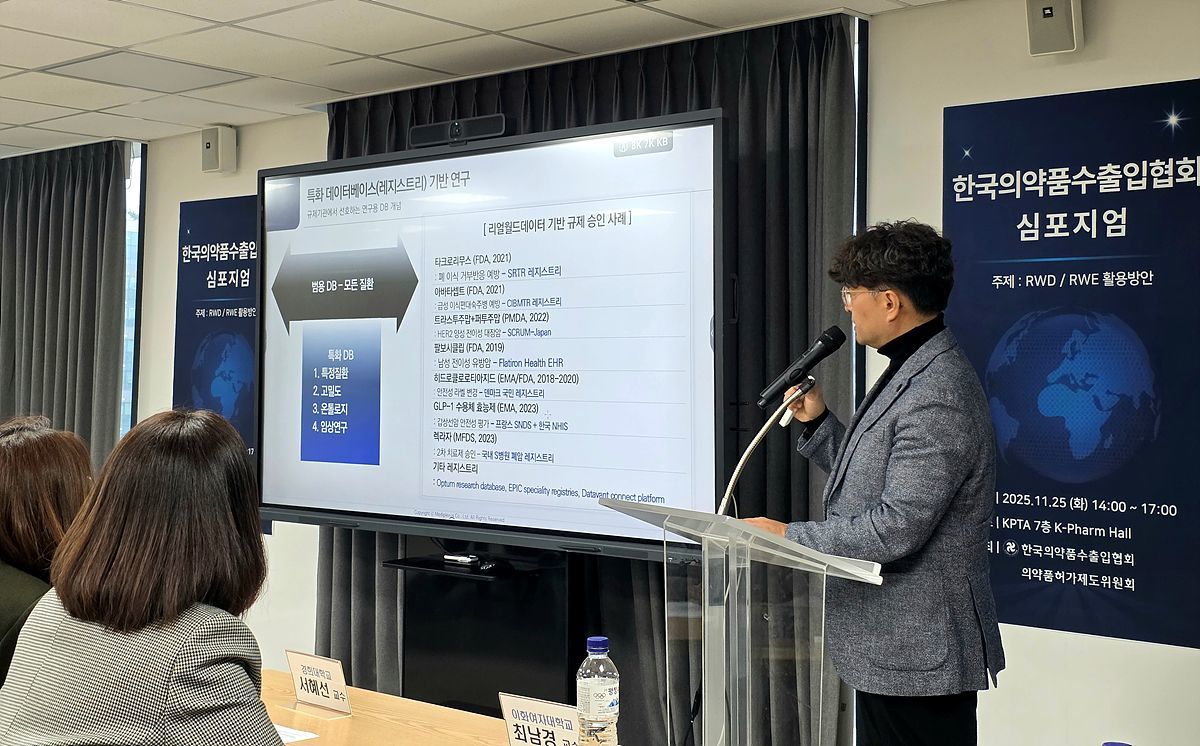
CEO Kim Dong-kyu of Mediplexus (speaker) presenting the technology at the RWD / RWE Symposium hosted by the Korea Pharmaceutical Traders Association and the Pharmaceutical Approval System Committee / Source = Mediplexus
Mediplexus’s core strength lies in its “full-cycle clinical research system,” which provides both data informatization (structuring) and all clinical research execution procedures. Upon receiving a request, it optimizes the task into a structure that can be implemented with data. It then connects all outputs—from study design to data preparation, analysis, and result reporting—into a single flow.
CEO Kim cites three secrets behind implementing this capability: ▲ a “specialized database” that structures hospital clinical Real World Data (RWD) for clinical research use ▲ a dedicated analysis tool “allRe” that standardizes the design, implementation, and analysis of clinical research ▲ “converged personnel” who translate the sponsor’s requirements into variables, design, and analysis and take responsibility for conducting the research. He also presented the view that only when these elements work together can a “full-cycle clinical research system” function properly in practice, including dataset operations based on Institutional Review Boards and Data Review Boards (IRB/DRB).
Integrated full-cycle clinical research…“One-stop” linkage from product planning to post-marketingThe full-cycle clinical research system defined by Mediplexus connects the entire flow from formulating questions at the product planning stage, through regulatory clinical trial design and execution, analysis and evidence compilation, to post-marketing studies. The company explains that full-cycle linkage is particularly important because the more fragmented the planning–clinical–post-marketing stages are, the greater the likelihood of definition changes and rework costs. It also argues that building a process-oriented full-cycle system, rather than conducting one-off, results-oriented projects, enables improvements in speed, reproducibility, and consistency in result interpretation as studies are repeated.
For example, even if one clinical study leveraging RWE is successfully completed, applying RWE to another clinical study may generate quite different issues. Introducing a process-oriented full-cycle system in this context secures procedural transparency, including IRB/DRB review-based data operations, based on standardized templates and indicator frameworks, process records, and quality management systems. At the same time, it builds a system that increases start-up speed, reproducibility, and explainability as clinical studies are repeated.
Mediplexus’s full-cycle clinical research system delivers both convenience and utility to sponsors. Sponsors only need to articulate one or two questions regarding the decisions for which they intend to use RWE, outline the general direction for target patients and comparison groups, and define the level of desired outcomes (for internal decision-making or for external submission). Mediplexus then assumes responsibility for the full cycle from study design and subject/indicator definition to analysis and result reporting. Documented outputs, including IRB/DRB responses, are also provided as a package.
Patient-centered value: “In the era of precision medicine, RWD/RWE will refine patient group definitions”CEO Kim believes that leveraging RWD/RWE can refine the definition of patient populations in a precision medicine environment and reduce trial and error and rework at the study design stage. This, he explains, mitigates risks such as timeline delays and additional costs during development and clinical phases, while preparing the evidence needed for decision-making more efficiently.
Signing ceremony for the data service partnership between Pusan National University Hospital and Mediplexus / Source = Mediplexus
When Mediplexus meets with a sponsor, the two sides first agree on the questions, target patients, comparison groups, and direction of key evaluation variables. Mediplexus then immediately checks data availability and recording methods. Even if key evaluation variables are the same, the scope and lead time (from request to actual data delivery) vary depending on whether they are recorded in the Electronic Medical Record (EMR) as prescriptions, administration, tests, procedures, or narrative text. To accelerate the overall process, Mediplexus prioritizes early completion of checks on data availability and recording methods.
Mediplexus then drafts a list of key indicators and design alternatives to concretize the study design. It composes datasets in consideration of ethical and data review processes such as IRB/DRB, and proceeds with subject/comparison group definition, analysis, and result review. Hospital RWE is generally considered difficult to apply directly to clinical research. For this reason, CEO Kim uses “specialized databases” that structure data around specific diseases. He first secures safety and efficacy with key evaluation variables and then expands the analysis to include confounding/adjustment variables and sensitivity/subgroup variables.
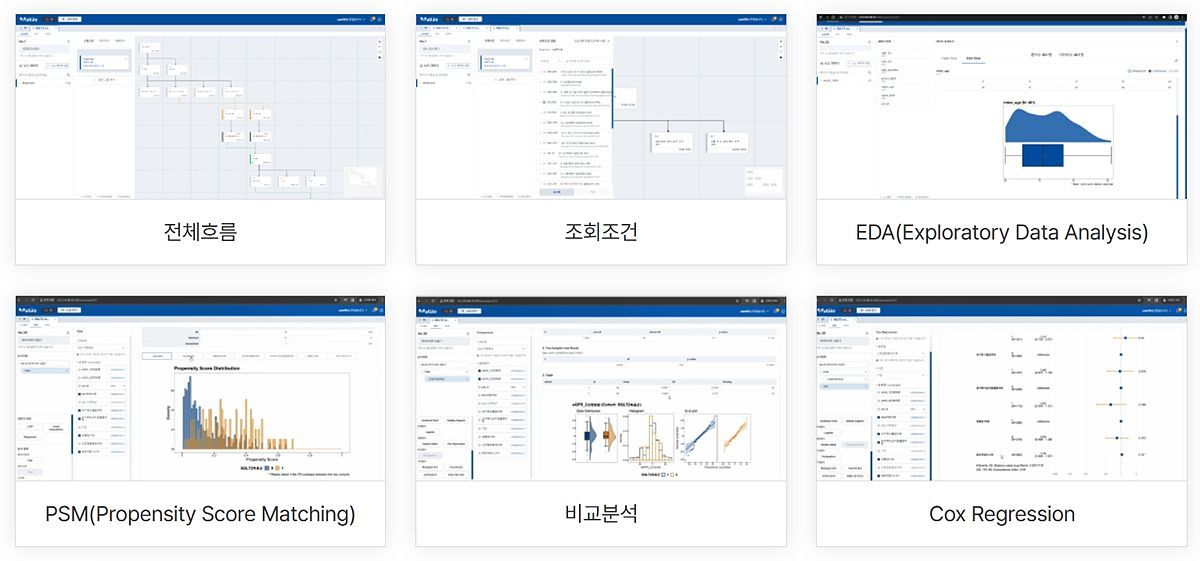
allRe: “conditional efficiency” based on standardization and risk managementMediplexus’s dedicated analysis tool, allRe, is also noteworthy. Its core function is to guide the entire clinical research process along the most appropriate path, like an in-vehicle navigation system, while recording major changes and progress histories to ensure reproducibility and transparency. It standardizes the flow from design to implementation and analysis so that each stage naturally leads to the next, and verifies at each stage whether the dataset is appropriate. This approach reduces both the likelihood of errors and the number of rework iterations. Some segments of the clinical research industry have already assessed that allRe reduces costs from rework caused by shifting definitions during the research process and shortens overall timelines.
CEO Kim emphasizes that, thanks to these advantages of allRe, it is possible to manage risk factors in clinical research such as data export and security and duplicate enrollment across multiple sites. This also applies to Post-Marketing Surveillance (PMS).
Key features of Mediplexus’s allRe / Source = Mediplexus
Mediplexus believes that, in certain scenarios where RWD-based approaches such as external control arms (ECA) are applied, it is possible to improve efficiency by reducing the burden of patient recruitment in regulatory clinical trials or lowering post-marketing study costs. The company estimates that, in some appropriately conditioned cases, patient recruitment burden could decline by around 30% and post-marketing clinical costs could fall by at least 20%. However, it cautions that these figures should be mentioned carefully, with clear assumptions and defined scope, as there can be large variations depending on disease, endpoints, data availability, and regulatory requirements.
Mediplexus’s full-cycle clinical research system operates on an IRB/DRB-based dataset unit without exporting data. It records core decision-making processes and quality management details to manage and provide transparency on “how specific results were generated.” This also addresses the issue of duplicate enrollment across multiple institutions. Instead of integrating raw data, it adjusts consistency at the dataset level and conducts pooled analyses, which is a safer structure. Reducing unnecessary risk factors is a core principle at Mediplexus.
This principle carries over into PMS. Patient definitions, evaluation variables, follow-up periods, data sources, and quality evidence are clearly defined, and the analysis process is preserved as standardized outputs and analysis logs. The same applies to adverse events and causality assessments. Definitions and evidence tailored to study objectives and data availability are organized into deliverables and used to explain PMS results. In this way, PMS essential requirements can be secured reliably. CEO Kim explains that, based on this, utilizing observational studies (OS) in combinations aligned with study purposes to examine comparative effects or extended questions allows timelines, costs, and risks to be managed altogether.
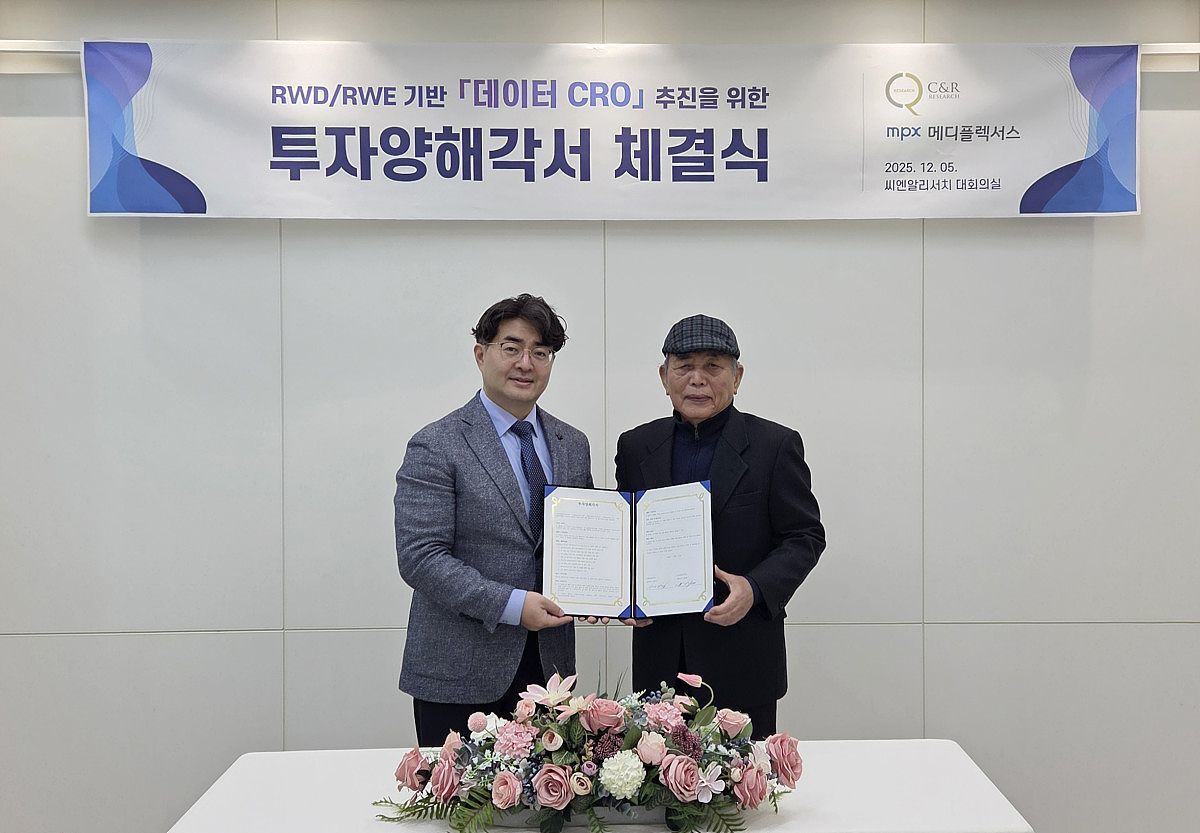
Expanding hospital–CRO–pharma connections…with overseas markets, including Asia, in viewIn December last year, Mediplexus signed an investment memorandum of understanding with C&R Research. The aim is to enhance the completeness of its full-cycle clinical research system. Mediplexus is responsible for designing the datasets needed to implement research questions in data form, as well as for analysis and evidence compilation. C&R Research is responsible for study operations and field execution. The two companies have established a joint project manager structure to ensure that clinical study operations and datafication/analysis are conducted in a systematic manner.
Signing ceremony for the investment memorandum of understanding between C&R Research and Mediplexus / Source = Mediplexus
Thanks to this structure, sponsors gain significant benefits. They not only shorten the time required to initiate a study but also save time and resources that would otherwise be spent on rework when definitions change during the study. They receive documents required for review and external communication in a consistent format. Mediplexus and C&R Research will first unify operating standards and outputs, then secure consistency at the project level to generate synergistic effects. The two companies state that, in the medium to long term, they plan to expand a data-driven collaborative framework connecting hospitals, CROs, and pharmaceutical companies. They add that they are also considering potential expansion into global markets, including Asia.
CEO Kim comments, “Mediplexus’s full-cycle clinical research system adjusts the level of outputs from the design stage so that anyone can naturally extend research results to re-examination, Risk Management Plans (RMP), and external communications. In 2026, we will further advance the full-cycle clinical research system, focusing on oncology and chronic diseases in the elderly.”
Reporter Cha Joo-kyung, IT Donga (racingcar@itdonga.com)
ⓒ dongA.com. All rights reserved. Reproduction, redistribution, or use for AI training prohibited.
Popular News