Samsung Electronics posted an operating profit of KRW 16.4 trillion in its semiconductor business in the fourth quarter of 2025. It became the first Korean company to open the era of KRW 20 trillion in annual profit in this segment. In particular, high bandwidth memory (HBM), a core artificial intelligence (AI) semiconductor, emerged as the central pillar of the performance rebound, pushing revenue (KRW 333.6 trillion) to an all-time high. This is regarded as a symbolic milestone for gauging the technological competitiveness and strategic direction of K-tech in the midst of the AI transition. Focusing on four pillars — Samsung Electronics’ semiconductors, AI, global technology hegemony, and the industrial ecosystem — the next steps of K-tech were examined from multiple angles.
〈1〉 “AI as a companion in everyday life”… Opening the curtain on the smart home
Every January, CES is held at the Las Vegas Convention Center in Nevada, United States. As is widely known, CES is where the world’s home appliances and IT new technologies are brought together. The industry regards it as the most important event to gauge the year’s technology trends. In its early days, the competitive landscape was clearly centered on home appliances such as TVs and refrigerators. In recent years, however, the exhibition has increasingly featured the convergence of the automotive industry and information technology (IT), changing the overall atmosphere to resemble a motor show.
This year’s CES saw intense competition in new technologies related to artificial intelligence (AI). As a result, attendees could directly experience the “realization of AI” on site. While marveling at the speed of technological evolution, they were also confronted with AI that naturally crosses into domains traditionally seen as human, gaining a glimpse of a future that feels both unfamiliar and complex. What is clear is that AI is no longer a technology of the distant future; it has now penetrated deeply into everyday life.
CES “fixture” runs separate venue this year
Differentiation strategy built on “immersive AI experience”During CES 2026, Samsung Electronics set up an exclusive exhibition space at the nearby Wynn Hotel instead of the existing Las Vegas Convention Center. Until now, Samsung had served as a fixture at CES from the center of the Central Hall in the convention center, but this year it chose a separate exhibition venue for the first time.
This decision stemmed from Samsung’s selection of “AI immersive customer experience” as its exhibition concept this year. The intention was to highlight its AI strategy more clearly by presenting Samsung’s technologies and directionality as a single, coherent flow within a dedicated space.
At this event, Samsung presented a concrete vision of the future lifestyle that will be created by combining TVs and home appliances with AI. Various demonstrations were conducted in the exhibition space under realistic home-life scenarios. For example, when a viewer watching a movie scene asked, “Which city is this filmed in right now?”, the name of the city appeared immediately at the bottom of the TV screen along with recommended travel itineraries. In another scene, when asked, “Please tell me the recipe for lasagna,” the necessary ingredients and cooking steps were instantly sent to a smartphone.
These scenes depicted everyday life powered by Samsung’s integrated AI platform, “Vision AI Companion.” They symbolically showed that an era has opened in which the TV understands user needs and situations and responds instantly.
Through Vision AI Companion, Samsung made clear its strategy to turn the TV into the central device of the living room and further expand it into the “brain” that controls the entire smart home.
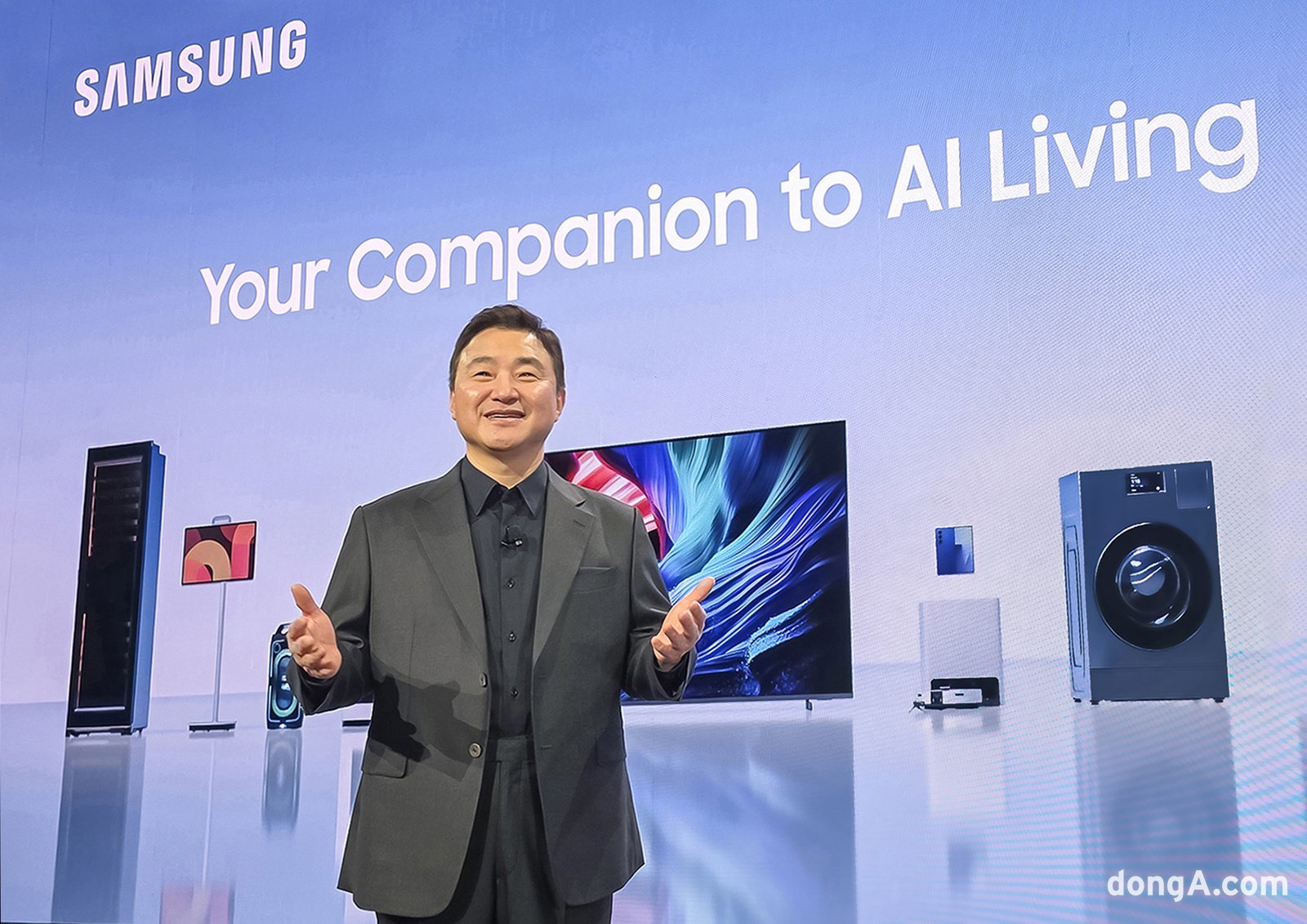
Roh Tae-moon, President and CEO of Samsung Electronics, is presenting the latest AI strategy at “The First Look” for CES 2026 held at the Wynn Hotel in Las Vegas, United States, on 4 January (local time). Photo courtesy of Samsung Electronics
Real-time visual recognition technology implemented
Equipped with neural processing unit (NPU)The technological starting point of Vision AI Companion is “real-time visual recognition.” It analyzes incoming video signals to the TV on a frame-by-frame basis and identifies people, objects, text, scene changes, and behavior patterns using deep learning.
Whereas conventional TVs relied on broadcast metadata or simple video patterns, Vision AI has raised the technological level to understanding the actual meaning of scenes on the screen. At the core of all these computations is a high-performance on-device NPU (neural processing unit) mounted inside the TV.
By processing visual analysis and AI inference on-device rather than in the cloud, Samsung significantly improved response speed. At the same time, it reduced the possibility that personal data would be transmitted externally.
The visual information recognized by Vision AI Companion is combined with generative AI, specifically large language models (LLMs). When users ask questions such as “What is this dish?” or “Who is the player on screen now?”, the AI understands the context of the current screen and generates appropriate answers. It also connects with external AI services such as Microsoft Copilot and Perplexity to provide search, summarization, and recommendation functions.
Roh Tae-moon, Head of the Device eXperience (DX) Division at Samsung Electronics, stated, “Samsung will apply AI to all of its products and services so that customers can enjoy truly meaningful AI experiences,” adding, “As an AI companion in customers’ daily lives, we will lead the popularization of AI experiences.”
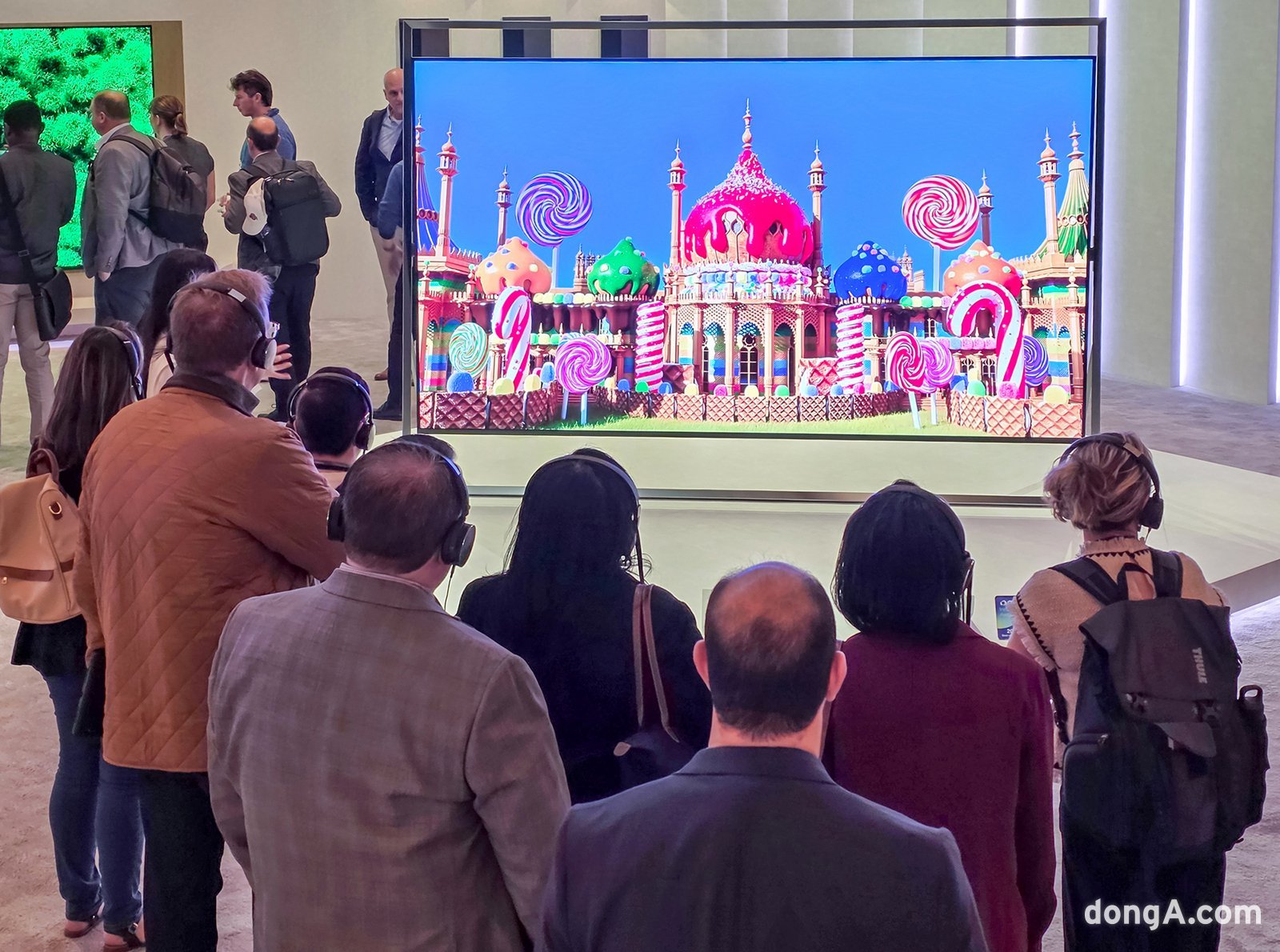
Visitors are viewing Samsung Electronics’ world-first 130-inch “Micro RGB TV” unveiled at CES 2026 in Las Vegas.
World’s first 130-inch Micro RGB TV unveiled
Accurate expression of contrast and color with no color-mixing errorAt this CES, Samsung emphasized its technological competitiveness in the premium TV market by unveiling the world’s first 130-inch Micro RGB TV. The product drew attention for implementing next-generation color reproduction and contrast control technologies that surpass the limitations of existing LED- and LCD-based TVs.
Conventional LCD TVs generate light through a structure of white LEDs and color filters. Under this structure, the color expression range is limited by filter efficiency, and control of brightness and contrast also remains relatively simple.
By contrast, Samsung’s Micro RGB TV adopts a structure in which RGB (red, green, blue) LEDs are independently arranged as the backlight. Each micro RGB LED is reduced to a size of 100 micrometers (μm) or less and densely fills the entire screen, and the luminance and color of each element can be controlled individually. As a result, the degree of freedom in light control and color accuracy is greatly enhanced compared with existing mini-LEDs.
Thanks to the independent RGB LED structure, “chaos-free color control” is possible, with virtually no color-mixing errors or filter loss, and efficiency in brightness, contrast, and color reproduction is significantly improved.
To realize this technology, Samsung achieved innovations across SMPS and driver design. High-speed PWM control circuits and precise power supply technology were essential to precisely control the thousands to tens of thousands of RGB LEDs. In practice, the driver ICs and power design that manage the large-scale RGB LEDs functioned as the core processes.
From a design perspective, a “Timely Frame” design was applied to create a visual effect in which the gigantic screen appears like a large window opened inside the home. In addition, the Micro RGB AI Engine Pro was mounted to analyze scene characteristics, brightness, and color in real time and finely adjust contrast, maximizing immersion on the large screen.
The sound has also evolved with AI. By using the AI Sound Controller Pro function, for instance, during a soccer broadcast, the volume of the commentator’s voice can be reduced while the cheers of the crowd filling the stadium are made more vivid. Combined with the “Eclipssa Audio” function co-developed with Google, not only picture quality but also sound quality has been greatly enhanced, improving the overall sense of presence.
Yong Seok-woo, Head of the Visual Display Business at Samsung Electronics, said, “Since 2006, Samsung has redefined the potential of TVs while maintaining the No. 1 position in the global TV market for nearly 20 years,” adding, “We will continue to lead the market by delivering innovative technologies and products that add enjoyment and comfort to customers’ everyday lives.”
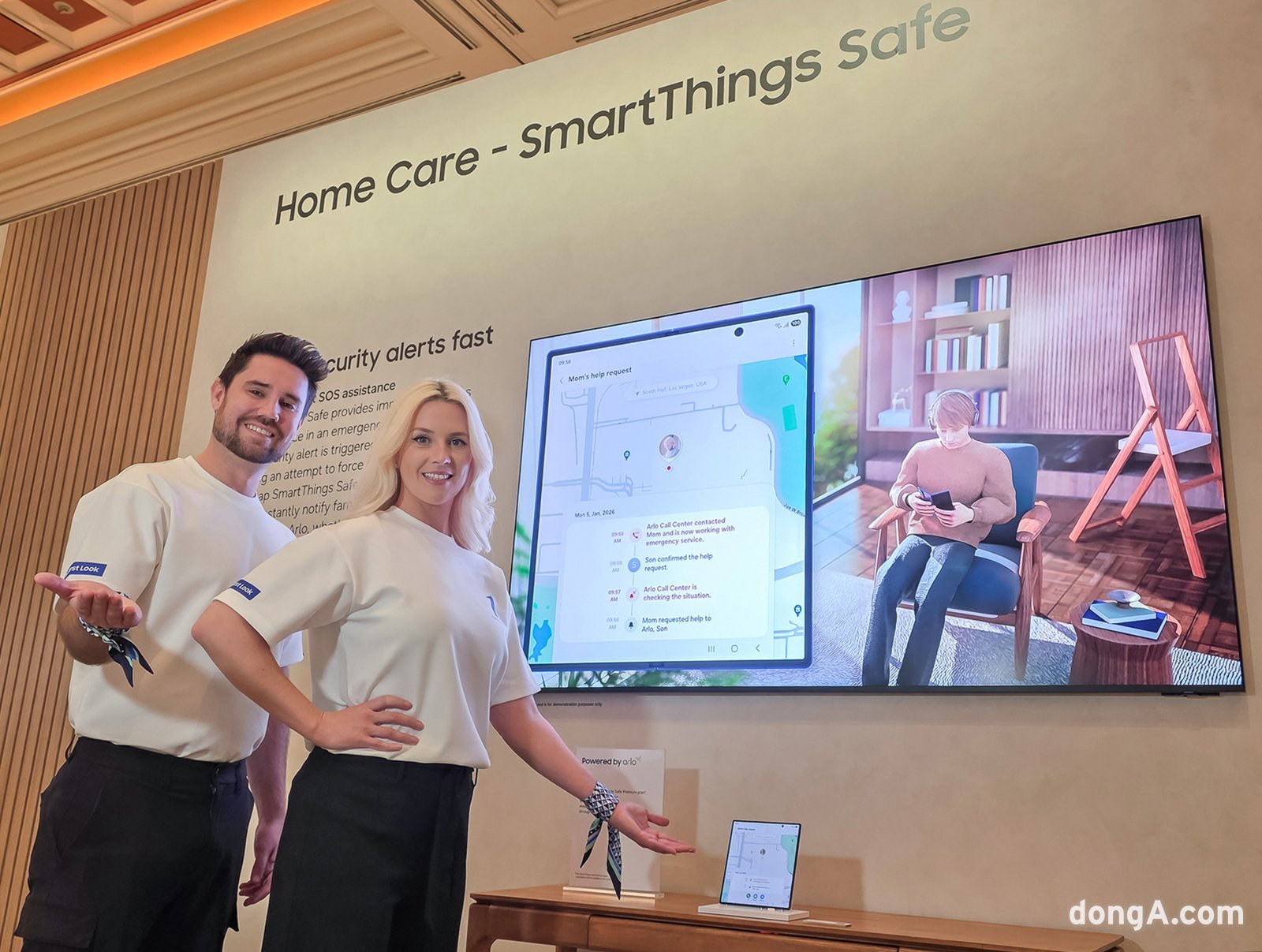
A Samsung Electronics coordinator introduces the “SmartThings Safe” feature, which allows users, at the press of a single button on a smartphone or tablet when a crisis is detected, to share their current location and send alerts to family members.
Samsung activates “Screen Everywhere”
TV serves as command tower in the homeSamsung Electronics is fully activating its “Screen Everywhere” strategy. This is a vision to extend the display experience into every space of daily life.
In the past, Samsung has offered customized viewing experiences through Micro LED, lifestyle TVs, and Neo QLED. Building on this, it has expanded to equipping home appliances such as refrigerators, ovens, and washing machines with screens.
This strategy is evolving beyond simply increasing the number of Samsung products into a smart home experience connected with AI. Samsung has proposed a direction in which various home appliances are equipped with screens and used as central interfaces for control and monitoring, linked to the AI-based SmartThings platform.
At CES 2026, Samsung’s exhibition theme was “Your Companion to AI Living.” It is a concept that advances the Screen Everywhere vision in line with the AI era, with a strategy to observe, assist, and connect all aspects of users’ daily lives through AI.
Last year, Samsung laid the foundation for Screen Everywhere through its AI Home platform and screen-based appliances, and this time it presented a more concrete AI-centered implementation of this direction.
Even when turned off, the TV is linked with SmartThings to show household energy usage at a glance, connect with healthcare devices to visualize real-time health status through graphics, and function as a command tower within the home. Through “Samsung Daily+” based on Tizen OS, users can intuitively check and control the status of lighting, temperature, robot vacuum cleaners, and other devices without a separate hub. A spatial recognition interface has also been implemented, enabling channel changes and volume control using only the user’s gaze and gestures.
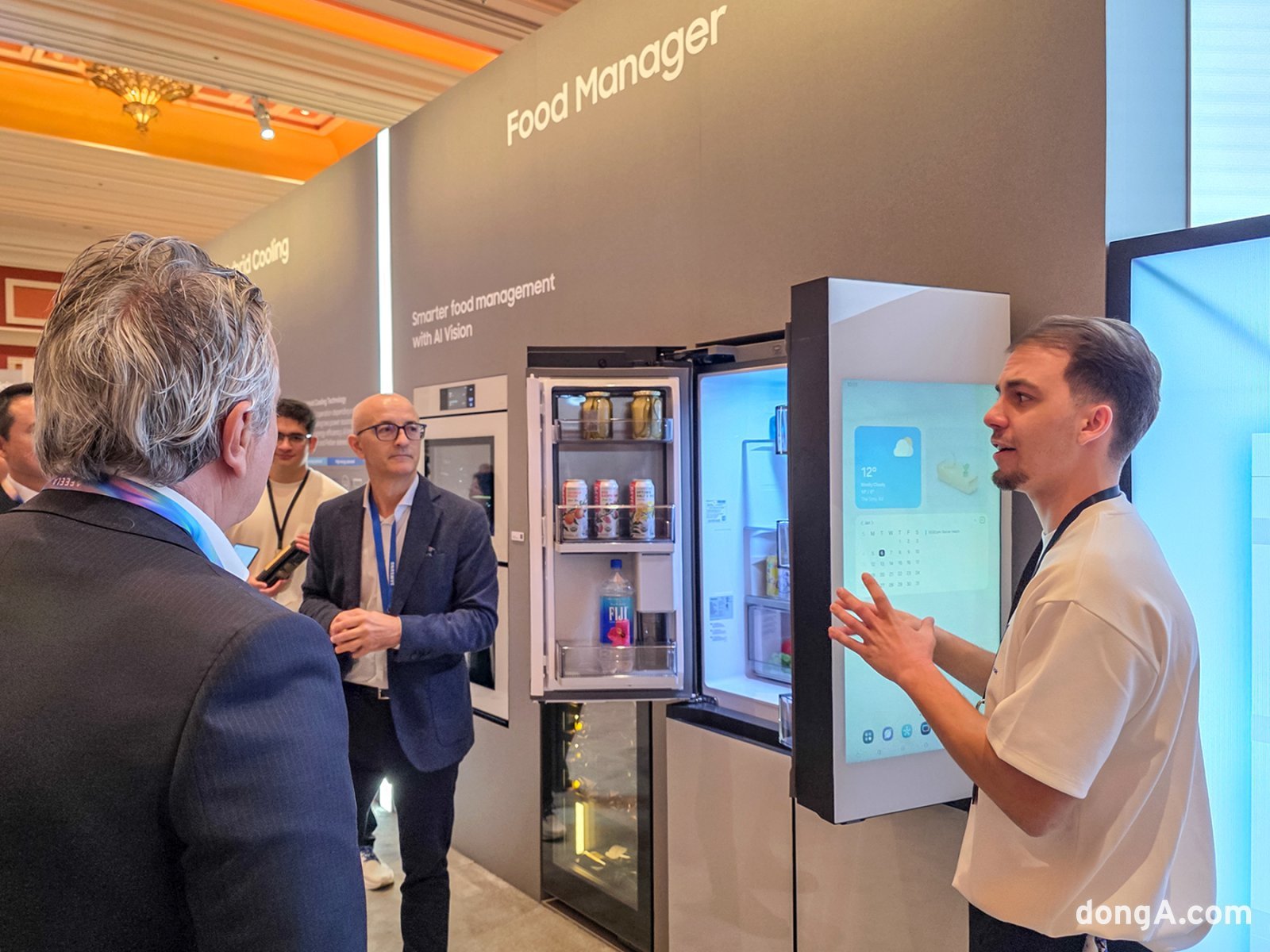
Visitors at CES 2026 listen to an explanation of Samsung Electronics’ “Bespoke AI Family Hub” refrigerator.
Safety and energy savings enabled by industry collaboration
Electricity bill benefits for Samsung appliance users in US and EuropeSamsung Electronics also showcased tangible outcomes through cross-industry collaborations. A representative example is the “Smart Home Saving” service developed with HSB, a US specialty insurer. Washing machines, dryers, ovens, and other devices connected to SmartThings act as sensors in the home, immediately detecting leaks or smoke, notifying users, and preemptively blocking risk factors.
These preventive features reduce insurers’ risk, and the benefit is returned to customers in the form of discounted insurance premiums. The service has been piloted in the state of Florida since last year and is scheduled to be expanded this year to markets across the United States, Europe, and other global regions.
Energy-saving effects have also been verified. Samsung demonstrated through global carbon verification organization Carbon Trust that using SmartThings’ AI Energy Mode can reduce the energy consumption of washing machines by up to 30%. This is equivalent to the monthly electricity usage of approximately 14,000 households in Seoul.
Italian power company Enel provides customers who purchase Samsung washing machines and connect them to SmartThings with up to 180 kWh of free washing power over two years, equivalent to about 670 uses. British Gas in the UK offers a 50% discount on electricity rates during daytime hours on weekends. Dutch retailer Coolblue is also running a program that allows free use of washing machines and dryers during specific time slots.
The Flex Connect program, operated in partnership with US energy company Leap, automatically activates AI Energy Mode during peak hours when power demand surges, optimizing electricity usage and rewarding users with points.
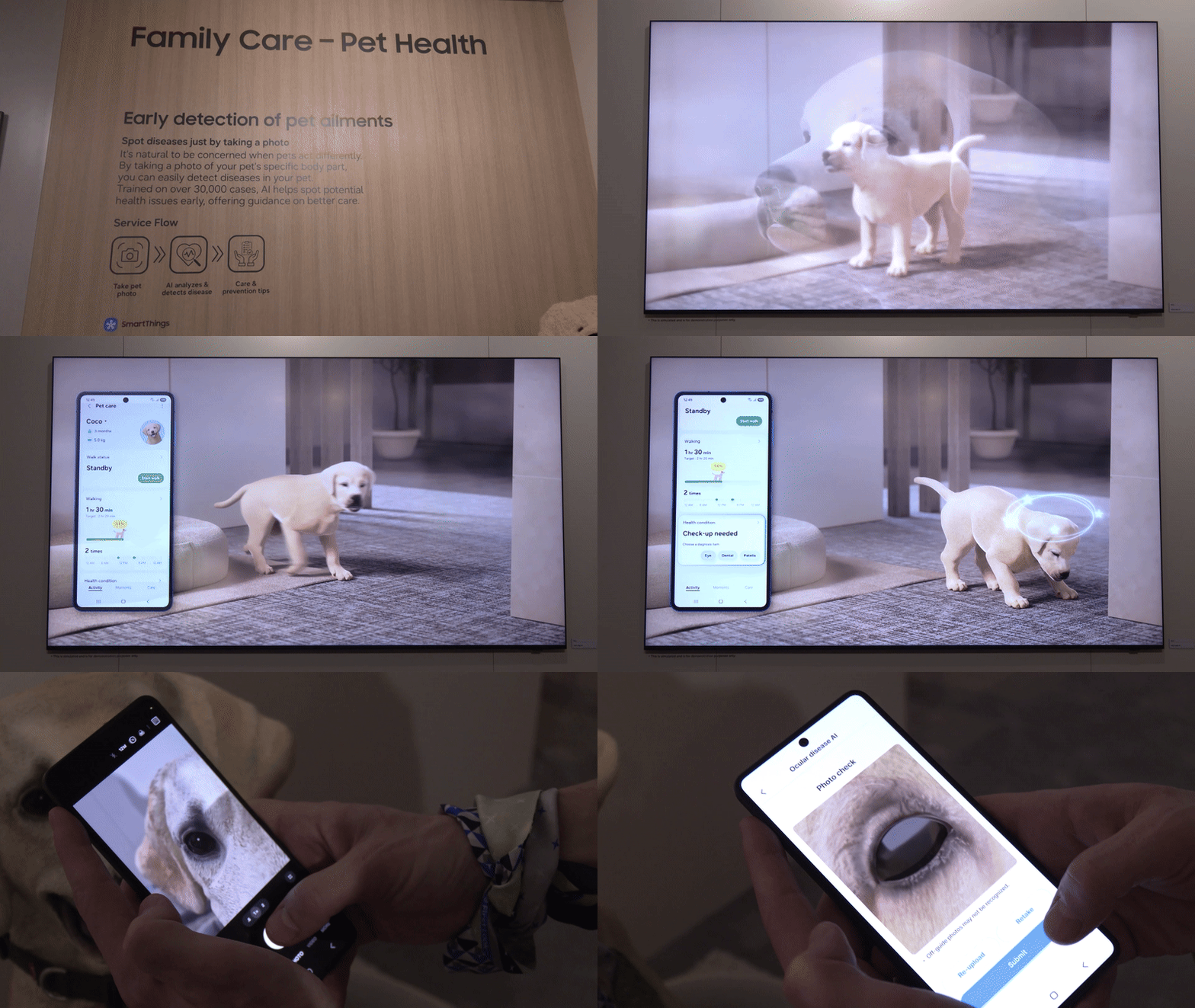
SmartThings has also expanded its role to safeguarding family safety and health. Samsung’s “SmartThings Safe” feature allows users in emergencies to send their current location and warning alerts to family members simultaneously at the press of a single button. Services were also introduced that use robot vacuum cleaners equipped with cameras to monitor the condition of pets in real time, and that diagnose the potential for dental and joint diseases in pets using just a single photo.
By combining SmartThings with AI-powered home appliances, Samsung continuously expands the value of the AI home. Since acquiring SmartThings in 2014, the company has built out its connected ecosystem over the past decade, and now boasts more than 430 million users worldwide, over 4,700 connected devices, and around 390 partner brands.
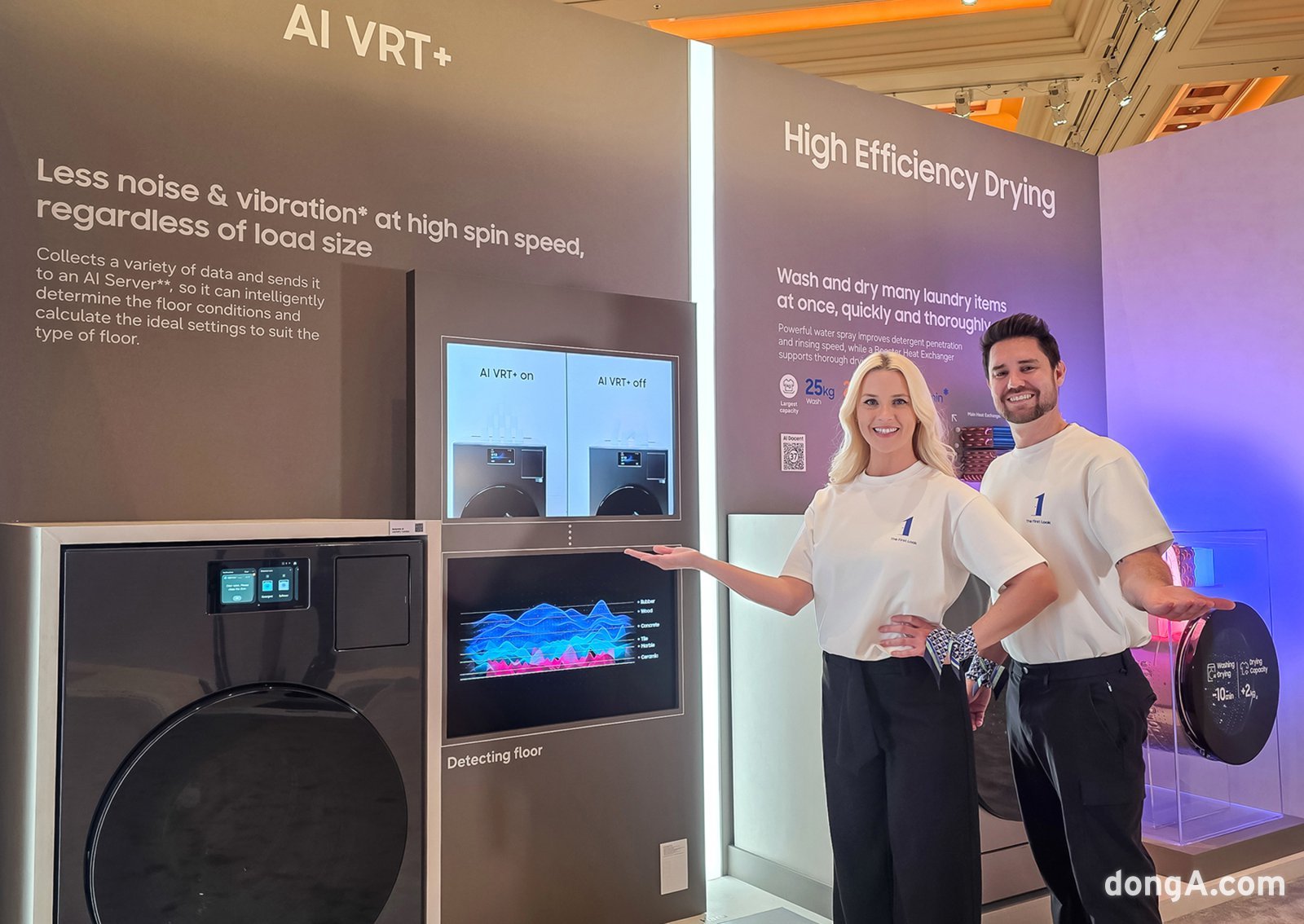
The 2026 Bespoke AI Combo Washer-Dryer.
Fulfilling a century-long wish to be freed from housework
AI home appliances as “Home Companions” “Home Companion” is also one of Samsung’s key visions.
Kim Chul-ki, Head of the DA Division at Samsung Electronics, explained, “Samsung’s AI home appliances are realizing the Home Companion vision based on an overwhelming connected ecosystem, form factors optimized for interaction with users through screens, cameras, and voice, and high reliability.”
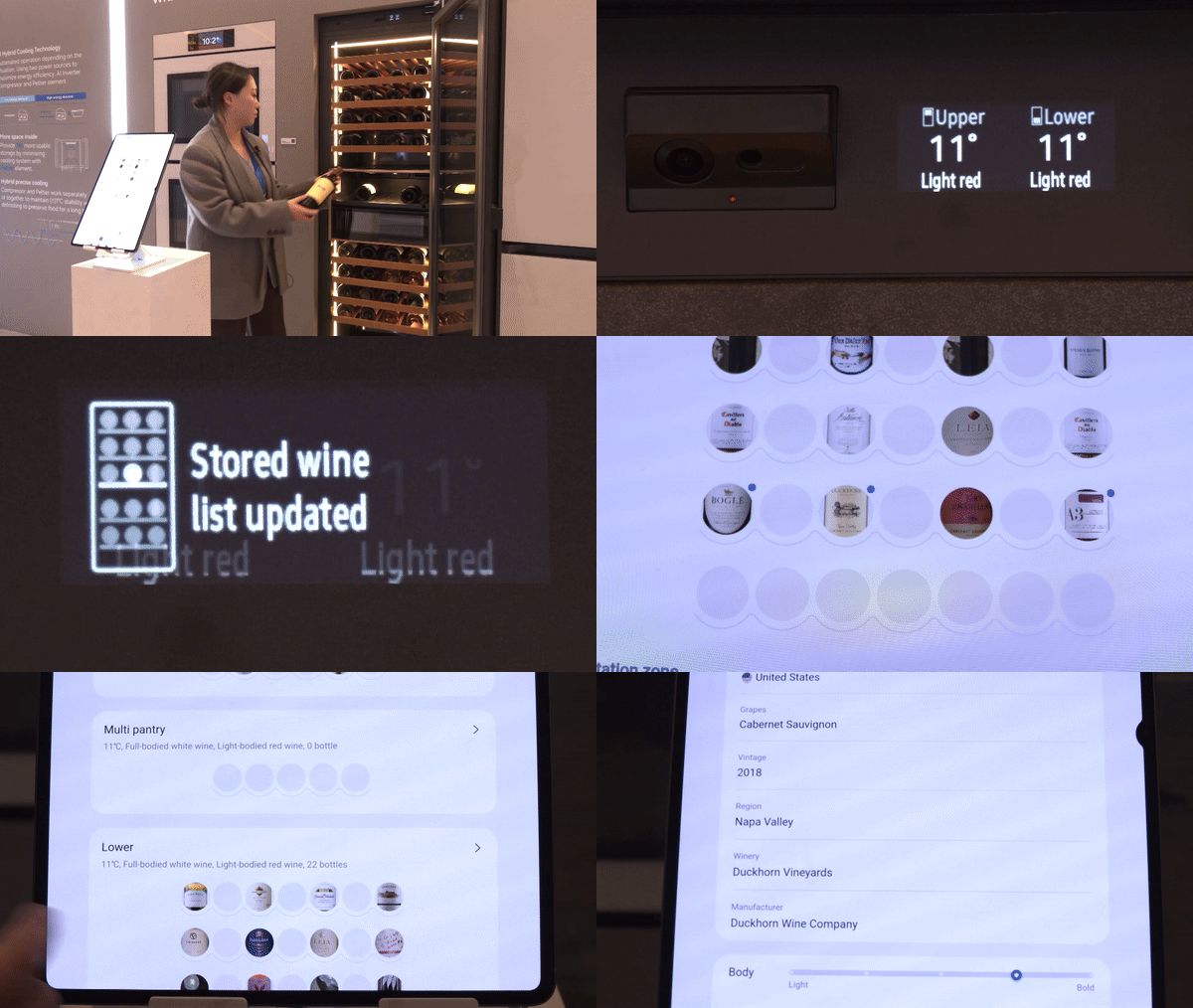
In line with this strategy, refrigerator functions are being further enhanced. The Samsung Bespoke AI Family Hub refrigerator has significantly improved food recognition performance by combining its internal camera-based AI vision capabilities with Google Gemini. The refrigerator can autonomously recommend dishes and generate recipes. The Infinite AI wine refrigerator recognizes wine labels and automatically logs grape variety, vintage, and storage location.
The 2026 Bespoke AI Combo Washer-Dryer offers enhanced drying performance. The Bespoke AI AirDresser features a wrinkle-focused care function that smooths wrinkles like a steam iron. The Bespoke AI WindFree Pro air conditioner provides seven types of airflow motions. The 2026 Bespoke AI Steam Robot Vacuum Cleaner is equipped with high-temperature washing and 100°C steam sterilization functions.
In this way, Samsung’s future home appliances are ready to deliver housework assistance that feels almost as if a human hand were involved, built on more advanced AI technologies.
Samsung has also presented a vision of delivering intelligent care experiences through AI integration across mobile devices, TVs, and home appliances. The idea is that the system will understand users’ daily routines and lifestyle patterns, autonomously propose optimal services when needed, and execute them.
Demonstration of the Food Manager wine label recognition function.
Demonstration of the pet health check function.
Samsung Health analyzes sleep, nutrition, and activity data to identify potential signs of chronic diseases, and provides exercise and sleep coaching as well as customized recipes using ingredients in the refrigerator. When abnormal signs are detected, the plan is to link with the Xealth platform to enable consultation with medical professionals. AI technologies for brain health that detect declines in users’ cognitive abilities are also cited as among Samsung’s next-generation strategic pillars.
This is a Q&A-style summary of the article
Q1. “The TV sees me and understands me?”
A. Samsung’s Vision AI Companion analyzes, in real time and on a frame-by-frame basis, the people, objects, text, and scenes on the screen. It also identifies the user’s intent behind questions. For example, if a user watching a cooking scene asks, “What is this?”, the TV can immediately tell the
ⓒ dongA.com. All rights reserved. Reproduction, redistribution, or use for AI training prohibited.
Popular News