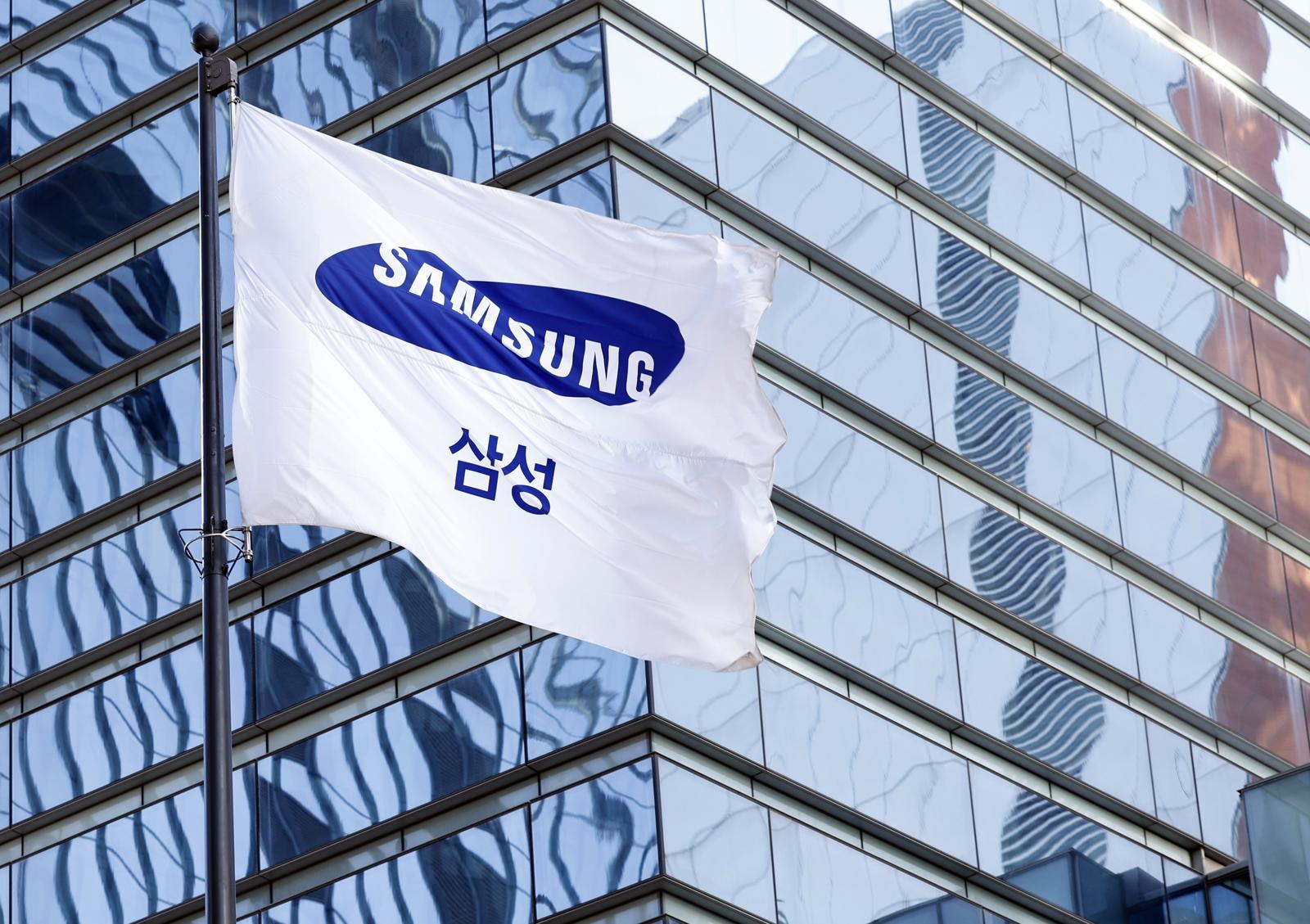
Samsung Electronics’ Seocho office building on Seocho-daero, Seocho-gu, Seoul. 2026.1.8/News1
Samsung Electronics posted its highest-ever quarterly earnings on the back of a semiconductor supercycle. The semiconductor boom in the fourth quarter (October–December) of last year drove performance, pushing annual revenue for the first time beyond KRW 330 trillion.
In a regulatory filing on the 29th, Samsung Electronics announced that its consolidated revenue for last year came to KRW 333.6059 trillion. This is the highest figure since the company’s founding and represents a 10.9% increase year-on-year. Over the same period, operating profit rose 33.2% to KRW 43.6011 trillion, marking the fourth-highest level on record.
In particular, the impact of the semiconductor boom led to record-high quarterly earnings in the fourth quarter of last year, which significantly contributed to the improvement in annual results. Fourth-quarter revenue last year was KRW 93.8374 trillion, and operating profit was KRW 20.0737 trillion. These figures represent sharp increases of 23.8% and 209.2%, respectively, compared with the same period a year earlier.
The Semiconductor (DS) Division’s performance improved significantly due to a surge in memory demand driven by increased investment in artificial intelligence (AI) data centers. In the fourth quarter of last year, the DS Division recorded revenue of KRW 44 trillion and operating profit of KRW 16.4 trillion. These represent increases of 46.2% and 465%, respectively, from a year earlier. Expanded demand and price increases for memory semiconductors such as DRAM and NAND flash boosted earnings.
In the Device Experience (DX) Division, fourth-quarter revenue last year was KRW 44.3 trillion and operating profit was KRW 1.3 trillion. In the Mobile Experience (MX) business, shipment volumes declined as the impact of new model launches weakened, but the division maintained double-digit profitability, supported by stable sales of flagship products and increased sales of tablets and wearable devices.
Harman recorded fourth-quarter revenue last year of KRW 4.6 trillion and operating profit of KRW 300 billion, driven by expanded supply to the European automotive electronics market and peak-season effects in audio. Samsung Display also achieved fourth-quarter revenue of around KRW 9.5 trillion and operating profit of around KRW 2 trillion, as demand increased for small- and medium-sized displays in smartphones, information technology (IT) devices, and automotive applications.
Samsung Electronics projected that growth in its semiconductor business will continue in the first quarter of this year (January–March), led by demand for AI data centers and servers. In particular, performance improvement is anticipated as mass production and shipments of HBM4, a next-generation high-bandwidth memory (HBM) including an industry-leading 11.7Gbps product, become fully underway. The DX Division is also expected to benefit from the launch effect of the Galaxy S26.
ⓒ dongA.com. All rights reserved. Reproduction, redistribution, or use for AI training prohibited.
Popular News