Branding is not the exclusive domain of large corporations. The smaller the startup or organization, the more urgent the need for branding. This is because it establishes the corporate image, increases customer touchpoints, and contributes to tangible performance improvement. However, most founders postpone branding due to limited resources. In response, IT Donga is sharing practical branding know-how that startups can apply immediately, together with Jang Jong-hwa, CEO of Tidy-B. The Startup Branding Guide aims to help build effective branding.
Has there ever been a moment when you stopped in front of a store you had never seen before? The menu looks fine, but the first thought is, “Is this place… really okay?” Reducing that 1–2 seconds of hesitation is where branding begins. This column examines the definition of a brand, the importance of trust, and a diagnostic method that can be checked immediately.
The point where customers hesitate is where branding begins
Branding begins where customers hesitate / Source = Yo-B
Imagine there are two salad shops in the neighborhood with similar price ranges. Shop A has many menu items and attractive photos. However, information essential for first-time customers—such as what the signature menu is, how long it takes to receive an order, and what ingredients are used—is not readily visible. Reviews are scattered, and in-store guidance text is inconsistent.
Shop B has a small menu. Instead, it prominently displays the phrase, “A healthy salad, ready within 5 minutes for your busy lunch hour.” Information on ingredient origins and allergens is summarized on a single sheet, and reviews are easy to find. Packaging is always done “in the same way.”
Even if the two shops taste similar, consumers usually choose Shop B first. What stands out is not “style” but “reassurance.” Put simply, branding is about building a path that prevents customers from postponing their choice.
A brand is the sum of the trust customers feel
A brand is the sum of the trust customers feel / Source = Yo-B
A brand can be simply defined as “a marker that distinguishes us among countless options.” The American Marketing Association (AMA) defines a brand as a “name, term, design, symbol, or other feature that identifies one seller’s goods or services as distinct from those of other sellers.” The International Organization for Standardization (ISO) calls it “an intangible asset that creates images and associations in the minds of stakeholders and generates economic value.” The key phrase here is “in the minds.” Branding is ultimately about creating a distinction in customers’ minds such as “this store/this company is this kind of place.”
Marketing expert Seth Godin describes a brand as “the sum of expectations, memories, stories, and relationships that, taken together, account for a consumer’s decision to choose one product or service over another.” In other words, a brand becomes a “shortcut for judgment,” formed by the combination of name, logo, tone of voice, customer response, reviews, and product experience. The sum of the trust that customers feel is the brand itself.
Customers hesitate when there is no information, no trust, or no basis for comparison
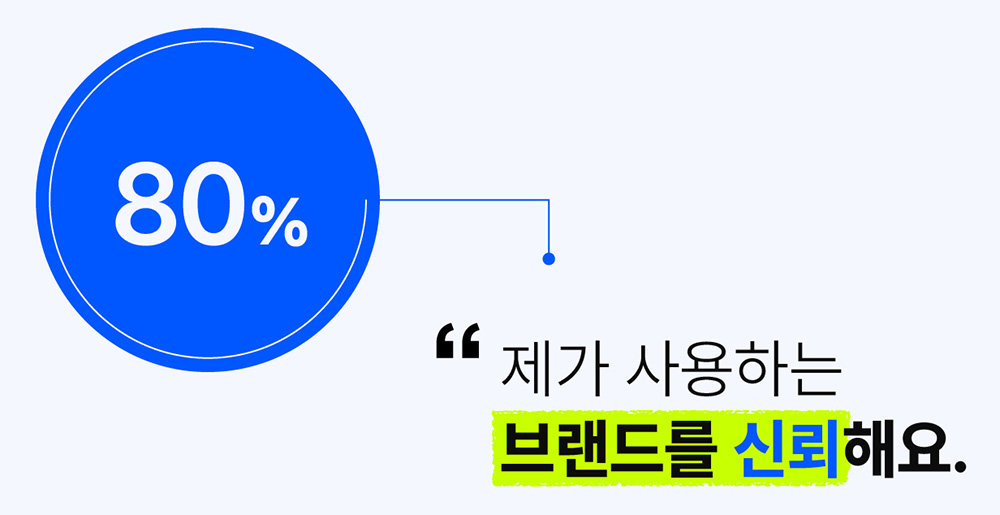
According to Edelman, 80% of consumers trust the brands they use / Source = Yo-B
There are three main reasons why customers hesitate when choosing a service or product. First, when there is insufficient information. If it is clear what is being sold but unclear whether it “fits me,” customers hesitate. When there is only a price list with no criteria, it is even harder to decide.
Second, when there is no trust. Thoughts like “What if I regret spending this money?” or “What if I just waste my time?” cause hesitation. The perceived cost of failure is particularly high with a first purchase.
Third, customers hesitate when comparison is difficult. If services or products appear similar, customers compare using the simplest criteria such as price, distance, or popularity. In the absence of differentiated criteria, most customers choose “the cheapest option.”
Google’s consumer insights team calls this the “messy middle.” According to research published in 2020, people constantly repeat exploration and evaluation. They search, compare, search again, and then compare again. During this process, six cognitive biases, including “social proof” such as reviews, “authority” such as experts or institutions, and “immediacy” such as what is available right now, determine the final decision. Ultimately, the question in customers’ minds always converges to one: “Is this choice safe?”
This is why branding is described as a “structure of trust.” According to a survey published in 2025 by global communications company Edelman, 80% of respondents said they “trust the brands they use.” This implies that brands with established trust lower the barrier to choice.
Trust forms more quickly through recommendation than through advertising. In Nielsen’s 2021 global advertising trust survey of more than 40,000 consumers in 56 countries, 88% of respondents said they trust “recommendations from people I know.” This is why reviews and recommendations stand out for products being purchased for the first time.
Attractive design vs. promise architectureConsider the case of a startup that previously received branding support. This startup operates a service that evaluates and introduces pet products such as pet food, snacks, and supplements. Its purpose was to help pet owners choose “truly good products” from the vast range of products on the market. The founder’s intention was good, but the problem lay in “how it was presented.”
The app featured a cute, well-crafted logo, plenty of illustrations of adorable dogs and cats, and stylish card news content ideal for social media. The design was strong. However, what customers were genuinely curious about was not visible. Because it was unclear why products were good and what criteria were used, comments in the community and reviews sometimes questioned whether content was paid advertising or sponsorship.
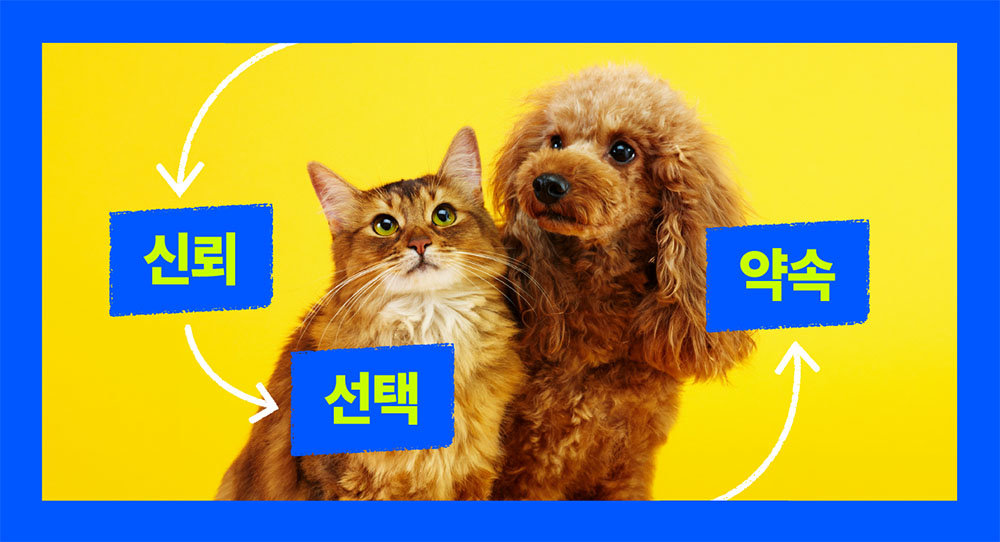
Customer trust leads to the selection of a company’s own brand. Clear promises drive repeat visits / Source = Yo-B
The branding strategy was therefore changed. The first step was to define a “promise that guardians can trust with peace of mind.” First, a one-sentence promise was created. The existing slogan, “Smart choices for pets,” which was vague in meaning, was replaced with “Veterinarians and nutrition experts evaluate products based on 7 criteria.” This single sentence clarified who evaluates products and how.
Second, evaluation criteria and processes were disclosed transparently. The seven evaluation criteria—including raw material safety, nutritional balance, manufacturing environment, and accuracy of ingredient labeling—were fixed on the first screen. Each product detail page clearly stated scores by category and evaluation comments. This allowed customers to verify the basis for evaluation themselves.
Third, filters were created to reflect customers’ situations. Filters such as exclusion of allergenic ingredients, senior dogs, weight management, and kidney health were added so that customers could independently find products that suited their pets. Instead of vague recommendations, the service provided a basis for choice.
Six months later, the service’s revisit rate and dwell time increased noticeably. Reviews such as “The evaluation criteria are clear, so I trust it” and “I like that I can search based on my pet’s conditions” became more common. Requests from suppliers seeking to list their products also increased significantly. This was because trust had been established in customers’ minds that “this service is reliable.” Attractive design captures attention, but clear promises drive repeat visits.
Trust must pass through three gates
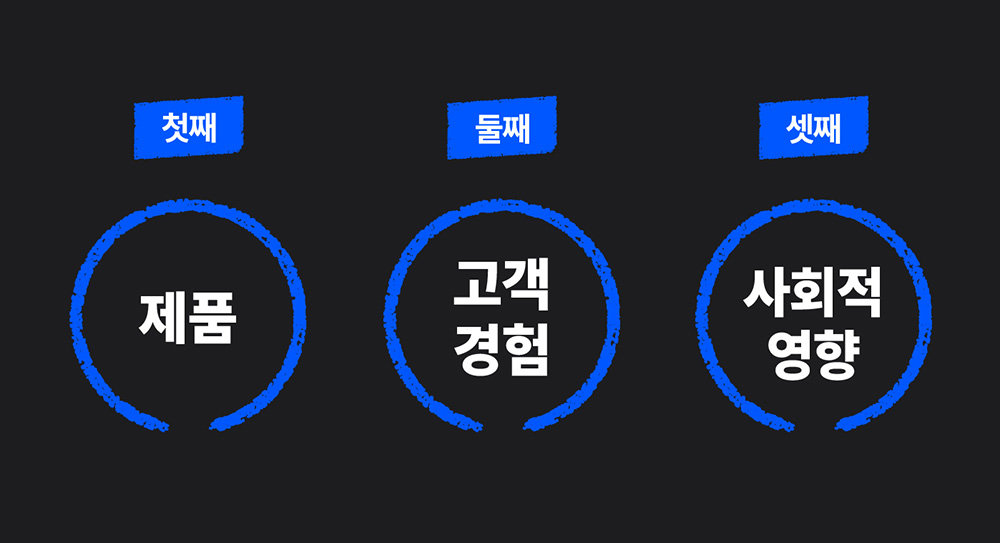
Edelman explains that to build trust, brands must pass through the gates of product, customer experience, and social impact / Source = Yo-B
Richard Edelman, CEO of Edelman, explains that three gates must be passed to build trust. The three gates he presents are: ▲Product (Is the quality acceptable?) ▲Customer experience (Is the service acceptable?) ▲Social impact (Does the company keep its promises?). Although this may sound somewhat grandiose, it applies equally to startups and small business owners. In essence, branding is about creating a structure of trust that enables customers to choose quickly and believe they will not regret their decision.
Key points1. A brand is not just a name and logo. It is the “association” that remains in customers’ minds.
2. Customers postpone decisions when information is insufficient, when they feel uneasy, or when comparison is difficult. Trust determines whether they buy.
3. Branding is not about making things “pretty,” but about building a structure that enables customers to choose quickly and trust their choice.
Today’s branding mission: Create a “Choice & Trust Checklist”
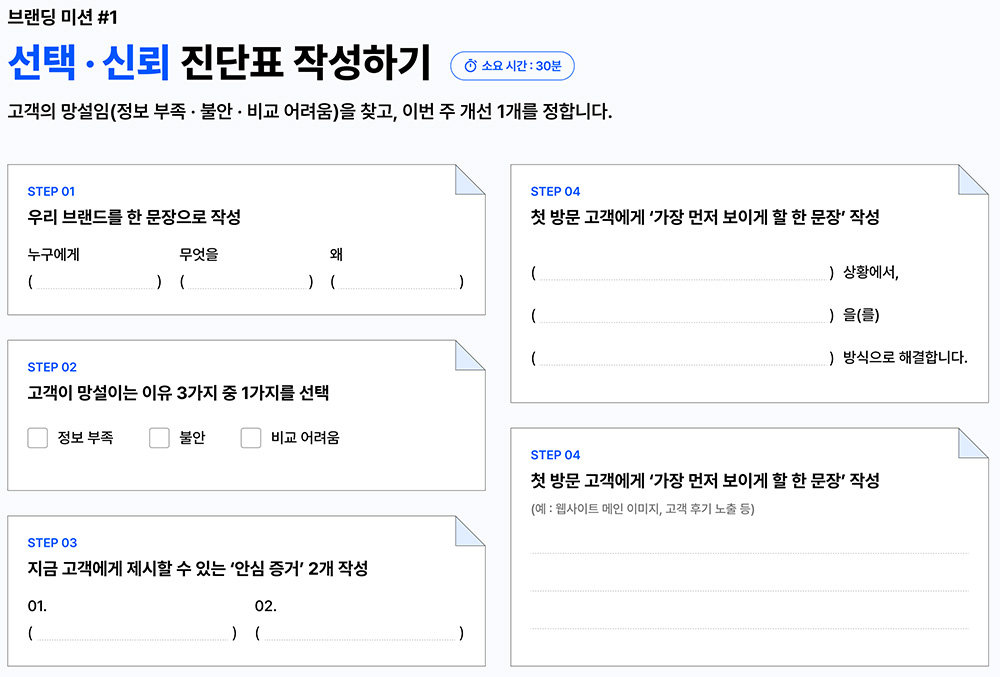
Branding mission / Source = Tidy-B
Goal: Identify customer hesitation points (information shortage, anxiety, difficulty in comparison) and select one item to improve this week.
Time required: 30 minutes
Execution steps (5 stages)
1. Write a one-sentence description of the brand (for whom / what / why).
2. Select one of the three main reasons for customer hesitation (information shortage, anxiety, difficulty in comparison).
3. Write down two “reassurance proofs” that can currently be presented to customers (reviews, case studies, processes, guarantees, FAQs, etc.).
4. Write a “first visible sentence” for first-time visitors (We solve OO in OO situations using OO method).
5. Decide exactly where to apply the “improvement plan” (e.g., main website page, review display, etc.).
Written by / Jang Jong-hwa, CEO of Tidy-B
Branding, design, and marketing expert with 15 years of experience. Has provided creative services to more than 100 companies including Samsung Electronics, LG Electronics, and Adidas. Founded Tidy-B in 2021 and currently operates “Yo-B,” an AI branding automation solution for startups and SMEs.
Edited by / IT Donga reporter Han Man-hyeok (mh@itdonga.com)
ⓒ dongA.com. All rights reserved. Reproduction, redistribution, or use for AI training prohibited.
Popular News