JDP Signed for Applying Ammonia-Based Power Generation Solutions to Ships
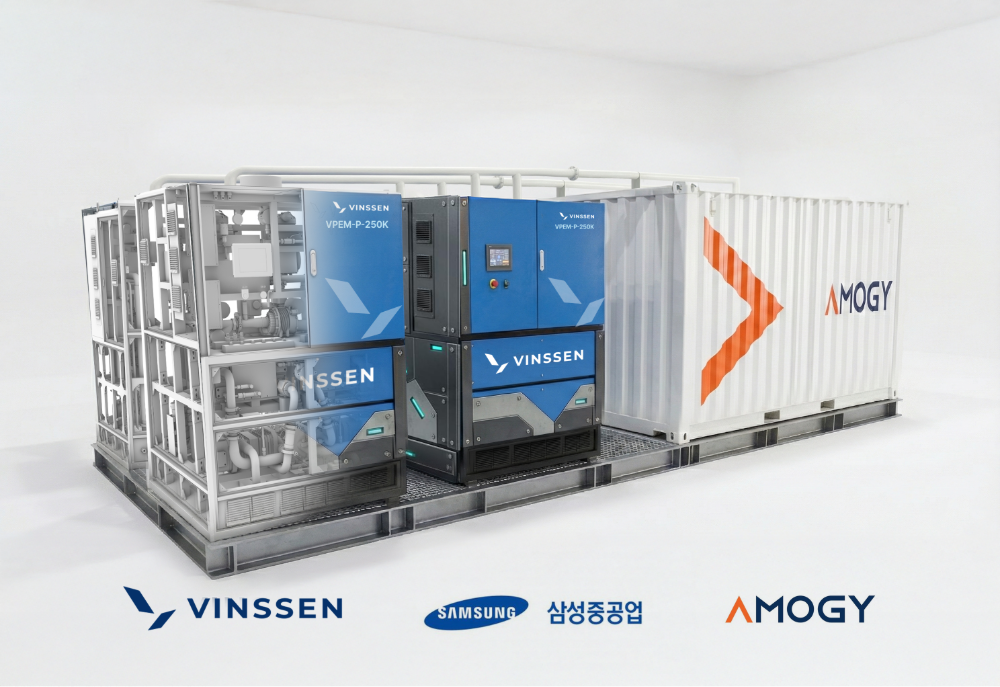
NGP system rendering image. Provided by Vinssen
Samsung Heavy Industries, global ammonia solution company Amogy, and hydrogen fuel cell specialist Vinssen are joining forces to develop an “ammonia–hydrogen fuel cell-based zero-carbon power system” that is expected to become a game changer for maritime carbon neutrality.
The three companies on the 22nd signed a Joint Development Project (JDP) agreement for the demonstration and commercialization of an “Ammonia-to-Power”-based powerpack that combines an onboard ammonia cracker with a hydrogen fuel cell.
The project is being promoted with the goal of developing a next-generation marine power source, tentatively named NGP (Next Generation Product), in response to the strengthening of environmental regulations by the International Maritime Organization (IMO).
The next-generation product (NGP) to be developed in this project is designed to replace conventional diesel generators. It produces electricity by supplying hydrogen, generated through an ammonia cracker, to a polymer electrolyte membrane fuel cell (PEMFC). As it generates power without a combustion process, it is characterized by zero carbon dioxide emissions.
Ammonia is considered a suitable zero-carbon alternative fuel for large vessels that require long-distance operation, as it has high efficiency as a hydrogen storage and transport medium, is easy to liquefy, and has high storage density. The NGP system produces electricity by cracking ammonia back into hydrogen and supplying it to a fuel cell, boasting an environmentally friendly process with no combustion and therefore no carbon emissions at all.
In particular, while securing high output, the product will be designed to have dimensions similar to existing marine engines, enabling its application within large commercial vessels. This is expected to allow the introduction of next-generation zero-carbon power systems while minimizing changes to existing ship designs.
If this joint development is successfully carried out, it is expected to accelerate the advent of an era of 100% zero-carbon propulsion vessels that do not rely on fossil fuels.
Lee Chil-hwan, CEO of Vinssen, said, “This collaboration is an important turning point in transforming the internal combustion engine-centered shipbuilding industry structure into a fuel cell-based electric propulsion system,” adding, “Vinssen will contribute to securing competitiveness in the high value-added eco-friendly ship market based on its accumulated technological edge in marine hydrogen fuel cells.”
ⓒ dongA.com. All rights reserved. Reproduction, redistribution, or use for AI training prohibited.
Popular News