Government to Launch Low-Earth Orbit Satellite Council Next Month
Over 80 Companies Including SKT and Hyundai Motor to Participate
Pooling Domestic R&D Capabilities to Build Connectivity Networks
9,000 U.S. Low-Earth Orbit Satellites… South Korea Has ‘Zero’
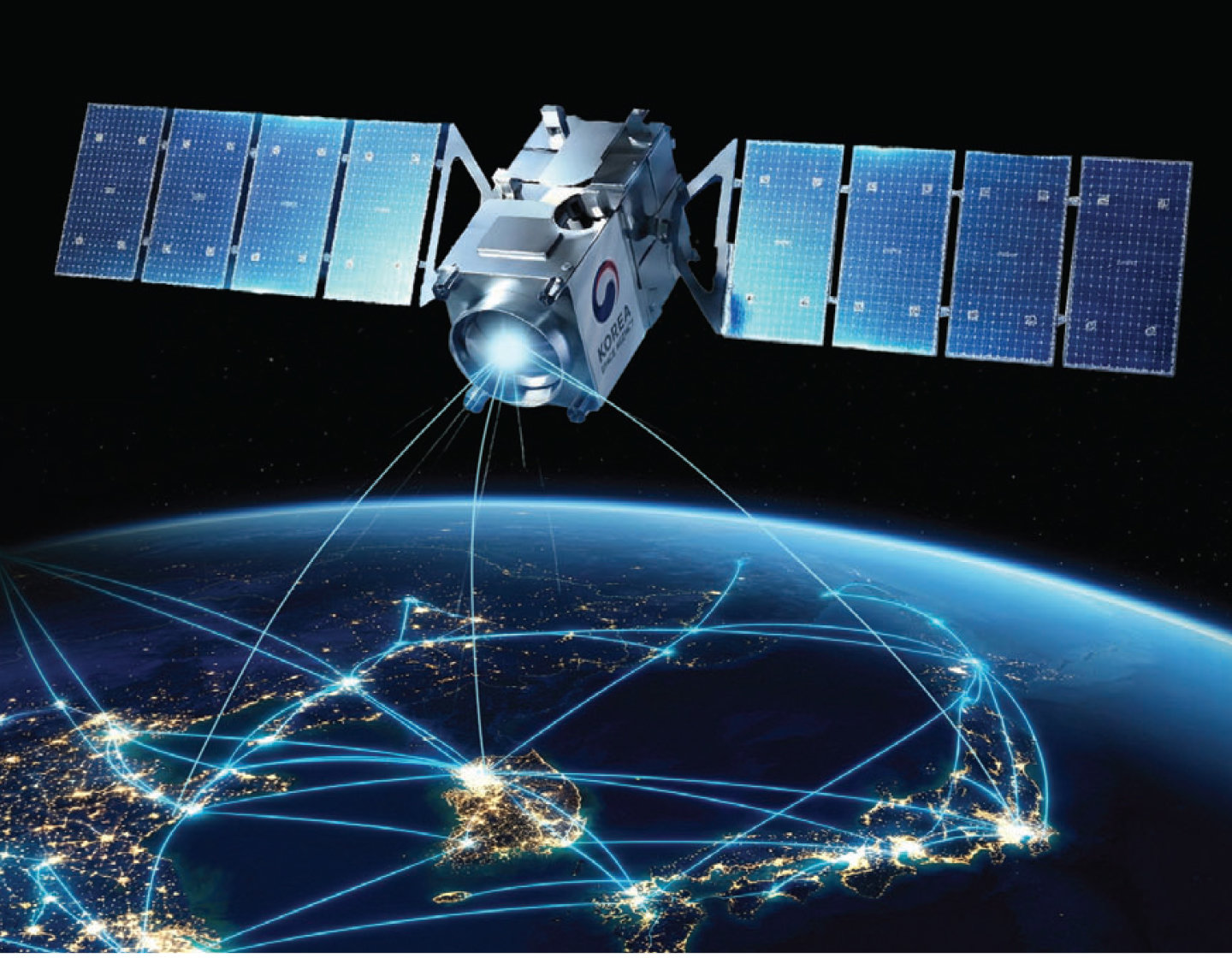
The government is launching a consultative body to pool industrial capabilities for the construction of a satellite communication network to support the physical artificial intelligence (AI) ecosystem, a so‑called “Korean Starlink.” It is understood that more than 80 companies related to the satellite communication industry, including Hanwha Aerospace, Hyundai Motor, and LG Electronics in the space and aviation, defense, physical AI, and telecommunications sectors, will participate in the body.
● “Severe shortage of K‑LEO”… all‑out public‑private mobilizationAccording to a compilation of coverage from the defense industry and information technology (IT) sectors on the 28th, the Defense Acquisition Program Administration (DAPA), the Ministry of Science and ICT (MSIT), and other government bodies plan to hold an inauguration ceremony for the “Low Earth Orbit (LEO) Satellite Communication Industry Council” on 4 February and begin full‑fledged discussions on building a “Korea Low Earth Orbit (K‑LEO) Communication System.”
In addition to the Ministry of National Defense and the MSIT, the council will include the Ministry of Culture, Sports and Tourism, the Ministry of Oceans and Fisheries, the Korea Aerospace Administration, and other government ministries, as well as relevant institutions such as the Agency for Defense Development. Defense and space‑aerospace companies such as Hanwha Aerospace, Hanwha Systems, Hyundai Rotem, LIG Nex1, and Hancom InSpace; physical AI and electronics companies such as Hyundai Motor and LG Electronics; and domestic telecommunications carriers including KT and SK Telecom will join, bringing the total number of participating companies to more than 80.
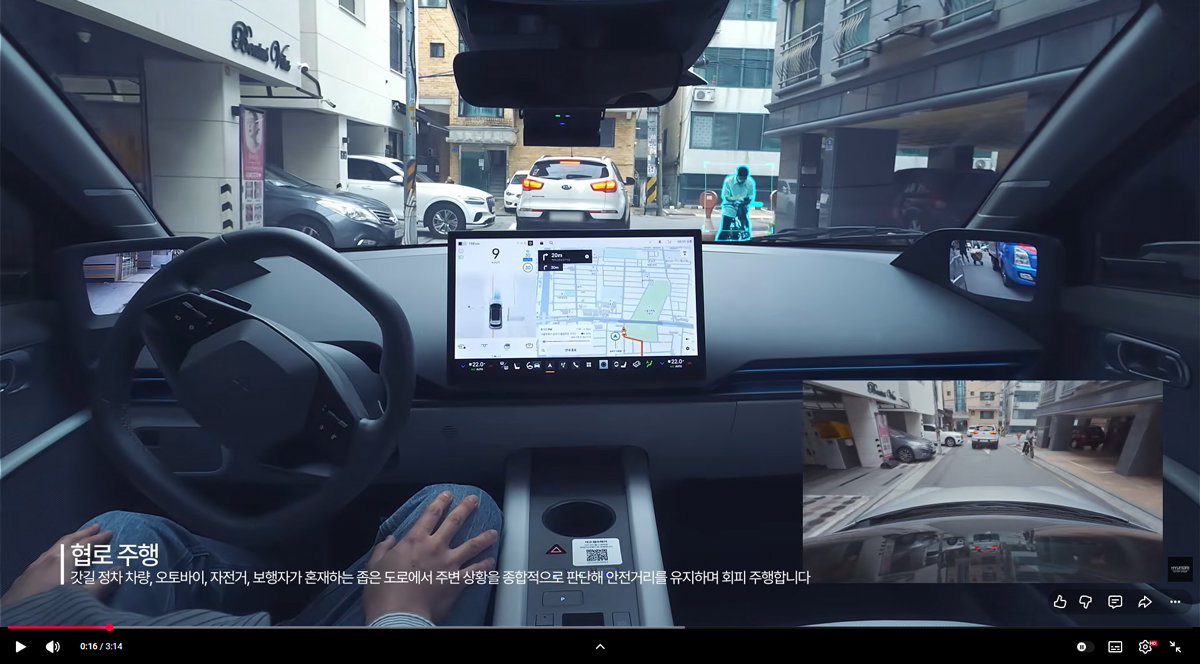
The government’s decision to form the council is seen as stemming from the perception that Korea is falling behind in the competition to build a LEO communication network, which will serve as the neural network of future physical AI. For physical AI such as humanoids and autonomous mobility, integration with sixth‑generation (6G) mobile communication, which targets “ultra‑high speed, ultra‑connectivity, and ultra‑low latency,” is essential.
In particular, to enhance the stability and operational range of physical AI, the importance of satellite communication networks that can transmit signals to areas beyond the reach of existing communication infrastructure—such as in the air, at sea, and in mountainous regions—is coming to the fore. LEO satellites, which orbit close to Earth, experience low signal loss and enable high‑speed communication, making them a core resource for 6G networks. An industry official stressed, “Assuming that the introduction of physical AI will expand into security areas such as military vessels and submarines in the future, the establishment of a K‑LEO system is indispensable.”
The council is expected to build on the “K‑LEO Industry Cooperation Task Force (TF),” which publicly recruited participants late last year, to consolidate domestic research and development (R&D) capabilities and establish a concrete roadmap for the K‑LEO industry.
● U.S. and China already in a low‑Earth‑orbit land‑grab
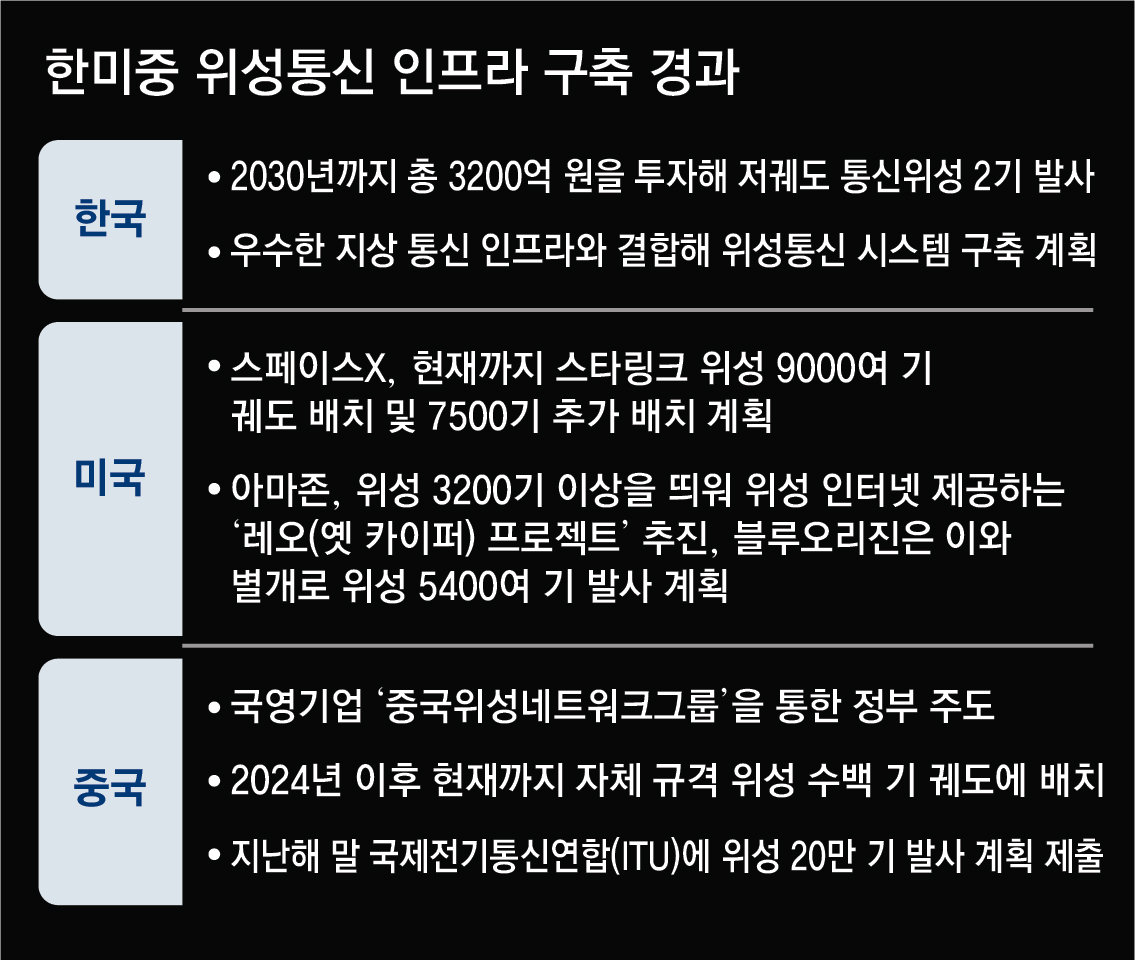
The domestic industry assesses that at least 6–8 commercial LEO satellites are needed for 6G commercialization, but Korea currently has no LEO infrastructure at all. Since last year, the government has planned to invest about KRW 320 billion to launch two LEO satellites by 2030, but experts point out that this is far from sufficient.
The United States has already placed more than 9,000 Starlink satellites in low Earth orbit, led by private company SpaceX. According to foreign media, the U.S. Federal Communications Commission (FCC) recently approved the additional deployment of 7,500 Starlink satellites. Starlink has established a Korean subsidiary and is moving to secure an early lead in the domestic market. In fact, while K‑LEO deployment has been sluggish, domestic shipping and shipbuilding companies such as Hyundai Glovis and Avikus (HD Hyundai’s autonomous ship navigation specialist) have begun adopting Starlink.
Blue Origin, founded by Amazon founder Jeff Bezos, also announced this month a large‑scale satellite communication build‑out plan to deploy more than 5,400 satellites in low and medium Earth orbits.
China is also reported to be accelerating the construction of its satellite communication network, having already launched hundreds of satellites built to its own specifications. According to the South China Morning Post (SCMP) in Hong Kong, China recently submitted an application to the International Telecommunication Union (ITU), a UN agency, for the launch of low Earth orbit internet satellites, unveiling a plan to send more than 200,000 satellites into orbit. Hong Dae‑sik, professor in the Department of Electrical and Electronic Engineering at Yonsei University, said, “Satellite communication is not optional; it is an inevitable part of the future. The U.S. and China are deploying LEO satellites in greater numbers and at lower altitudes,” adding, “To avoid missing the coming momentum, the government, industry, and academia in Korea must all pool their capabilities.”
ⓒ dongA.com. All rights reserved. Reproduction, redistribution, or use for AI training prohibited.
Popular News